Quick Top 10 Facts about Acadian Flycatcher
| SCIENTIFIC NAME | Empidonax virescens (Acadian Flycatcher) |
| CLASSIFICATION | KINGDOM: Animalia CLASS: Aves ORDER: Passeriformes FAMILY: Tyrannidae PHYLUM: Chordata GENUS: Empidonax |
| SIZE | Length: 13–15 cm (5.1–5.9 inches) Wingspan: 24–26 cm (9.4–10.2 inches) Weight: 9–13 g (0.3–0.46 oz) |
| HABITAT | Deciduous forests, riparian areas, and woodlands in eastern North America |
| DIET | Insectivorous – Feeds primarily on insects and spiders |
| SPECIES | Acadian Flycatcher (*Empidonax virescens*) |
| COUNTRY | Breeds in eastern North America, including the United States and parts of Canada |
| GESTATION PERIOD | Incubation period for eggs: 12–15 days, with young fledge after 12–15 days post-hatching |
| LIFE SPAN | Average lifespan is about 2–3 years, though some can live up to 5 years |
| CONSERVATION STATUS | Least Concern – Population stable but sensitive to habitat loss and forest fragmentation |
Scientific name and its classification within the bird family
The tiny, migratory songbird known as the Acadian Flycatcher (Empidonax virescens) is a member of the Tyrannidae family. A little migratory bird that is a member of the Tyrant Flycatcher family is the Acadian Flycatcher. Eastern North America, which includes both the United States and Canada, is where it is mostly found. It is easy to identify this species because of its characteristic olive-green upperparts and light yellow underparts.
Size, coloration, and distinctive features such as its bill and tail
With its long, thin beak and relatively small wingspan, the Acadian Flycatcher is able to capture insects midair. The distinctive way that the Acadian Flycatcher breeds is one fascinating feature about it. This flycatcher makes its nest on a horizontal limb, generally close to a tree trunk, in contrast to many other bird species. Twigs, leaves, and moss are among the materials that make up the cup-shaped nest. The female is in charge of building the nest, while the male looks out for the territory and supplies food for the mother and the young.
Behaviour and habits of the Acadian Flycatcher
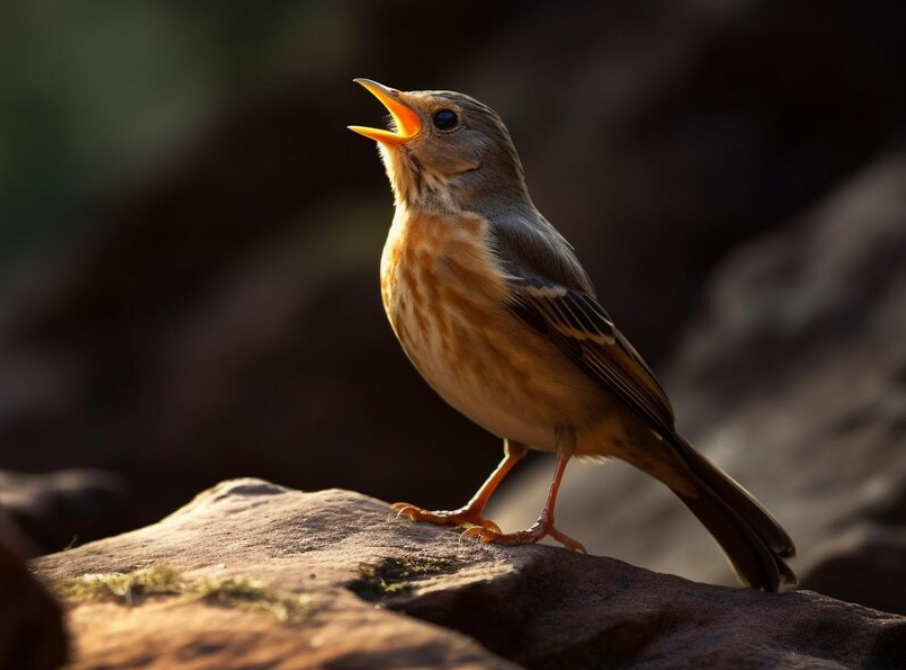
Many people characterise the loud, harsh cry of the Acadian Flycatcher as “peet-sah” or “peet-sah-ah.” Males and females utilise this sound to signal to one another that they are present in the area and to interact. A succession of melodic songs are sung by the male flycatcher throughout the mating season in an attempt to entice a mate and protect its territory from rival males.
Important Details Regarding Acadian Flycatcher
The birds are most active in the early morning and late afternoon, which is when you may often hear their melodies. In general, the Acadian Flycatcher is an intriguing bird species that is delightful to watch in its natural environment due to its distinctive traits and activities. It is renowned for having a unique call and unusual features. We’ll look at some fascinating Acadian Flycatcher facts in this blog article.
1. Physical appearance of the Acadian Flycatcher
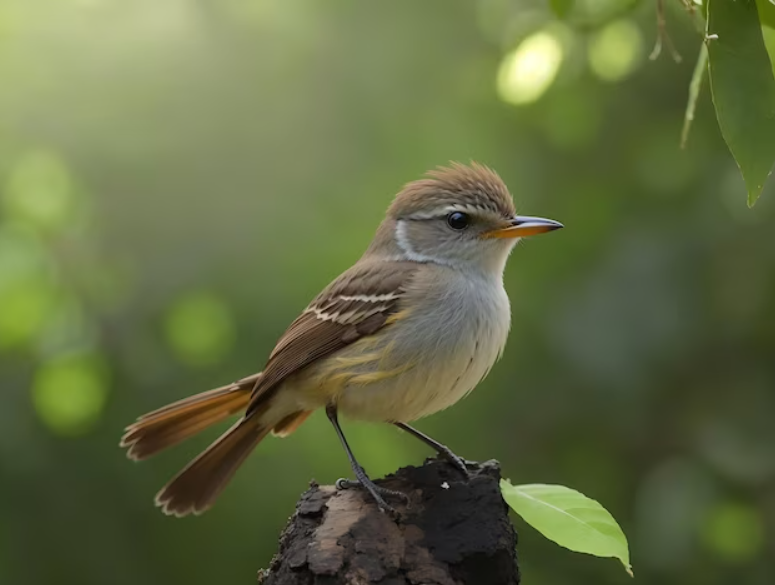
With a length of between 5.5 and 6 inches, the Acadian Flycatcher is a little bird. Its upperparts are olive green, while its belly and neck are a delicate yellowish-white colour. Its narrow, flat bill and distinctive white eyering are other features. With two white wing bands, the wings are dark brown in colour.
2. Environmental conditions required by Acadian Flycatcher
Deciduous woodlands, especially in the eastern regions of North America, are the primary habitat of the Acadian Flycatcher. It favours older woods with a thick canopy and a robust understory. Nesting on the lower branches of trees is a documented practice for these birds.
3. Unique hunting techniques and how it captures its prey
The Acadian Flycatcher mostly eats insects, including flies, beetles, and ants. They stalk their prey by darting from one perch and landing on another nearby or on the same perch again. They are renowned for their dexterity and accuracy in capturing soaring insects.
4. Specific environmental conditions that the Acadian Flycatcher requires for nesting and breeding
Late May to early July is when Acadian Flycatchers typically start their nesting season. Using grasses, moss, and other plant materials, they construct nests in the form of cups. Usually situated between 10 and 20 feet above the ground, their nests are perched on a horizontal limb.
5. Importance of preserving and protecting the Acadian Flycatcher
Because of its fragmented and declining habitat, the Acadian Flycatcher is considered a species of conservation concern in several places. Their preferred environment is being altered, and the loss of mature woods presents serious dangers to their numbers. Preserving and repairing these birds’ appropriate habitats is the main goal of conservation efforts.
6. Distinguished Voice and Dialogue patterns
The characteristic cry of the Acadian Flycatcher is a harsh, piercing “peet-sah.” Males use this cry to entice females and protect their territory. During courting and nest-building, they are also known to make a quiet, high-pitched “pip” sound.
7. Migration patterns of Acadian Flycatcher
Because it migrates across great distances between its breeding and wintering habitats, the Acadian Flycatcher is classified as a neotropical bird. Specifically, nations like Colombia, Ecuador, and Venezuela are where these birds spend their winters in Central and South America.
8. Population range and distribution
It is believed that there are 1.5 million American flycatchers in the world. Despite the fact that this number may seem to remain steady, it’s crucial to remember that in certain locations, habitat loss and other factors are causing their numbers to decline.
9. Preserving and protecting the Acadian Flycatcher and its habitat for future generations
To learn more about the ecology and behaviour of Acadian flycatchers, scientists and environmentalists are carrying out studies and monitoring campaigns. They seek to create successful conservation plans to save this species by researching its habitat needs, migratory habits, and reproductive biology.
10. Challenges such as habitat loss or climate change.
Respecting their environment and causing as little disruption as possible can help you enjoy viewing Acadian Flycatchers. For a closer look at these species, binoculars and birding guides might be helpful resources. Their preservation may also be aided by funding conservation groups and taking part in citizen science initiatives.
It should be noted that the Acadian Flycatcher is an intriguing bird with unusual traits and a distinguishing cry. For this species to survive over the long run, it is essential to comprehend their habitat needs and support conservation initiatives.
FAQ (frequently asked questions) about Acadian Flycatcher
Q: What is an Acadian Flycatcher?
Ans: The Acadian Flycatcher (Empidonax virescens) is a small, insect-eating songbird native to North America. It is part of the tyrant flycatcher family and is known for its sharp “peet-sa” call.
Q: Where do Acadian Flycatchers live?
Ans: Acadian Flycatchers breed in mature deciduous forests across the eastern United States and migrate to Central and South America for the winter, favoring shaded, wooded areas near streams.
Q: What do Acadian Flycatchers eat?
Ans: They primarily eat flying insects, which they catch mid-air during short sallies from perches. Their diet includes flies, moths, beetles, and other small arthropods.
Q: How do Acadian Flycatchers defend themselves?
Ans: Acadian Flycatchers rely on their agility and speed to evade predators. Their nests are usually placed high in trees and well hidden, which also provides protection for their young.
Q: How do Acadian Flycatchers reproduce?
Ans: During breeding season, females build cup-shaped nests in tree branches. They lay 2–3 eggs, which hatch after about two weeks. Both parents help feed the chicks until they fledge.
Q: Are Acadian Flycatchers endangered?
Ans: No, Acadian Flycatchers are currently listed as “Least Concern” by the IUCN, although habitat loss and forest fragmentation are potential threats to their population in some regions.
Q: How long do Acadian Flycatchers live?
Ans: Acadian Flycatchers typically live up to 4–6 years in the wild, though some individuals have been known to live longer under favorable conditions.
Q: What are the characteristics of Acadian Flycatchers?
Ans: They are small, olive-green birds with pale underparts, a short bill, and a slightly crested head. They are known for their quick, darting flight and distinctive vocalizations.
Q: How can you identify an Acadian Flycatcher?
Ans: Identification can be tricky due to its similarity to other Empidonax species. However, its habitat, sharp two-syllable “peet-sa” call, and longer primary feathers help distinguish it from others.
Q: Do Acadian Flycatchers migrate?
Ans: Yes, Acadian Flycatchers are long-distance migrants. They breed in North America during the summer and migrate to Central and South America for the winter months.
#AcadianFlycatcher, #Flycatcher, #BirdWatching, #BirdPhotography, #BirdLovers, #BirdsOfInstagram, #WildlifePhotography, #Songbirds, #ForestBirds, #NatureLovers, #AvianLife, #BackyardBirding, #BirdNerd, #NorthAmericanBirds, #BirdConservation
Our sources and references about Acadian Flycatcher
1: Wikipedia
2: All About Birds – Cornell Lab
3: Audubon Field Guide
4: IUCN Red List