Animals and Habitat Interdependence
Animals play a vital role in maintaining healthy ecosystems, and their survival is closely linked to the habitats they occupy. Each species has evolved specific adaptations that allow it to thrive in particular environments, from extreme deserts to dense rainforests. Understanding the relationship between animals and their habitats helps explain how ecosystems function, remain balanced, and respond to environmental change.
Forest Ecosystems and Wildlife
Forests support an extraordinary diversity of animal life by providing shelter, food, and breeding grounds. Tropical rainforests are especially rich in biodiversity and are home to species such as monkeys, toucans, and jaguars. These animals are adapted to dense vegetation, warm temperatures, and high humidity.
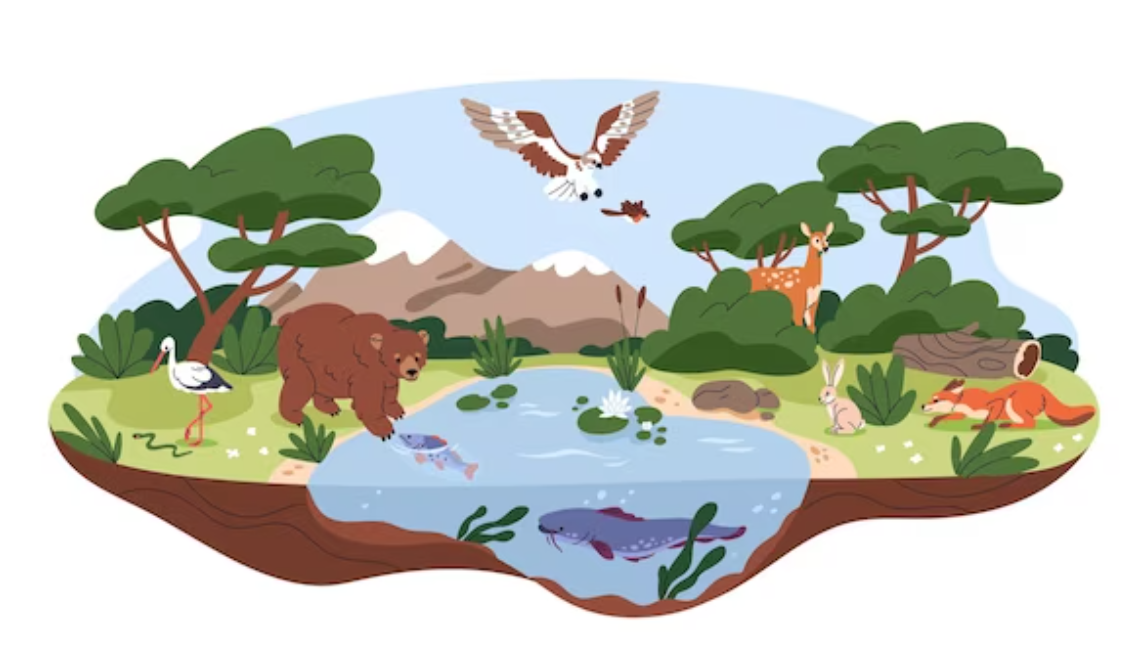
Temperate forests, on the other hand, host animals like deer, foxes, and bears. These species are well suited to seasonal changes, developing behaviours such as hibernation or migration to cope with colder winters and fluctuating food availability.
Oceans and Marine Animals
Oceans cover more than seventy percent of Earth’s surface and contain some of the most complex ecosystems on the planet. Coral reefs are among the most productive marine habitats, supporting colourful fish, sea turtles, crustaceans, and corals that depend on one another for survival.
Beyond coastal reefs, the open ocean is inhabited by large marine animals such as whales, dolphins, and sharks. These species have adapted to varying depths, pressure levels, temperatures, and ocean currents, allowing them to navigate vast marine environments efficiently.
Desert Habitats and Adaptations
Deserts are harsh environments characterised by extreme temperatures and limited water availability. Despite these challenges, many animals have evolved unique adaptations to survive in arid conditions. Camels, snakes, and scorpions possess physiological and behavioural traits that help them conserve water and tolerate heat.
Many desert animals are nocturnal, remaining underground during the day to avoid intense heat. Species such as kangaroo rats rely on burrows for shelter, while fennec foxes use their large ears to release excess body heat and detect prey efficiently.
Grasslands Supporting Large Mammals
Grasslands are open ecosystems dominated by grasses and seasonal rainfall, supporting large populations of grazing animals. Herbivores such as zebras, bison, and antelopes rely on abundant grasses for food, while predators like lions, wolves, and cheetahs depend on these herbivores for survival.
Because grasslands change with the seasons, many animals migrate long distances to find water and fresh grazing areas. Physical traits such as long legs, endurance, and sharp senses help animals navigate and survive in these wide, open landscapes.
Polar Regions and Survival
Polar regions, including the Arctic and Antarctic, are among the coldest environments on Earth. Despite the extreme conditions, animals such as polar bears, seals, and penguins have adapted remarkably well to life in icy habitats.
These animals possess thick layers of fur or blubber that provide insulation against freezing temperatures. Specialised features such as webbed feet, streamlined bodies, and strong claws enable them to swim efficiently and move across ice-covered terrain.
Freshwater Ecosystems and Species
Freshwater habitats, including rivers, lakes, ponds, and wetlands, support a wide range of animal species. Fish, amphibians, reptiles, birds, and mammals depend on freshwater ecosystems for food, shelter, and reproduction.
Animals living in freshwater environments show adaptations that help them swim, dive, or survive in waterlogged conditions. Beavers construct dams to create stable aquatic habitats, while otters have webbed feet and streamlined bodies that allow them to move swiftly through water.