Animals Grouped by Biology
Animals are scientifically classified into distinct biological groups based on shared physical traits, evolutionary history, and genetic relationships. This structured system helps scientists and researchers understand how different species are related and how animal life has evolved over time. Below is an overview of the major biological animal groups, along with familiar examples from each category.
Mammals and Their Traits
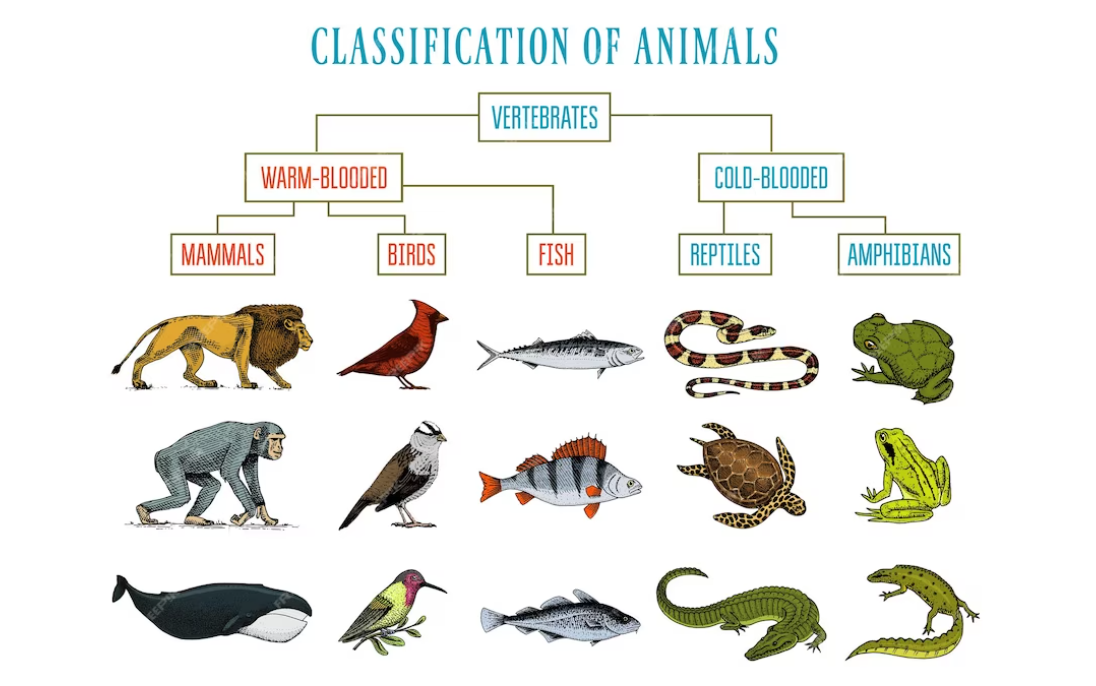
Mammals are warm-blooded vertebrates recognised for having hair or fur and mammary glands that produce milk for feeding their young. Most mammals give birth to live offspring and breathe air using lungs. This diverse group includes humans, dogs, cats, elephants, whales, and dolphins, which inhabit environments ranging from land to oceans.
Birds and Flight Adaptations
Birds are warm-blooded animals distinguished by feathers, beaks, and the ability to lay hard-shelled eggs. Many species are capable of flight due to their lightweight skeletons and wings, although some birds are flightless. Common examples include eagles, parrots, penguins, owls, and hummingbirds.
Reptiles and Scaled Bodies
Reptiles are cold-blooded vertebrates with dry, scaly skin and well-developed lungs. They typically lay eggs on land and rely on external heat sources to regulate body temperature. Reptiles are found worldwide and include snakes, lizards, turtles, crocodiles, and alligators.
Amphibians and Metamorphosis
Amphibians are cold-blooded animals that live both on land and in water during different stages of their lives. They undergo metamorphosis, starting as aquatic larvae with gills before developing lungs as adults. Frogs, toads, salamanders, and newts are well-known amphibians.
Fish and Aquatic Life
Fish are aquatic vertebrates adapted for life in water, using gills to breathe and fins to swim. They are cold-blooded and inhabit freshwater, marine, and coastal environments. Examples include salmon, trout, goldfish, sharks, and clownfish.
Invertebrates Without Backbones
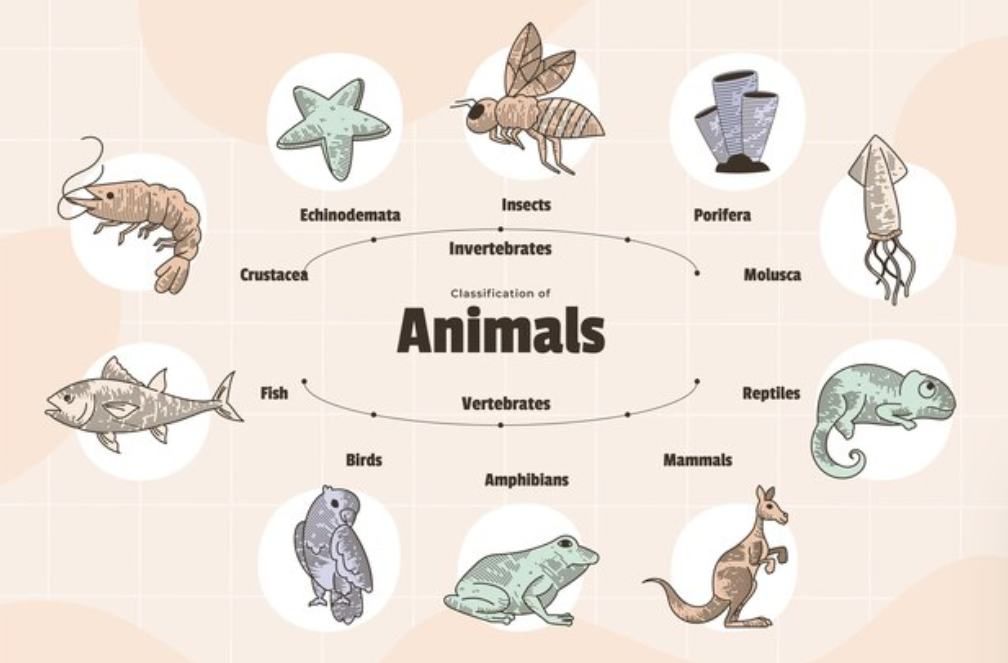
Invertebrates are animals that lack a backbone or spinal column and represent the largest group of animal species on Earth. This broad category includes insects, arachnids, molluscs, and crustaceans. Insects such as butterflies, ants, bees, and beetles make up the most diverse subgroup.
Echinoderms and Ocean Species
Echinoderms are marine invertebrates known for their radial symmetry and spiny outer surfaces. They possess a unique water vascular system that helps with movement and feeding. Common echinoderms include starfish, sea urchins, sea cucumbers, and sand dollars.
Cnidarians and Stinging Cells
Cnidarians are aquatic invertebrates characterised by radial symmetry and specialised stinging cells called cnidocytes. These cells contain nematocysts used for capturing prey and defence. Jellyfish, corals, sea anemones, and hydroids all belong to this group.