Animal Classification Overview
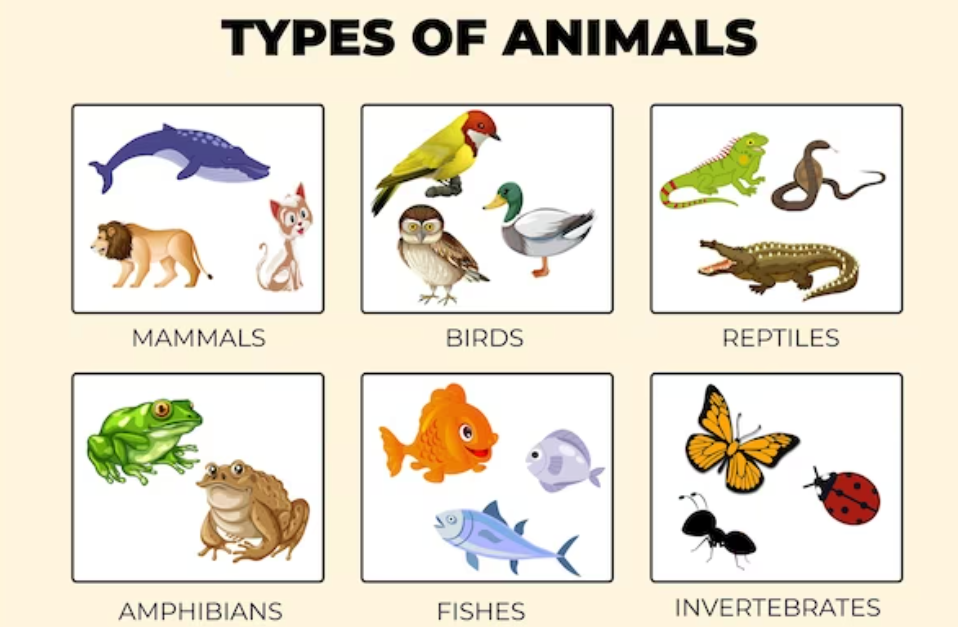
Animals can be classified using multiple criteria, including adaptations, behaviour, reproduction, and habitats. Many animals are grouped by habitat. Terrestrial species, such as snakes, lions, and elephants, live primarily on land. Aquatic animals, including fish, dolphins, and whales, thrive in water. Birds have evolved flight adaptations for life in the air. Some species survive extreme environments, such as deep-sea organisms and extremophiles, which endure high or low temperatures.
Classification by Diet
Animals may also be classified according to their diet. Herbivores, like deer, cows, and rabbits, feed mostly on plants. Carnivores, such as wolves, tigers, and lions, hunt other animals for food. Omnivores, including pigs, bears, and humans, consume both plants and animals. Some species are specialised feeders, such as nectarivores that eat flower nectar exclusively, or insectivores that eat only insects.
Classification by Body Structure
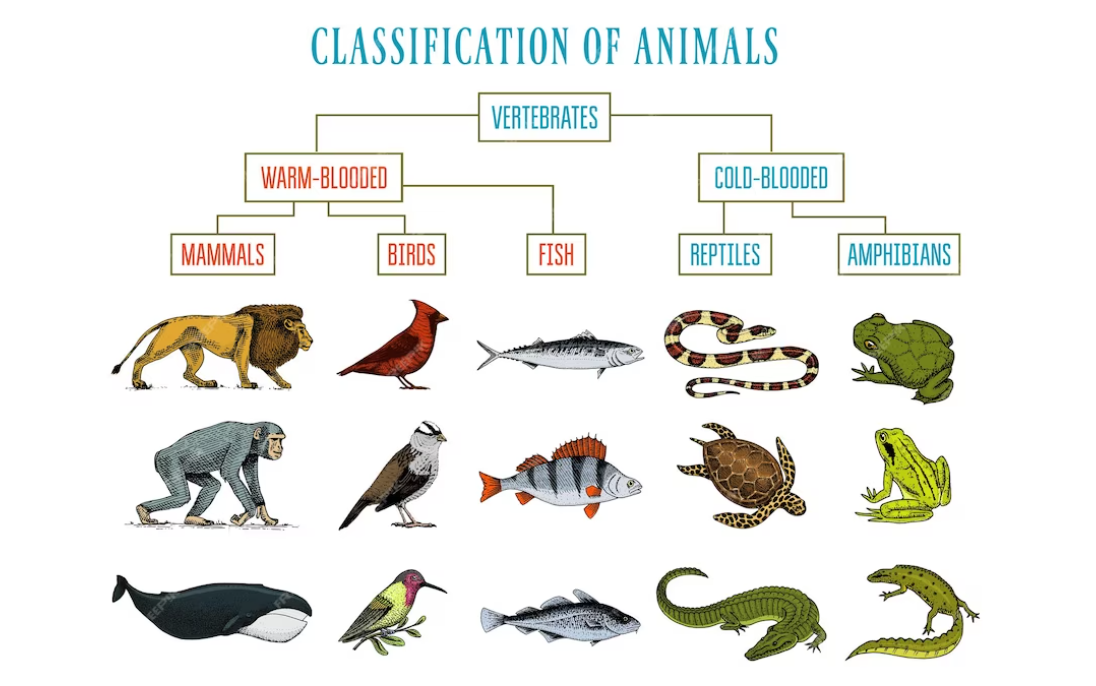
Animals can also be classified by their body structure and composition. Vertebrates, including fish, amphibians, birds, reptiles, and mammals, have a backbone. Invertebrates, such as worms, mollusks, spiders, and insects, lack a backbone. Reproduction is another classification factor: birds and reptiles are oviparous (egg-laying), while mammals are viviparous (live birth). Organisms may also be grouped by evolutionary relationships, where species share common ancestry and genetic traits.
Animal Groups and Types
Earth hosts a diverse range of animals with unique characteristics. Understanding these groups helps us appreciate biodiversity and adaptations.
1. Mammals
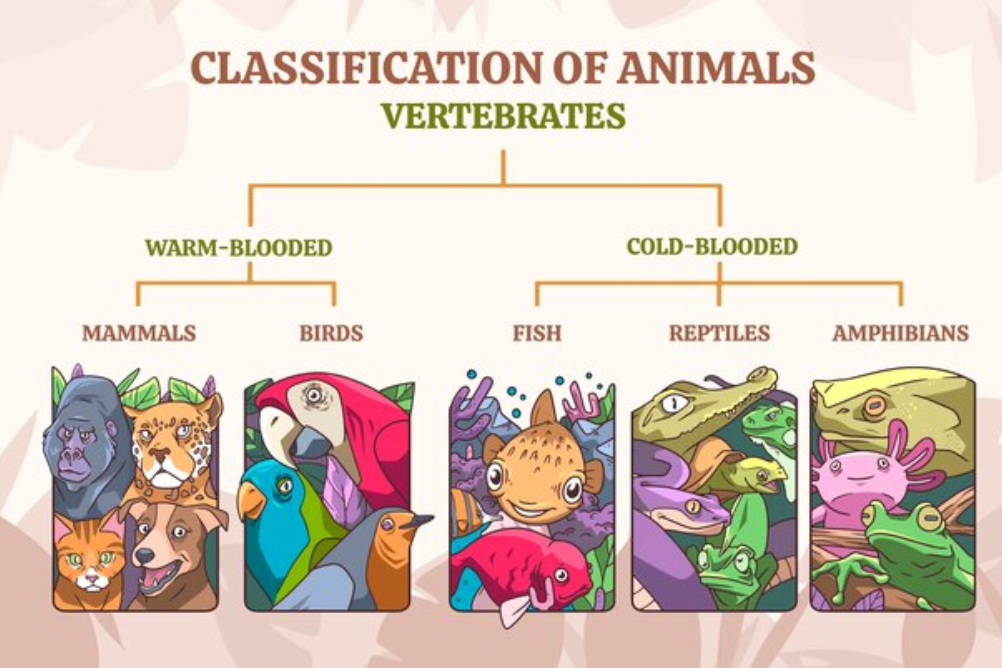
Warm-blooded animals with hair or fur that produce milk for their young are mammals. They regulate body temperature and give birth to live young. Examples include dogs, cats, elephants, and humans.
2. Birds
Birds are vertebrates with feathers, beaks, and hard-shelled eggs. Most can fly, while some are flightless. Birds vary in size from tiny hummingbirds to large ostriches and are known for vibrant plumage and melodious calls.
3. Reptiles
Reptiles have scaly skin, cold-blooded metabolism, and lay eggs. They include crocodiles, turtles, lizards, and snakes and thrive in land, water, and occasionally air habitats.
4. Amphibians
Amphibians are cold-blooded animals that develop from aquatic larvae to terrestrial adults. They lay eggs in water and have moist skin. Frogs, toads, and salamanders are examples capable of living both on land and in water.
5. Fish
Fish are aquatic animals with gills and fins. They extract oxygen from water and inhabit freshwater and marine environments. Fish range from tiny tropical species to large sharks.
6. Invertebrates
Invertebrates lack a backbone and form the majority of animal species. They include worms, mollusks, spiders, and insects, thriving in nearly every ecosystem.
7. Arthropods
Arthropods are invertebrates with jointed legs and a hard exoskeleton, including millipedes, spiders, insects, and crustaceans. With over a million species, they are the most diverse animal group on Earth.
8. Echinoderms
Echinoderms are marine animals with radial symmetry and spiny skin. Examples include starfish, sea urchins, and sea cucumbers. They play vital roles in marine ecosystems.
9. Mollusks
Mollusks are soft-bodied animals with protective shells. Squids, clams, octopuses, and snails exhibit diverse feeding and locomotion methods in aquatic and terrestrial habitats.
10. Protozoa
Protozoa are single-celled organisms found in soil, water, and living hosts. They vary in shape and function, serving as food for other animals and contributing to nutrient cycling.
11. Corals
Corals are marine invertebrates with hard calcium-carbonate skeletons. They form critical coral reef ecosystems and vary in size and form.
12. Cnidarians
Cnidarians are soft-bodied multicellular animals with stinging cells in their tentacles. Species include corals, jellyfish, and sea anemones.
13. Sponges
Sponges are simple aquatic animals with porous, hollow bodies. They filter bacteria and microbes from water for nourishment and lack a true stomach.
These examples represent only a fraction of the world’s animal diversity. Each species has unique adaptations that allow it to thrive in its environment. Understanding these classifications enhances our appreciation of biodiversity and the complexity of life on Earth.