Diversity of Animal Lifespans
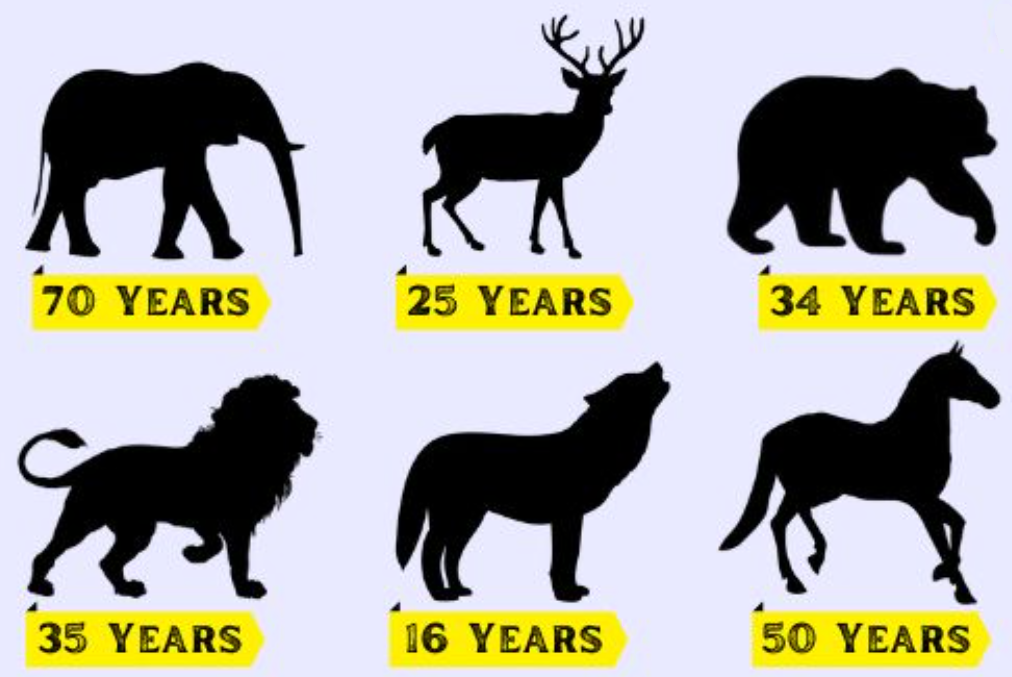
Animals display remarkable variation in lifespan depending on species, body size, metabolism, and ecological role. Some animals live only a few hours or days, while others survive for decades or even centuries. Generally, smaller animals such as rodents and small birds tend to have shorter lifespans, whereas larger animals like elephants and whales often live much longer.
For example, mice and rats usually live only a few years, while elephants and large whale species may live for 50 to over 100 years. Birds also show wide lifespan diversity, with small species like sparrows living only a few years, while larger birds such as parrots, eagles, and albatrosses may survive for several decades.
Lifespan Comparison by Animal Groups
The lifespan of animals varies greatly across major biological groups such as mammals, birds, reptiles, amphibians, insects, and marine invertebrates. Insects generally have the shortest lifespans, often measured in days or weeks. Mosquitoes and houseflies typically live for only a few weeks, while some mayflies survive for just a few hours as adults.
However, not all insects are short-lived. Queen ants and termites can live for many years under stable environmental conditions. Marine organisms also show extremes, with plankton and some jellyfish species living only days or weeks, while others exhibit unusual biological longevity.
Adaptations That Influence Longevity
An animal’s lifespan is shaped by a combination of genetics, environment, predation pressure, and reproductive strategy. Species that reproduce quickly and produce many offspring often evolve shorter lifespans, prioritising rapid population growth. In contrast, animals that reproduce slowly and invest heavily in parental care tend to live longer.
Some species have evolved exceptional adaptations that support longevity, such as efficient DNA repair, resistance to disease, slow metabolism, or the ability to regenerate damaged tissue. These biological traits allow certain animals to survive far beyond the average lifespan expected for their size.
Key Factors Affecting Animal Lifespan
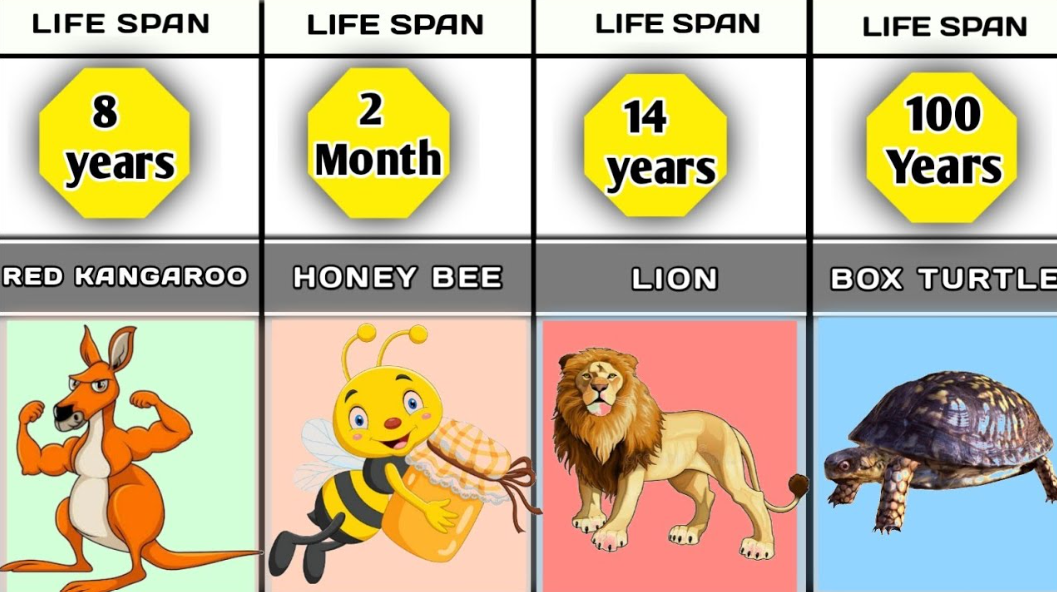
Animals vary greatly in size, physiology, and life expectancy. Environmental conditions, availability of food, predation risk, and human impact all play a role in determining how long an animal lives. Below is a comparison of animals with short, medium, and exceptionally long lifespans.
Animals With Short Lifespans
Mayfly: One of the shortest-lived animals, with adults surviving only a few hours to days.
Gastrotrich: A microscopic aquatic animal with a lifespan of only a few days.
Housefly: Typically lives between 15 and 30 days depending on conditions.
Mosquito: Adult mosquitoes usually live two weeks to one month.
Fruit Fly: Has an average lifespan of 40 to 50 days.
Animals With Moderate Lifespans
Rabbit: Domestic rabbits generally live between 8 and 12 years.
Guinea Pig: The average lifespan is around 5 to 7 years.
Cat: Domestic cats commonly live 13 to 17 years with proper care.
Small Dog Breeds: Breeds such as Chihuahuas and Yorkshire Terriers often live 12 to 16 years.
Medium Dog Breeds: Dogs like Beagles and Bulldogs typically live 10 to 12 years.
Animals With Long Lifespans
Elephant: Elephants usually live between 50 and 70 years in the wild.
Whales: Some whale species are known to live close to or over 100 years.
Giant Tortoise: These reptiles often live well beyond 100 years, with some exceeding 150 years.
Parrots: Large parrots such as macaws may live 50 to 80 years.
Galápagos Land Iguana: Known to live for more than 60 years.
Animals With Extreme Longevity
Bowhead Whale: Considered the longest-living mammal, with lifespans exceeding 200 years.
Greenland Shark: Estimated to live between 200 and 400 years, making it one of the longest-living vertebrates.
Red Sea Urchin: Some individuals have been recorded living over 200 years.
African Elephant: One of the longest-living land animals, reaching up to 70 years.
Tufted Titmouse: Despite its small size, this songbird can live nearly 13 years.
Why Animal Lifespan Matters Ecologically
Animal lifespans play a vital role in shaping ecosystems and population dynamics. Short-lived species contribute to rapid energy transfer and food web stability, while long-lived animals often act as keystone species that maintain ecological balance. Understanding lifespan diversity helps scientists study evolution, conservation, and the long-term health of ecosystems.