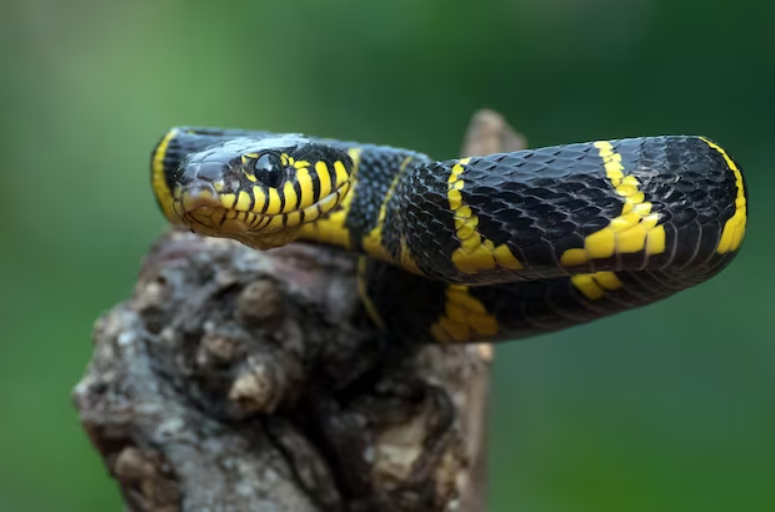
Quick Top 10 Facts about Boiga Snake
| SCIENTIFIC NAME | Boiga (Genus of snakes) |
| CLASSIFICATION |
KINGDOM: Animalia CLASS: Reptilia ORDER: Squamata FAMILY: Colubridae PHYLUM: Chordata GENUS: Boiga |
| SIZE | Generally ranges from 1 to 3 meters (3 to 10 feet) in length, depending on the species |
| HABITAT | Found in forests, jungles, and areas with dense vegetation, primarily in Southeast Asia and parts of South Asia |
| DIET | Carnivorous; primarily feeds on small vertebrates such as birds, lizards, and small mammals |
| SPECIES | Includes species like the Black-headed Cat Snake (Boiga nigriceps) and the Gold-ringed Cat Snake (Boiga dendrophila) |
| COUNTRY | Native to Southeast Asia, India, Sri Lanka, and parts of the Philippines |
| GESTATION PERIOD | Egg-laying species; typically incubates for about 60 to 80 days |
| LIFE SPAN | 10–15 years in the wild |
| CONSERVATION STATUS | Not currently threatened, but some species may face habitat loss |
Amazing Facts About Boiga Snakes
1. Known as “Cat Snakes”
Boiga species are often called “cat snakes” due to their slender bodies and the way they move, which resembles the way cats hunt.
2. Excellent climbers
Boiga snakes are arboreal (tree-dwelling), and they are highly skilled at climbing trees and shrubs.
3. Venomous but not deadly to humans
While Boiga snakes are venomous, their venom is typically not fatal to humans, though bites can cause mild to moderate symptoms.
4. Feed primarily at night
They are nocturnal hunters and are most active at night when they hunt small vertebrates.
5. Large and powerful jaws
Boiga snakes have large, flexible jaws that allow them to consume prey that is large relative to their size.
6. Diverse range of species
The genus Boiga contains several different species, many of which have distinctive color patterns, such as the Gold-ringed Cat Snake.
7. Camouflaged for hunting
Their natural coloration often helps them blend in with their environment, making it easier to ambush prey.
8. Aggressive when threatened
Although generally shy, Boiga snakes can be aggressive when threatened, striking quickly if they feel cornered.
9. Good vision
Boiga snakes have good vision, which helps them spot prey, especially at night.
10. Adapted to a variety of habitats
They can be found in a variety of habitats, from dense forests to cultivated areas, as long as there is ample cover and food sources.
Habitat and scientific classification of the Boiga snake
Boiga, also known as cat-eyed snakes, are an interesting family of snakes that may be found all over the globe. Their vertical pupils, which are a distinguishing feature, allow them to be identified as members of the Colubridae family. These snakes may be found in a wide range of habitats, including grasslands, woodlands, and even cities, due to their remarkable flexibility.
Information on conservation efforts to protect the species
Boiga snakes are amazing animals with unusual habits and adaptations. All around the globe, their many varieties may be found in a variety of environments. The richness and ecological balance of these snakes’ individual habitats depend on our ability to comprehend and protect them.
Unique characteristics and features of the Boiga snake
One fascinating thing about the Boiga is how they eat themselves. These snakes like to hunt at night and strike arboreal prey such as small animals and birds. They are known to be skilled climbers that can move among branches with ease due to their small stature. Boiga snakes have a unique method of ambush hunting where they hang from trees and strike unexpectedly quickly to catch their prey off guard.
Boiga Snake is venomous and its effects
Another amazing characteristic of Boiga snakes is their venom. The amount of venom in different boiga species varies; however, some contain moderate venom that is mostly employed to immobilise their victims. Although the venom of boiga snakes is believed to not be dangerous to humans, it may have unpleasant side effects, including pain and swelling. These snakes depend more on their quick reflexes and powerful constriction than on their poison to subdue their victims.
Feeding habits and hunting habits of Boiga snakes
Boiga family of snakes is a fascinating species that stands out for its unique hunting methods, adaptable personalities, and cat-like eyes. Because of their preference for arboreal food and their ability to scale trees, they are fascinating subjects for scientific research. Most people don’t believe that most species are hazardous to humans, despite the fact that some carry minor venom.
Fascinating facts about Boiga Snakes
The genus Boiga comprises snakes that are members of the Colubridae family. The reason these snakes are called “cat-eyed snakes” is because of their vertical pupils, which have a cat-like appearance. Boiga snakes may be found all over the globe, particularly in Australia, Asia, and Africa.
Diversity for Boiga snake eggs
With over 35 known species, the Boiga genus is varied. These snakes come in a range of sizes and colours, from tiny, delicate species to bigger, more robust ones. They may be found in a range of environments, including urban areas, meadows, and woodlands.
Composition and effects of their venom on prey and potential threats
The majority of Boiga species have moderate venom. Although its venom is thought to not be harmful to humans, it may nonetheless result in localised discomfort, agony, and swelling. The major purpose of these snakes’ venom is to immobilise and subjugate their prey, which is generally made up of frogs, lizards, small mammals, and birds.
Hunting techniques employed by Boiga snakes at Night
Boiga snakes are mostly nocturnal, which means that nighttime is when they are most active. Their vertical pupils, which enable them to collect more light, provide them with superb night vision. They can forage for food in dim light thanks to this adaptability.
A Lifestyle in the Trees
Numerous Boiga species are arboreal, meaning they spend a large portion of their lives in trees. Their prehensile tails and slim bodies let them climb and navigate between trees. These snakes can travel quickly from tree to tree because of their great agility.
Retaliatory Actions for Boiga Snakes
Boiga snakes have the ability to act defensively when they feel threatened. If provoked, they may attack, hiss, and flatten their bodies. Certain species may also expand their necks, giving the impression that they are bigger and more menacing to would-be predators.
Process of egg-laying and the incubation period for Boiga snake eggs
As oviparous snakes, boiga snakes reproduce by laying eggs. The female will locate a good place to lay her eggs after mating, such as a hollow tree or leaf litter. Different species lay different amounts of eggs; some lay a few, while others might lay twenty or more.
Ecosystem Importance for Boiga snake eggs
Boiga snakes are vital to the environments in which they live. They regulate the numbers of tiny animals, birds, and reptiles because they are predators. They also contribute to the general equilibrium of the food chain by providing food for bigger predators.
Threats and conservation efforts for Boiga snake eggs
Threats to Boiga snakes include habitat loss, fragmentation, and illicit collection for the pet trade, much as they do for many other snake species. Because of these circumstances, several species are classified as fragile or endangered. To preserve their ecosystems and guarantee their long-term existence, conservation activities are essential.
FAQ (frequently asked questions) about Boiga Snake
Q: What is a Boiga Snake?
Ans: The Boiga Snake is a genus of mildly venomous colubrid snakes, commonly known as cat-eyed snakes due to their distinctive vertical slit pupils. They are primarily arboreal and are found in parts of Asia and the Pacific islands.
Q: Where do Boiga Snakes live?
Ans: Boiga Snakes are typically found in tropical and subtropical regions of Asia, including Southeast Asia, the Philippines, and parts of India. They are arboreal and terrestrial, living in forests and grasslands where they can easily access their prey.
Q: What do Boiga Snakes eat?
Ans: Boiga Snakes are carnivorous, and their diet consists mainly of small vertebrates such as lizards, birds, and rodents. Some species are known to prey on eggs or amphibians as well.
Q: Are Boiga Snakes dangerous to humans?
Ans: While Boiga Snakes are mildly venomous, their bites are generally not lethal to humans. Their venom is used to subdue prey and can cause mild symptoms like swelling and pain if bitten, but fatalities are rare.
Q: How do Boiga Snakes hunt?
Ans: Boiga Snakes are skilled hunters that use their excellent vision to spot prey. They are known for their ability to climb and navigate through trees, using their long, slender bodies to strike quickly and capture their prey.
Q: How do Boiga Snakes reproduce?
Ans: Boiga Snakes are oviparous, meaning they lay eggs. After mating, the female lays a clutch of eggs, which she incubates until they hatch. The young snakes are independent from birth.
Q: What are the physical characteristics of Boiga Snakes?
Ans: Boiga Snakes are slender, medium to large snakes with long bodies. They have distinctive cat-like vertical pupils, which give them their common name. Their coloration varies depending on the species but is often a combination of browns, yellows, and blacks, providing excellent camouflage in their environment.
Q: Do Boiga Snakes make good pets?
Ans: Boiga Snakes are not commonly kept as pets due to their specialized care requirements and venomous nature. They are best suited for experienced snake keepers who are comfortable handling mildly venomous species.
Q: Are Boiga Snakes endangered?
Ans: While Boiga Snakes are not currently classified as endangered, some species may face threats from habitat destruction and human activities. It’s important to protect their natural habitats to ensure their continued survival.
Q: How long do Boiga Snakes live?
Ans: Boiga Snakes typically live for 10 to 15 years in captivity, depending on the species and the quality of care they receive. In the wild, their lifespan may vary due to predation and environmental factors.
#BoigaSnake, #Boiga, #ReptilePhotography, #SnakeLovers, #VenomousSnakes, #ExoticSnakes, #SnakeLoversOfInstagram, #Herpetology, #SnakeWatch, #WildlifePhotography, #ReptileLife, #WildSnakes, #NatureLovers, #ReptileWorld, #Herping
Our sources and references about Boiga Snake
1: Wikipedia – Boiga (Genus)
2: Reptiles Magazine – Boiga Species
3: IUCN Red List – Boiga
4: ARKive – Boiga Dioica (Cat-eyed Snake)


