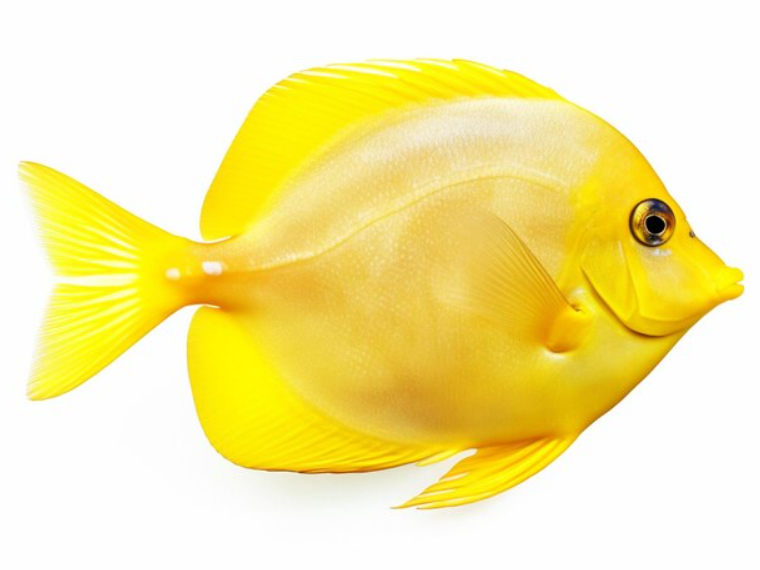
The Yellow Tang (Zebrasoma flavescens) is a popular and eye-catching fish species. This species is currently one of the most well-known and frequently kept fish in both home aquariums and public displays due to its vibrant yellow colouring and unique body shape. In this comprehensive guide, we will examine the Yellow Tang’s physical traits, natural habitat, diet, behaviour, reproduction, and conservation status, providing readers with a thorough understanding of this fascinating marine animal.
Quick Top 10 Facts about Yellow Tang Fish
| SCIENTIFIC NAME | Zebrasoma flavescens (Yellow Tang) |
| CLASSIFICATION | KINGDOM: Animalia CLASS: Actinopterygii ORDER: Perciformes FAMILY: Acanthuridae PHYLUM: Chordata GENUS: Zebrasoma |
| SIZE | Up to 8 inches (20 cm) in length |
| HABITAT | Native to the Indo-Pacific region, found in coral reefs |
| DIET | Herbivorous – Primarily feeds on algae and plant matter in coral reefs |
| SPECIES | Yellow Tang (*Zebrasoma flavescens*) |
| COUNTRY | Found in the Pacific Ocean, specifically around Hawaii, Fiji, and Tonga |
| GESTATION PERIOD | Eggs are externally fertilized and hatch in about 24-48 hours |
| LIFE SPAN | Up to 30 years in the wild |
| CONSERVATION STATUS | Listed as “Least Concern” (LC) by the IUCN, but overfishing for the aquarium trade is a concern |
Properties of the Yellow Tang’s Body
The Yellow Tang’s striking yellow hue is its most well-known feature, but its unusual body shape and structure all contribute to its distinctive look.
Body Shape and Colouration
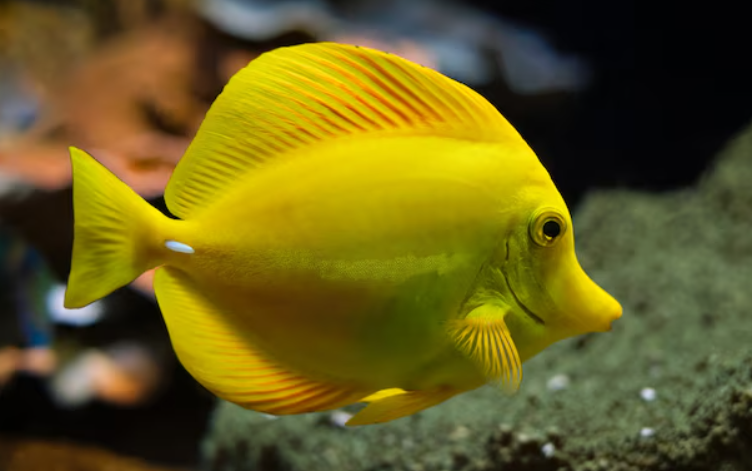
The body of the Yellow Tang has a sleek, vivid yellow colour. One of the main characteristics that make the fish so aesthetically pleasing is its colouration, which is particularly noticeable in aquariums or while swimming among the colourful coral reefs in its native environment. The fish has a streamlined design, making it perfect for rapid movement in the water due to its elongated, oval, and laterally compressed body.
Defensive Features
The Yellow Tang’s spine-like structure near its tail is one of its most distinctive characteristics. When threatened, the fish may elevate its sharp spine, serving as a defence mechanism against predators. Although it is not typically poisonous, the spine may cause pain or harm.
Dimensions
In the tang family, the Yellow Tang is considered a medium-sized fish. While they may grow to adult lengths of 8 to 10 inches (20 to 25 cm), they usually remain on the smaller end of this range, especially in large, open spaces like coral reefs.
Tail and Fins
The Yellow Tang has a well-developed caudal fin, or tail, which it uses for propulsion, much like many other species in the Acanthuridae family. While the anal fin helps with stabilisation, the dorsal fin is long and continuous, extending from the fish’s back and tapering to a tip. The Yellow Tang can move swiftly through the water thanks to these fins, helping it avoid predators or search for food.
Eyes
The Yellow Tang’s large, conspicuous eyes aid its keen eyesight when navigating the coral reefs. In the murky waters where the Yellow Tang is commonly found, its wide eyes provide superb vision, enabling it to identify potential mates or predators.
Distribution and Natural Habitat
The Yellow Tang is native to the tropical seas of the Indo-Pacific region, where it often inhabits coral habitats and shallow reefs. To understand how this species interacts with its environment, it is essential to explore its habitat and range.
Range of Geography
The Yellow Tang is mostly found in the central and western Pacific Ocean, stretching from Hawaii and the Marshall Islands to Japan and the Philippines. Additionally, sightings have been reported in Polynesia, French Polynesia, and parts of Micronesia. It typically inhabits reef habitats, where the complex coral structure provides both food and shelter. In these areas, the Yellow Tang can graze and breed in a secure environment. 
Favourite Environment
Yellow Tangs are often seen in shallow seas less than fifty feet (15 meters) deep. They are commonly found around coral reefs, where their diet and way of life are supported by the biodiversity. These fish prefer sheltered spots on the reef, such as crevices or areas with macroalgae for feeding. They may also reside in estuaries with calm water and near rocky outcroppings.
Conditions of the Environment
Yellow Tangs thrive in warm waters between 75 and 82°F (24 and 28°C). To access a variety of food sources and remain safe from predators, they also prefer clear water with moderate to strong currents.
Nutrition and Feeding Practices
As herbivorous fish, Yellow Tangs primarily consume plant material, particularly algae growing on reefs. Their diet plays an essential role in controlling the growth of algae, thus maintaining the balance of the habitat in which they live.
Nutrition
The primary food source for Yellow Tangs is macroalgae, including sponges, turf algae, and coralline algae. Their comb-like, sharp teeth are ideal for scraping algae off coral and rocks. These fish consistently need plant material, and the numerous types of algae that grow on reef structures typically make up their diet. While plants remain their major food source, they occasionally consume zooplankton and small crustaceans, particularly when algae are scarce.
Feeding Practices
- The Yellow Tang grazes and scrapes algae off rocks and coral using its sharp teeth.
- It moves continually from one area of the reef to another while grazing.
- This grazing practice helps control algal growth, protecting coral reefs from overpopulation.
- Their feeding behaviour is particularly beneficial for reef ecosystems, keeping algae levels in check and preventing certain species from dominating the ecosystem.
Social Structure and Behaviour
Generally, the Yellow Tang is a calm, energetic fish that thrives in social environments. They exhibit territorial behaviour, particularly during the mating season, although they are not as aggressive as some other species.
The Concept of Territory
Yellow Tangs often establish small territories around feeding grounds, which they protect aggressively from other fish. The sharp spine on their tail serves as a defence tool, especially during confrontations with competitors. However, they are not overly hostile and typically only engage in territorial disputes when food or space is limited.
School Conduct
Yellow Tangs usually live alone or in small groups, though they may form larger schools when food is abundant. These schools allow for more efficient feeding on algae and often provide protection from predators. While adult Yellow Tangs are typically found alone or in pairs, especially during the mating season, juvenile Tangs are more commonly seen in groups.
Relationships with Other Animals
Yellow Tangs often interact with other species, particularly cleaner fish, in their natural habitat. Cleaner fish help remove parasites from the Yellow Tang’s skin, creating a mutualistic relationship in which both species benefit.
Lifespan and Reproduction
The environment and seasonal changes that affect food supply and water temperature significantly influence the Yellow Tang’s reproductive behaviour.
Behaviour of Spawning
As broadcast spawners, Yellow Tangs release their sperm and eggs into the water column, where external fertilisation occurs. Spawning typically happens in early spring when the conditions are optimal for the survival of the larvae. During the spawning season, male Yellow Tangs often display increased aggression, using vocalisations and displays to defend their territories and attract females. Fertilisation occurs in open water, where females release their eggs.
Duration of Life
While Yellow Tangs typically live for 10 to 12 years in the wild, they can live up to 20 years. Their lifespan in captivity can vary but may increase with proper care.
Development
Before becoming juveniles and settling on coral reefs, Yellow Tangs spend their early years drifting in the open ocean as larvae. As they mature, they develop their distinctive yellow colour and long bodies. Their development is relatively rapid during the first few years, and they reach sexual maturity between the ages of two and three.
Status of Conservation
The International Union for Conservation of Nature (IUCN) currently lists the Yellow Tang as a species of Least Concern. However, human activities present serious threats, including habitat destruction and overfishing.
Overfishing
Yellow Tangs, especially in Hawaii, are frequently collected for the aquarium trade. Concerns have arisen about the fish’s population numbers due to the high demand, particularly in areas where overfishing is common. Moreover, the removal of excessive numbers of Yellow Tangs from the ecosystem can disrupt the delicate balance of coral reefs, which rely on this species for their health.
Destroying Habitats
The Yellow Tang’s primary habitat, coral reefs, is increasingly threatened by pollution, coastal development, and climate change. The health of the reefs, and consequently the species that depend on them, such as the Yellow Tang, is directly endangered by coral bleaching caused by rising ocean temperatures.
Conservation Initiatives
Efforts to conserve Yellow Tang populations include marine protected areas, sustainable fishing methods, and regulations governing the aquarium trade to prevent overharvesting. Initiatives to reduce pollution and combat the effects of climate change are also underway to protect coral reefs.
FAQ (frequently asked questions) about Yellow Tang
Q: What is a Yellow Tang?
Ans: The Yellow Tang is a vibrant, brightly colored fish species found in coral reefs, known for its distinctive yellow body and energetic personality.
Q: Where do Yellow Tangs live?
Ans: Yellow Tangs are native to the Indo-Pacific region, including areas like Hawaii and the Great Barrier Reef, where they inhabit coral reefs and rocky areas.
Q: What do Yellow Tangs eat?
Ans: Yellow Tangs are herbivores, primarily feeding on algae, seaweed, and plant matter found in their reef environment.
Q: How do Yellow Tangs defend themselves?
Ans: Yellow Tangs have sharp spines on their tails, which they can use to defend themselves against predators.
Q: How do Yellow Tangs reproduce?
Ans: Yellow Tangs reproduce by laying eggs, which are fertilized externally, with the larvae developing in the open water before settling on the reef.
Q: Are Yellow Tangs good for home aquariums?
Ans: Yes, Yellow Tangs are popular in home aquariums due to their bright colors and active nature, though they require ample space and a well-maintained tank.
Q: How long do Yellow Tangs live?
Ans: Yellow Tangs can live up to 10 years or more in captivity, provided they are cared for properly with a balanced diet and appropriate tank conditions.
Q: What are the characteristics of Yellow Tangs?
Ans: Yellow Tangs are known for their bright yellow coloration, a disc-shaped body, and a peaceful yet active temperament in reef environments.
Q: Do Yellow Tangs need a special environment?
Ans: Yes, Yellow Tangs require a well-established saltwater aquarium with plenty of live rock for grazing, along with stable water conditions.
Q: Are Yellow Tangs endangered?
Ans: While Yellow Tangs are not currently endangered, they are threatened by overfishing in some areas and habitat degradation, particularly in Hawaii.
#YellowTang, #TangFish, #MarineFish, #SaltwaterAquarium, #ReefFish, #FishLovers, #AquariumLife, #UnderwaterWorld, #TropicalFish, #FishTank, #OceanLife, #AquariumHobby, #FishPhotography, #CoralReef, #SeaLife
Our sources and references about Yellow Tang
1: Wikipedia
2: FishBase
3: Reef2Reef
4: Marine Care