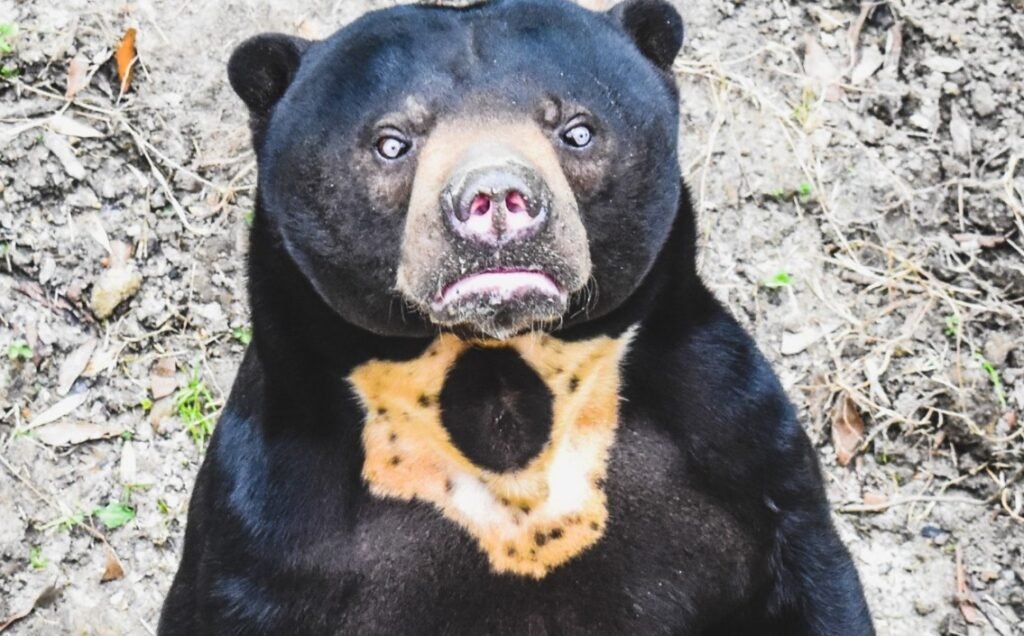
The Sun Bear, also known as *Helarctos malayanus*, is the smallest species of bear, native to Southeast Asia. It is known for its distinctive yellow or white crescent-shaped marking on its chest, which resembles a sun, giving the bear its name. Sun Bears are primarily nocturnal and are excellent climbers, often found in the trees of tropical forests. They have a specialised diet that includes insects, fruits, and honey, and they possess long claws for climbing and digging. Despite their small size, Sun Bears are powerful and can be aggressive if threatened. They are an endangered species, with their numbers declining due to habitat loss and poaching.
Quick Top 10 Facts about Sun Bear
| SCIENTIFIC NAME | Helarctos malayanus |
| CLASSIFICATION | KINGDOM: Animalia PHYLUM: Chordata CLASS: Mammalia ORDER: Carnivora FAMILY: Ursidae GENUS: Helarctos SPECIES: H. malayanus |
| SIZE | Height: 4.5–5.5 feet (1.37–1.68 meters) when standing Weight: 60–150 pounds (27–68 kg) |
| SPECIES | The Sun Bear is the smallest bear species, native to the tropical forests of Southeast Asia. It is known for its unique sun-like chest marking and its ability to climb trees and dig for food. |
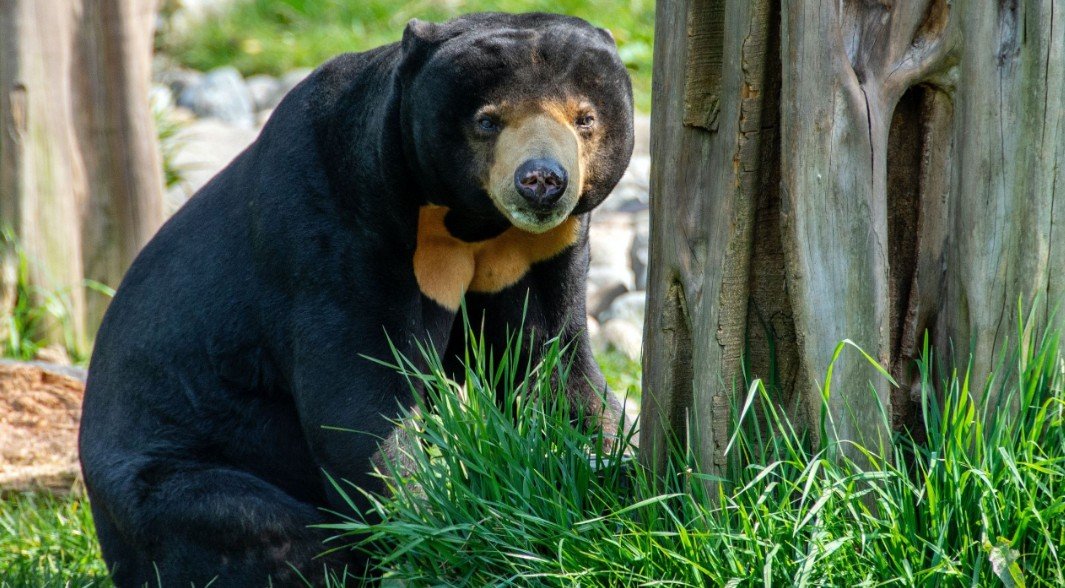
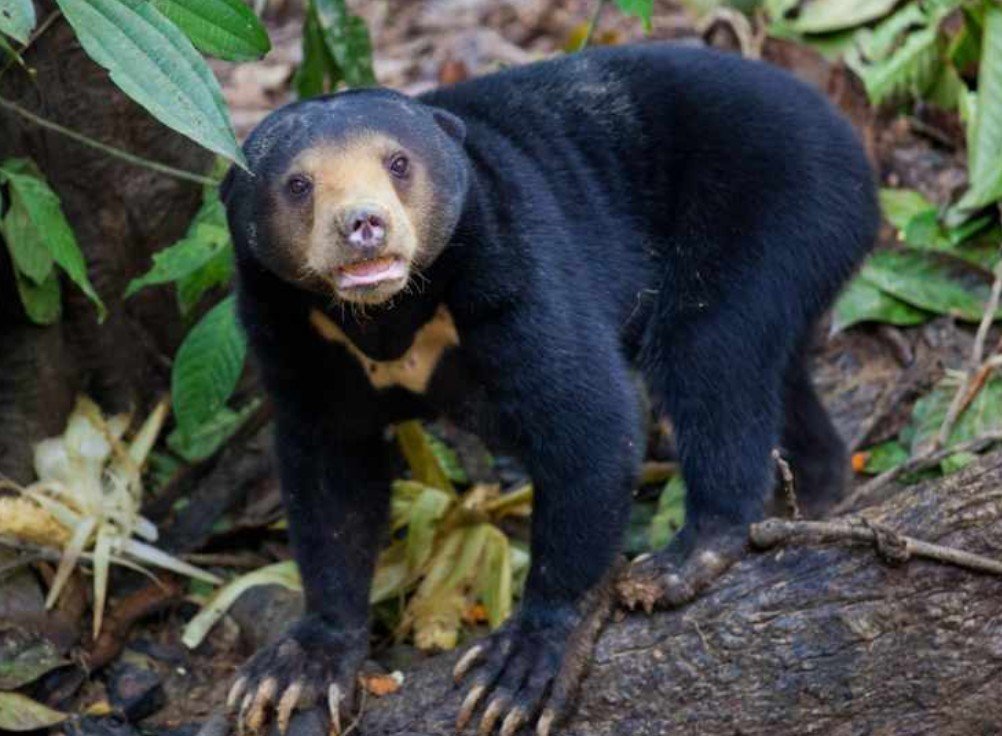
| APPEARANCE | Sun Bears have black fur with a distinctive yellow or white crescent-shaped marking on their chest. They have a small, compact body with long claws and a relatively short face. Their small size and sleek build make them excellent climbers. |
| LIFE SPAN | Typically 25–30 years in the wild |
| HABITAT | Sun Bears are native to the tropical forests of Southeast Asia, particularly in countries like Malaysia, Thailand, and Indonesia. They are arboreal and spend a significant amount of time in trees, where they build nests. |
| DIET | Sun Bears are omnivorous and have a diet that includes fruits, insects, small animals, and honey. They are known for using their long claws to extract honey from beehives and dig for insects and roots. |
| NATURAL PREDATORS | Sun Bears have few natural predators due to their small size, but they may face threats from larger carnivores and humans. Cubs may be at risk from other large carnivores. |
| COUNTRY | Malaysia, Thailand, Indonesia, and other Southeast Asian countries |
| GESTATION PERIOD | Gestation lasts approximately 95–120 days, and females typically give birth to one or two cubs. |
| CONSERVATION STATUS | Endangered (EN) – Sun Bears are threatened by habitat destruction, poaching, and illegal wildlife trade. Their populations are rapidly declining, and conservation efforts are critical for their survival. |
Amazing Facts About Sun Bear
1. Smallest Bear Species
The Sun Bear is the smallest of all the bear species, weighing only between 60–150 pounds (27–68 kg) and measuring 4.5–5.5 feet (1.37–1.68 meters) in length when standing on its hind legs.
2. Unique Chest Marking
One of the most distinctive features of the Sun Bear is its sun-like chest marking, which can range from yellow to white in colour and resembles a crescent or a sunburst.
3. Exceptional Tree Climbers
Sun Bears are excellent climbers, spending a significant amount of their time in the trees. They are one of the few bear species that are adapted to living in an arboreal environment.
4. Honey Lovers
Sun Bears are known for their love of honey. They use their long claws to pry open beehives and extract the honey, a behavior that is crucial to their diet.
5. Powerful Claws
Despite their small size, Sun Bears have powerful claws that they use for climbing trees, digging for food, and extracting honey from difficult-to-reach places.
6. Nocturnal Behavior
Sun Bears are primarily nocturnal, which means they are most active during the night. This behavior helps them avoid human interaction and predators.
7. Solitary Animals
Sun Bears are generally solitary animals. They prefer to live alone, except during mating season or when a mother is caring for her cubs.
8. Habitat Loss Threatens Survival
Sun Bears are facing a significant threat from habitat loss due to deforestation in Southeast Asia. This has led to a decline in their population, and they are now listed as endangered.
9. Strong, Thick Fur
Sun Bears have thick, black fur that helps protect them from the harsh environment of the tropical forest. The fur is particularly important for their survival during cooler nights.
10. Important Role in Ecosystem
Sun Bears play an important role in their ecosystem as seed dispersers and insect hunters. Their activities help to maintain the balance of the forest environment.
Sun Bear: The Tiniest Yet Fiercest Bear Species
Introduction to the Sun Bear
Both animal enthusiasts and environmentalists are drawn to the unusual Sun Bear (Helarctos malayanus), sometimes referred to as the Malayan sun bear. Being the world’s tiniest bear, it possesses a wide range of intriguing traits and behaviours that make it one of the most fascinating animals. This species, which is mostly found in Southeast Asia’s tropical rainforests, is noteworthy for its unique look, solitary lifestyle, and ecological significance.
Sun Bear’s Physical Characteristics
Distinctive Size and Body Structure
Because of its distinctive size and characteristics, the sun bear is a readily identifiable species. Despite being smaller than other bears, it has morphological characteristics that are both fascinating and necessary for its survival in thick woodland environments.
Dimensions and Construction
- Size: Compared to their bigger siblings, sun bears are tiny; mature males weigh between 55 and 145 pounds (25 and 65 kg), while females weigh somewhat less. They may reach a shoulder height of around 30 inches (75 cm) and are roughly 3 to 4 feet (90 to 120 cm) long. Although this may seem little for a bear, their diminutive stature helps them navigate the thick woodlands in which they live.
- Body Shape: Sun Bears can move through trees and dense underbrush because to their compact, stocky form. They can climb trees and search for food because to their powerful limbs and claws.
Fur and Colouration
The Sun Bear’s black fur, which covers the majority of its body, is one of its most distinguishing characteristics. But the moniker “sun bear” is derived from the characteristic crescent-shaped patch on the breast, which is either white or yellow and represents the rising sun. This patch is a distinctive distinguishing characteristic that varies in size and form from person to person. The bear’s short fur also helps it stay cool in the tropical climate, where temperatures often rise.
Facial Features and Ears
- Face: The sun bear’s dark eyes and short snout are its distinguishing features. In addition to their little stature, their face is sometimes characterised as having a slightly melancholy look, which may add to their charming appeal. The bear often uses its long tongue, which may reach up to 9 inches (23 cm), to reach honey, termites, and nectar in trees.
- Ears: In the deep forest, where it might be difficult to see its food, the sun bear’s tiny, rounded ears help them hear noises.
Distribution and Habitat of the Sun Bear
Geographic Range and Preferred Environments
Southeast Asian tropical rainforests are home to the majority of sun bears. Malaysia, Indonesia, Thailand, Myanmar, and Vietnam are among their range nations. Although they are often linked to deep, primary forests with plenty of food supplies, sun bears may be found in a variety of forest types within these regions, ranging from lowland to montane forests.
Habitat of Forests
The Sun Bear usually stays in woods with plenty of trees for climbing and likes places with thick foliage for shelter. The bear needs a range of foods, including as fruits, insects, small vertebrates, and honey, which are available in these areas. Sun bears are often categorised as arboreal (living in trees) and terrestrial animals based on their nutrition and behaviour. They forage for food by spending a lot of time on the forest floor or in the lower branches of trees.
The Rainforest Ecosystem
The ecology of the tropical rainforest depends heavily on sun bears. Through seed distribution and insect population management, they contribute to the forest’s equilibrium. Their feeding habits contribute in seed dissemination, which ensures the continuous development of forest flora, and their hunting for termites, ants, and other insects helps control insect populations.
Sun Bear Diet and Feeding Habits
Opportunistic Omnivorous Diet
Sun Bears are omnivores who eat a wide variety of foods and are opportunistic eaters. The primary foods they eat are:
- Fruits: Mangoes, jackfruits, figs, and rambutan are just a few of the fruits that sun bears are known to like. They can reach difficult-to-reach areas of trees or remove the skin off fruits using their lengthy claws.
- Honey & Insects: Honey, termites, and ants make up a significant portion of their diet. With their powerful claws and lengthy tongues, sun bears are experts at removing honey from beehives. One significant component of their function as the ecosystem’s natural pest controllers is their desire for insects.
- Small Animals: Birds, rats, and even the rare snake are examples of tiny animals that sun bears may sometimes consume.
- Eggs and Nectar: They have also been seen consuming flower nectar and, on occasion, bird eggs or even young birds.
Because of its wide variety of food sources, the sun bear is very adaptive in its forest habitat, enabling it to thrive even in times of food shortage.
Sun Bear Behaviour and Social Patterns
Solitary Lifestyle and Territoriality
Although it belongs to the bear family, the Sun Bear differs from its bigger counterparts in a few distinctive behavioural characteristics.
Sun Bears are solitary creatures, much like the majority of bear species. Except during mating season or when a mother is tending to her pups, they are usually seen by themselves. Due to their intense territoriality, sun bears will use scent marking to demarcate their area. They mark their territory by scratching trees with their powerful claws and fangs.
Crepuscular and Nocturnal Habits
It is known that sun bears are either crepuscular (active at dawn and dusk) or nocturnal (active at night). In order to escape the severe heat of the tropical sun, they forage during these cooler hours of the day. They are also able to avoid competition and predators because to this behaviour.
Tree Climbing and Nest Building
The ability of sun bears to climb trees is one of their most amazing behaviours. During the day, sun bears are often seen nesting in trees and are skilled climbers. Like other bear species, they construct nests from leaves, branches, and twigs so they may safely relax and sleep.
Sun Bear Reproduction and Life Cycle
Mating and Gestation Period
The Sun Bear has a very solitary reproductive style, and while regional variations may exist, mating typically takes place between May and July. The female Sun Bear gives birth to a single cub after a gestation period of around 95 to 100 days after mating.
Maternal Care and Cub Development
Sun Bear cubs are completely dependent on their mother for care from birth, since they are blind and defenceless. Over the course of their two-year stay with their mother, cubs acquire vital survival skills including climbing, foraging, and evading predators. The mother and youngster have a very close attachment, with the mother offering the cub protection and care throughout the early years of life.
Threats to Sun Bears and Conservation Status
Current IUCN Status and Risk Factors
According to the International Union for Conservation of Nature (IUCN), the sun bear is now listed as vulnerable. Numerous risks to this species have caused its population to decline:
- Loss of Habitat: Deforestation is the main danger facing sun bears. Their native habitat is being quickly reduced by extensive logging and agricultural growth, especially the establishment of palm oil plantations. In addition to lowering the food supply, habitat degradation also makes it more difficult for sun bears to wander freely within their natural area.
- Poaching and Illegal Trade: In many Southeast Asian nations, sun bears are killed for their flesh, fur, and body parts, which are then employed in traditional medicine. Furthermore, the illicit wildlife trade often targets their gall bladders and other body parts.
- Human-Wildlife Conflict: Sun Bears are increasingly encountering human settlements as forests are being destroyed for agriculture. Conflicts often result from this, particularly when the bears attack beehives or fields in an attempt to get food.
Conservation Efforts and Future Outlook
Protecting their habitats, upholding the law against unlawful hunting and trade, and spreading knowledge of the species’ significance in preserving the health of forest ecosystems are the major goals of conservation efforts for sun bears.
FAQ (Frequently Asked Questions) about Sun Bear
Q: What is a Sun Bear?
Ans: The Sun Bear is the smallest species of bear, native to Southeast Asia. It is known for its distinctive chest marking and its ability to climb trees and dig for food.
Q: How big do Sun Bears get?
Ans: Sun Bears weigh between 60–150 pounds (27–68 kg) and stand about 4.5–5.5 feet (1.37–1.68 meters) tall when on their hind legs.
Q: Are Sun Bears good climbers?
Ans: Yes, Sun Bears are excellent climbers and spend a lot of time in trees. They use their long claws to climb and create nests in the branches.
Q: What do Sun Bears eat?
Ans: Sun Bears are omnivores and have a diet that includes fruits, insects, small animals, and honey. They are particularly fond of honey and use their claws to extract it from beehives.
Q: How long do Sun Bears live?
Ans: In the wild, Sun Bears typically live for 25–30 years with proper care.
Q: Are Sun Bears endangered?
Ans: Yes, Sun Bears are listed as endangered due to habitat loss, poaching, and illegal wildlife trade.
Q: How many cubs do Sun Bears have?
Ans: Female Sun Bears typically give birth to one or two cubs after a gestation period of 95–120 days.
Our sources and references about Sun Bear
1: Wikipedia – Sun Bear
2: WWF – Sun Bear
3: WWF Indonesia – Sun Bear
4: Britannica – Sun Bear