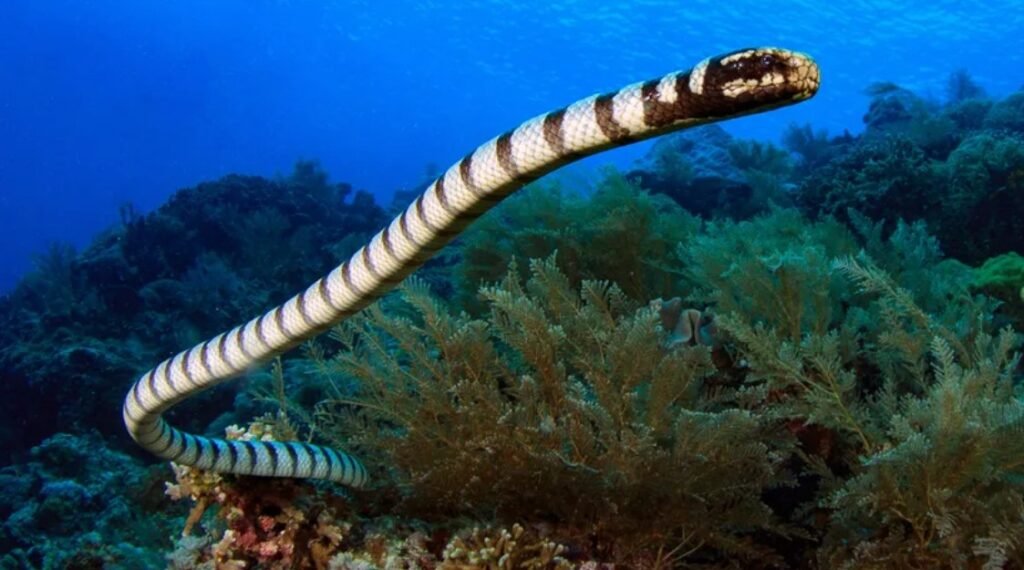
Sea snakes are a diverse group of snakes that primarily inhabit marine environments. They are found in tropical and subtropical waters across the Indo-Pacific region. Known for their ability to swim and thrive in the sea, sea snakes are highly specialized for a life in water. While many species are venomous, they are typically not aggressive toward humans unless threatened. Sea snakes play an important role in maintaining the balance of marine ecosystems, feeding on fish and other marine animals.
Quick Top 10 Facts about Sea Snake
| SCIENTIFIC NAME | Various species across different genera, such as Hydrophis and Pelamis |
| CLASSIFICATION | KINGDOM: Animalia PHYLUM: Chordata CLASS: Reptilia ORDER: Squamata FAMILY: Elapidae (for many species) |
| SIZE | Length: 50–150 cm (1.5–5 feet), depending on the species |
| SPECIES | Fish, crustaceans, and other small marine organisms |
| APPEARANCE | Typically long and slender, with a paddle-shaped tail for swimming. Many species have distinctive color patterns, often yellow or black. |
| LIFE SPAN | Typically 10–15 years, depending on the species |
| HABITAT | Coastal waters, coral reefs, and open ocean in tropical and subtropical regions |
| DIET | Fish, crustaceans, and other marine animals |
| NATURAL PREDATORS | Large fish, sea birds, and some marine mammals |
| COUNTRY | Indo-Pacific region, including countries like Australia, India, and Indonesia |
| GESTATION PERIOD | Varies by species; some give live birth, while others lay eggs |
| CONSERVATION STATUS | Many species are at risk due to habitat loss and marine pollution |
Amazing Facts About Sea Snake
1. Superb Swimmers
Sea snakes are extremely well-adapted for life in the water. Their long, slender bodies and paddle-like tails make them highly efficient swimmers, able to navigate through the ocean with ease.
2. Venomous and Dangerous?
While sea snakes are venomous, most species are not dangerous to humans unless provoked. Their venom is used to catch and immobilize prey, but they generally do not pose a threat to humans.
3. Live Birth in Water
Many sea snakes give live birth in the water, which is a unique adaptation to their marine lifestyle. Some species, however, still lay eggs on land.
4. Camouflaged for Survival
Sea snakes often have patterns or colors that help them blend into their watery surroundings, providing effective camouflage from both predators and prey.
5. Solitary and Territorial
Sea snakes are generally solitary, preferring to live alone. They may exhibit territorial behavior, especially in feeding areas or during the mating season.
6. Specialized Diet
Sea snakes are carnivorous, feeding mainly on fish, crustaceans, and other small marine animals. Their diet is highly specialized for their aquatic environment.
7. Adapted Lungs
Sea snakes have adapted to life underwater with large, efficient lungs that allow them to hold their breath for extended periods, enabling them to dive deep in search of food.
8. Slow Movers on Land
While sea snakes are agile in the water, they are slow and cumbersome on land. They typically only come to shore to breed or lay eggs.
9. Venomous Prey Capture
The venom of sea snakes is potent and helps them catch prey quickly by immobilizing it. However, it is not typically harmful to humans unless a bite occurs.
10. Ecological Importance
Sea snakes are important members of marine ecosystems, helping regulate fish populations and contributing to the overall balance of the food chain.
The Poisonous Marine Reptile, the Sea Snake
Sea snakes are an amazing group of highly specialised marine reptiles belonging to the Elapidae family, which also includes cobras, kraits, and coral snakes. In contrast to their terrestrial counterparts, sea snakes possess a unique set of morphological and behavioural characteristics that enable them to flourish in aquatic habitats. Despite their reputation for being poisonous, sea snakes are vital to the habitats in which they live. To shed light on these amazing marine animals, we shall examine the biology, behaviour, habitat, nutrition, and importance of sea snakes in this article.
1. Sea Snakes: What Are They?
Reptiles known as sea snakes are mostly found in maritime habitats, which may range from shallow coastal waters to deeper oceanic areas. Depending on the species, these snakes are often referred to as marine snakes or sea kraits. The vast majority of sea snakes are poisonous, and they are well-known for their very successful hunting techniques and unique aquatic adaptations.
Distribution of Sea Snakes
There are over 70 different kinds of sea snakes in the globe, and the majority of them live in the Pacific and Indian oceans, especially along the coasts of Australia, the Philippines, and Southeast Asia. Since their predecessors adapted to living in the water millions of years ago, sea snakes have evolved from land-dwelling snakes. Because of this, sea snakes have acquired a number of characteristics that enable them to live and procreate in the ocean, while still maintaining many of the characteristics of land snakes.
2. The Physical Attributes of Sea Snakes
A variety of morphological traits set sea snakes apart from their terrestrial counterparts. Their colouring, bodily composition, and adaptations are all suited to ocean life.
Body Composition of Sea Snakes
- Streamlined Bodies: Sea snakes can travel through water more effectively because of their long, thin, and streamlined bodies. Many species have laterally flattened tails that function as paddles to propel them through the water, demonstrating how their bodies are designed for swimming. Sea snakes are effective hunters because of their flattened tails, which enable them to move quickly and nimbly.
- Lungs and Breathing: Sea snakes need to surface to breathe air because they have lungs, unlike fish, which use gills. Many species, however, have the ability to hold their breath for extensive periods of time, ranging from 30 minutes to several hours, which enables them to remain underwater and hunt for longer periods of time.
- Size of Sea Snakes: The size of sea snakes varies widely; some species are just about 1 meter (3.3 feet) long, while others, like the olive sea snake, may reach up to 2 meters (6.6 feet). A sea snake’s size usually corresponds to its species and environment.
Venom and Poison
- Poisonous Bite: The majority of sea snakes are very poisonous, immobilising and killing their victims with their venom. They may paralyse or kill their victim with their venom, which is a complex cocktail of poisons and enzymes. Despite the strength of their venom, sea snakes usually avoid human contact and only attack when threatened.
- Delivery of Poison: Sea snakes may inject their victims with poison thanks to their teeth. Typically, the venom is administered quickly, immobilising the victim and facilitating the snake’s swallowing.
Colours and Camouflage
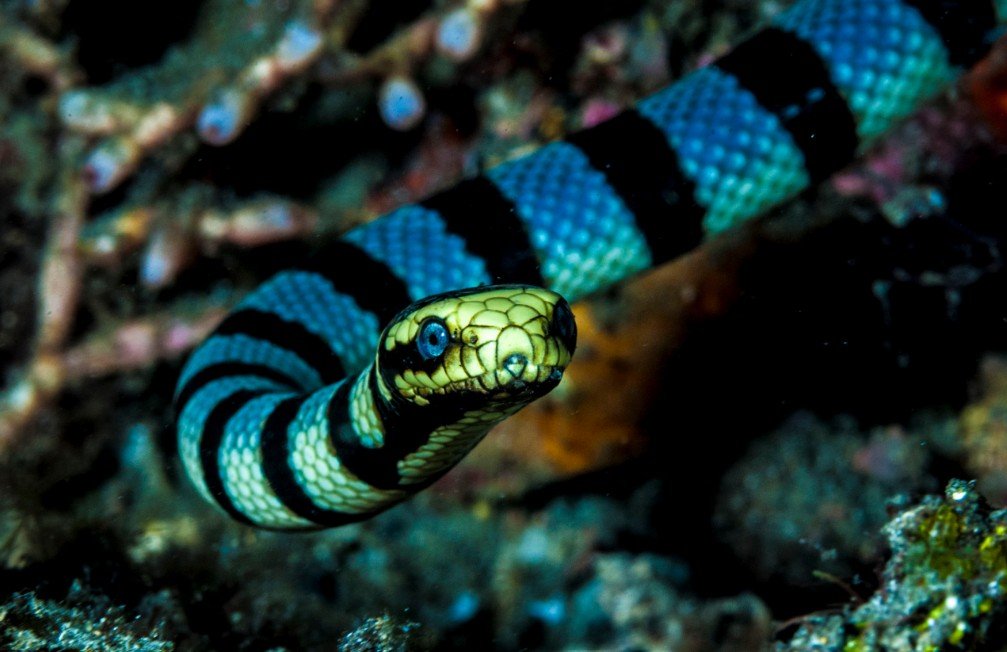
- Colours for Camouflage and Warning: A lot of sea snakes have colours that assist them blend in with their aquatic environment. They may blend in with the sand, coral, or underwater plants by using colours and patterns like grey, brown, or olive, as well as banded or striped designs. They can forage for food or seek cover without being seen by predators because of their camouflage.
- Vibrant Warning Colours: The bodies of some species, such as the banded sea krait, are ringed in dazzling black and white. Potential predators may be alerted by this colouration that the snake is poisonous and should be avoided.
3. Sea Snake Habitat and Distribution
The Indian and Pacific oceans are home to sea snakes, which are mostly found in warm, shallow waters. Sea snakes thrive in these areas because they have access to a variety of food sources and the seas are often calm.
Preferences for Habitat
- Coral Reefs: One of the ocean’s most varied and fruitful ecosystems, coral reefs provide sea snakes access to a wide range of food, such as eels, tiny fish, and crustaceans.
- Shallow Coastal Seas: Fish and other tiny marine creatures may be hunted by a variety of sea snake species in shallow coastal seas. Additionally, some sea snakes go into brackish water habitats like mangrove forests and estuaries.
- Deep Sea Habitats: Although most sea snakes live in shallow seas, certain species have evolved to live in deeper, open ocean environments. Because it is difficult to see these species’ behaviour and movements in the deep water, they are usually little investigated.
Distribution of Sea Snakes
The regions with the highest concentrations of sea snakes include Southeast Asia, Australia, the Philippines, and India. They may be found in seas as far south as the northern region of New Zealand and as far north as Japan. Certain species, such as the yellow-bellied sea snake, are found in the open ocean and have an even wider range.
4. Nutrition and Feeding Practices
Being predominantly carnivorous, fish, crabs, and tiny marine creatures make up the majority of sea snakes’ food. They can hunt and eat effectively in their underwater habitat because of their specialised adaptations.
Mechanisms of Feeding
- Venomous Predation: Prey are subdued and killed by sea snakes using their venom. They bite their victim and inject it with venom, paralysing it so the snake may eat it. The paralysis caused by the poison in some species allows the snake to devour its victim whole.
- Hunting Techniques: Sea snakes are adept hunters that use both active and ambush foraging techniques to catch their prey. While some species, like the banded sea krait, prefer to remain in one spot and wait for food to approach, others, like the yellow-bellied sea snake, swim in pursuit of fish.
Dietary Preferences
Although certain species may also eat crustaceans or other tiny marine animals, sea snakes mostly eat fish and eels. The olive sea snake, for example, feeds on tiny fish, especially those that reside on reefs and coral outcrops.
5. Conduct and Procreation
Motion
The ability to swim in the water is a natural adaptation for sea snakes. They can travel quickly through the water because of their flattened tails, which make them agile swimmers. Although many species are mainly designed for an aquatic existence, they can also crawl on land.
Sea snakes need to surface often to breathe, while certain species may stay underwater for longer periods of time because of their long-term breath-holding capacity.
Reproduction
Because sea snakes are ovoviviparous, they do not lay eggs; instead, they give birth to live offspring. Since of this adaptability, there is less chance of predation since the newborn sea snakes may be born right into the aquatic environment.
- Mating: Male sea snakes look for females to mate with throughout the breeding season. Males may pursue females over great distances throughout the mating process, exhibiting complex wooing behaviours prior to fertilisation.
6. Preservation and Environmental Significance
An essential part of aquatic environments are sea snakes. Being the apex predators in their habitat, they support fish population control and the equilibrium of marine food webs. The condition of the marine habitats they live in is evident from their existence.
Status of Conservation
Human actions including pollution, overfishing, and habitat degradation are endangering several species of sea snakes. Sea snake populations are also seriously threatened by plastic debris and oil spills in the water. Certain species, like the yellow-bellied sea snake, are classified as vulnerable because of their dwindling populations and particular habitat needs.
The Role of Ecology
Sea snakes are crucial to maintaining the stability of their ecosystems because they regulate the numbers of tiny fish, crabs, and other marine species.
Sea snakes contribute to preserving the variety of species in their ecosystems and preventing herbivores from overgrazing coral reefs by preserving the equilibrium of marine life.
FAQ (Frequently Asked Questions) about Sea Snake
Q: What is a Sea Snake?
Ans: A Sea Snake is a type of snake that has adapted to living in marine environments. These snakes are mostly found in tropical waters and are excellent swimmers.
Q: What do Sea Snakes eat?
Ans: Sea Snakes are carnivorous and primarily feed on fish, crustaceans, and other small marine animals.
Q: Where are Sea Snakes found?
Ans: Sea Snakes are found in the tropical and subtropical waters of the Indo-Pacific region, including areas like Australia, India, and Southeast Asia.
Q: How long do Sea Snakes live?
Ans: In the wild, Sea Snakes can live for up to 15 years, though this may vary depending on species and environmental conditions.
Q: Are Sea Snakes harmful to humans?
Ans: While most Sea Snakes are venomous, they are not generally aggressive and will not harm humans unless threatened.
Q: Do Sea Snakes lay eggs?
Ans: Some species of Sea Snakes lay eggs, while others give birth to live young in the water.
Q: How do Sea Snakes communicate?
Ans: Sea Snakes communicate through body movements and scent marking, especially during mating season.
Q: Are Sea Snakes endangered?
Ans: Some species of Sea Snakes are considered endangered due to habitat loss, pollution, and human activities.
Q: What role do Sea Snakes play in ecosystems?
Ans: Sea Snakes are important predators in marine ecosystems, helping to control fish populations and contribute to the health of coral reefs.
Q: Are Sea Snakes good swimmers?
Ans: Yes, Sea Snakes are highly skilled swimmers and have evolved to thrive in marine environments, using their long bodies and paddle-like tails to move gracefully through the water.
#SeaSnake #MarineSnakes #VenomousSnakes #AquaticLife #SnakeFacts #OceanWildlife #Reptiles #SeaSnakes
Our sources and references about Sea Snake
1: Wikipedia – Sea Snake
2: National Geographic – Sea Snake
3: Britannica – Sea Snake
4: Audubon – Sea Snake