Snails are gastropod mollusks with coiled shells. They are found in a wide range of environments, from oceans and freshwater bodies to gardens and forests. Snails are primarily herbivores, feeding on plants, algae, and decaying matter. They are known for their slow movement and slime trails.
Quick Top 10 Facts about Snail
| SCIENTIFIC NAME | Gastropoda |
| CLASSIFICATION | KINGDOM: Animalia PHYLUM: Mollusca CLASS: Gastropoda |
| SIZE | Varies by species; typically 0.1 to 12 inches (0.25 to 30 cm) in length |
| HABITAT | Wide range of habitats including forests, gardens, deserts, and freshwater or marine environments |
| DIET | Mostly herbivorous; feeds on leaves, algae, fruits, and decaying vegetation, though some are omnivores or carnivores |
| SPECIES | Thousands of species including land snails, sea snails, and freshwater snails |
| COUNTRY | Found worldwide, on every continent except Antarctica |
| GESTATION PERIOD | Most lay eggs; incubation and hatching times vary depending on the species and environment |
| LIFE SPAN | 2–10 years on average, some species can live up to 25 years |
| CONSERVATION STATUS | Varies by species; some are common while others are endangered due to habitat destruction and pollution |
Amazing Facts About Snails
1. Snails are part of the mollusk family
They belong to the class Gastropoda, which includes both aquatic and terrestrial species.
2. They have a muscular foot for movement
Snails move by gliding along on their muscular foot, which secretes mucus to reduce friction.
3. Their shell is their home
The coiled shell offers protection from predators and harsh environmental conditions.
4. Snails can sleep for years
Some land snails can enter a state of dormancy or hibernation for several years during extreme conditions.
5. They have thousands of teeth
Snails possess a tongue-like organ called a radula, covered with tiny tooth-like structures to scrape food.
6. They are intersex organisms
Most snails have both male and female reproductive organs, although they still require a mate to reproduce.
7. They play important ecological roles
Snails contribute to decomposition, soil health, and serve as food for many animals.
8. Some are invasive species
Certain snail species, like the giant African land snail, can become invasive and damage ecosystems and crops.
9. They can regenerate body parts
Some snails have the ability to regenerate lost eyes or parts of their soft tissue.
10. Snails are surprisingly strong
Despite their slow pace, snails can lift objects several times their own weight with their muscular foot.
Facts About Snail: An Intriguing Crustacean
Soft-bodied and slow-moving, snails are members of the phylum Mollusca’s class Gastropoda. From gardens and woodlands to freshwater ecosystems and seas, these amazing creatures may be found in a variety of settings. Although not all species have shells, snails are distinguished by their characteristic spiral-shaped shells. They are an important component of the natural world because of their distinct way of moving, their nutrition, and their function in the ecosystem.
The physical traits, species, habitat and distribution, food, reproduction, behaviour, and significance of snails to ecosystems is given below:
1. Overview of Snails
With hundreds of species that differ in size, form, and habitat, the gastropod class—the largest group of molluscs—includes snails. Although some species, like slugs, have no shells at all, they are renowned for having spiralled shells. These animals are often recognised by their sensory tentacles and muscular foot, which they employ for locomotion.
Science-Based Classification
- Animalia is the kingdom.
- Phylum: Mollusca
- Gastropoda class
- Order: Diverse (for example, aquatic snails belong to Caenogastropoda, whereas terrestrial snails belong to Pulmonata).
- Family: Diverse (e.g., Planorbidae for freshwater snails, Helicidae for land snails)
2. The Physical Attributes of Snails
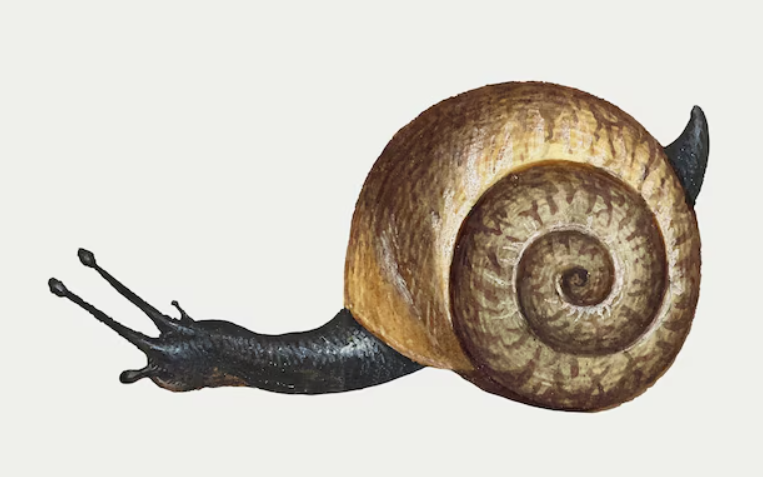
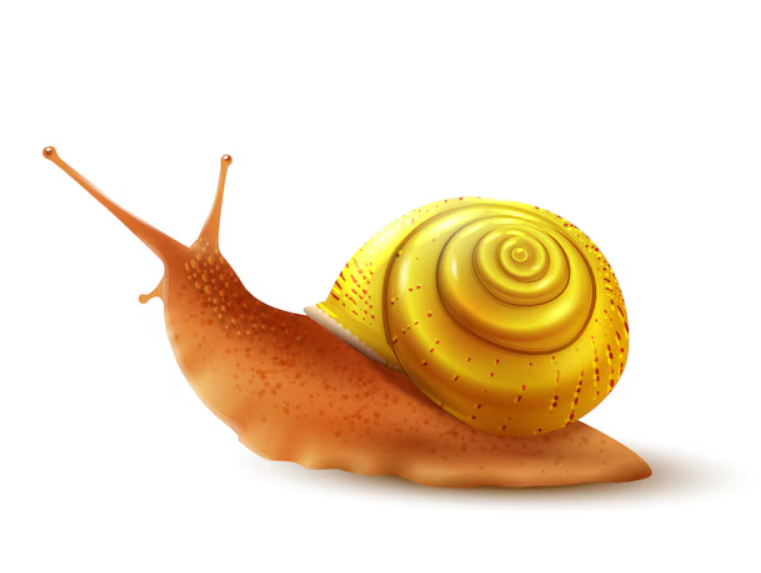
The muscular foot that snails use to crawl slowly over surfaces and their delicate, unsegmented bodies are what define them. The most distinctive characteristic of many snails is their spiral shell, which protects their fragile bodies.
The Structure of the Body
- Shell: The calcium carbonate shell of the majority of snails is coiled. Depending on the species, the shell’s dimensions, form, and colour may change. For instance, the shells of water snails may be more rounded, but those of land snails are often more conical.
- Foot: Snails can glide slowly because of the muscular anatomy of their foot. It secretes a slippery mucus that helps the snail glide across uneven surfaces by lowering friction.
- Tentacles: The head of a snail has two sets of tentacles. Usually, the shorter pair is utilised for touch and scent, while the longer pair houses the eyes, which are sensitive to light.
- Mantle: The portion of the snail’s body that secretes the shell is called the mantle. In addition to covering the snail’s organs, it may aid in breathing for many species, particularly aquatic snails.
Motion
In order to move ahead, snails use a technique known as creeping or gliding, in which their muscular feet contract and release in waves. In order to lessen friction and shield their sensitive undersides, snails also create a slime.
3. Snail Types
According to their environment, snails may be generally divided into three groups: freshwater, marine, and terrestrial.
Snails on Land
Common terrestrial habitats for these snails include gardens and woodlands. In order to keep their delicate bodies from drying out, they often depend on damp surroundings. The big African land snail (Achatina achatina) and the common garden snail (Cornu aspersum) are examples of terrestrial snails.
Snails in Freshwater
Lakes, ponds, rivers, and streams are home to freshwater snails. In comparison to terrestrial snails, they often have a harder, more compact shell. The bladder snail (Physella species) and the ramshorn snail (Planorbidae) are two well-known freshwater species.
Snails in the Sea
From coastal waters to the deep sea, marine snails may be found in saltwater environments. The size, form, and behaviour of marine snails vary widely, making them varied. The cowrie (Cypraea species) and conch (Strombus) are well-known marine snails.
4. Distribution and Habitat
Around the globe, snails may be found in a wide range of habitats, including both aquatic and terrestrial settings. With the exception of Antarctica, they are found on every continent.
Habitat on Land
The majority of land snails inhabit hilly regions, gardens, meadows, and woods with enough moisture to keep them from drying up. These snails feed on organic debris and may be found in the soil, under rocks, or in leaf litter.
Watery Environment
Rivers, streams, ponds, and lakes are home to freshwater snails, which often cling to submerged vegetation, rocks, and other surfaces. Oceans, from the deep sea to the shallow coastal seas, are home to marine snails.
Adaptations to the Climate
From tropical locations to temperate and polar zones, snails may be found in a variety of temperatures. In order to endure times of intense heat and dryness, several species—particularly those found in desert climates—have evolved dormant or aestivation processes.
5. Nutrition and Feeding Practices
Although some may consume other snails or decomposing organic matter, most snails are herbivores. Plants, including leaves, flowers, algae, and even tree bark, make up the majority of their food.
Mechanism of Feeding
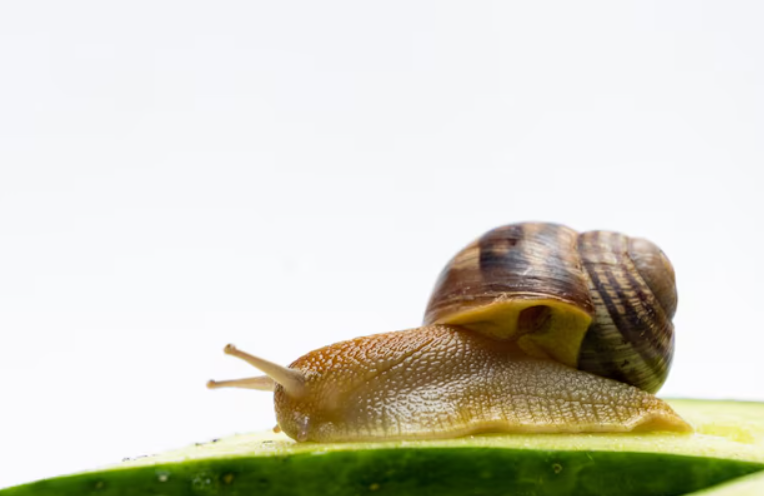
The radula, a serrated, rasp-like device, is a specialised feeding organ used by snails to scrape food off surfaces. Snails may cut or scrape their food before consuming it thanks to the radula, which works similarly to teeth. While terrestrial snails usually eat soft plant matter like fruits and vegetables, aquatic snails often consume algae and debris that builds up on submerged surfaces.
Variations in Diet
Certain snails, such as carnivorous snails, use a modified radula and digestive system that are appropriate for consuming tiny creatures, such as other snails or invertebrates.
6. Lifespan and Reproduction
Although the majority of snails are intersex, they have both male and female reproductive organs, and they display a range of reproductive techniques.
Mating
Copulation is the process by which two snails share sperm during mating. Even though they are intersex, snails typically need a partner to breed, and both will subsequently lay eggs. Before mating, certain species—like the garden snail—engage in wooing behaviour, which may include pheromone sharing or tentacle dance.
Laying of Eggs
Snails often hide their clusters of eggs in leaf litter or damp soil after mating. Juvenile snails, which are tiny replicas of adult snails but lack completely formed shells at birth, are created when the eggs hatch. Depending on the species, the quantity of eggs might vary greatly. Depending on the surroundings, some snails may lay hundreds of eggs at once, which might hatch in a few weeks.
Duration of Life
Depending on the species, snails have different lifespans. Snails typically survive one to three years, but under the right circumstances, some may live longer. The lifespan of larger species, such as the enormous African land snail, may reach ten years.
7. Snails’ Significance in Ecosystems
In order to keep ecosystems in balance, snails are essential. Among their many contributions are their roles in decomposition, soil aeration, and food chain participation.
Decomposers
In ecosystems, snails play a crucial role in decomposing organic materials, including dead plants and animals. By doing this, nutrients are recycled back into the soil and made accessible to plants and other living things.
Source of Food
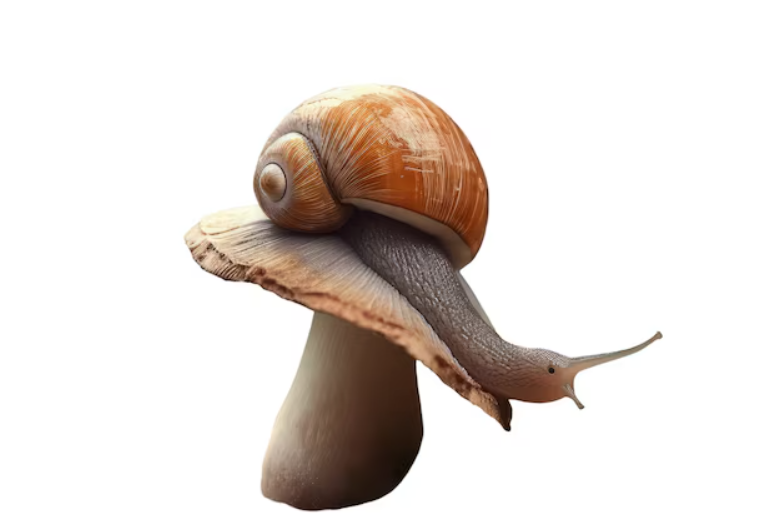
Many predators, such as birds, amphibians, reptiles, and mammals, eat snails. Although snails are protected by their shells, several creatures have evolved the capacity to crack through or crush snail shells in order to reach the sensitive tissue inside.
Aeration of the Soil
Snails enhance soil structure and encourage healthy plant development by aerating the soil as they pass through it. Their motions provide better air and water delivery to plant roots and help avoid soil compaction.
8. Threats and Conservation
Despite the abundance and global distribution of many snail species, invasive species, pollution, and habitat degradation pose risks to certain species. For instance, urbanisation and water pollution pose a threat to the habitat of some freshwater snails.
Conservation Activities
Conservation initiatives in certain areas concentrate on preserving snail habitats and reviving endangered species’ populations. For instance, preserving aquatic habitats’ biodiversity depends on the protection of freshwater snails that are under risk of extinction.
FAQ (Frequently Asked Questions) about Snail
Q: What is a Snail?
Ans: A snail is a type of mollusk that belongs to the class Gastropoda. Snails are characterized by their soft bodies, coiled shells, and slow movement. They can be found in a variety of environments, including gardens, forests, freshwater, and oceans. Snails play important roles in ecosystems as decomposers and a food source for other animals.
Q: Where do Snails live?
Ans: Snails are incredibly adaptable and are found all over the world. They live in a wide range of habitats, including terrestrial (land), freshwater, and marine environments. Land snails are often found in gardens and forests, while aquatic snails live in ponds, lakes, rivers, and oceans.
Q: What do Snails eat?
Ans: Most snails are herbivores and feed on plants, algae, fruits, and decaying vegetation. Some species are omnivores or even carnivores, feeding on small invertebrates. They use a specialized tongue called a radula, which is covered in tiny tooth-like structures, to scrape or cut their food.
Q: How big can a Snail get?
Ans: Snail sizes vary greatly depending on the species. Small land snails may only grow a few millimeters in size, while larger species, like the Giant African Land Snail, can reach lengths of up to 8 inches (20 cm). Marine snails can also be quite large, depending on the species.
Q: Are Snails dangerous?
Ans: Most snails are harmless to humans. However, some freshwater and marine snails can carry parasites that cause diseases in humans, such as schistosomiasis. Cone snails, a group of marine snails, have venomous stings that can be dangerous, but such cases are rare.
Q: How do Snails defend themselves?
Ans: Snails primarily use their shells for protection against predators. When threatened, they can retract into their shells to hide. Some snails also produce mucus that can deter predators or help them escape. Certain marine snails have evolved toxins as a defense mechanism.
Q: What does a Snail look like?
Ans: Snails have soft, moist bodies and a coiled shell on their back, which can be spiraled in various shapes and sizes depending on the species. They have a muscular foot used for movement and tentacles on their head, with eyes typically located at the tips of the longer pair.
Q: How long do Snails live?
Ans: The lifespan of a snail varies by species. Some snails live only 1–3 years, while others, like the Giant African Land Snail or certain marine species, can live up to 10 years or more in favorable conditions.
Q: Can you keep a Snail as a pet?
Ans: Yes, many people keep snails as pets, especially species like garden snails or aquatic snails. They are low-maintenance and can be kept in terrariums or aquariums. Pet snails need a proper diet, clean habitat, and suitable humidity and temperature conditions.
Q: Are Snails endangered?
Ans: While many snail species are common, some are endangered due to habitat loss, pollution, and climate change. Conservation efforts are in place for certain rare or threatened snail species, especially those found in isolated ecosystems or small geographic ranges.
#Snail, #Mollusk, #Gastropod, #Nature, #GardenSnail, #PetSnail, #MarineLife, #Wildlife, #Invertebrates, #SnailFacts, #Ecosystem, #SlowAndSteady
Our sources and references about Snail
1: Wikipedia – Snail
2: National Geographic – Snails
3: Encyclopedia Britannica – Snail
4: San Diego Zoo – Snails