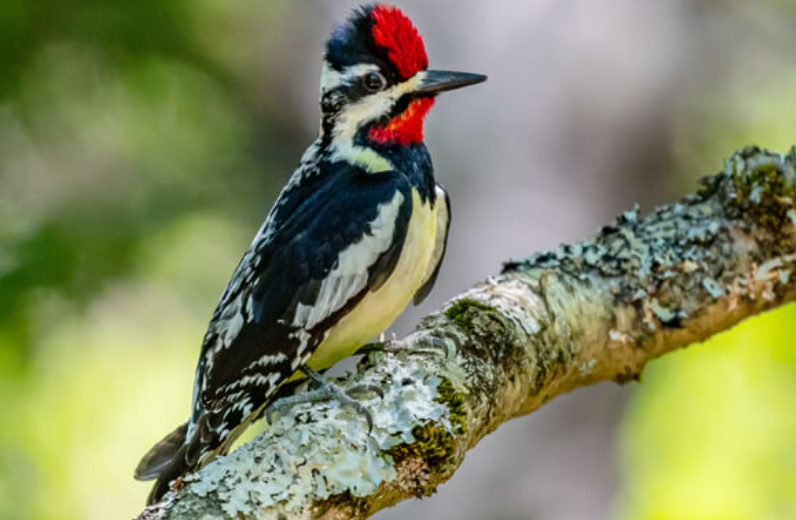
The Yellow-bellied Sapsucker is a species of woodpecker found in North America. It is named for its characteristic yellow belly and its feeding behavior, where it drills rows of holes into trees to extract sap. This species plays an important role in the forest ecosystem by helping to control insect populations.
Quick Top 10 Facts about Yellow-bellied Sapsucker
| SCIENTIFIC NAME | Sphyrapicus varius |
| CLASSIFICATION | KINGDOM: Animalia PHYLUM: Chordata CLASS: Aves ORDER: Piciformes FAMILY: Picidae GENUS: Sphyrapicus SPECIES: S. varius |
| SIZE | Length: 7–8.5 inches (18–22 cm); Wingspan: 13–16 inches (33–41 cm) |
| HABITAT | Deciduous and mixed forests in North America, especially during breeding season; migrates to the southeastern U.S., Central America, and the Caribbean in winter |
| DIET | Mainly sap from trees, insects attracted to sap, and some fruits and berries |
| SPECIES | The Yellow-bellied Sapsucker is a migratory woodpecker known for drilling neat rows of sap wells in trees |
| COUNTRY | Primarily found in Canada and the eastern United States |
| NESTING | Nests in tree cavities excavated in live or dead trees; both sexes help raise the young |
| LIFE SPAN | About 6–7 years in the wild |
| CONSERVATION STATUS | Least Concern; populations are stable and widely distributed |
Amazing Facts About Yellow-bellied Sapsuckers
1. Sap is their specialty
They drill rows of holes in trees to access sap and also eat the insects attracted to it.
2. They’re migratory
Yellow-bellied Sapsuckers breed in the north and migrate south for the winter, unlike many other woodpecker species.
3. Important for ecosystems
Their sap wells provide food for other animals like hummingbirds, bats, and squirrels.
4. Recognizable appearance
They have a bold black-and-white face pattern, red forehead, and a pale yellow belly.
5. Unique drumming sounds
They use drumming as a form of communication, especially during the breeding season.
6. Excellent excavators
They carve out nest cavities in trees, which are later used by other birds like bluebirds and owls.
7. Named for a behavior
Their common name “sapsucker” comes from their unique feeding behavior of drilling into tree bark.
8. Tree preference
They favor trees like birch, maple, and hickory for sap wells but will use over 1,000 tree species.
9. Both parents raise the young
Males and females take turns incubating eggs and feeding the chicks.
10. Not harmful to healthy trees
While sap-feeding can damage trees, healthy trees usually recover without serious long-term effects.
Introduction to the Yellow-Bellied Sapsucker
Native to North America, the Yellow-Bellied Sapsucker (Sphyrapicus varius) is an intriguing and unique bird. It is distinguished as a woodpecker by its distinctive behaviour and habitat preferences in addition to its colourful plumage. Different from other woodpecker species, these birds are especially well-known for their eating habits, which include boring sap wells into trees. Offering a thorough overview of this fascinating bird species, Yellow-Bellied Sapsucker’s physical traits, habitat, eating patterns, breeding behaviour, and conservation status.
Physical Characteristics of the Yellow-Bellied Sapsucker
With a wingspan of around 16 to 18 inches (41 to 46 cm) and an average length of 8 to 9 inches (20 to 23 cm), the Yellow-Bellied Sapsucker is a medium-sized woodpecker. The remarkable blend of black, white, and golden tones in their plumage is what makes these birds so recognisable.
Key Features of the Yellow-Bellied Sapsucker
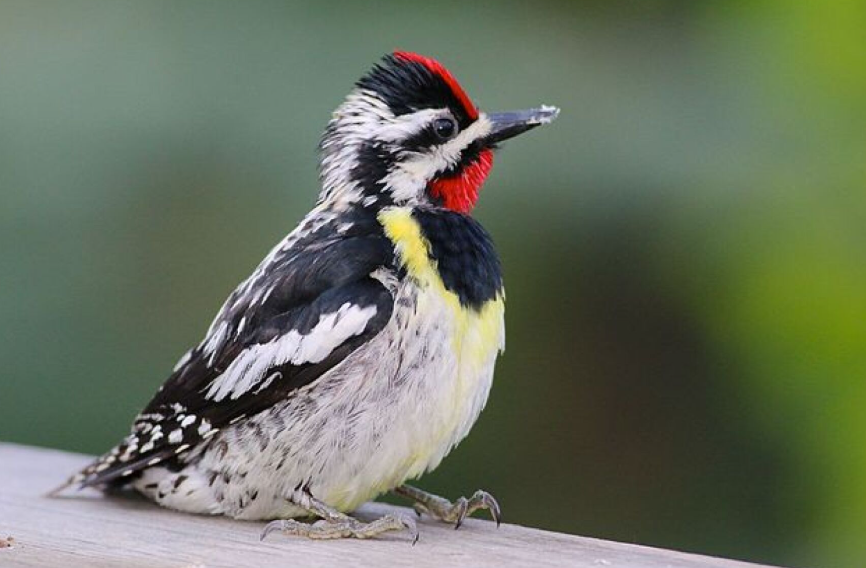
In contrast to the white or light yellow belly, the male Yellow-Bellied Sapsucker has a brilliant red crown and a red neck. The male is more colourful than the female, who is similar in appearance but does not have the red neck patch. To further set them apart from other species, they also have a white stripe down the side of their face.
Body and Plumage
To blend in with tree bark, the Yellow-Bellied Sapsucker’s dark, black-and-white striped back helps it blend in. The distinctive attribute that lends the bird its name is its yellowish belly, and the wings have a similar pattern.
Beak and Feet
The Yellow-Bellied Sapsucker, like other woodpeckers, drills into trees with its long, straight beak. Typical of woodpeckers, their feet are zygodactyl, meaning they have two toes facing forward and two backward, which aids in their ability to hold firmly to tree trunks.
Distribution and Habitat of the Yellow-Bellied Sapsucker
From southern Canada to the northern United States, including the Great Lakes area and portions of New England, the Yellow-Bellied Sapsucker is mostly found in eastern and northern North America. They go to the southern United States and sometimes to Mexico during the winter.
Preferred Habitat of the Yellow-Bellied Sapsucker
Deciduous woods and mixed woodlands, particularly those with a high supply of old trees, are usually home to these woodpeckers. They like woods with a variety of oaks, birches, aspens, and maples because these species provide the perfect setting for their particular eating habits. Their choice of habitat is largely dependent on the existence of sap-producing plants.
Urban and Suburban Presence
Although they are often found in woods, if the proper kind of trees are present, they may also be found in suburban parks and forested urban areas. Because sugar maples and birch trees offer a consistent supply of sap, Yellow-Bellied Sapsuckers are known to prefer areas with these species.
Feeding Practices of the Yellow-Bellied Sapsucker
In contrast to other woodpecker species that mainly seek insects or other invertebrates, the Yellow-Bellied Sapsucker is most well-known for its sap-feeding habits. These woodpeckers create sap wells where sap collects by drilling holes in tree trunks. Then, in a process called sap sucking, they go back to these wells to feed on the sap.
Sap Wells and Feeding Habits
It is well known that yellow-bellied sapsuckers produce a pattern of well-spaced rows of tiny holes. Typically, these holes are bored into the tree’s bark, allowing sap to seep out and gather in the hollowed-out spaces. The sapsucker then uses its tongue, which is designed specifically for collecting sap, to feed on this sweet nectar. The bird can eat effectively because of its lengthy tongue, which reaches well beyond the beak.
Preferred Trees for Sap Drilling
Yellow-Bellied Sapsuckers like to harvest sap from maples, birches, oaks, aspens, and elms. They may return to the same trees over time, particularly when sap is abundant, even though they often dig new sap wells every day.
Secondary Feeding Habits
Yellow-Bellied Sapsuckers consume insects and other tiny creatures that are caught in sap or discovered on tree bark in addition to sap. They can remove insects from tree bark cracks with the use of their lengthy tongues. This feeding habit may have a big effect, particularly on young trees. Drilling several holes in the bark might damage the tree by generating wounds or infections that could eventually cause the tree to get unwell or die. However, since older trees are more capable of healing, this behaviour often has less of an effect on them.
Nesting and Breeding of the Yellow-Bellied Sapsucker
In the spring, between April and June, when sap-producing trees are most prevalent, Yellow-Bellied Sapsuckers usually breed. The males mark out their territory at the start of the mating season and communicate with competitors and possible partners by drumming, a unique sound produced by quickly tapping their beak on the tree.
Nesting Habits and Tree Selection
The partner chooses an appropriate nesting location after securing a mate. Yellow-bellied sapsuckers dig a nest hole in dead or dying trees to build their nests. Typically, these nests are found in trees that are between 10 and 40 feet high.
Eggs and Incubation
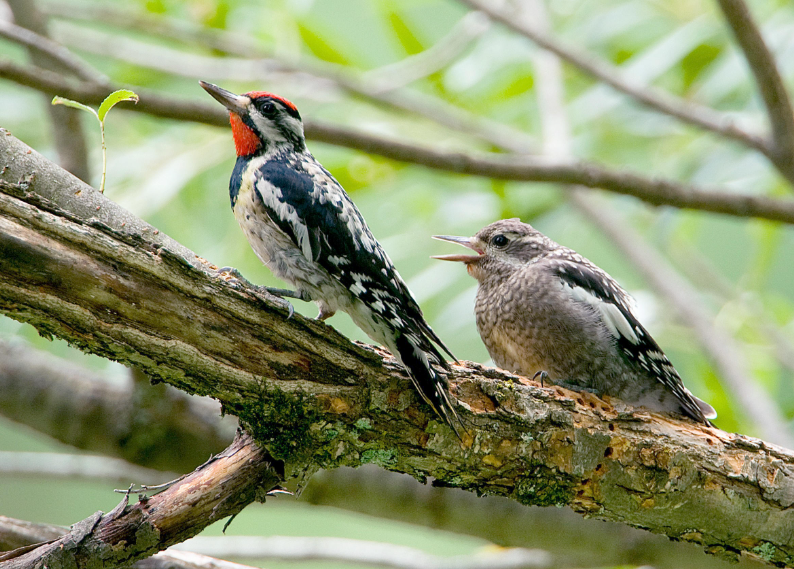
Four to seven white eggs are laid by the female and incubated for around twelve to fourteen days. The eggs are incubated by both parents alternately, and the chicks are fed once they hatch.
Chick Development
Following hatching, the chicks spend between 24 to 28 days in the nest until fledging. The parents continue to feed them a mix of insects and sap throughout this period. When the chicks are ready to leave the nest, they start learning how to fend for themselves, usually with parental supervision.
Conservation Status of the Yellow-Bellied Sapsucker
According to the International Union for Conservation of Nature (IUCN), the Yellow-Bellied Sapsucker is a species of least concern and is not officially categorised as endangered or vulnerable. However, habitat loss and deforestation may have an impact on its population, just as they do on many other bird species. Their habitat may be threatened by the removal of dead trees that are crucial for breeding and by the logging of mature forests.
Threats to Habitat and Populations
Due to competition from other woodpecker species for nesting sites and exposure to pesticides that might lower insect availability, Yellow-Bellied Sapsuckers may have difficulties in urban environments. Furthermore, overuse of sap resources in certain locations may have an impact on the general health of tree populations, even if their sap-feeding behaviour usually does not damage older trees.
Conservation Efforts and Future Outlook
Fortunately, Yellow-Bellied Sapsuckers are often not in imminent danger because of their extensive range and environmental flexibility. The population of these unusual woodpeckers will be sustained by conservation initiatives aimed at preserving forests, particularly those with a high abundance of hardwood species.
FAQ (Frequently Asked Questions) about Yellow-bellied Sapsucker
Q: What is a Yellow-bellied Sapsucker?
Ans: The Yellow-bellied Sapsucker (Sphyrapicus varius) is a medium-sized woodpecker native to North America. It is known for its distinctive behavior of drilling rows of holes into tree bark to feed on sap and insects. The bird has a striking appearance with black and white plumage, a red forehead, and a pale yellow belly.
Q: Where does the Yellow-bellied Sapsucker live?
Ans: Yellow-bellied Sapsuckers breed in forests of Canada and the northeastern United States and migrate to the southeastern U.S., Mexico, Central America, and the Caribbean during winter. They prefer deciduous forests and woodlands, especially areas with birch, maple, and other sap-producing trees.
Q: What does the Yellow-bellied Sapsucker eat?
Ans: The Yellow-bellied Sapsucker primarily feeds on tree sap, which it accesses by drilling organized rows of small holes in tree bark. It also eats insects attracted to the sap, as well as ants, spiders, and occasionally fruit and berries.
Q: How can I identify a Yellow-bellied Sapsucker?
Ans: This bird is identified by its black and white wings, red forehead, and pale yellow belly. Males have a red throat, while females have a white throat. Their habit of creating neat rows of sap wells on trees is also a key indicator of their presence.
Q: Are Yellow-bellied Sapsuckers harmful to trees?
Ans: While their sap-drilling behavior usually doesn’t kill healthy trees, repeated drilling over time can weaken trees and make them vulnerable to disease and insects. Some trees, especially younger or stressed ones, may suffer damage from heavy sapsucker activity.
Q: Do Yellow-bellied Sapsuckers migrate?
Ans: Yes, they are migratory birds. They breed in northern areas such as Canada and parts of the northern U.S., and migrate south to the southeastern U.S., Mexico, and Central America for the winter months.
Q: What sounds does the Yellow-bellied Sapsucker make?
Ans: Yellow-bellied Sapsuckers produce a nasal, cat-like “mew” call and drumming sounds on tree trunks or metal objects to communicate. Their drumming is often slow and irregular compared to other woodpeckers.
Q: Do Yellow-bellied Sapsuckers have any predators?
Ans: Yes, their predators include birds of prey like hawks and owls, as well as tree-climbing mammals such as raccoons and squirrels that may raid nests for eggs or chicks.
Q: Are Yellow-bellied Sapsuckers protected?
Ans: Yes, Yellow-bellied Sapsuckers are protected under the Migratory Bird Treaty Act in the U.S. This means it’s illegal to harm or harass them, or to destroy their nests or eggs without a permit.
Q: Can I attract Yellow-bellied Sapsuckers to my yard?
Ans: Yes, you can attract them by maintaining native trees like maple and birch, which they prefer for sap. Suet feeders may also appeal to them, especially in colder months. Providing a quiet, naturalistic environment helps support their visits.
#YellowBelliedSapsucker, #Woodpecker, #BirdWatching, #BackyardBirds, #WildlifeConservation, #BirdFacts, #ForestBirds, #MigratoryBirds, #TreeSapFeeder, #NorthAmericanBirds
Our sources and references about Yellow-bellied Sapsucker
1: Wikipedia – Yellow-bellied Sapsucker
2: All About Birds – Yellow-bellied Sapsucker
3: Audubon Field Guide – Yellow-bellied Sapsucker
4: National Wildlife Federation – Yellow-bellied Sapsucker