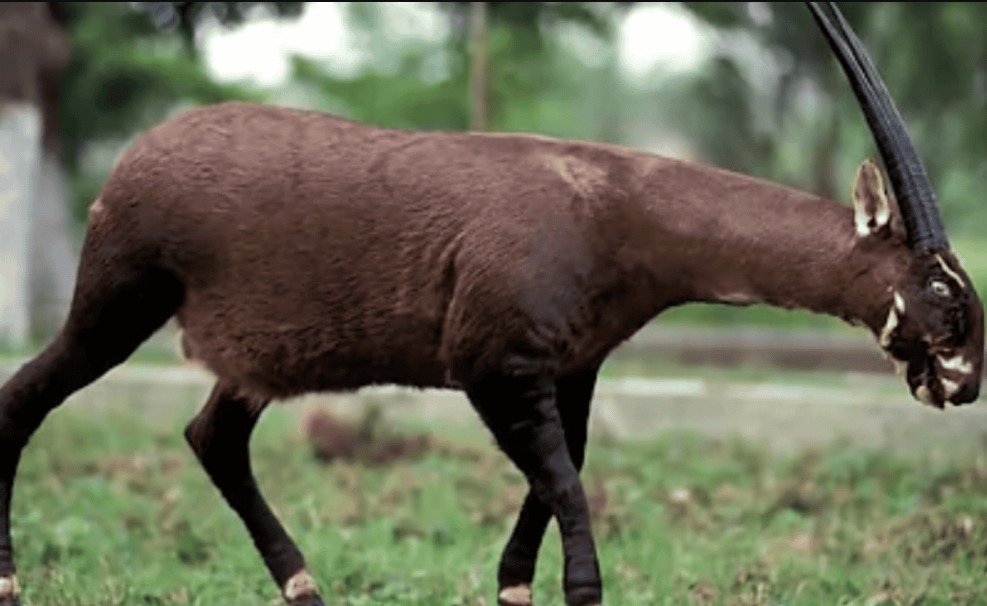
The Saola, often referred to as the “Asian Unicorn,” is one of the world’s rarest and most mysterious animals. This elusive mammal was first discovered in 1992 in the Annamite Mountains on the border between Laos and Vietnam. Known for its striking appearance, with long, straight horns and a white facial marking, the Saola is critically endangered and remains poorly understood due to its rare sightings and the difficult terrain in which it lives. Its discovery was a monumental moment in zoology, as it was previously unknown to science. Saolas are an important symbol of conservation efforts in Southeast Asia.
Quick Top 10 Facts about Saola
| SCIENTIFIC NAME | Pseudoryx nghetinhensis |
| CLASSIFICATION | KINGDOM: Animalia PHYLUM: Chordata CLASS: Mammalia ORDER: Artiodactyla FAMILY: Bovidae GENUS: Pseudoryx |
| SIZE | Height: 85–105 cm (33–41 inches) Weight: 90–100 kg (200–220 lbs) |
| SPECIES | Saola (Pseudoryx nghetinhensis) |
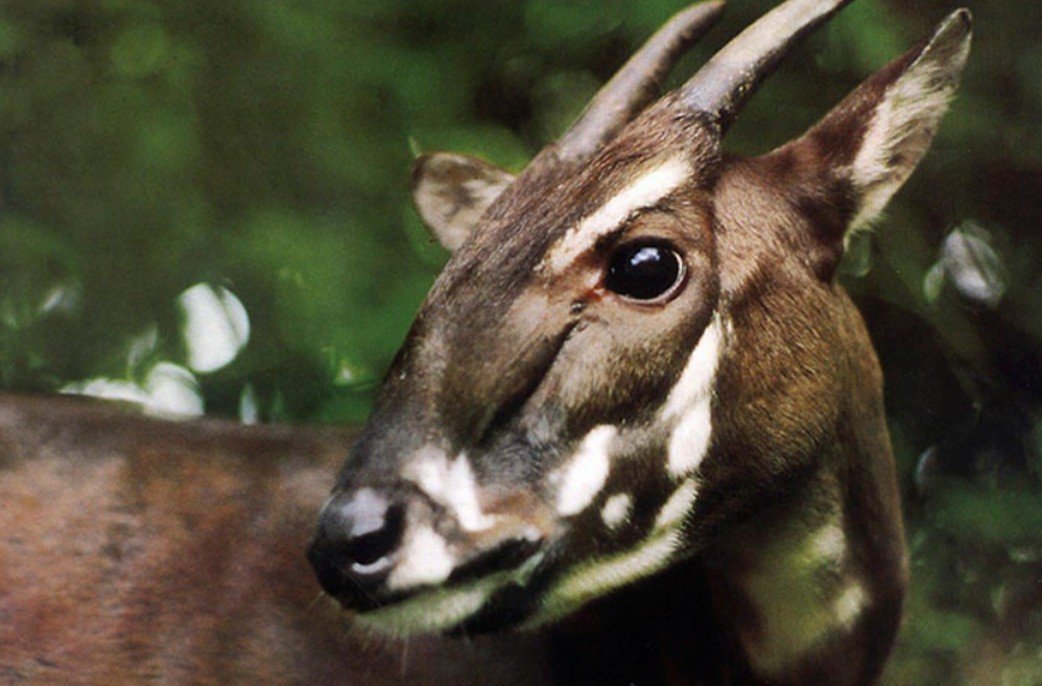
| APPEARANCE | The Saola has striking white markings on its face and long, straight horns that are typically 50–60 cm (20–24 inches) long. Its body is covered in dark brown fur with lighter undersides, and it has a slender, deer-like build. |
| LIFE SPAN | Estimated to live 10–20 years in the wild, although data is limited due to the rarity of sightings. |
| HABITAT | Saolas are found in the dense forests of the Annamite Mountains, located on the border between Laos and Vietnam, at altitudes of 500 to 1,000 meters (1,640–3,280 feet). |
| DIET | They are herbivores, primarily feeding on shrubs, grasses, and small plants found in their mountainous habitat. |
| NATURAL PREDATORS | As a relatively elusive species, the Saola faces few natural predators, but large carnivores in the area, such as tigers or leopards, may pose a threat. |
| COUNTRY | Saolas are found in the border regions between Laos and Vietnam, specifically in the Annamite Mountain range. |
| CONSERVATION STATUS | The Saola is listed as Critically Endangered by the International Union for Conservation of Nature (IUCN), with fewer than 100 individuals estimated to remain in the wild. |
Amazing Facts About Saola
1. A Rare Discovery
The Saola was discovered in 1992 by a joint Vietnamese-Laotian team, making it one of the most recent large mammal discoveries in the world.
2. The “Asian Unicorn”
Due to its elusive nature and the rarity of sightings, the Saola is often referred to as the “Asian Unicorn,” symbolizing mystery and wonder in the animal kingdom.
3. Long, Straight Horns
One of the most distinctive features of the Saola is its long, straight horns, which can reach lengths of up to 60 cm (24 inches). These horns are used for defense and in social interactions.
4. A Forest Dweller
The Saola inhabits the dense forests of the Annamite Mountains, at elevations between 500 and 1,000 meters, where it remains hidden from human eyes due to the thick vegetation.
5. Herbivorous Diet
The Saola primarily feeds on a variety of shrubs, grasses, and other plant life found in its mountainous habitat, though little is known about its specific dietary habits.
6. Shy and Elusive
Known for being extremely shy, the Saola avoids human interaction and is rarely seen in the wild. Its solitary behavior contributes to its difficulty in being studied.
7. Low Reproductive Rate
Saolas have a low reproductive rate, with few known births in captivity. This, combined with their limited habitat, contributes to their endangered status.
8. Important Indicator Species
The Saola serves as an indicator species, meaning that its presence or absence can provide valuable information about the health of the ecosystem in which it lives.
9. Threatened by Habitat Loss
Deforestation and habitat destruction are significant threats to the Saola’s survival. Logging and agricultural expansion in the Annamite Mountains are putting pressure on its fragile population.
10. Symbol of Conservation
Due to its rarity and the urgency of its conservation, the Saola has become a symbol of wildlife protection and the need to preserve Southeast Asia’s biodiversity.
Saola Overview
One of the world’s most enigmatic and uncommon creatures, the saola (Pseudoryx nghetinhensis) is a severely endangered and secretive mammal. The saola, often called the “Asian unicorn,” belongs to the Bovidae family, which also includes sheep, goats, and antelope. But the saola is special because of its distinctive qualities and its uncommon, almost legendary reputation. This article will examine this remarkable creature’s history, physical characteristics, habitat, behaviour, and conservation initiatives.
Scientific Discovery
The Annamite Mountains, which are located on the border between Vietnam and Laos, are where the saola was first found in 1992. Due to the region’s severe remoteness, rough terrain, and lush rainforests, the species has remained mostly concealed from the world for generations. Being the first big mammal to be found in the area in more than 50 years, the saola’s discovery was a landmark moment in biology.
Initial Evidence
While undertaking a biodiversity study in 1992, a team of scientists from Vietnam and Laos discovered the bones and skulls of an unknown mammal. After further research, scientists determined that these remnants belonged to a brand-new species, which they subsequently called Pseudoryx nghetinhensis. Its scientific name reflects its distinct genetic composition, but the term “saola” is taken from the native Vietnamese word for the animal.
The saola has mostly remained a mystery to scientists since it was discovered. Numerous facets of the saola’s behaviour, feeding, and reproductive habits remain unknown to researchers, and very few individuals have ever been seen in the wild.
Cultural Name
The saola’s horns have given it the moniker “Asian unicorn” due to its look. It’s crucial to remember that the saola is not a real unicorn, however. Its paired, straight horns really vary greatly from the spiralling horns of several other animals in the Bovidae family, such as the antelope. The monster’s fabled status—it was almost considered a legendary creature until it was officially documented—is the source of the term.
Physical Description
The medium-sized herbivore saola is distinguished by its graceful and secretive look. Despite having the physique of a goat or an antelope, it differs from its cousins in a number of ways. Let’s examine its physical characteristics in more detail:
Body Size
The saola weighs between 100 and 120 kg (220 and 265 pounds) and stands around 80 cm (31 inches) tall at the shoulder. Its form is thin and lean, designed to help it navigate over tough terrain and deep woodlands. The saola’s body is coated in short brown fur with lighter stripes on the underside, which helps it blend in with its surroundings, and its long legs make it a skilled runner.
Horn Anatomy
The saola’s two straight, vertical horns are among its most distinguishing characteristics. Both males and females often have these lengthy horns, which may grow up to 50 cm (20 inches) in length. The main purposes of the saola’s horns are defence and maybe intraspecific competition, or rivalry between members of the same species.
- Horn Structure: In contrast to the curving horns of many other bovids, the saola’s horns are parallel and slightly slanted, giving it a remarkable look.
- Horn Function: The horns are probably used in territorial conflicts and as a defence against predators.
Facial Traits
With its huge, black eyes and rather short snout, the saola has a unique look. The animal’s big ears are well suited to picking up noises in its heavily forested surroundings. Together with its acute sense of smell, the saola’s ears aid in spotting any dangers or other animals.
Limb Structure
An essential adaption for negotiating the rough terrain of the Annamite Mountains is the saola’s powerful, muscular legs. The saola can easily traverse rough and hilly terrain because to its environment-appropriate hooves.
Natural Habitat
The Annamite Mountains, which form the boundary between Vietnam and Laos, are the only place in the Saola’s range. These mountains are notorious for their excessive rainfall, thick forests, and steep slopes, which make life difficult for both people and animals.
Highland Forests
Highland regions between 500 and 2,000 meters (1,600 and 6,500 feet) above sea level are home to Saolas. The saola are naturally protected from many possible predators and human settlements by these isolated areas, which are often difficult to reach.
- Forest Cover: The Saola inhabit subtropical and rainforest woods, where dense foliage provide protection and cover. There are also plenty of food supplies in the thick undergrowth, including shrubs, herbaceous plants, and tree leaves.
Geographic Range
The saola has a very small range due to its particular habitat needs. The bulk of the species’ distribution is in the Annamite Mountains, however accessing most of the territory is challenging. Studying the saola in the field is quite challenging because to its remote range and low population density.
Diet Behaviour
Little is known about the saola’s everyday behaviour since it is a timid and secretive species. Nonetheless, scientists have been able to piece together some of its behaviours from the little data that are now accessible.
Plant Diet
As a herbivore, the saola consumes a broad range of vegetation, including grass, bushes, and the leaves of young trees. Its diet probably changes with the seasons based on what food is available in its alpine environment.
- Foraging Behaviour: Saolas are believed to forage through low-lying foliage, reaching ground-level plants with their long necks and pointed hooves.
Social Patterns
Although occasional reports of individuals being seen together have been made, the saola is thought to be a solitary species. Males and females may only congregate during mating times, and it is unknown whether the saola forms social groupings like other bovid species.
- Territorial Tendencies: The saola probably demonstrates territorial behaviour and stays away from bigger animals and populated areas because of its evasive nature. The precise processes behind territoriality are yet unclear, however.
Conservation Status
The International Union for Conservation of Nature has classified the saola as critically endangered (IUCN). The saola is in grave danger of becoming extinct in the near future, with an estimated few dozen individuals remaining in the wild.
Primary Threats
The Saola’s population has been declining due to a number of serious threats:
- Habitat Decline: One of the biggest threats is deforestation brought on by logging and human encroachment. The native habitat of the saola has been destroyed as a result of road development, unlawful hunting, and agricultural expansion.
- Snare Threats: Saolas are caught in snares placed for other species, such as deer or wild boars, even though they are not usually killed for their flesh. The Saola population is seriously at danger from these traps.
- Climate Pressure: Saolas’ already limited range may be further constrained by changes in the habitats in which they reside as a result of climate change.
Conservation Actions
The following are initiatives to preserve the saola:
- Protected Areas: To preserve the habitat of the saola, a number of national parks and reserves have been created in Vietnam and Laos.
- Community Education: To stop illicit hunting and logging, local people are being taught the value of preserving the saola and its environment.
- Research Efforts: Although there are currently no successful captive breeding initiatives, research on the saola’s reproductive patterns is still being conducted.
FAQ (Frequently Asked Questions) about Saola
Q: What is a Saola?
Ans: The Saola is a rare and critically endangered mammal found in the Annamite Mountains of Laos and Vietnam. It is often referred to as the “Asian Unicorn” due to its elusive nature and striking appearance.
Q: Where can you find Saolas?
Ans: Saolas are found only in the dense forests of the Annamite Mountains, located on the border between Laos and Vietnam.
Q: What do Saolas eat?
Ans: Saolas are herbivores, primarily feeding on shrubs, grasses, and small plants found in their mountainous habitat.
Q: How many Saolas are left in the wild?
Ans: It is estimated that fewer than 100 Saolas remain in the wild, making them critically endangered.
Q: Why is the Saola called the “Asian Unicorn”?
Ans: The Saola is referred to as the “Asian Unicorn” because of its rare and elusive nature, as well as its striking horns, which resemble those of a mythical unicorn.
Q: How long do Saolas live?
Ans: While specific data is scarce, Saolas are believed to live around 10–20 years in the wild, though this is an estimate due to the lack of research on their lifespan.
Q: What are the main threats to the Saola?
Ans: The main threats to the Saola include habitat loss due to logging and agriculture, poaching, and the fragmentation of their mountainous habitat.
Q: How is the Saola important to the ecosystem?
Ans: As an indicator species, the Saola plays a vital role in indicating the health of its ecosystem. Its presence suggests that the environment is relatively undisturbed, while its absence can signal ecological problems.
Q: Why is the Saola so rarely seen?
Ans: The Saola is extremely elusive, living in the dense, rugged forests of the Annamite Mountains, and avoids human contact, making it difficult to study and observe in the wild.
Q: What conservation efforts are in place to protect the Saola?
Ans: Conservation efforts include habitat protection, anti-poaching initiatives, and studies to better understand the Saola’s behavior and needs to ensure its survival in the wild.
#Saola #AsianUnicorn #RareAnimals #Conservation #EndangeredSpecies #WildlifeProtection #SaolaFacts #SoutheastAsia #Biodiversity
Our sources and references about Saola
1: Wikipedia – Saola
2: WWF – Saola
3: IUCN Red List – Saola
4: National Geographic – Saola