Quick Top 10 Facts about Bearded Dragon
| SCIENTIFIC NAME | Pogona vitticeps |
| CLASSIFICATION |
KINGDOM: Animalia PHYLUM: Chordata CLASS: Reptilia ORDER: Squamata FAMILY: Agamidae GENUS: Pogona SPECIES: P. vitticeps |
| SIZE | 16 to 24 inches long including tail; 10 to 20 ounces in weight |
| HABITAT | Deserts, woodlands, savannas, and scrublands – native to central Australia |
| DIET | Omnivorous – eats insects, small animals, leafy greens, and vegetables |
| SPECIES | Bearded Dragon (Central or Inland Bearded Dragon) |
| COUNTRY | Australia (especially arid and semi-arid regions) |
| GESTATION PERIOD | About 55 to 75 days (incubation of eggs) |
| LIFE SPAN | 8 to 12 years in captivity (shorter in the wild) |
| CONSERVATION STATUS | Not endangered – commonly bred in captivity and popular as a pet |
Amazing Facts About Bearded Dragons
1. They get their name from their beard
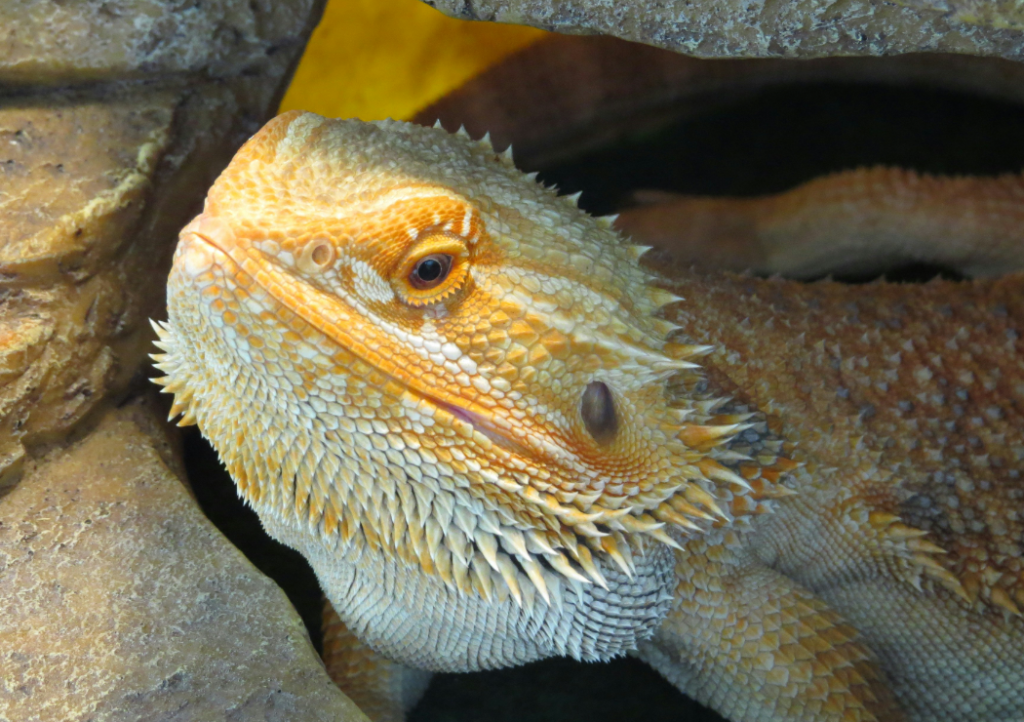
Bearded dragons puff out their throat, which looks like a beard, especially when threatened or showing dominance.
2. They can wave and bob their heads
These gestures are forms of communication among bearded dragons.
3. They are popular reptile pets
Bearded dragons are among the most popular pet reptiles due to their calm nature and ease of care.
4. They are cold-blooded
They rely on external heat sources to regulate their body temperature.
5. They can run on two legs
At full speed, bearded dragons sometimes lift their front legs and run on their hind legs.
6. Bearded dragons are solitary
They prefer living alone and can become territorial around other dragons.
7. They can change color slightly
While not like chameleons, they can darken or lighten parts of their body depending on mood or temperature.
8. They brumate, not hibernate
In colder months, bearded dragons enter a state of dormancy known as brumation.
9. They use their tongue to explore
Like snakes, they use their tongue to sense their environment.
10. Bearded dragons are omnivores
Their diet includes both animal protein (like insects) and plant matter such as leafy greens and vegetables.
Intriguing facts about bearded dragons
The fascinating reptiles known scientifically as Pogona, or bearded dragons, are found in the arid regions of Australia. Their name originates from the prickly scales behind their chin that mimic beards, and they may puff out and darken to indicate dominance or seduce a partner. Owing to their remarkable versatility, these reptiles may be found in a variety of habitats, including deserts, woodlands, and scrublands.
Scientific name and species information about bearded dragons
Pogona, the scientific name for bearded dragons, are interesting reptiles that are becoming more and more common as pets. These Australian native reptiles get their name from the prickly scales that round their necks and resemble facial hair. Because of their minimal care needs, distinctive look, and placid disposition, bearded dragons make wonderful pets.
Bearded dragons have an amazing ability to change colour
One amazing feature of bearded dragons is their amazing ability to change their body temperature. They are ectothermic, meaning that external heat sources regulate their body temperature. In addition to warming up by soaking in the sun, they could look for cover or dig tunnels under the surface of the ground to keep cool. Their behaviours allow them to live in a wide range of climate-related environments.
Dietary preferences of bearded dragons
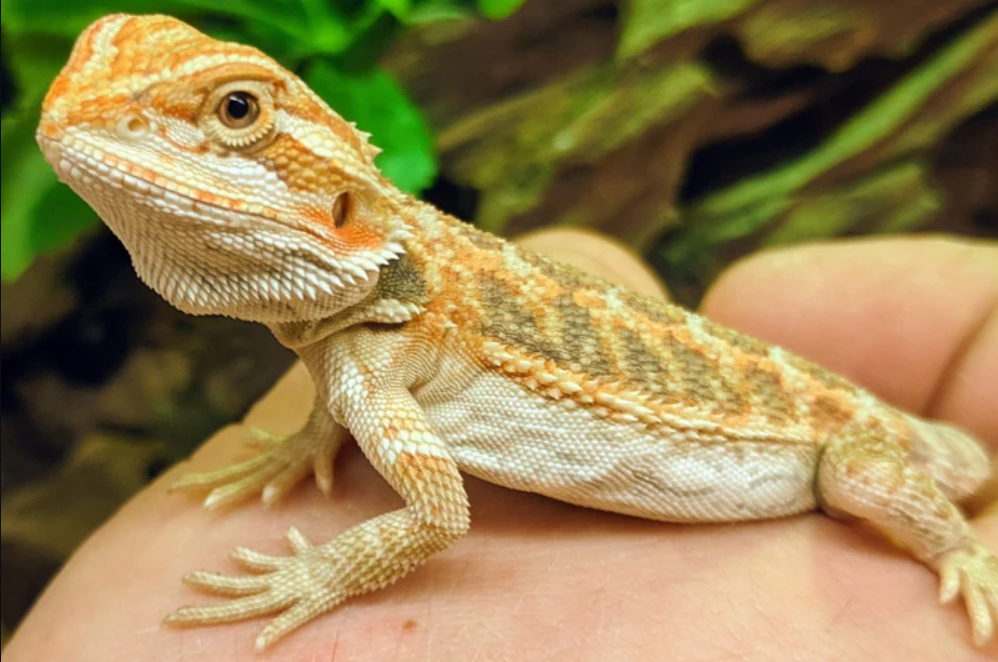
Bearded dragons are omnivores, meaning they eat both plants and animals. Along with insects like mealworms and crickets, their main diet consists of vegetables and leafy greens. They can chew food efficiently because of the structure of their jaws. These reptiles are also well-known for their peculiar feeding behaviour, which is called “gaping,” in which they open their mouths wide in front of predators to show rage or fear.
Bearded dragons ability to communicate through body language
Another amazing thing about bearded dragons is their ability to communicate via body language. They use a variety of gestures and body postures to convey their intentions and sentiments. When they feel frightened or defensive, they could, for example, flatten their bodies, puff out their beards, and darken their colouring to seem larger and more dangerous. On the other hand, they could softly nod their heads or stretch their limbs out in the sun when they feel relaxed and at peace.
Bearded dragons distinctive appearance and calm nature
Bearded dragons are a popular pet due to their distinctive appearance and calm nature. They may be easily controlled and enjoy social interaction when given the right care. However, it’s imperative that you provide them with a respectable habitat that mimics their natural environment, replete with UVB lighting, a heat source, and a spacious cage that includes hiding spots and climbing frames. Additionally, essential to their health are a well-balanced diet and regular veterinary examinations.
Fascinating characteristics of bearded dragons
Bearded dragons are incredible reptiles with a wide range of fascinating characteristics. These reptiles’ ability to regulate body temperature, unique feeding patterns, and diverse forms of communication never fail to captivate reptile enthusiasts and pet owners. To ensure their well-being in captivity, it is critical to understand their natural tendencies and offer them the care they need.
Interesting facts about the variety of species of bearded dragons
Diverse Species of bearded dragons
Bearded dragons come in a variety of species, each having distinctive traits of its own. The Inland, or Central Bearded Dragon, is the most popular species kept as pets (Pogona vitticeps). Rankin’s Dragon (Pogona henrylawsoni) and Eastern Bearded Dragon (Pogona barbata) are two more species. Every species has a unique temperament and look.
Defensive behaviours exhibited by bearded dragons
Bearded dragons have an amazing protection mechanism when they feel attacked. Their beard, which is typically flat against their body, may be seen when they push out their neck. To prospective predators, this display makes them look bigger and more menacing. To further ward off any possible dangers, they may also expand their lips wide and display their pointed teeth.
Omnivorous Diet preference for bearded dragons
The varied diet of bearded dragons includes both plant material and tiny animals. Their main food source is insects, namely mealworms, roaches, and crickets. They also like a wide range of fruits and vegetables, including berries, carrots, and leafy greens. To guarantee that their nutritional demands are satisfied, it is essential to provide a balanced diet.

Special adaptation of thermal Regulation by Bearded dragons
Being ectothermic, bearded dragons depend on outside sources to control their body temperature. Within their cage, they need a gradient that has a warmer part (95–105°F; 35–40°C) for basking and a colder portion (75–85°F; 24–29°C). They can thermoregulate by alternating between warmer and colder regions as required, thanks to this temperature differential.
How to interact with bearded dragons safely
In contrast to common perception, bearded dragons are gregarious animals who relish engagement with humans. They often behave affectionately and may develop close relationships with their owners. A bearded dragon and its owner may build a trustworthy bond through consistent handling and respectful engagement.
Average life span of Bearded Dragons
In comparison to other reptiles, bearded dragons have rather lengthy lives. They may survive in captivity for up to ten or fifteen years if given the right care and surroundings. Since some of them have been known to live up to 15 years, reptiles need a long-term commitment from their admirers.
Communication facts about bearded dragons
Bearded dragons may communicate with their owners and with each other in a number of ways. They communicate through body language, such as arm waving and head bobbing. While waving one’s arms is a sign of submission, males often use head bobbing to assert their authority or territoriality. Owners may have a better understanding of their needs and feelings by becoming familiar with their distinctive communication signals.
The natural shedding process in bearded dragons
Bearded dragons lose their skin regularly, much as other reptiles do. They may regrow and repair damaged or worn-out skin thanks to this mechanism. In order to speed up the natural process of shedding, owners should make sure that the right humidity levels are met and give a rough surface, such as pebbles or logs. Bearded dragons often consume their shed skin because it has extra nutrients.
Consideration before keeping bearded dragons as pets
For those who like reptiles, bearded dragons are fascinating creatures that make excellent pets. Their distinct look, kind disposition, and very few upkeep needs have contributed to their growing popularity. Potential owners may give bearded dragons the finest care and establish an atmosphere that is appropriate for them by being aware of some intriguing facts about these amazing animals.
FAQ (Frequently Asked Questions) about Bearded Dragon
Q: What is a Bearded Dragon?
Ans: A Bearded Dragon is a species of lizard native to Australia. It is well-known for its spiny “beard” under its chin, which it can puff up when threatened or during mating displays. Bearded Dragons are popular pets due to their docile nature, intelligence, and ease of care.
Q: What do Bearded Dragons eat?
Ans: Bearded Dragons are omnivores, which means they eat both plants and animals. Their diet typically includes insects like crickets, worms, and roaches, as well as leafy greens, fruits, and vegetables. A balanced diet is crucial for their health and well-being.
Q: How big do Bearded Dragons get?
Ans: Adult Bearded Dragons typically reach lengths of 18 to 24 inches (46 to 61 cm), including their tail. Males are usually larger than females. Their size can vary depending on their diet, habitat, and genetics.
Q: How long do Bearded Dragons live?
Ans: Bearded Dragons can live up to 10-15 years in captivity with proper care. Their lifespan may be affected by factors such as diet, habitat, and overall health.
Q: Are Bearded Dragons good pets?
Ans: Yes, Bearded Dragons make excellent pets due to their calm and friendly nature. They are interactive and enjoy human interaction. They can be handled easily and are suitable for reptile enthusiasts of all ages.
Q: How should I set up a Bearded Dragon’s habitat?
Ans: Bearded Dragons need a spacious terrarium with proper heating, lighting, and humidity. The enclosure should be at least 40 gallons in size, with a basking area and cool zone. UVA and UVB lighting is essential for their health, and they need temperatures ranging from 75°F to 105°F (24°C to 41°C) with a nighttime drop to around 65°F (18°C).
Q: Do Bearded Dragons need a lot of space?
Ans: Yes, Bearded Dragons require a sizable habitat. A larger tank will provide more room for them to move around, climb, and bask in various temperatures. A 40-gallon tank is recommended for adult Bearded Dragons, though they may require even more space as they grow.
Q: Can Bearded Dragons live with other reptiles?
Ans: While Bearded Dragons are generally solitary creatures, they can be housed with other Bearded Dragons of the same species if the tank is large enough. However, it’s usually not recommended to house them with other species as territorial behavior may lead to aggression.
Q: Do Bearded Dragons need to be bathed?
Ans: Yes, Bearded Dragons benefit from regular baths to maintain hydration and clean their skin. A shallow bath once or twice a week can help them stay healthy and avoid skin issues, especially during shedding periods.
Q: Are Bearded Dragons low-maintenance pets?
Ans: While Bearded Dragons are relatively low-maintenance compared to some other reptiles, they still require daily care. This includes feeding, maintaining proper habitat conditions, and ensuring they get enough light and heat. Regular vet checkups are also recommended to keep them healthy.
#BeardedDragon, #BeardedDragonPet, #ReptilePets, #Lizards, #ExoticPets, #PetLizards, #BeardedDragonCare, #LizardCare, #ReptileEnthusiasts, #AustralianLizards, #ExoticPetCare
Our sources and references about Bearded Dragon
1: Wikipedia – Bearded Dragon
2: PetMD – Bearded Dragon Care
3: The Spruce Pets – Bearded Dragons
4: Bearded Dragon.org – Bearded Dragon Care