Quick Top 10 Facts about Blowfly Insect
| SCIENTIFIC NAME | Calliphoridae (Family of Blowflies) |
| CLASSIFICATION | KINGDOM: Animalia PHYLUM: Arthropoda CLASS: Insecta ORDER: Diptera FAMILY: Calliphoridae GENUS: Various |
| SIZE | Varies from 6 mm to 14 mm (0.2 to 0.5 inches) in length |
| HABITAT | Commonly found in urban and rural areas; particularly attracted to decaying organic matter |
| DIET | Feed on decaying meat, excrement, and garbage |
| SPECIES | Over 1,000 species globally, with the most well-known being the common green bottle fly (Lucilia sericata) |
| COUNTRY | Found worldwide in both temperate and tropical regions |
| GESTATION PERIOD | Eggs hatch into larvae (maggots) within hours; the entire life cycle takes about 1–2 weeks |
| LIFE SPAN | Typically 2–3 weeks from egg to adult, depending on environmental conditions |
| CONSERVATION STATUS | Not endangered; blowflies are abundant and widely distributed |
Amazing Facts About Blowfly Insect
1. Blowflies are crucial for forensic science
Blowflies are often the first insects to arrive at a corpse, and their life cycle is used to estimate the time of death in criminal investigations.
2. They have a rapid life cycle
Blowflies can complete their life cycle in just a few days under ideal conditions, with eggs hatching into maggots within hours.
3. Blowflies can fly long distances
They are strong flyers and can travel several kilometres in search of food or a suitable place to lay eggs.
4. They are attracted to rotting flesh
Blowflies are scavengers and play a critical role in decomposing organic matter, particularly decaying animal carcasses.
5. Their larvae (maggots) are used in medicine
Maggots are used in maggot therapy, where they help clean wounds by eating dead tissue, promoting healing.
6. They help recycle nutrients
By feeding on decaying matter, blowflies help break down organic material, recycling nutrients back into the environment.
7. They are important pollinators
Though they are more often associated with decomposition, some blowflies also help pollinate certain flowers.
8. Blowflies can see in all directions
Blowflies have large compound eyes that give them almost 360-degree vision, helping them avoid predators and navigate effectively.
9. They have an excellent sense of smell
Blowflies are equipped with highly sensitive antennae that help them detect smells from great distances, especially those of decaying matter.
10. Blowflies can be pests
In addition to their role in nature, blowflies are considered pests when they infest homes, particularly when they invade areas with food waste.
Overview of the blowfly’s taxonomy and classification
The family Calliphoridae, which includes blowflies, falls under the insect order Diptera. Blowflies occur widely across the globe. They are especially common in Australia, Europe, and North America. People easily recognise these flies by their shiny colouring. Their metallic hues, which are blue or green, make them stand out among other fly species.
Duration of each stage and any environmental factors that influence their development
Blowflies serve an important role as decomposers in ecosystems. They lay eggs on decaying organic materials, like corpses or food. Blowflies feel drawn to these substances. The eggs develop into larvae, called maggots, which feed on the decaying matter. This process helps break down organic substances. It also returns valuable nutrients to the environment in a natural cycle.
Life cycle of blowflies, including the stages of egg, larva (maggot), pupa, and adult
Blowflies pass through four main stages in their life cycle: egg, larva, pupa, and adult. Females usually lay eggs in batches. These eggs hatch within a few hours. The larvae emerge and grow by moulting several times. They consume large amounts of decaying material. Once they grow to a certain size, they enter the pupal stage. In this stage, they undergo metamorphosis. The adult blowflies then emerge ready to mate and repeat the cycle.
Interesting adaptations or behaviours during different life stages
Blowflies are fascinating creatures that play a vital role in decomposition. They help maintain ecosystem balance and health. Their ability to break down matter and recycle nutrients proves essential to nature. Scientists often study blowflies in forensic investigations. Their behaviour and growth help determine the time of death in cases. Understanding how blowflies develop offers valuable insights into forensic entomology and biological cycles.
Fascinating facts about butterfly insects
The scientific name for blowflies is Calliphoridae. These insects belong to the Diptera order and include many interesting species. Their unique skill of detecting and settling on rotting organic matter makes them important in both ecology and forensics. Blowflies contribute significantly to the study of decay and crime scene investigation.
Physical Characteristics:
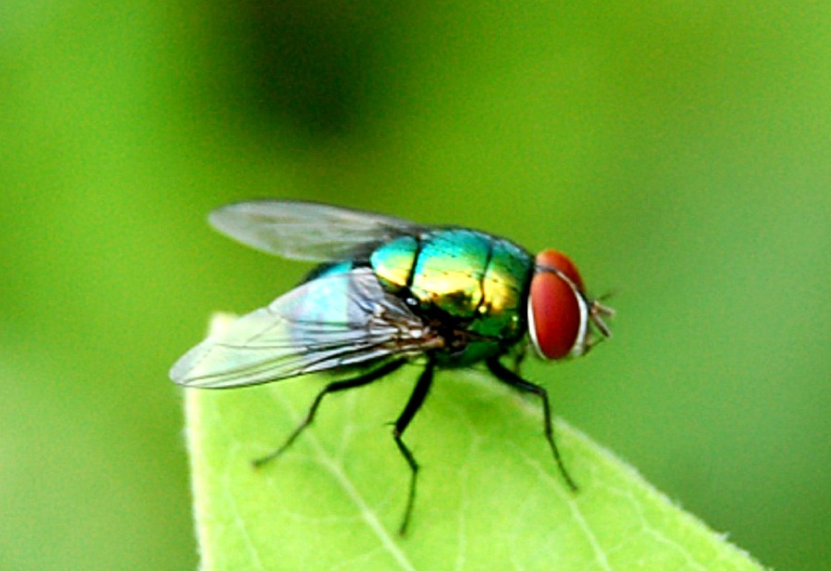
Blowflies grow to a medium size and measure between 6 and 14 millimetres long. Their bodies reflect a metallic shine. Depending on the species, they may appear blue, green, or black. Their transparent wings often display distinctive patterns. One can easily recognise blowflies by their large compound eyes. These eyes cover much of their head’s surface. The complex eye structure gives blowflies excellent vision. They can quickly detect movement in their surroundings.
Behaviour and Habitat of blowflies
Blowflies live worldwide and thrive in diverse environments. One may find them in meadows, forests, or even cities. They feel attracted to rotting organic matter. This includes dead animals, spoilt fruits, and human waste. Blowflies often indicate that decomposition has begun in the area.
Unique characteristics or features of blowflies
Blowflies possess an extraordinary sense of smell. It helps them detect suitable food sources quickly and from afar. They can locate decomposing meat or ripening fruit using their strong olfactory abilities. Once they find a food source, they lay eggs nearby or directly on the material.
Each stage and any environmental factors that influence their development
Blowflies experience complete metamorphosis with four stages: egg, larva, pupa, and adult. After hatching, the eggs become legless larvae. These larvae, or maggots, help with decomposition. They feed on the decaying matter and assist in breaking it down. Environmental factors such as heat and moisture influence how quickly they develop.
Blowflies play a crucial role in nutrient recycling and decomposition
Once larvae feed and grow, they enter the pupal stage. During this stage, they develop into mature adult flies. Pupae are usually found in soil or hidden cracks near the food source. Humidity and temperature greatly affect the pupal phase’s duration. Adult blowflies emerge once fully formed. They then seek out new locations to repeat the life cycle. Under ideal conditions, they can complete their development in just two weeks.
Role of blowflies in Forensic Entomology
Blowflies hold key importance in forensic entomology, which explores insect use in criminal investigations. They are typically the first insects to arrive when a body begins to decay. Experts use their presence and growth stage to estimate the postmortem interval (PMI). This information assists in determining the likely time of death.
Ecological importance of blowflies in the ecosystem
By studying the blowfly’s life stages and the conditions around a body, forensic entomologists uncover vital clues. Specific blowfly species can also reveal the geographical origin of a crime. This adds another layer of detail to investigations. 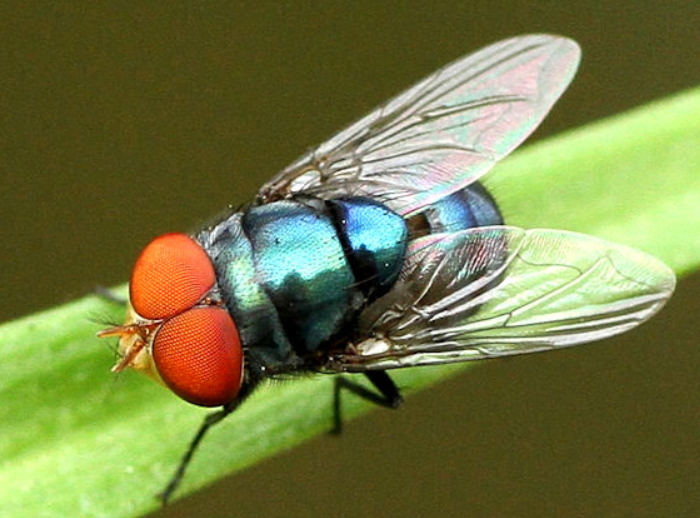
Blowflies thrive in places that most animals avoid. They flourish in decaying, unhygienic conditions. Their ability to find and colonise decomposing organic matter makes them valuable in science and ecology.
#Blowfly, #BlowflyInsect, #Decomposers, #InsectFacts, #Maggots, #ForensicEntomology, #Decomposition, #FlyLife, #InsectControl, #Nature, #Pollution, #InsectWorld, #Calliphoridae
Our sources and references about Blowfly Insect
1: Wikipedia – Blowfly
2: Britannica – Blowfly
3: Nature – Blowfly and Forensic Science
4: ABC Education – Blowfly Importance