Quick Top 10 Facts about Blue Death Feigning Beetle
| SCIENTIFIC NAME | Asbolus verrucosus |
| CLASSIFICATION |
KINGDOM: Animalia CLASS: Insecta ORDER: Coleoptera FAMILY: Tenebrionidae PHYLUM: Arthropoda GENUS: Asbolus |
| SIZE | About 1.5–2 cm (0.6–0.8 inches) in length |
| HABITAT | Desert regions, especially in the southwestern United States (e.g., Sonoran Desert) |
| DIET | Detritivore – feeds on decaying plant matter, dry organic materials, and occasionally fruits and vegetables |
| SPECIES | Blue Death Feigning Beetle |
| COUNTRY | United States (primarily southwestern states like Arizona and Nevada) |
| GESTATION PERIOD | Eggs hatch in 2–4 weeks depending on temperature and humidity |
| LIFE SPAN | Can live up to 8–10 years in captivity |
| CONSERVATION STATUS | Not evaluated; not currently considered threatened or endangered |
Amazing Facts About Blue Death Feigning Beetle
1. Plays dead to survive
When threatened, it flips onto its back and remains motionless, pretending to be dead to avoid predators.
2. Not actually blue
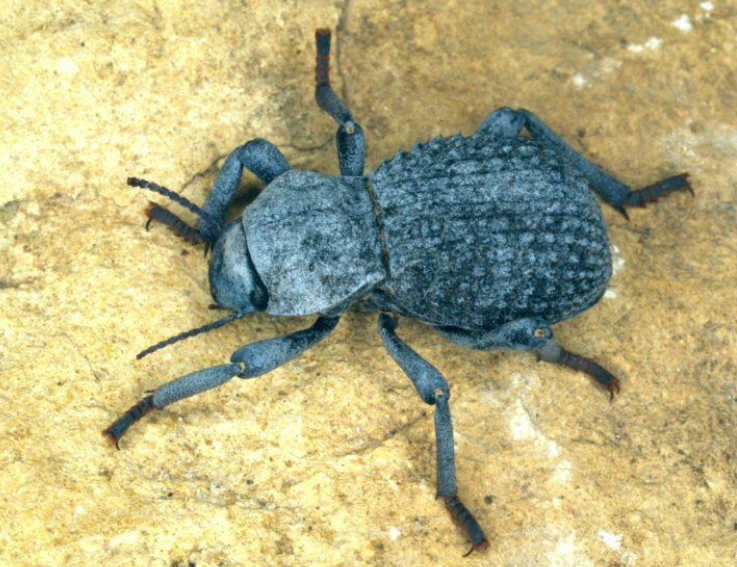
Its dusty blue color is caused by a waxy coating that helps it retain moisture in dry desert environments.
3. Super hardy
This beetle is extremely tough and can adapt to harsh conditions, making it a favorite among insect enthusiasts.
4. Lives a long life
Unlike many insects, the Blue Death Feigning Beetle can live up to a decade, especially in captivity.
5. Popular in pet trade
Because of their calm demeanor and unique look, they are commonly kept as exotic pets.
6. Easy to care for
They require minimal space and food, making them great for beginner invertebrate keepers.
7. Belongs to the darkling beetle family
It is part of the Tenebrionidae family, which includes many other ground-dwelling beetles.
8. Desert expert
Perfectly adapted for desert life, it’s highly resistant to dehydration and extreme temperatures.
9. Doesn’t fly
Despite having wings, the Blue Death Feigning Beetle is flightless and prefers crawling.
10. Fascinating to watch
Its slow, deliberate movements and curious nature make it a fun and educational creature to observe.
Unique defence mechanism of playing dead
The unique defence mechanism of the fascinating Blue Death Feigning Beetle is well known. This beetle is native to arid regions of North America, particularly the Southwest and Mexico. Scientists refer to it as Asbolus verrucosus. It belongs to the Tenebrionidae family and may be identified by its striking blue colouring, which serves as a deterrent to potential predators.
Common myths or misconceptions about the Blue Death Feigning Beetle
Blue Death, Pretending to Be One of the most amazing things about the beetle is its ability to appear lifeless when in danger. When it detects danger, this beetle will go into a state of tonic immobility, when it seems dead and remains motionless. It would even tuck its legs and antennae in close to its body to accentuate the illusion of death. This incredible adaptation helps the beetle escape predators since many animals are hesitant to approach what seems to be dead food.
Description of the blue coloration and size of the beetle
The Fake Blue Death The beetle’s ability to persevere under challenging circumstances is yet another amazing feature. As its name suggests, this insect thrives in arid areas and can withstand long droughts. Its waxy covering, which reduces water loss from evaporation, is responsible for its remarkable ability to retain water. This versatility allows the beetle to flourish in dry areas with little water, making it a true survivor in extreme environments.
Comparison to other species of darkling beetles
Asbolus verrucosus, often known as the Blue Death Feigning Beetle, is an intriguing bug that is a member of the darkling beetle family. The deserts of northern Mexico and the southwestern United States are home to this unusual insect. When in danger, it is well known for its ability to seem to be dead, tricking predators into believing it is no longer a threat.
Physical Characteristics: Coloration and Size
With a length of around one inch, the Blue Death Feigning Beetle is a little beetle. It seems velvety due to the tiny hairs covering its dark blue or black body. The oval-shaped body of the beetle is protected by an exoskeleton that has hardened. It can move swiftly when needed because of its long, thin legs.
Description of the Blue Death Feigning Beetle
The Blue Death Feigning The beetle’s capacity to seem to be dead is one of its most intriguing features. The beetle will lay on its back with its legs and antennae tucked up close to its body when it feels threatened. It will stand still for a long time, perhaps for hours or even for many minutes. Because it deceives predators into believing the beetle is already dead and not worth chasing, this habit serves as an efficient protection strategy.
Habitat and Distribution: Natural Habitat
Arid desert areas like the Sonoran Desert and Chihuahuan Desert are home to the Blue Death Feigning Beetle. These beetles choose environments with sand or gravel since they may dig below the surface to avoid very hot or cold conditions. They have also been seen to live in arid scrublands and rocky outcrops that have little vegetation.
Details on the diet of the Blue Death Feigning Beetle
The Blue Death Pretending to be As a detritivore, the beetle consumes organic debris that has decomposed. Its main food source is decomposing plant matter, such as leaves, twigs, and fruits. Because they aid in the decomposition and recycling of organic debris, these beetles are crucial to the ecosystem’s ability to cycle nutrients in arid conditions.
Duration of Life, mating rituals and egg-laying habits
The climate and the availability of food may have an impact on a Blue Death Fencing Beetle’s longevity. These beetles live for two to three years on average. They go through many phases of development during the course of their lives, beginning as eggs and continuing through the larval and pupal stages until reaching maturity.
How the blue coloration helps the beetle blend in with its surroundings
Due to a number of adaptations, the Blue Death Feigning Beetle can withstand the harsh desert environment. It can withstand harsh weather conditions and minimise water loss because of its capacity to burrow into the earth. Its body is covered in tiny hairs that act as insulation and stop moisture loss. Its dark colouring also aids in heat absorption from the sun, enabling it to warm up rapidly in the morning.
Natural predators of the Blue Death Feigning Beetle
The Blue Death Feigning Beetle still faces predators in its native environment despite having an amazing protection system. A few of the frequent predators include tiny animals, lizards, and birds. But because these predators are more inclined to pursue living prey, the beetle’s ability to act dead typically deters them.
FAQ (frequently asked questions) about Blue Death Feigning Beetle
Q: What is a Blue Death Feigning Beetle?
Ans: The Blue Death Feigning Beetle is a small desert-dwelling insect known for its unique defense mechanism of playing dead when threatened. Its name comes from its powdery blue appearance and its tendency to “feign death” to avoid predators.
Q: Why is it called the Blue Death Feigning Beetle?
Ans: The beetle gets its name from its dusty blue coating, which helps it survive in arid environments, and from its behavior of playing dead—also known as thanatosis—when it senses danger.
Q: Where do Blue Death Feigning Beetles live?
Ans: These beetles are native to the arid deserts of the southwestern United States, particularly in Arizona and Nevada. They are commonly found in dry, sandy environments where they can burrow and hide from extreme heat.
Q: What do Blue Death Feigning Beetles eat?
Ans: Blue Death Feigning Beetles are omnivorous scavengers. In captivity and in the wild, they eat decaying plant material, dried insects, fruits, and vegetables. They are known for being hardy and easy to feed in terrariums.
Q: How does the Blue Death Feigning Beetle defend itself?
Ans: Its primary defense mechanism is to play dead when it feels threatened. By becoming motionless and stiff, the beetle fools predators into thinking it’s already dead and not worth eating.
Q: Is the Blue Death Feigning Beetle dangerous to humans?
Ans: No, the Blue Death Feigning Beetle is completely harmless to humans. It does not bite, sting, or carry any diseases. In fact, it’s often kept as a pet by insect enthusiasts due to its low-maintenance care needs.
Q: How long do Blue Death Feigning Beetles live?
Ans: These beetles have a surprisingly long lifespan for insects. In captivity, they can live up to 8 years or more with proper care, which makes them appealing pets for those interested in exotic invertebrates.
Q: Why are Blue Death Feigning Beetles blue?
Ans: The beetle’s blue coloration comes from a waxy coating on its exoskeleton that reflects light. This coating helps prevent water loss and protects the beetle from the harsh desert sun.
Q: Are Blue Death Feigning Beetles good pets?
Ans: Yes, they make excellent pets for beginners and insect hobbyists. They are low-maintenance, require minimal space, and do not have special dietary or humidity needs, making them easy to care for.
Q: Do Blue Death Feigning Beetles need a special habitat?
Ans: In captivity, they thrive in a dry terrarium with sand or desert soil, hiding spots like bark or rocks, and low humidity. They prefer warm temperatures and require little maintenance, making them ideal for desert-themed insect enclosures.
#BlueDeathFeigningBeetle, #DesertBeetle, #BeetleLovers, #InsectPhotography, #ExoticPets, #BugLife, #BeetlesOfInstagram, #InvertebrateLovers, #PetBugs, #NatureLovers, #DesertInsects, #Entomology, #CoolBugs, #CreepyCrawlies, #UniquePets
Our sources and references about Blue Death Feigning Beetle
1: Wikipedia – Asbolus verrucosus (Blue Death Feigning Beetle)
2: Insect Identification – Blue Death Feigning Beetle
3: PetKeen – Blue Death Feigning Beetle Care Guide
4: Exotic Nutrition – Blue Death Feigning Beetle