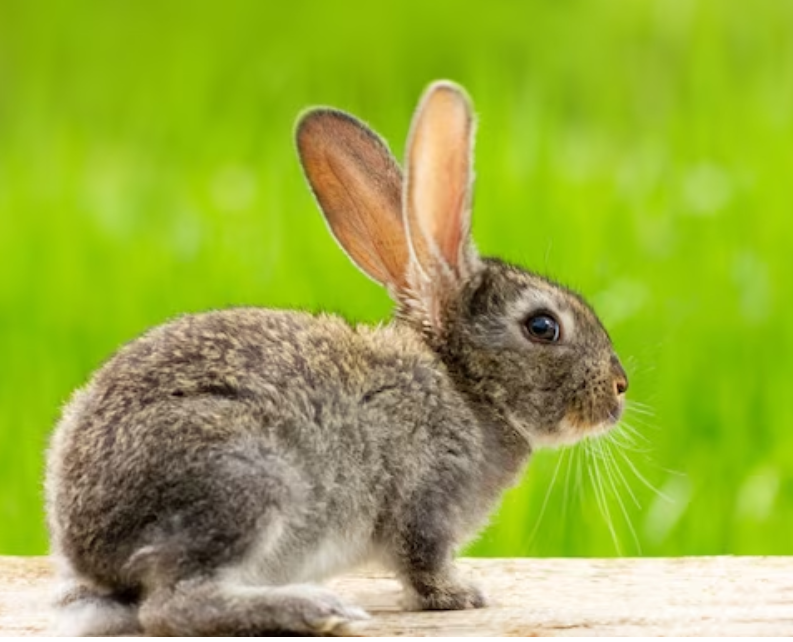
Rabbits are small mammals known for their long ears, fluffy tails, and strong hind legs. They are herbivores, primarily feeding on grass, leaves, and vegetables. Rabbits are prolific breeders and live in burrows or warrens. They are popular as pets and have been domesticated in many cultures.
Quick Top 10 Facts About Rabbit
| SCIENTIFIC NAME | Oryctolagus cuniculus (Rabbit) |
| CLASSIFICATION | KINGDOM: Animalia CLASS: Mammalia ORDER: Lagomorpha FAMILY: Leporidae PHYLUM: Chordata GENUS: Oryctolagus |
| SIZE | Length: 20–50 cm (8–20 in) Weight: 1–2.5 kg (2.2–5.5 lbs), depending on breed |
| HABITAT | Meadows, forests, grasslands, deserts, and wetlands; often found in burrows or warrens |
| DIET | Herbivorous – Eats grasses, vegetables, bark, and leafy weeds |
| SPECIES | European Rabbit (Oryctolagus cuniculus), along with various domestic breeds and wild relatives like hares |
| COUNTRY | Native to southwestern Europe and northwest Africa; now found worldwide due to domestication and introduction |
| GESTATION PERIOD | 28–31 days |
| LIFE SPAN | 1–2 years in the wild; 8–12 years in captivity |
| CONSERVATION STATUS | Least Concern (domestic and some wild populations); however, some wild species like the European Rabbit are considered Near Threatened in parts of their native range |
General facts about rabbits, including their appearance, size, shape, and fur
Small mammals, like rabbits, are members of the Leporidae family. Their big ears, fluffy tails, and rapid reproduction rate are among their best-known traits. We’ll look at some fascinating facts about rabbits below:
Leporidae is a family of intriguing creatures that includes rabbits. Long ears, fluffy tails, and strong hind legs are characteristics of these little animals that are well-known. They are white, brown, black, and even speckled, among other colours and patterns. Since rabbits are herbivores, their main source of food is vegetation. They can absorb the most nutrients from their meals because of a special digestive mechanism.
Reproductive behaviour of rabbits: Their ability to breed rapidly
The fact that rabbits can procreate quickly is an intriguing feature about them. A litter of up to 12 pups, known as kits, may be born to female rabbits, known as does, during their short 30-day gestation period. Though they are born hairless and with closed eyelids, these kits grow and develop rapidly in a few weeks. Because of their high rates of reproduction, rabbits are often connected to fertility and plenty in many civilizations.
Unique features such as long ears, powerful hind legs, fluffy tails, and exceptional hearing and vision
It’s also well known that rabbits are very fast and agile. They can jump and hop quite far, covering up to 45 miles per hour, thanks to their strong hind legs. In the wild, their extraordinary speed aids them in avoiding predators. The excellent hearing and eyesight of rabbits also help them survive. They can identify any dangers from every angle thanks to their 360-degree field of view.
Global distribution facts about rabbits: Some specific species and their regions
Rabbits are unusual animals with intriguing qualities. These little creatures have a lot to be admiring, from their large ears and fluffy tails to their amazing agility and quick reproduction. Whether you find their charming look or their incredible survival abilities endearing, rabbits continue to pique people’s curiosity throughout the globe.
In addition to being popular pets, rabbits also offer a few fascinating tidbits of information that some people may not be aware of. Firstly, rabbits have very good eyesight; at any one time, they can view about 360 degrees of their surroundings. Additionally, they have keener hearing and smell than other animals, which helps them identify predators and prey from a considerable distance away. Another fascinating fact about rabbits is that they are known to live for five to eight years, so if you want to keep one as a pet, you should try to provide it with a healthy home so it may live even longer.

The Social nature facts about rabbits and their tendency to live in groups
Living in groups, rabbits are also very gregarious creatures who like playing and interacting with people and other animals. They can dig fast and deeply because of their strong rear legs and long claws. They are also excellent diggers. In conclusion, rabbits consume their own excrement, which is a vital component of their diet as it increases the amount of nutrients in their food that they absorb. Thus, you can be certain that there’s much more going on than meets the eye behind that cuddly visage the next time you encounter a rabbit.
1. Environment and habitats range for rabbits
Rabbits inhabit a wide range of environments worldwide, such as ponds, grasslands, woods, and deserts. Because of their great adaptability, they can live in a variety of environments.
2. Food Plan and favourite diet of rabbits
Since rabbits are herbivores, their main source of food is vegetation. They eat only grass, leaves, twigs, and sometimes bark. They can get the most nourishment possible from plant material thanks to a special digestive mechanism.
3. Communication and vocalisations of rabbits
Rabbits communicate with one another in a number of ways. They alert others to danger by thudding their rear legs on the earth. In order to convey a range of emotions, they also create diverse vocalisations, such as growls, grunts, and purrs.
4. Conception and reproduction cycle of rabbits
The quick pace of reproduction in rabbits is well known. A litter of three to twelve kits, born to a female rabbit known as a doe, is known as a litter. The kits are born hairless and blind after a gestation period of around thirty days. They wean by the time they are four to five weeks old because they grow up rapidly.
5. Vitality and energy level of rabbits
A rabbit’s life expectancy varies based on its species and habitat. Wild rabbits only survive for one to two years on average because of predation and other causes; tamed rabbits live for eight to twelve years on average.
6. Social Interaction and behavior of rabbits
Rabbits are gregarious creatures that live in colonies, often known as warrens. They use scent marking and body language to communicate, and they create hierarchies within their communities. As a social bonding mechanism, rabbits also groom one another.
7. Quickness and adaptability of rabbits
The extraordinary speed and agility of rabbits are well known. Their rapid running ability allows them to swiftly flee from predators at up to 45 miles per hour. They can also jump and change direction quickly because of their powerful rear legs.
8. Dental well-being of rabbits
Teeth that develop continually in rabbits need to be worn down constantly. To maintain the health of their teeth, they chew on fibrous plant matter. If their teeth get enlarged, dental issues may occur, causing discomfort and making eating difficult.

9. Types and Strains and various colour options of rabbits
Numerous breeds of rabbits exist, and each has special qualities of its own. The Flemish Giant, the Netherland Dwarf, and the Dutch Rabbit are a few prominent breeds. These breeds differ in temperament, size, and colour.
10. Importance of rabbits to Culture
Throughout history, rabbits have appeared in many nations’ mythologies. They are often linked to rebirth, fortune, and fertility. Rabbits are revered in various cultures and seen as signs of fertility.
Importance of understanding and appreciating rabbits in the animal kingdom
With a rich history and distinctive features, rabbits are intriguing animals. They are an important component of the animal world because of their capacity for environmental adaptation, efficient communication, and rapid reproduction. Rabbits, whether they are kept as pets or in the wild, never fail to pique our interest.
FAQ (frequently asked questions) about Rabbits
Q: What is a rabbit?
Ans: A rabbit is a small, herbivorous mammal known for its long ears, fluffy tail, and powerful hind legs. Rabbits belong to the family Leporidae and are found in many parts of the world.
Q: Where do rabbits live?
Ans: Rabbits live in a variety of environments including meadows, forests, grasslands, deserts, and wetlands. Domesticated rabbits live in homes or hutches under human care.
Q: What do rabbits eat?
Ans: Rabbits are herbivores and eat a diet of grasses, hay, leafy greens, and vegetables. They also need a constant supply of fresh water and benefit from chewing on hay to maintain dental health.
Q: How do rabbits defend themselves?
Ans: Rabbits defend themselves by using their speed and agility to flee from predators. They also thump their hind legs on the ground to warn others of danger and use camouflage to hide.
Q: How do rabbits reproduce?
Ans: Rabbits reproduce rapidly. After mating, a female rabbit (doe) has a short gestation period of about 28-31 days and can give birth to 4-12 kits (baby rabbits) at a time.
Q: Are rabbits good pets?
Ans: Yes, rabbits are popular pets due to their gentle nature, quiet behavior, and ability to bond with humans. They require proper care, space to move, and social interaction to thrive.
Q: How long do rabbits live?
Ans: Domestic rabbits can live between 8 to 12 years with proper care. Wild rabbits generally have shorter lifespans due to predators and environmental challenges.
Q: What are the characteristics of rabbits?
Ans: Rabbits are small mammals with soft fur, large eyes, strong hind legs, and long ears. They are social animals and are most active during dawn and dusk (crepuscular behavior).
Q: Do rabbits dig burrows?
Ans: Yes, many wild rabbits dig burrows, known as warrens, which provide shelter and protection from predators. Domestic rabbits may also exhibit digging behavior if given the opportunity.
Q: Can rabbits be trained?
Ans: Yes, rabbits can be trained to use a litter box and respond to simple commands, especially with positive reinforcement. Consistency and gentle handling are key to successful training.
#Rabbit, #BunnyLove, #RabbitsOfInstagram, #BunnyLife, #FluffyBunny, #CuteRabbits, #PetRabbit, #RabbitLovers, #BunnyGram, #AnimalLovers, #HopHop, #BunnyWorld, #FurryFriends, #RabbitPhotography, #AdorableBunnies
Our sources and references about Rabbit
1: Wikipedia
2: Encyclopaedia Britannica
3: National Geographic
4: House Rabbit Society