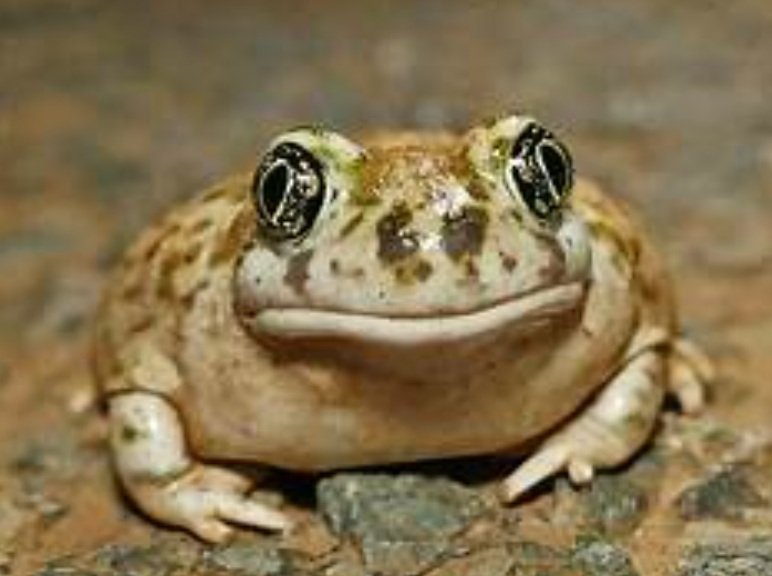
Quick Top 10 Facts about Spadefoot Toad
| SCIENTIFIC NAME | Scaphiopus spp. / Spea spp. |
| CLASSIFICATION | KINGDOM: Animalia PHYLUM: Chordata CLASS: Amphibia ORDER: Anura FAMILY: Scaphiopodidae GENUS: Scaphiopus / Spea |
| SIZE | Length: 1.5–3 inches (4–7.5 cm) |
| HABITAT | Arid or semi-arid regions, sandy or loose soil areas across North America |
| DIET | Insects, spiders, worms, and other small invertebrates |
| SPECIES | Several species including the Eastern Spadefoot (Scaphiopus holbrookii) and Western Spadefoot (Spea hammondii) |
| COUNTRY | Primarily found in the United States and parts of southern Canada and northern Mexico |
| GESTATION PERIOD | Eggs hatch in 1–2 days; tadpoles may metamorphose in as little as 2 weeks under harsh conditions |
| LIFE SPAN | Typically 5–10 years in the wild |
| CONSERVATION STATUS | Varies by species; some are of Least Concern, while others face habitat threats |
Amazing Facts About Spadefoot Toads
1. They get their name from a unique spade-like structure
Spadefoot toads have a hardened “spade” on each hind foot that helps them dig backwards into the soil.
2. They are expert burrowers
They spend much of their lives underground, emerging mostly during heavy rains.
3. They can remain dormant for months
Spadefoot toads can survive dry conditions by entering a state of estivation underground.
4. Their tadpoles develop extremely fast
In temporary pools, their young may transform into toads in just 10–14 days to avoid desiccation.
5. They have vertical pupils
Most spadefoot toads have vertical, cat-like pupils, which help them see in low light.
6. They produce a distinctive call
Their calls are often compared to the sound of a bleating sheep or a short grunt.
7. They are often mistaken for true toads
Despite their name, they are not true toads and belong to a different family (Scaphiopodidae).
8. Some species are endangered
Habitat destruction and urbanization have put pressure on certain species like the Western Spadefoot.
9. They play an important ecological role
By feeding on insects and being prey themselves, spadefoot toads help balance ecosystems.
10. They have toxin-secreting skin
Some species release mild toxins through their skin as a defense mechanism against predators.
Intriguing facts about the spadefoot toad
The spadefoot The intriguing toad is a species of amphibian recognized for its distinct features and habits. This toad, which can be found in North America, Europe, and Asia, inhabits the globe. Its name derives from the morphology of its hind feet, which are designed to dig and resemble spades.
Adaptations for Dry Environments of Spadefoot Toads
The capacity of the spadefoot toad to live in dry areas is an intriguing feature. This toad, in contrast to many others, had the amazing capacity to aestivate—a kind of hibernation that occurs during hot and dry seasons. It buries itself under the surface and waits for more conducive circumstances to allow it to survive.
Unique Breeding Habits of Spadefoot Toads
The breeding habits of the spadefoot toad are another fascinating feature. Because of their unusual breeding method, these toads rely on the existence of transient pools of water. These ponds are created by heavy rains, and toads congregate there to mate and lay eggs. Before the temporary water supply evaporates, the tadpoles take advantage of it, hatching and growing quickly. Because of this adaptability, the spadefoot toad may effectively reproduce in dry and uncertain conditions.
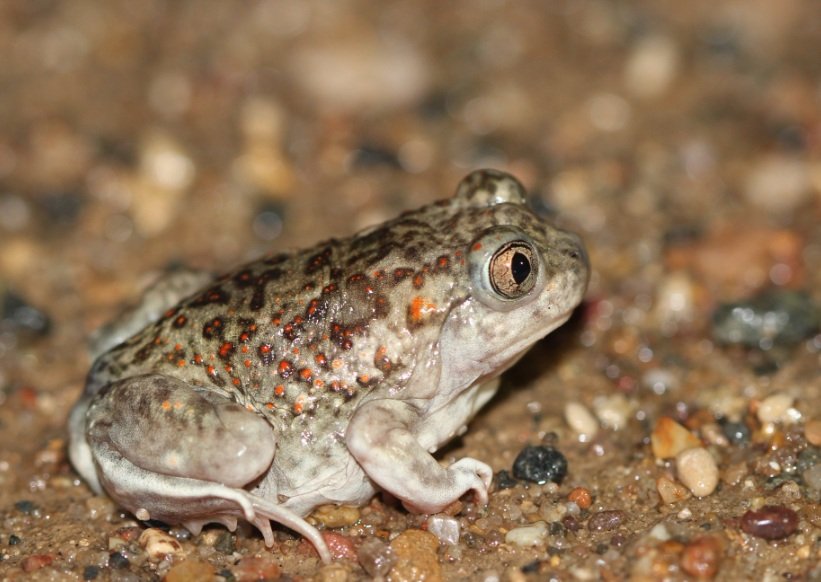
Insights into Spadefoot Toads
An amazing amphibian that has evolved to live in dry and semi-arid conditions is the spadefoot toad. This fascinating organism’s nocturnal habits, distinct physical features, and unique adaptations make it possible to study. Gaining knowledge about the spadefoot toad allows us to recognize the variety and tenacity of the natural world.
Habitat and Distribution of Spadefoot Toads
Typically, the spadefoot toad inhabits dry and semi-arid environments, including scrublands, grasslands, and deserts. They are found in Asia, Europe, and North America and are highly suited to living in these severe settings.
Physical Characteristics of Spadefoot Toads
A characteristic that distinguishes spadefoot toads from other toads is a protrusion on their rear legs that resembles a spade. Their unique adaptability allows for rapid ground-burrowing. Their rough, warty skin serves as protection and concealment, and their robust bodies and short legs contribute to this.
Nocturnal Behavior of Spadefoot Toads
Spadefoot toads are typically nocturnal animals, so nighttime is when they are most active. To save energy and stay out of the sun, they spend their days hidden in burrows or underground. They come out at night to mate and go food hunting.
Dietary Preferences of Spadefoot Toads
The majority of the diverse food that spadefoot toads consume is made up of insects and other tiny invertebrates. Because they are opportunistic feeders, they will consume everything they can snag, including tiny amphibians, ants, spiders, and beetles. Their food is essential to preserving the equilibrium of the ecosystem in which they live.
Reproduction and Life Cycle of Spadefoot Toads
Spadefoot toads’ distinctive mating technique is strongly correlated with water. To deposit their eggs, they need ephemeral pools of water, such as seasonal ponds or puddles created by rain. These ponds may provide a secure environment for their tadpoles to grow. At breeding grounds, spadefoot toads congregate in great numbers when the circumstances are favorable. Males yell to entice females, and once a female chooses a mate, the male and female engage in amplexus, in which the male latches onto the female’s back. After the female lays its eggs, the male externally fertilizes them. After emerging from the eggs, tadpoles go through a quick stage of growth. Until they change into juvenile toads, they are fed on algae and other organic substances found in the water. Depending on the surroundings, the whole process from egg to adult can take a few weeks to several months.
 Survival Adaptations of Spadefoot Toads
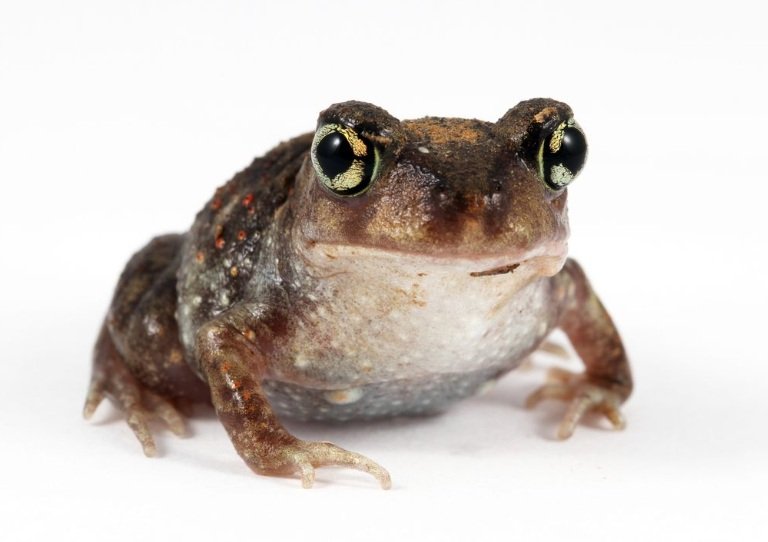 Survival Adaptations of Spadefoot Toads
Spadefoot toads have developed a number of adaptations that help them live in their distinct environments. They can swiftly burrow using their spade-like rear legs, which helps them avoid temperature extremes and predators. Additionally, they have unique skin glands that secrete poison as protection against predators. The capacity of spadefoot toads to aestivate is another amazing adaptation. They go into a condition of dormancy called aestivation, which enables them to endure prolonged hot weather or drought. They sink their teeth into the earth and go into hibernation, slowing their metabolism and storing water until the weather gets better.
FAQ (Frequently Asked Questions) about Spadefoot Toad
Q: What is a Spadefoot Toad?
Ans: The Spadefoot Toad is a type of toad belonging to the family Scaphiopodidae. These toads are named for the unique, spade-like structures on their hind feet, which they use for digging. They are burrowing amphibians known for their ability to survive in arid environments and are found across North America, particularly in areas with seasonal rainfall.
Q: Where do Spadefoot Toads live?
Ans: Spadefoot Toads are found in a variety of habitats, including grasslands, deserts, and temporary wetlands. They are most commonly located in the western and central United States, including areas like the Great Basin, southwestern deserts, and parts of the Midwest. They often burrow underground during dry periods and only emerge to breed during wet seasons.
Q: What do Spadefoot Toads eat?
Ans: Spadefoot Toads are carnivorous and primarily feed on small invertebrates such as insects, spiders, and worms. They will also consume other small animals like snails or even small vertebrates if the opportunity arises. Their diet is largely dependent on the food available in their environment.
Q: How big do Spadefoot Toads get?
Ans: Spadefoot Toads typically range in size from 1.5 to 3 inches (3.8 to 7.6 cm) in length. They are relatively small compared to other toad species but have a robust and stocky build with powerful hind limbs for digging.
Q: Are Spadefoot Toads dangerous?
Ans: Spadefoot Toads are not dangerous to humans. However, they do produce toxins in their skin as a defense mechanism to deter predators. These toxins are potent but not harmful to humans, though they can cause mild irritation if touched. It is advisable not to handle them directly to avoid any irritation or allergic reactions.
Q: How do Spadefoot Toads defend themselves?
Ans: Spadefoot Toads use their spade-like feet to burrow quickly into the ground to escape predators. They can also secrete toxic fluids from their skin when threatened. This secretion can cause irritation to the mouth or eyes of potential predators. Their burrowing behavior is a highly effective defense mechanism against predation.
Q: What is the habitat of a Spadefoot Toad?
Ans: Spadefoot Toads are typically found in temporary ponds, shallow marshes, and ephemeral wetlands. These environments provide the ideal conditions for breeding and laying eggs. Outside of the breeding season, they burrow underground to avoid extreme temperatures and dry conditions, emerging only when it rains.
Q: How long do Spadefoot Toads live?
Ans: The lifespan of a Spadefoot Toad can vary, but in the wild, they typically live around 5 to 7 years. The lifespan may be shorter in areas with less consistent rainfall or harsher environmental conditions. Toads in captivity may live longer with proper care.
Q: Can you keep a Spadefoot Toad as a pet?
Ans: Yes, Spadefoot Toads can be kept as pets, but they require specific conditions to thrive. They need a suitable enclosure with adequate moisture and a burrowing area, as well as access to live food such as insects. They are more suited for experienced amphibian keepers, as they can be sensitive to changes in their environment.
#SpadefootToad, #Amphibians, #Toads, #BurrowingToads, #Wildlife, #Conservation, #ReptileEnthusiasts, #NatureLovers, #WildlifeProtection, #AmphibianCare
Our sources and references about Spadefoot Toad
1: Wikipedia – Spadefoot
2: National Wildlife Federation – Spadefoot Toad
3: USGS – Spadefoot Toad Research
4: US Fish and Wildlife – Spadefoot Toad