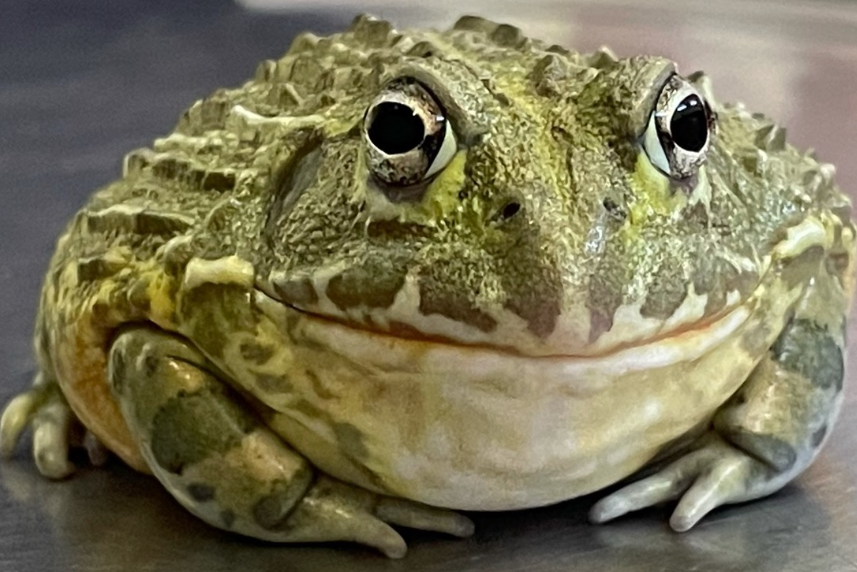
Quick Top 10 Facts about African Bullfrog
| SCIENTIFIC NAME | Pyxicephalus adspersus (African Bullfrog) |
| CLASSIFICATION | KINGDOM: Animalia CLASS: Amphibia ORDER: Anura FAMILY: Pyxicephalidae PHYLUM: Chordata GENUS: Pyxicephalus |
| SIZE | Length: 13–25 cm (5–10 inches) Weight: 1–1.4 kg (2.2–3.1 lbs) |
| HABITAT | Found in savannas, grasslands, and temporary pools in sub-Saharan Africa |
| DIET | Carnivorous – Feeds on insects, small vertebrates (such as birds and rodents), and amphibians |
| SPECIES | African Bullfrog (Pyxicephalus adspersus) |
| COUNTRY | Native to countries in sub-Saharan Africa, including South Africa, Botswana, and Zimbabwe |
| GESTATION PERIOD | Eggs hatch in 2–3 days after laying; tadpoles develop into froglets in 2–3 months |
| LIFE SPAN | Up to 45 years in captivity; typically 10–15 years in the wild |
| CONSERVATION STATUS | Least Concern— Not currently threatened, though habitat loss may impact local populations |
Physical Appearance: The size and weight of African Bullfrogs
The Pyxicephalus adspersus, or African bullfrog, is a remarkable amphibian that may be found across Africa. Males of this species may grow to a length of 10 inches and weigh more than 4 pounds, making them renowned for their amazing size. With a huge head and a broad mouth that enable them to eat a variety of foods, they have a sturdy body structure.
Unique breeding habits and reproductive behaviour of African Bullfrogs
The African bullfrog’s unique breeding habits are among its most fascinating features. These frogs congregate in transient sources of water, such as puddles or flooded regions, during the rainy season in order to breed. To entice females, the males mark their territory and make loud, resonant sounds. After a female chooses a partner, they lay eggs together and participate in a process called amplexus, in which the male latches onto the female’s back to fertilise the eggs.
Natural habitat of African Bullfrogs, including wetlands and grasslands
African Due to their great degree of adaptability, bullfrogs can live in a variety of environments, such as semi-desert regions, savannas, and grasslands. They can withstand very high temperatures and stay safe from predators because of their amazing ability to burrow into the earth. These frogs graze on a range of invertebrates, small vertebrates, and even other frogs since they are opportunistic feeders. They can eat prey bigger than their heads and have an insatiable hunger.
Unique characteristics and importance in the ecosystem
All things considered, the African bullfrog is an amazing amphibian because of its enormous size, unusual mating style, and ecological adaptation. Its capacity for burrowing and its varied food help it survive in a variety of settings. Researching these amazing animals reveals important details about the natural world and the complex interactions that exist between different species and their surroundings.
Fascinating facts about African bullfrogs
The intriguing amphibian known as Pyxicephalus adspersus, or African bullfrog, is indigenous to the sub-Saharan areas of Africa. This species is among the biggest frogs on the planet and is sometimes referred to as the giant bullfrog or the pixie frog. We’ll look at some fascinating information about the African bullfrog below:
1. Unique characteristics of African bullfrogs:
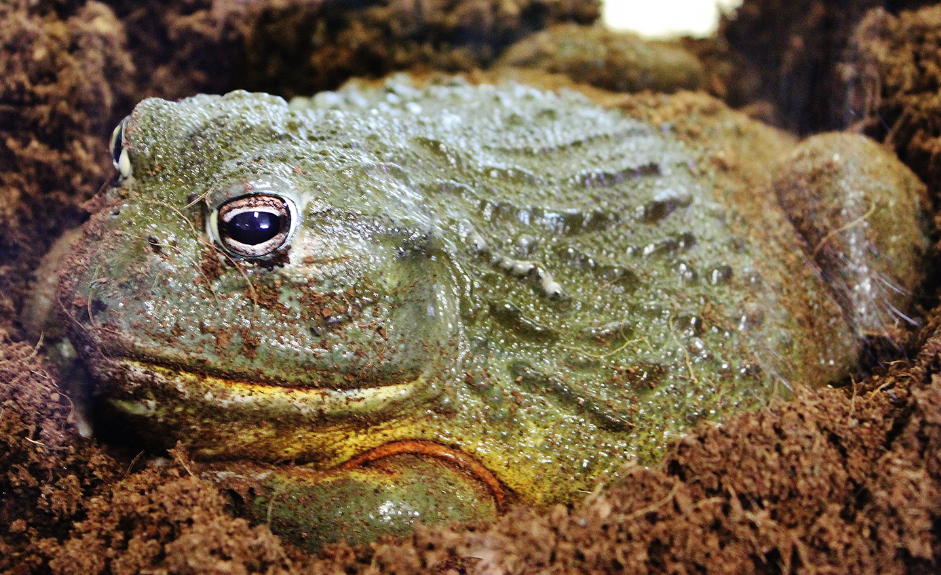
African bullfrogs are renowned for their enormous size. Females are somewhat smaller than males, with males reaching a maximum length of 10 inches (25 cm). They have a large mouth and a round, strong body. They usually have brown or olive-green skin with darker patches or blotches that help them blend in with their environment.
2. Carnivores Nature, diet, and feeding habits:
Bullfrogs from Africa are opportunistic predators. Their hunger is so great that they will devour almost everything that can fit in their jaws, including small animals, birds, insects, and even other frogs. They have a peculiar eating technique in which they ambush their victims, snatching them whole with their strong teeth.
3. The Habit of Burrowing:
The African bullfrog’s capacity to burrow is one of its fascinating behaviours. These frogs will burrow into the earth to avoid the heat and prevent water loss during the dry season when water sources are few. They can use their powerful front limbs and hind legs to dig holes up to a depth of one meter.
4. Reproductive behaviour of African bullfrogs:
The way African bullfrogs breed is very interesting. Males congregate around makeshift pools of water during the rainy season and scream out to attract ladies. The cry of the males is unique and like loud, resonant snoring. The male’s action of grabbing a female from behind when she is interested is called amplexus. Thousands of eggs will then be laid by the female, which the male will externally fertilise.
5. Reproduction and Lifecycle:
Process of egg-laying and tadpole development Tadpoles emerge from the eggs a few days after fertilisation. After that, the tadpoles will transform, eventually gaining legs and lungs. Several weeks may pass throughout this procedure. The baby frogs will emerge from the water and begin their lives on land after their metamorphosis is complete. It takes them a few years to become sexually mature.
6. Defence mechanisms employed by African bullfrogs:
African bullfrogs possess a special kind of defence. They will puff up their bodies to seem bigger and more menacing when they feel threatened. Additionally, they are capable of letting off a loud, high-pitched scream that may frighten off predators and let them flee. They also release a poisonous chemical via their skin that may be dangerous to predators.
7. Ecological Importance: Significance in African Traditions:
In many African societies, the African bullfrog is significant culturally. It is often connected to fertility and rain. Its appearance during the wet season is seen as a symbol of wealth and good fortune. Because of their purported therapeutic qualities, frogs are used in traditional medicine in several cultures.
The importance of understanding and conserving African Bullfrogs for the overall health of the ecosystem
The African bullfrog is an amazing amphibian with distinctive traits and habits. It’s an interesting animal to examine because of its size, eating habits, burrowing behaviour, and reproductive tactics. In many African societies, it is also considered a cultural sign of fertility and rain.
FAQ (frequently asked questions) about African Bullfrog
Q: What is an African bullfrog?
Ans: The African Bullfrog (Pyxicephalus adspersus) is a large, robust frog species native to sub-Saharan Africa. It is known for its large size, powerful build, and aggressive nature when threatened.
Q: Where do African bullfrogs live?
Ans: African Bullfrogs inhabit savannas, grasslands, and wetlands across sub-Saharan Africa. They are often found in areas with seasonal rainfall, where they can breed in temporary water bodies.
Q: What do African bullfrogs eat?
Ans: African bullfrogs are carnivorous and have a wide-ranging diet, including insects, small mammals, amphibians, and even small birds. They are known to be aggressive hunters and will consume whatever prey is available.
Q: How do African bullfrogs defend themselves?
Ans: When threatened, African bullfrogs inflate their bodies to appear larger and more intimidating. They also use their strong, muscular limbs to dig into the ground for protection or to escape into burrows.
Q: How do African bullfrogs reproduce?
Ans: African bullfrogs breed during the rainy season. Males call loudly to attract females, and once a female lays her eggs in a water body, the male fertilises them externally. The eggs hatch into tadpoles, which develop into adult frogs.
Q: Are African bullfrogs endangered?
Ans: No, African bullfrogs are not considered endangered. They are listed as “least concern” by the IUCN due to their wide distribution and adaptability to various environments.
Q: How long do African bullfrogs live?
Ans: African bullfrogs can live up to 45 years in captivity, though they typically live for 20–30 years in the wild, depending on environmental conditions and predation risks.
Q: What are the characteristics of African bullfrogs?
Ans: African bullfrogs are large, robust frogs with a broad, flattened body, short limbs, and a large head. Their colouration varies from green to brown, with some having distinct yellow markings.
Q: Can African bullfrogs be kept as pets?
Ans: Yes, African bullfrogs can be kept as pets, but they require a large, secure enclosure and appropriate care, including proper heating and humidity levels. They are best suited for experienced amphibian keepers.
Q: Are African bullfrogs aggressive?
Ans: Yes, African bullfrogs can be quite aggressive, especially when defending their territory or when handled improperly. They have powerful jaws and will bite if threatened.
#AfricanBullfrog, #Bullfrog, #FrogLovers, #Amphibians, #ExoticPets, #WildlifePhotography, #FrogLife, #WildlifeConservation, #AmphibianLovers, #NatureLovers, #WildFrogs, #ToxicFrog, #AfricanWildlife, #FrogPhotography, #PetFrog
Our sources and references about African Bullfrog
1: Wikipedia
2: Encyclopaedia Britannica
3: IUCN Red List
4: FrogWatch – African Bullfrog


