Quick Top 10 Facts about African Bush Elephant
| SCIENTIFIC NAME | Loxodonta africana (African Bush Elephant) |
| CLASSIFICATION | KINGDOM: Animalia CLASS: Mammalia ORDER: Proboscidea FAMILY: Elephantidae PHYLUM: Chordata GENUS: Loxodonta |
| SIZE | Height: 3–4 meters (9.8–13.1 feet) Weight: 4,500–6,800 kg (10,000–15,000 lbs) |
| HABITAT | Grasslands, savannas, forests, and deserts across Sub-Saharan Africa |
| DIET | Herbivorous – Feeds on grasses, fruits, bark, and leaves |
| SPECIES | African Bush Elephant (*Loxodonta africana*) – the largest land mammal |
| COUNTRY | Found in many African countries, including South Africa, Botswana, Tanzania, and Kenya |
| GESTATION PERIOD | 22 months – the longest of any land mammal |
| LIFE SPAN | 60–70 years in the wild |
| CONSERVATION STATUS | Vulnerable – Threatened by poaching, habitat loss, and human-wildlife conflict |
Intriguing facts about African bush elephant
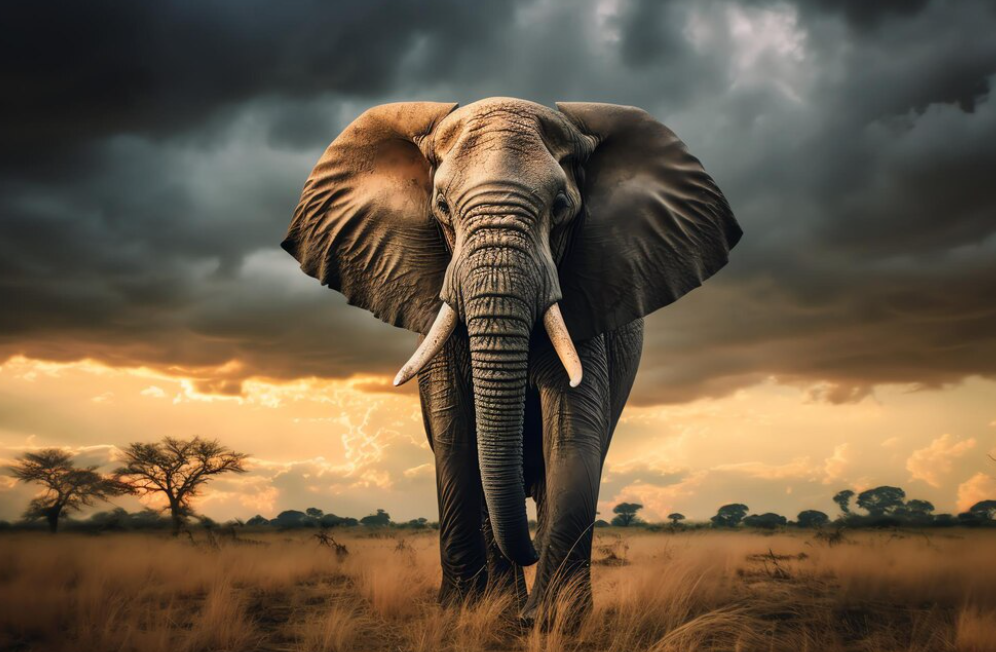
The African Bush Elephant is a majestic animal distinguished by its remarkable strength and size. Males may grow to a height of 13 feet at the shoulder and weigh up to 14,000 pounds, making them the biggest terrestrial mammal on Earth. With their big, flapping ears that help them control their body temperature and their long, curving tusks, these elephants have a striking look.
Social nature and communication methods of African bush elephant
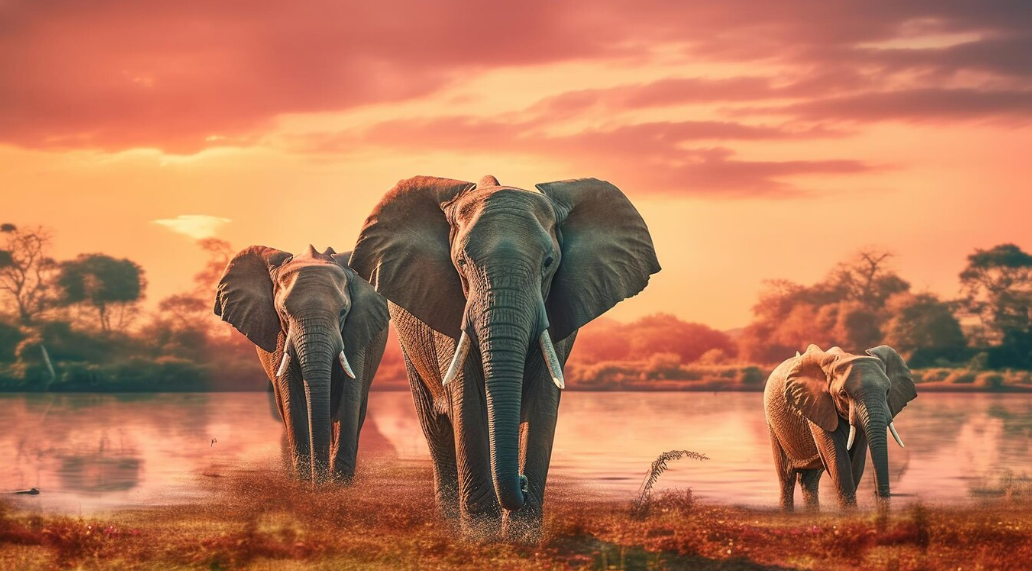
The social structure of the African bush elephant is among its most remarkable features. These elephants reside in herds, which are close-knit family units headed by a matriarch. The matriarch, who is often the group’s oldest and most seasoned female member, is essential to leading the herd and making critical choices. Adult males prefer to spend solitary lives or form tiny bachelor groups; females and their young progeny make up the herds.
Feeding habits and herbivorous diet of African bush elephant
African bush elephants are mostly plant-feeders since they are herbivores. They eat a wide variety of foods, including fruits, roots, leaves, and bark. These elephants can obtain nutrients from fibrous and difficult plant material because of their special digestive system. They have the capacity to eat a lot—up to 300 pounds in a single day. Due to their ability to spread seeds and forge paths through thick foliage, their eating habits also significantly influence the manner in which their surroundings are shaped.
Fascinating Facts about African Bush Elephant
The biggest land mammal on Earth is the African bush elephant, or Loxodonta africana in scientific terms. These amazing animals may be found in many African nations, including Tanzania, South Africa, Kenya, Botswana, and Zimbabwe. We’ll look at some amazing facts about African bush elephants below:
Physical Characteristics, Dimensions and mass
The striking size and weight of the African bush elephant are well known. Males often reach shoulder heights of 10 to 13 feet and weigh between 5,000 and 14,000 kg (11,000 and 31,000 pounds). In comparison to males, females are somewhat smaller, standing 8–10 feet tall and weighing between 2,700 and 6,000 kg (6,000–13,000 pounds).
African bush elephant’s large ivory tusks.
The African bush elephant’s large, curving tusks are one of its most distinguishing characteristics. These tusks, which may reach a length of ten feet, are essentially enlarged incisor teeth. They provide a variety of functions, including protecting themselves from predators, digging for water, and removing tree bark. Unfortunately, because of their great value in the illicit ivory trade, these tusks have also made elephants a target for poaching.
Distinct features: large ears, a long trunk
The amazing trunk of the African bush elephant is a combination of its snout and upper lip. This multipurpose limb is very powerful and nimble, with the ability to move bulky items, collect food, and even shoot water. It may be used for communication, such as trumpeting to alert others to danger or to express emotions, and has more than 100,000 muscles.
Social Structure and Behaviour
Primarily gregarious, African bush elephants live in intricate family units headed by a matriarch. These herds, which are made up of females, their young, and sometimes younger males, may number up to twenty people. When it comes to leading the herd, making choices, and making sure they are secure, the matriarch is very important.
Nutrition and ability to consume large quantities of food
Being herbivores, African bush elephants mostly eat grasses, leaves, bark, and fruits. They have the capacity to consume up to 300 kilograms (660 pounds) of vegetation in a single day. As they travel across many habitats, their food contributes to the formation of open areas and the promotion of plant variety in the environment.
Threats and Conservation Status
African bush elephants are very strong and large, yet they are threatened in many ways. Poaching, habitat destruction, and conflicts between people and animals are some of the main issues they face. To save these amazing animals, conservation strategies, public awareness campaigns, and anti-poaching campaigns are being supported.
African bush elephants for their ecological and cultural value
A noteworthy species in terms of both physical attributes and ecological significance is the African bush elephant. Gaining knowledge about these amazing animals will enable us to value and safeguard them for future generations.
FAQ (frequently asked questions) about African Bush Elephant
Q: What is an African Bush Elephant?
Ans: The African Bush Elephant (Loxodonta africana) is the largest land mammal on Earth, known for its large ears, long trunk, and tusks. It is native to sub-Saharan Africa and is an iconic symbol of wildlife conservation.
Q: Where do African Bush Elephants live?
Ans: African Bush Elephants primarily inhabit savannas, forests, and woodlands across sub-Saharan Africa. They are found in a range of habitats, from open plains to dense forests, and prefer areas with access to water sources.
Q: What do African Bush Elephants eat?
Ans: They are herbivores, feeding on grasses, fruits, bark, leaves, and tree branches. Due to their large size, they require a significant amount of food each day, often consuming up to 300 pounds (136 kg) of vegetation daily.
Q: How do African Bush Elephants defend themselves?
Ans: African Bush Elephants use their size, strength, and tusks to defend themselves. They are also highly social animals and will often form protective groups when threatened by predators or humans.
Q: How do African Bush Elephants reproduce?
Ans: African Bush Elephants have a long gestation period of about 22 months, the longest of any land mammal. Females give birth to a single calf, which they care for intensely in a matriarchal social structure.
Q: Are African Bush Elephants endangered?
Ans: African Bush Elephants are listed as “Endangered” by the IUCN. They face threats from habitat loss, poaching for their ivory tusks, and human-wildlife conflict. Conservation efforts are critical to their survival.
Q: How long do African Bush Elephants live?
Ans: In the wild, African Bush Elephants can live for up to 60 to 70 years. Their lifespan may vary depending on environmental conditions and human-related threats.
Q: What are the characteristics of African Bush Elephants?
Ans: African Bush Elephants are large, with thick gray skin, large ears, and long trunks that they use to grasp objects and drink water. Their tusks are made of ivory and continue growing throughout their lives.
Q: Are African Bush Elephants social animals?
Ans: Yes, African Bush Elephants are highly social and live in family groups led by a matriarch. These groups provide protection, support, and knowledge to younger members of the herd.
Q: How do African Bush Elephants communicate?
Ans: African Bush Elephants communicate using a variety of vocalizations, including trumpeting calls, rumbling sounds, and low-frequency infrasound. They also use body language, such as ear flapping and trunk movements, to express emotions.
#AfricanBushElephant, #Elephants, #WildlifePhotography, #AfricanWildlife, #SaveTheElephants, #WildlifeConservation, #ElephantLovers, #BigFive, #EndangeredSpecies, #NatureLovers, #ElephantFamily, #ElephantLove, #SafariLife, #WildAnimals, #ConservationMatters
Our sources and references about African Bush Elephant
1: Wikipedia
2: Encyclopaedia Britannica
3: IUCN Red List
4: World Wildlife Fund (WWF)