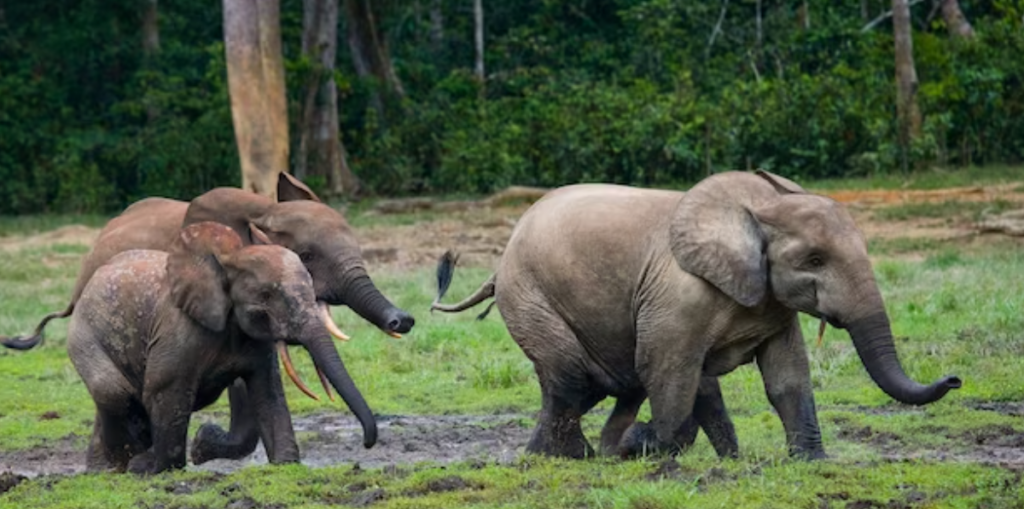
Quick Top 10 Facts about African Elephant
| SCIENTIFIC NAME | Loxodonta africana |
| CLASSIFICATION | KINGDOM: Animalia PHYLUM: Chordata CLASS: Mammalia ORDER: Proboscidea FAMILY: Elephantidae GENUS: Loxodonta SPECIES: L. africana |
| SIZE | Height: 8–13 feet (2.5–4 meters) at the shoulder, Weight: 5,000–14,000 pounds (2,268–6,350 kg) |
| HABITAT | Found in a variety of habitats, including savannas, forests, and deserts, primarily across sub-Saharan Africa |
| DIET | Herbivorous; feeds on grasses, fruits, leaves, bark, and small branches |
| SPECIES | African Elephant, the largest land mammal on Earth |
| COUNTRY | Native to Africa, found in a wide range of countries across sub-Saharan Africa |
| GESTATION PERIOD | About 22 months, the longest gestation period of any land animal |
| LIFE SPAN | 60–70 years in the wild |
| CONSERVATION STATUS | Vulnerable (IUCN); threatened by poaching for ivory and habitat loss |
Amazing Facts About African Elephants
1. They are the largest land mammals
African elephants rank as the largest terrestrial animals. Males can weigh up to 14,000 pounds (6,350 kg) and stand 13 feet (4 metres) tall at the shoulder.
2. They have large ears that help regulate body temperature
The large ears of African elephants serve more than just hearing. They help dissipate heat and regulate body temperature by releasing excess heat.
3. They use their trunks for a variety of tasks
Elephants use their trunks for breathing, smelling, drinking, grabbing objects, and social interactions like touching or caressing.
4. They have remarkable memories
Elephants possess excellent memories, aiding them in navigating vast landscapes and recalling locations of waterholes and food sources.
5. They live in matriarchal herds
African elephant herds operate under the leadership of the oldest and most experienced female, known as the matriarch. This strong leadership helps the herd survive in the wild.
6. Elephants communicate using infrasound
Elephants communicate over long distances using low-frequency sounds (infrasound), which can travel several kilometres.
7. They are herbivores with large appetites
African elephants consume up to 300 pounds (136 kg) of food daily, including grasses, leaves, and fruits.
8. They are social and empathetic animals
Elephants are highly social animals, displaying empathy, cooperation, and mourning behaviours when a herd member dies.
9. They have tusks made of ivory
Elephants’ tusks are elongated incisors that grow throughout their lives. These tusks, made of ivory, have unfortunately led to illegal poaching.
10. Their populations are threatened
Despite their size and strength, African elephants face threats from poaching for their tusks and habitat destruction, making conservation efforts critical.
Intriguing Facts About African Elephants
The African elephant, native to the continent, stands as an amazing animal. Males can grow up to 13 feet tall and weigh up to 14,000 pounds, making them the largest terrestrial mammals on Earth. These magnificent creatures, known for their lengthy trunks, use them for breathing, drinking, and grasping items, among other functions. Their long ears not only help them stay cool in the hot African environment but also facilitate communication over great distances.
Behaviour and Social Structure of African Elephants
African elephants live in close-knit family groupings known as herds. These gregarious creatures typically follow the matriarch—the oldest and most seasoned female in the group. The matriarch plays an essential role by leading the group to water and food sources and protecting the younger animals from harm. These sentient animals communicate through an intricate system that includes various vocalisations, body language, and even infrasound—a low-frequency sound that travels great distances.
African Elephants Have Unique Features and Feeding Habits
One of the most remarkable features of African elephants is their amazing memory. They can recall the locations of food and water supplies even after several years. This extraordinary recall aids their survival in the vast African savannah, where resources can be scarce. As herbivores, African elephants primarily consume grass, leaves, bark, and fruits. They can eat up to 300 pounds of food daily, requiring extended feeding periods. Due to their size and voracious appetite, they create clearings and disperse seeds through their excrement, significantly influencing their habitats.
Interesting Facts About African Elephants
Global public interest in African elephants has surged due to these magnificent animals. As the largest land mammals on Earth, these gentle giants stand out for their distinctive qualities. African elephants are among the most intriguing species, distinguished by their size, intellect, social structure, and unique traits. We must continue advocating for their preservation and work to ensure their safety. Below, we examine several amazing facts about African elephants.
Description of the Average Size and Weight of African Elephants
African elephants are renowned for their immense size and weight. Adult males, known as bulls, can weigh up to 14,000 pounds and stand up to 13 feet tall at the shoulder. Females, or cows, may reach about 10 feet in height and weigh up to 7,000 pounds. Though somewhat smaller than males, they remain spectacular in size.
Unique Features and Functions of the Trunk and Tusks
The trunk of an African elephant is among its most recognisable features. This long, muscular projection combines the functions of the nose and upper lip, offering great versatility. Elephants use their trunks for breathing, drinking, picking up food, and even greeting one another.
Information on the Trunks and Tusks of African Elephants
In addition to their trunks, African elephants possess long, curving tusks. These tusks, essentially elongated incisor teeth, can grow up to ten feet in length. They serve as defensive weapons and are used for digging and removing bark from trees.
African Elephant Social Structure and Mating Pattern
African elephants live in intricate family units known as herds. These gregarious creatures usually follow the matriarch—the oldest and most seasoned female—who serves as the group’s leader and decision-maker. Upon reaching sexual maturity, male elephants often leave the herd to live alone or join smaller bachelor groups.
Intelligence and Emotions of African Elephants
African elephants are renowned for their high intellect and emotional intelligence.
#AfricanElephant, #Elephants, #Wildlife, #AfricanWildlife, #EndangeredSpecies, #Conservation, #SaveElephants, #ElephantConservation, #WildlifeProtection, #IvoryTrade, #Nature, #AnimalKingdom
Our sources and references about African Elephant
1: Wikipedia – African Elephant
2: World Wildlife Fund – African Elephant
3: Save the Elephants – African Elephants
4: National Geographic – African Elephant


