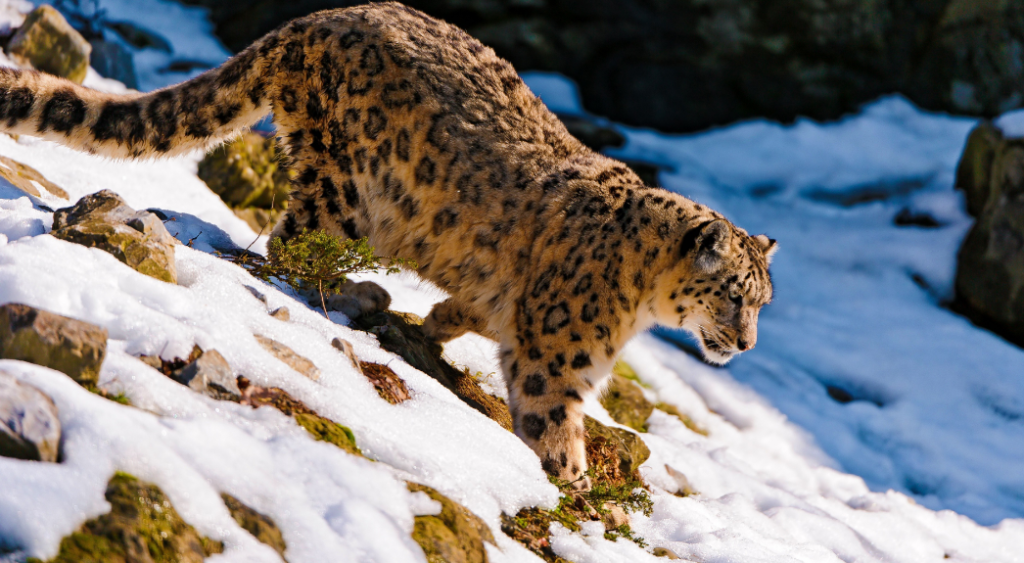
The Snow Leopard is a large, carnivorous cat native to the mountain ranges of Central and South Asia. It is known for its thick fur, which helps it survive the cold climates of its high-altitude habitat. Snow leopards are elusive, solitary hunters, and their diet consists mainly of wild sheep, goats, and smaller mammals.
Quick Top 10 Facts about Snow Leopard
| SCIENTIFIC NAME | Panthera uncia |
| CLASSIFICATION | KINGDOM: Animalia PHYLUM: Chordata CLASS: Mammalia ORDER: Carnivora FAMILY: Felidae GENUS: Panthera SPECIES: P. uncia |
| SIZE | Length: 3–4.5 feet (90–135 cm), Tail: 3–4 feet (90–120 cm), Weight: 60–120 pounds (27–55 kg) |
| HABITAT | Mountain ranges of Central Asia, including the Himalayas, Tibetan Plateau, and surrounding regions |
| DIET | Carnivorous; preys on mountain ungulates, small mammals, and birds |
| SPECIES | Snow Leopard, a solitary and elusive big cat native to the mountain ranges of Central Asia |
| COUNTRY | Found in countries including India, Nepal, Bhutan, China, and Mongolia |
| GESTATION PERIOD | Gestation lasts around 93–110 days, and females usually give birth to 2–3 cubs |
| LIFE SPAN | Up to 15–18 years in the wild, although many die at a younger age due to human-related threats |
| CONSERVATION STATUS | Vulnerable; populations are threatened by poaching, habitat loss, and loss of prey species |
Amazing Facts About Snow Leopards
1. Snow Leopards have exceptional camouflage
Their thick, spotted coat allows them to blend into rocky, snowy terrains, making them nearly invisible to prey.
2. They have powerful limbs for climbing
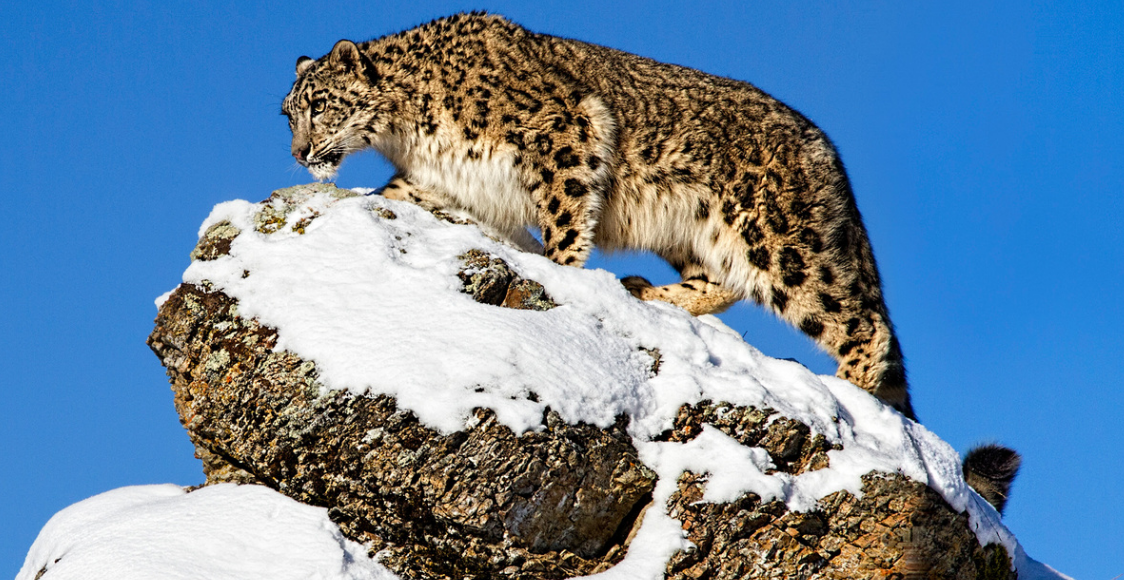
Snow Leopards can scale steep cliffs and rocky outcrops with ease, hunting in areas most predators cannot reach.
3. They are solitary animals
Unlike some big cats, Snow Leopards prefer to live alone, marking their territory with scent markings and scrapes.
4. They have long tails for balance
Their long, thick tail helps them maintain balance while navigating the rugged mountain landscapes.
5. Snow Leopards are elusive
Due to their solitary and nocturnal nature, Snow Leopards are rarely seen by humans in the wild.
6. They can leap great distances
Snow Leopards are known for their powerful jumps, capable of leaping up to 50 feet (15 meters) to catch prey.
7. They are skilled hunters
Snow Leopards use stealth and patience to stalk prey, often ambushing them from above or behind.
8. They can survive in harsh conditions
Snow Leopards are well adapted to cold environments, with their thick fur and large paws that act as natural snowshoes.
9. They communicate through vocalizations and scent
While mostly silent, Snow Leopards use growls, grunts, and scent markings to communicate with others, especially during mating season.
10. They are endangered due to human activities
Snow Leopards face threats from poaching for their fur and bones, habitat destruction, and conflict with livestock herders.
The Majestic Mountain Predator: The Snow Leopard
The snow leopard (Panthera uncia) is one of the most elusive and magnificent large cats in the world. It has earned a reputation for its remarkable ability to endure in some of the harshest and most hostile environments on the planet. The snow leopard excels in stealth and originates from the high mountain ranges of Central and South Asia. It is perfectly suited to the icy, rocky terrains in which it lives. People across the world, including wildlife enthusiasts and environmentalists, are captivated by the snow leopard’s distinctive appearance, remarkable agility, and enigmatic behaviour.
This article will explore the physical traits, habitat, behaviour, nutrition, conservation status, and ecological role of the snow leopard. It will help readers understand why protecting this magnificent predator is vital.
1. Physical Attributes of the Snow Leopard
The snow leopard’s appearance is one of its most striking features. This medium-sized large cat is perfectly adapted to the cold, rocky highland climate.
Dimensions and Look
- Weight and Size: Male snow leopards typically weigh between 36 and 55 kilogrammes (79 and 121 pounds), with females being slightly lighter. Snow leopards are medium-sized cats. Their length ranges from 90 to 130 cm (35 to 51 inches), with a tail that can add an additional 80 to 105 cm (31 to 41 inches).
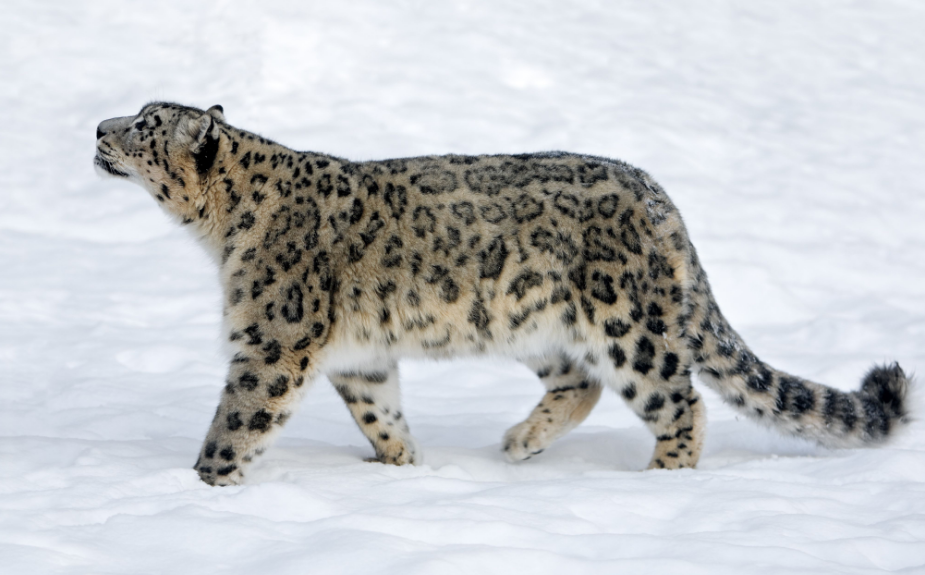
- Camouflage: Their thick fur, a lovely shade of light smoky-grey to yellowish-tan, helps them blend seamlessly with rocky and snow-covered surroundings. The fur features rosette-shaped and open patches. The long, thick coat provides vital protection from the freezing cold of their high-altitude habitats.
- Adapted Paws: The snow leopard’s large paws help distribute its weight on rocky and snowy terrain, making movement easier in these difficult environments. Furthermore, their cushioned feet serve as natural snowshoes.
- Strong Jaws and Keen Eyes: Snow leopards possess strong jaws with specialised teeth designed to grasp and hold onto their prey. Their eyes are a mesmerising shade of green or greyish-blue.
The Tail of the Snow Leopard
- Tail Characteristics: The snow leopard’s long, thick tail, which can reach the length of its body, is one of its most distinctive features. The tail provides warmth and helps with balance. The snow leopard uses it to protect its face and body while sleeping in the cold.
Adaptations to the Cold
- Physical Adaptations: Snow leopards are perfectly designed to withstand the harsh temperatures of mountainous areas. Their large nasal passages warm the cold air before it reaches their lungs. Their thick coats trap air around the body to act as insulation.
2. Distribution and Habitat of Snow Leopards
Snow leopards inhabit the wild mountain ranges of Central Asia, South Asia, and Eastern Asia. They can be found in China, India, Nepal, Bhutan, Pakistan, Afghanistan, Tajikistan, Kyrgyzstan, and Mongolia.
Habitats at High Altitudes
- High-Altitude Living: Snow leopards typically live between 3,000 and 4,500 metres (9,800 to 14,800 feet) above sea level. They are found in alpine meadows, rocky outcrops, high-altitude deserts, and steep cliffs. These areas experience extreme weather, heavy snowfall, and sparse vegetation.
- Mountain Range Locations: The untamed landscapes and isolated regions of the Himalayas, Karakoram, Pamir, and Tian Shan mountain ranges offer the snow leopard a safe environment for hunting and living.
Distribution and Range
- Geographical Distribution: Although snow leopards are primarily found in the Himalayas, they can also be located in several Central Asian countries. Their numbers are difficult to track and study as they inhabit some of the world’s most remote and inaccessible areas.
- Known Habitats: Snow leopards are particularly abundant in India and Nepal, especially in the Himalayan peaks. They can also be found in the Altai Mountains of Russia and Mongolia, the Tian Shan, and northern Pakistan.
3. Social Structure and Behaviour of Snow Leopards
Snow leopards are solitary animals, which makes studying their behaviour difficult. Nevertheless, scientists have uncovered fascinating details about their lifestyle, social structure, and survival strategies.
Solitary Nature of Snow Leopards
- Home Range: Snow leopards are solitary creatures, and their home range usually spans between 20 and 60 square kilometres (8 to 23 square miles), depending on topography, population density, and food availability. Although they avoid direct conflict, their territories may overlap with other snow leopards.
- Male and Female Territories: Male snow leopards often cover larger distances in search of food or mates. As a result, they typically have larger territories than females. Females prefer to stay near their den sites, especially when rearing cubs, and establish territories near areas abundant in prey.
Identifying the Territory
- Scent Marking: Snow leopards use scent marking to establish their territories. They leave scratches on rocks, trees, and other objects. Additionally, they mark their urine to indicate dominance or mating availability to other individuals within their range.
Reproduction and Mating
- Mating Season: Mating typically occurs between January and March. Snow leopards reproduce once a year. After a gestation period of 90 to 100 days, females give birth to one to three cubs.
- Protection and Nurturing: To shield the cubs from harsh weather, they are born in isolated, protective dens such as caves, rock fissures, or dense vegetation. The cubs are entirely dependent on their mother for care, as they are born blind.
- Cubs’ Independence: Cubs stay with their mother for 18 to 22 months before becoming independent and establishing their own territories. Snow leopards are known to spend more time with their mothers than other large cats, during which they acquire crucial survival skills.
4. Nutrition and Hunting Techniques of Snow Leopards
Snow leopards are skilled hunters and predators with unique adaptations that enable them to survive in their harsh environments.
Primary Food Sources
- Prey Types: The main food sources for snow leopards include medium-sized ungulates and wild prey such as musk deer, blue sheep, goat antelopes, argali sheep, and sometimes smaller animals like hares and pikas. In areas where their natural prey is limited, they have also been observed hunting domestic animals like yaks, sheep, and goats.
Hunting Techniques
- Stealth and Ambush: Snow leopards track their prey from a distance, using stealth and ambush tactics. They leap at the right moment, and their powerful rear legs enable them to leap long distances and capture prey with precision.
- Climbing Skills: Snow leopards are excellent climbers. They use this ability to hunt on steep slopes and rocky cliffs. Their ability to leap up to 15 metres (49 feet) provides a significant advantage when hunting on rugged, steep terrain.
- Hunting Times: These large cats typically hunt alone. They rely on their acute senses of hearing, smell, and sight to locate and ambush prey. Snow leopards prefer to hunt during dawn or dusk when their camouflage and stealth are most effective.
5. Conservation Status of Snow Leopards
The International Union for Conservation of Nature (IUCN) classifies the snow leopard as vulnerable. Poaching, habitat loss, and human-wildlife conflict are the primary threats to this species.
Risks to Snow Leopards
- Poaching: Poaching is a significant threat to snow leopards, as hunters target their exquisite fur and body parts. They are also hunted for their teeth and bones, which are illegally sold for use in traditional medicine.
- Habitat Loss: Human activities such as mining, forestry, and agriculture have drastically reduced the snow leopard’s native range, causing habitat loss.
- Human-Wildlife Conflict: Snow leopards sometimes hunt livestock in rural areas, leading farmers to kill them in retaliation, thus causing conflict between humans and wildlife.
Conservation Efforts
- Anti-Poaching Measures: Many governments and conservation organisations have implemented anti-poaching legislation and community-based conservation initiatives. These efforts include habitat preservation, the creation of protected areas, and the promotion of ecotourism to raise awareness.
- Community Initiatives: The Snow Leopard Trust and other conservation groups have developed programmes aimed at reducing human-wildlife conflict. They are also working to provide local communities with sustainable farming alternatives to livestock rearing.
FAQ (Frequently Asked Questions) about Snow Leopard
Q: What is a Snow Leopard?
Ans: The Snow Leopard (Panthera uncia) is a large cat native to the mountain ranges of Central and South Asia. Known for its beautiful spotted coat, thick fur, and long tail, the Snow Leopard is well adapted to life in cold, rugged environments. They are solitary creatures and are often considered elusive due to their secretive nature.
Q: Where does the Snow Leopard live?
Ans: Snow Leopards are found in the mountainous regions of Central Asia, including the Himalayas, the Tibetan Plateau, and parts of Mongolia, Kazakhstan, and Russia. They live in high-altitude, rugged terrain, often at elevations between 3,000 and 4,500 meters (9,800 to 14,800 feet) above sea level.
Q: What does the Snow Leopard eat?
Ans: Snow Leopards are carnivorous predators, primarily hunting ungulates such as blue sheep, ibex, and Himalayan tahr. They also prey on smaller animals like hares, marmots, and birds. Due to their solitary nature, they are skilled hunters, relying on stealth and ambush techniques to catch their prey.
Q: How big does a Snow Leopard get?
Ans: Snow Leopards typically weigh between 27 and 55 kilograms (60 to 120 pounds). Males are usually larger than females, and their body length ranges from 90 to 130 cm (35 to 51 inches), with their long tail adding another 80 to 105 cm (31 to 41 inches). Their size and muscular build help them navigate their mountainous habitats effectively.
Q: Are Snow Leopards dangerous?
Ans: While Snow Leopards are capable of attacking large prey, they are not typically a threat to humans. They are shy and solitary animals, preferring to avoid human contact. However, they can be dangerous if provoked or cornered, as they are powerful predators with sharp claws and teeth.
Q: How do Snow Leopards hunt?
Ans: Snow Leopards hunt primarily at dawn and dusk. They rely on their excellent camouflage and quiet movement to sneak up on their prey. They often ambush their victims from above or behind, using the terrain to their advantage. Their powerful hind legs allow them to leap great distances to surprise their prey.
Q: What does the Snow Leopard look like?
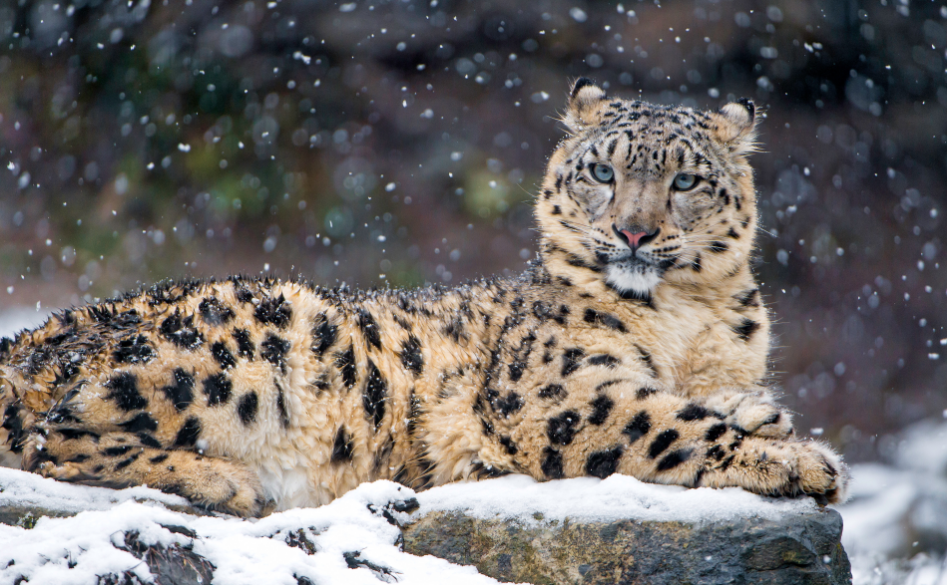
Ans: Snow Leopards have a thick, long fur coat that is pale grey with a pattern of dark rosettes and spots. Their eyes are large, and their facial features are distinct, with high cheekbones and a broad nose. Their long, bushy tail helps them balance on steep, rocky slopes, and provides warmth when wrapped around their bodies.
Q: How long do Snow Leopards live?
Ans: In the wild, Snow Leopards typically live for around 15 to 18 years. In captivity, where they are protected from threats like poaching and habitat loss, they can live longer, sometimes reaching up to 21 years.
Q: Are Snow Leopards endangered?
Ans: Yes, Snow Leopards are classified as vulnerable by the International Union for Conservation of Nature (IUCN). Their populations are threatened by habitat loss, poaching, and retaliation killings from herders. Conservation efforts are ongoing to protect their habitats and reduce human-wildlife conflict.
#SnowLeopard, #BigCats, #WildlifeConservation, #MountainAnimals, #EndangeredSpecies, #WildlifeProtection, #CarnivorousPredators, #SnowLeopardFacts, #WildlifePhotography
Our sources and references about Snow Leopard
1: Wikipedia – Snow Leopard
2: WWF – Snow Leopard
3: Snow Leopard Trust
4: National Geographic – Snow Leopard