Quick Top 10 Facts about Beluga Sturgeon Fish
| SCIENTIFIC NAME | Huso huso |
| CLASSIFICATION | KINGDOM: Animalia CLASS: Actinopterygii ORDER: Acipenseriformes FAMILY: Acipenseridae PHYLUM: Chordata GENUS: Huso |
| SIZE | Can grow up to 18 feet (5.5 meters) long and weigh up to 3,000 pounds (1,360 kg) |
| HABITAT | Found in the Caspian Sea, Black Sea, and the rivers that flow into them, especially the Volga River. |
| DIET | Carnivorous – primarily feeds on smaller fish and invertebrates such as mollusks and crustaceans. |
| SPECIES | Beluga Sturgeon (Huso huso) |
| COUNTRY | Found in parts of Eastern Europe and Asia, particularly in the Caspian Sea and Black Sea basins. |
| GESTATION PERIOD | Eggs take around 7-12 days to hatch, depending on water temperature. |
| LIFE SPAN | Beluga sturgeons can live up to 100 years, with some reaching sexual maturity after 15-20 years. |
| CONSERVATION STATUS | Critically Endangered due to overfishing, habitat destruction, and the demand for their roe (caviar). |
Amazing Facts About Beluga Sturgeon Fish
1. Largest sturgeon species
The Beluga Sturgeon is the largest of all sturgeon species and one of the largest fish in the world.
2. Can live for over a century
Beluga sturgeons have an extraordinary lifespan, living up to 100 years or more in the wild.
3. Highly valued for caviar
The roe (eggs) of the Beluga Sturgeon is considered a delicacy, and the fish is heavily targeted for caviar production.
4. Slow to mature
Beluga sturgeons take a long time to reach sexual maturity, sometimes not until they are 15-20 years old.
5. Nearly went extinct
Overfishing and habitat destruction led to a sharp decline in Beluga Sturgeon populations, and they are now critically endangered.
6. They are bottom feeders
Beluga Sturgeons are benthic feeders, which means they spend most of their time at the bottom of rivers and seas searching for food.
7. Long migrations
These fish are known to migrate long distances, traveling from the Caspian Sea to rivers for spawning.
8. They have no scales
Unlike many fish species, Beluga Sturgeons do not have scales but rather a tough, armored skin with bony plates.
9. Their size is impressive
Beluga Sturgeons can grow to impressive lengths, reaching up to 18 feet (5.5 meters) and weighing more than 3,000 pounds (1,360 kg).
10. They are ancient survivors
The Beluga Sturgeon is a living fossil, having existed for over 200 million years, well before the dinosaurs disappeared!
Fascinating facts about Beluga Sturgeon
The Beluga Sturgeon is an intriguing animal distinguished by its distinct features. This amazing fish is endemic to the Eurasian continent and may be found in the basins of the Caspian and Black Seas. Caviar made by Beluga Sturgeons is prized worldwide and is regarded as a delicacy.
Physical Characteristics and Appearance of Beluga Sturgeon
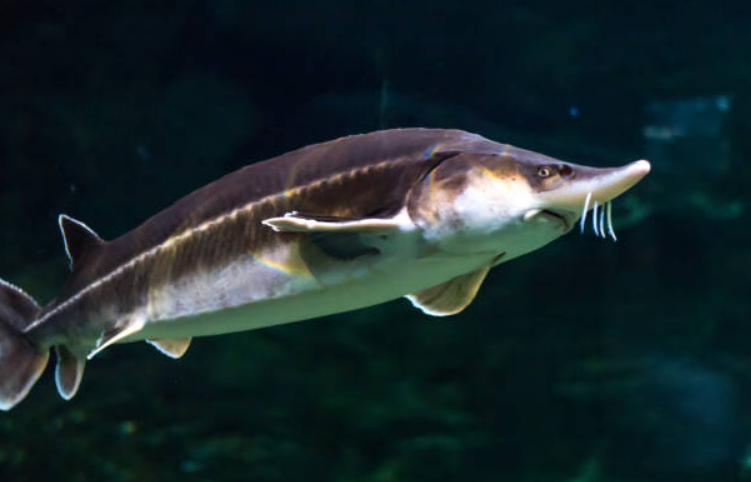
The Beluga Sturgeon is the world’s largest freshwater fish. It can grow up to 20 feet in length and weigh more than 2,000 pounds. Its smooth, scaleless skin, usually grey or olive, covers its elongated body. One of the most distinctive features of the Beluga Sturgeon is its long, thin nose, which aids in its efficient swimming.
Longevity and Slow Growth of Beluga Sturgeon
These remarkable animals are among the longest-living fish species, with a lifespan of up to 100 years. Beluga Sturgeons grow slowly, taking around 15 years to reach adulthood. Females reproduce only every two to four years, adding to their unique reproductive cycle. Overfishing and habitat loss have caused a significant decline in their population, classifying them as an endangered species. Efforts are being made to protect and conserve the Beluga Sturgeon to ensure its survival for future generations.
Origin and Scientific Name of Beluga Sturgeon
The Beluga Sturgeon, known scientifically as *Huso huso*, is the largest freshwater fish in the world. It can reach a maximum length of 20 feet and weigh over 2,000 pounds. Its elongated body, smooth skin, and rows of bony scutes down its sides give it a distinctive appearance. The most remarkable feature of the Beluga Sturgeon is its enormous mouth full of sharp teeth. It uses this mouth to consume a wide variety of food, including smaller fish, crabs, and mollusks.
Overfishing Leads to Migration of Beluga Sturgeon
Beluga Sturgeons are highly migratory, known for covering vast distances in search of ideal breeding habitats. They primarily inhabit the deep, slow-moving waters of the Caspian and Black Sea basins. However, during certain times of the year, they also venture into coastal regions and estuaries. The Beluga Sturgeon is known for its impressive lifespan, with some individuals living for more than a century, with one reaching an astonishing age of 118 years.
Diet and Feeding Habits of Beluga Sturgeon
The slow growth rate and lack of natural predators contribute to the Beluga Sturgeon’s remarkable lifespan. As bottom feeders, Beluga Sturgeons search for food on the riverbed or ocean floor using sensitive barbels located near their mouths. Their main food sources include mollusks, crabs, and small fish.
Ability to Consume Large Quantities of Food in a Single Meal
Due to their size and insatiable appetite, Beluga Sturgeons can consume vast quantities of food in one meal. Beluga caviar, made from their highly sought-after roe, is a prized delicacy. The Beluga produces the largest sturgeon eggs, renowned for their rich, buttery flavour and delicate texture. However, due to severe population declines caused by overfishing and habitat loss, the Beluga Sturgeon is now considered an endangered species. Efforts are underway to protect and conserve the remaining Beluga Sturgeon population.
The Major Threats Faced by the Beluga Sturgeon
These threats include the implementation of fishing limits, the creation of protected zones, and the promotion of environmentally friendly fishing practices. Captive breeding programmes have also been established to help preserve the population of this incredible species. In summary, the Beluga Sturgeon is a fascinating creature with distinct characteristics. Its enormous size, elongated body, and bony scutes make it easy to differentiate from other sturgeon species. The species plays an enormous ecological and economic role due to its lifespan, long-distance migration, and involvement in the caviar industry. Immediate conservation action is necessary to ensure the survival of this iconic species for future generations.
Overfishing for Its Valuable Caviar by the Beluga Sturgeon
The Beluga Sturgeon inhabits the Black and Caspian Sea basins, which include Russia, Azerbaijan, Kazakhstan, Iran, and Turkmenistan. These regions, with their expansive river networks and nutrient-rich waters, provide the ideal environment for the Beluga Sturgeon to thrive. As an anadromous species, the Beluga spends most of its life in the sea but moves to freshwater rivers to breed. During their annual migrations for spawning, they can travel hundreds of kilometres. The Beluga Sturgeon is a resilient and adaptable species that thrives in both freshwater and saltwater habitats.
Economic Significance of the Beluga Sturgeon
The Beluga Sturgeon lives in both deeper offshore waters and shallower coastal areas of the Caspian Sea. These areas provide various food sources, such as mollusks, prawns, and crabs. The Caspian Sea is also well known for its brackish water, a blend of fresh and salty water. The sturgeon’s ability to maintain its osmotic balance and adjust to varying salinity levels relies on this brackish water.
Migration and Habitat of Beluga Sturgeon
The Black Sea presents a unique mix of opportunities and challenges for the Beluga Sturgeon. The Black Sea is a large saltwater body with limited freshwater inflows. Nevertheless, the rivers that flow into the Black Sea provide enough breeding habitats for the sturgeon. These rivers supply the freshwater needed for sturgeon reproduction, and the nutrients they carry aid in the development of larvae.
Threats and Conservation Efforts for Beluga Sturgeon
The distinct features of the Caspian and Black Sea basins significantly influence the habitat and distribution of Beluga Sturgeons. These areas offer plentiful food sources, both freshwater and saltwater habitats, which allow the sturgeon to thrive. However, recent years have brought serious challenges to the Beluga Sturgeon population, mainly due to overfishing and habitat degradation. Conservation efforts are critical to ensure the long-term survival of this unique species.
International Conservation Efforts for Beluga Sturgeon
The International Union for Conservation of Nature (IUCN) has classified the Beluga Sturgeon as critically endangered. Overfishing, habitat degradation, and pollution have drastically reduced the number of Beluga Sturgeons in the wild. Moreover, the species is under significant pressure due to the high demand for Beluga caviar, which is considered a luxury delicacy.
Several recent conservation initiatives have helped protect and restore the Beluga Sturgeon population. These include strict fishing regulations, the establishment of protected areas, and the promotion of sustainable aquaculture practices. Some countries have also banned the trade of Beluga caviar made from wild-caught sturgeons in an effort to combat illegal fishing and preserve the species.
Contribution to Nutrient Cycling and Ecosystem Stability by Beluga Sturgeon
One of the key conservation strategies involves enforcing strict fishing laws. These regulations limit the number of sturgeons that can be caught, the size of fish that can be harvested, and the fishing seasons. By enforcing these rules, the government aims to prevent overfishing and allow the population to recover.
The creation of protected areas plays a crucial role in conservation efforts. These areas act as refuges where Beluga Sturgeons can breed and thrive without disturbance. They are equipped with safeguards to prevent illegal fishing and environmental damage, with their selection based on the species’ natural habitat. Conservationists hope to establish safe havens where the Beluga Sturgeon can spawn and repopulate.
Sustainable Solutions for Protecting Beluga Sturgeon
In addition to these measures, sustainable aquaculture practices have gained attention. Fish are raised in facilities specifically designed for aquaculture, under strict supervision. By supporting sustainable aquaculture, conservationists aim to reduce the pressure on wild Beluga Sturgeon populations. This approach lessens the need to capture sturgeons in their natural habitats while still meeting the demand for Beluga caviar.
Overall, these conservation initiatives are vital for the Beluga Sturgeon’s survival. By enforcing strict fishing regulations, creating protected areas, promoting sustainable aquaculture, and banning the sale of wild caviar, conservationists are working hard to preserve this critically endangered species.
The Role of Beluga Sturgeon in Ecosystem
Beluga Caviar, made from the roe (eggs) of the Beluga Sturgeon, is one of the most prized and expensive caviar varieties worldwide. Known for its silky texture and mild, buttery flavour, it is considered a delicacy.
Traditionally, Beluga caviar is served with blinis (small pancakes), sour cream, and sometimes chopped onions or egg whites. To fully appreciate its rich flavour, it is usually consumed in small amounts. Beluga caviar is a favourite among connoisseurs and food enthusiasts, often associated with elegance and special occasions.
While hunting wild Beluga caviar is strictly regulated, sustainable aquaculture methods have enabled the production of caviar from farmed Beluga Sturgeons. This reduces pressure on wild populations while still meeting the demand for this luxury product.
FAQ (frequently asked questions) about Beluga Sturgeon Fish
Q: What is a Beluga Sturgeon?
Ans: The Beluga Sturgeon is one of the largest species of sturgeon and is known for its impressive size and prized roe, which is used to make caviar. It is native to the Caspian Sea and other large river basins in Eastern Europe and Central Asia.
Q: Where do Beluga Sturgeons live?
Ans: Beluga Sturgeons are primarily found in the Caspian Sea, Black Sea, and their connected rivers, such as the Volga River. They are also present in the Sea of Azov, but their populations have significantly declined due to overfishing and habitat loss.
Q: What do Beluga Sturgeons eat?
Ans: Beluga Sturgeons are bottom-feeding carnivores. They feed on a variety of food including fish, mollusks, and invertebrates. They use their long snouts to forage for food on the riverbed or sea floor.
Q: Are Beluga Sturgeons endangered?
Ans: Yes, Beluga Sturgeons are critically endangered due to overfishing, habitat destruction, and the damming of rivers that impede their migration. The International Union for Conservation of Nature (IUCN) has listed them as endangered.
Q: How do Beluga Sturgeons reproduce?
Ans: Beluga Sturgeons reproduce by migrating upstream to spawn in freshwater rivers. The females release their eggs, which are fertilized by the males. The young sturgeons hatch in freshwater and migrate to the sea as they mature.
Q: How long do Beluga Sturgeons live?
Ans: Beluga Sturgeons are long-lived fish, often living for over 100 years in the wild. They reach sexual maturity relatively late in life, which makes their populations vulnerable to overfishing.
Q: What are the physical characteristics of Beluga Sturgeons?
Ans: Beluga Sturgeons have a long, streamlined body and can grow up to 18 feet long, making them one of the largest fish species. They have a distinctive broad, flattened head, a large mouth, and smooth, bony plates along their back and sides called scutes.
Q: Are Beluga Sturgeons important to humans?
Ans: Yes, Beluga Sturgeons are highly valued for their roe, which is processed into Beluga caviar, a delicacy in many parts of the world. However, due to overfishing and conservation efforts, their trade is now strictly regulated.
Q: Can Beluga Sturgeons be farmed?
Ans: Yes, Beluga Sturgeons are farmed in some regions to provide caviar while reducing pressure on wild populations. Sustainable aquaculture methods have been developed to help conserve these fish while still meeting market demand for caviar.
#BelugaSturgeon, #SturgeonFishing, #EndangeredSpecies, #FreshwaterFish, #Caviar, #FishingLife, #FishConservation, #WildlifeProtection, #MarineLife, #FishPhotography, #Sturgeon, #WildlifeConservation, #FishLovers, #AquaticLife, #SustainableFishing
Our sources and references about Beluga Sturgeon Fish
1: Wikipedia – Beluga Sturgeon
2: National Geographic – Beluga Sturgeon Facts
3: IUCN Red List – Beluga Sturgeon
4: NOAA Fisheries – Beluga Sturgeon