Quick Top 10 Facts about Black-headed Python Snake
| SCIENTIFIC NAME | Antaresia novehoi |
| CLASSIFICATION | KINGDOM: Animalia PHYLUM: Chordata CLASS: Reptilia ORDER: Squamata FAMILY: Pythonidae GENUS: Antaresia |
| SIZE | Up to 5.5 feet (1.7 meters) |
| HABITAT | Woodlands, grasslands, and rocky outcrops in northern Australia |
| DIET | Primarily small mammals, birds, and reptiles |
| SPECIES | 1 species: Antaresia novehoi (Black-headed Python) |
| COUNTRY | Found in northern Australia, including Queensland and the Northern Territory |
| GESTATION PERIOD | Egg-laying species; eggs incubate for approximately 60–70 days |
| LIFE SPAN | Up to 20 years in captivity |
| CONSERVATION STATUS | Not currently endangered; populations stable, but habitat destruction is a concern |
Amazing Facts About Black-headed Python Snake
1. Non-venomous constrictor
The Black-headed Python is a constrictor and subdues prey by wrapping around it and squeezing.
2. Recognizable black head
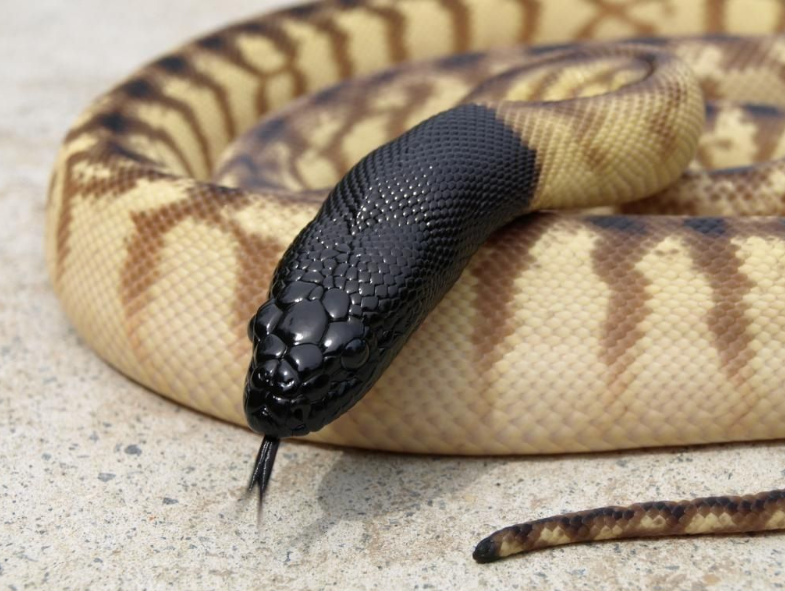
Their black-colored head is a distinct feature, making them easy to identify.
3. Carnivorous diet
They primarily feed on small mammals, birds, and occasionally other reptiles.
4. Inhabits a variety of environments
They are found in woodlands, grasslands, and rocky outcrops in northern Australia.
5. Beautiful coloration
Their body is typically light brown or yellow with dark, irregular patches across their scales.
6. Excellent climbers
Despite being heavy, they are excellent climbers and can often be seen in trees.
7. Egg-laying species
Females lay clutches of eggs, which they incubate until they hatch.
8. Slow-moving
They are generally slow-moving and prefer to remain undisturbed in their natural habitat.
9. Relatively docile nature
Despite their size, Black-headed Pythons are relatively docile and are popular in the fascinating pet trade.
10. Endemic to Australia
This species is native only to northern Australia, making it a unique and valuable species to the region.
Intriguing facts about black-headed python snake
The black-headed python, scientifically known as Aspidites melanocephalus, is a native species of non-venomous snake found in Australia. It belongs to the family Python and may be identified by the stark contrast between the colour of its black head and its pale body. This kind of python is well-known for having a powerful physique and may reach a maximum length of 4 metres; however, 2 to 3 metres is more common.
Habitat and distribution of black-headed python snake
In terms of habitat, most black-headed pythons are found in northern Australia’s Pilbara, Top End, and Kimberley regions. It prefers a range of habitats, including woodlands, meadows, and rocky areas. Due to its exceptional ability to adapt to the dry and semi-arid conditions found in its environment, this species of python is sometimes seen hiding in hollow logs or rock fissures during the day.
Prey preferences of black-headed python snake
Rats and small marsupials make up the bulk of the small- to medium-sized prey that the black-headed python consumes. Because it is an ambush predator, it subdues its prey with patience and excellent concealment. The python will ensnare and strangle its prey until it is dead, at which point it will consume the victim in its entirety. This species’ slow metabolism allows it to survive on very few meals.
Unique Physical characteristics of the black-headed python snake
All things considered, the black-headed python is a fascinating kind of snake that has two distinguishing characteristics: its black head and its muscular body. Because of its diet and capacity for environmental adaptation, it is a formidable predator in its native Australian habitat. It’s crucial to understand that black-headed pythons pose no risk to people. In general, they are submissive and would rather stay out of conflict. But they still need to be handled carefully and with respect, just like any other wild animal.
Traits and behaviours of black-headed python
Aspidites melanocephalus, the scientific name for the black-headed python, is a non-venomous reptile that is indigenous to Australia. This unusual type of snake stands out due to a number of intriguing traits and behaviours. We shall look at some amazing black-headed Python facts below:
Fascinating facts about black-headed python snake
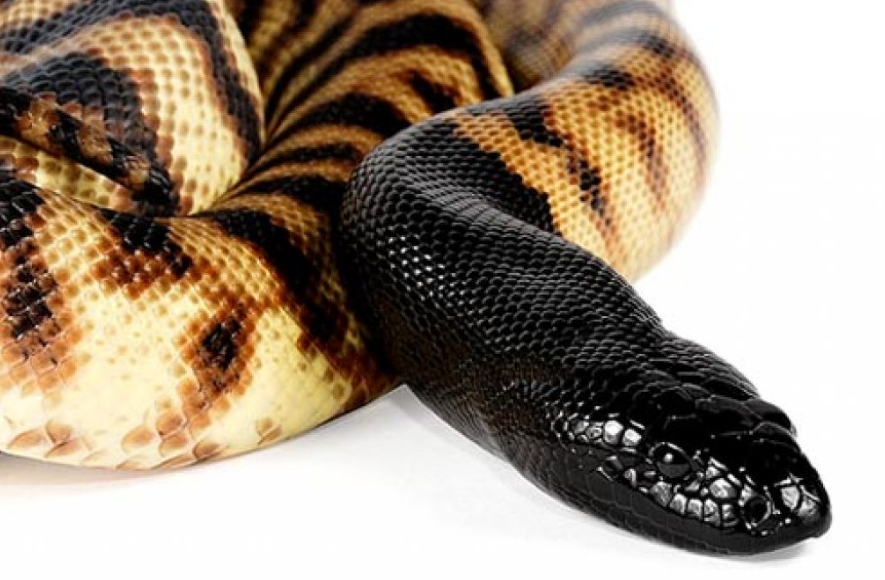
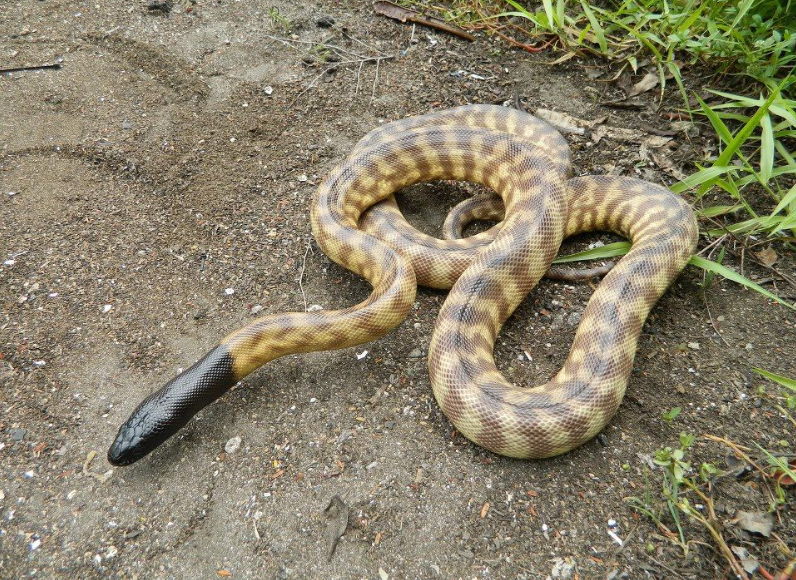
Adult black-headed pythons may grow to be medium to large in size, measuring between five and eight feet in length. It has a strong body and skin with a unique pattern. The snake’s black head, as its name implies, stands out against its pale body. Its body colour varies from light brown to reddish-brown, with sporadic bands or blotches that aid in concealment in its native environment.
Habitats and distribution of black-headed python: grasslands and rocky areas
Black-headed pythons inhabit a variety of ecosystems in northern and eastern Australia. They live in a variety of habitats, such as rocky places, meadows, and forests. They are mostly terrestrial snakes. These snakes are also known to live in cracks and caverns, where they can find safety and refuge.
Behaviour and Diet of black-headed pythons
Carnivorous by nature, black-headed pythons mostly consume animals, including rodents and tiny marsupials. Because they are constrictors, they squeeze their victim until it becomes unconscious. With their unusual feeding technique, these pythons ambush their victim, strike fast, and overwhelm it with their powerful coils. After subduing its victim, the python will consume it completely, often starting with its head.
Egg-laying process of Black-headed pythons
Black-headed pythons are oviparous animals that lay eggs. Ten to twenty eggs will be laid in a clutch by the female python, which she will then coil around for warmth and protection. After around 60 to 70 days of incubation, the eggs will hatch. From birth, the hatchlings are self-sufficient and have to fend for themselves.
Impact of human activities, such as urbanisation and agriculture
Although it is not officially listed as endangered, habitat degradation and fragmentation are posing challenges to the black-headed python population. These snakes have a hard time surviving because of the degradation of their native environment brought about by urbanisation and agricultural development. Additionally, since they are often caught and sold as pets, the illicit pet trade puts their numbers in jeopardy.
Conservation efforts or initiatives aimed at protecting the black-headed python’s habitat
The habitat of the black-headed python is being preserved by conservation efforts. It is critical that communities and people understand the value of protecting biodiversity and take action to reduce its environmental effects.
Importance of conservation black-headed python
With its distinct look, habitat, eating habits, and reproductive techniques, the black-headed python is an intriguing animal. It may not be as well-known as some other snake species, but in its natural environment, it is crucial to preserving the equilibrium of ecosystems. By coming to understand and appreciate these amazing animals, we can help save them and guarantee their existence for future generations.
FAQ (Frequently Asked Questions) about Black-headed Python Snake
Q: What is a Black-headed Python Snake?
Ans: The Black-headed Python (Aspidites melanocephalus) is a non-venomous snake native to northern Australia. It is known for its distinctive black-colored head and light-colored body. This python is one of the largest species of snake in Australia, capable of reaching lengths of up to 8 feet (2.4 meters).
Q: What does the Black-headed Python Snake look like?
Ans: The Black-headed Python is easily recognizable by its dark, almost black head, contrasted by a light-colored body, which can be tan, yellow, or light brown with irregular dark markings. Its body is thick and muscular, typical of a python species. These snakes have smooth, shiny scales and large, strong bodies.
Q: Where is the Black-headed Python Snake found?
Ans: The Black-headed Python is found in northern Australia, particularly in areas such as the Northern Territory and parts of Queensland. They are typically found in woodlands, grasslands, and areas with dense vegetation, often near rocks or trees where they can hide and ambush prey.
Q: What does the Black-headed Python Snake eat?
Ans: Black-headed Pythons are carnivorous and primarily feed on small to medium-sized mammals, birds, and reptiles. Like other pythons, they are constrictors, meaning they wrap around their prey and squeeze until it suffocates before swallowing it whole. They are known to feed on other snakes, including venomous species.
Q: Is the Black-headed Python Snake dangerous?
Ans: No, the Black-headed Python is not venomous. Like most pythons, it relies on constriction to subdue its prey. It is not aggressive toward humans and typically avoids confrontation. However, as with all wild animals, it is best to handle them with care or observe them from a safe distance.
Q: How big do Black-headed Pythons get?
Ans: The Black-headed Python can grow up to 8 feet (2.4 meters) in length, though most individuals are around 5 to 6 feet (1.5 to 1.8 meters) long. They are thick-bodied snakes with powerful muscles, allowing them to constrict prey effectively.
Q: How does the Black-headed Python behave?
Ans: Black-headed Pythons are generally calm and slow-moving snakes. They are not aggressive and tend to be secretive, spending much of their time hiding in vegetation or in crevices. They are primarily terrestrial but can also climb trees or shrubs when necessary. Pythons are known for their excellent sense of smell, which helps them track down prey.
Q: Can you keep a Black-headed Python as a pet?
Ans: Yes, the Black-headed Python can be kept as a pet by experienced reptile owners. They are generally easy to care for in captivity, provided their enclosure is large enough to allow for proper movement and exercise. They require a warm environment, a varied diet, and occasional access to water for hydration and soaking. Handling should be done gently as they are not typically aggressive, but they can be startled if not approached calmly.
Q: How long do Black-headed Pythons live?
Ans: Black-headed Pythons can live for 20 to 30 years in captivity with proper care. In the wild, their lifespan is typically shorter due to predation, habitat loss, and other environmental factors.
#BlackHeadedPython #PythonSnake #NonVenomousSnake #ReptileCare #Wildlife #SnakeLovers #ExoticPets #SnakeSpecies #AustralianWildlife #ReptileEnthusiast #ConstrictorSnake #Pythons
Our sources and references about Black-headed Python Snake
1: Wikipedia – Black-headed Python
2: Reptiles Magazine – Black-headed Python
3: Australian Fauna – Black-headed Python
4: Reptile Expert – Black-headed Python Care