Quick Top 10 Facts about Bongo Antelope
| SCIENTIFIC NAME | Tragelaphus eurycerus |
| CLASSIFICATION |
KINGDOM: Animalia PHYLUM: Chordata CLASS: Mammalia ORDER: Artiodactyla FAMILY: Bovidae GENUS: Tragelaphus |
| SIZE | Height: 1.2–1.5 meters (3.9–4.9 feet) at the shoulder, weight: 200–400 kg (440–880 lbs) |
| HABITAT | Rainforests and dense woodland areas in Central and West Africa |
| DIET | Herbivorous, feeding primarily on leaves, fruits, and grasses |
| SPECIES | Bongo Antelopes are split into two subspecies: the Western Bongo and the Eastern Bongo |
| COUNTRY | Found in the rainforests and wooded areas of Central and West Africa, including countries like Gabon, Cameroon, and Kenya |
| GESTATION PERIOD | Approximately 9 months (around 240 days) |
| LIFE SPAN | 20–25 years in the wild |
| CONSERVATION STATUS | Endangered due to habitat loss, poaching, and hunting. Listed as Vulnerable by the IUCN |
Amazing Facts About Bongo Antelope
1. Striking orange and white stripes
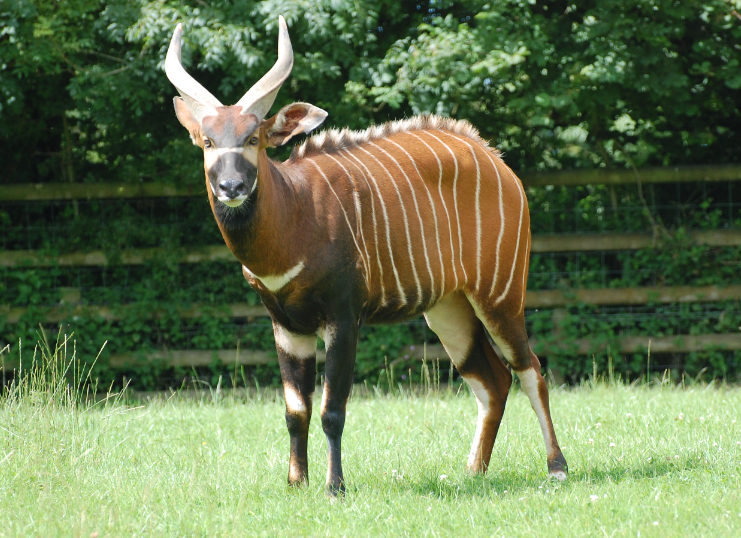
Bongo Antelopes are easily identifiable by their striking reddish-orange coats with white vertical stripes that help them blend in with the forest environment.
2. Known for their agility
These antelopes are known for their remarkable agility and can navigate steep, hilly terrain with ease, making them well-suited to forest life.
3. They are nocturnal
Bongo Antelopes are primarily nocturnal, spending their days hiding in dense forests and coming out at night to feed and move around.
4. They have powerful horns
Male Bongo Antelopes have long, spiral-shaped horns that they use for defense and during fights with rivals for dominance and mating rights.
5. They live in small herds
While Bongo Antelopes are solitary most of the time, females and their young live in small family groups, with males generally living alone or in small bachelor groups.
6. Endangered species
Due to habitat destruction, poaching for their meat and skin, and human encroachment, Bongo Antelopes are currently classified as Endangered.
7. They are shy and elusive
Bongo Antelopes are known to be highly elusive and secretive, often avoiding human presence and remaining hidden in dense forest cover.
8. They are excellent swimmers
Bongo Antelopes have been known to cross rivers and streams with ease due to their strong swimming abilities.
9. Bongo Antelopes communicate through vocalizations
They use various sounds, such as grunts and snorts, to communicate with each other, especially during the mating season.
10. They are an important part of the ecosystem
As herbivores, Bongo Antelopes help maintain the health of their ecosystems by grazing on plants, which helps control the growth of vegetation in the forest undergrowth.
Habitat, Size, weight, and distinctive features of the bongo antelope
The Bongo, or Tragelaphus eurycerus, is a large and majestic antelope species that lives in the rainforests of Central Africa. It stands out because of its peculiar features, which include long, spiralling horns, a reddish-brown coat with white stripes, and a muscular build. Male bongos are among the largest antelopes found in woods, weighing up to 900 kg and standing around 1.5 metres tall at the shoulder.
Behaviour and Social Structure: Reproductive process, long horns and reddish-brown coat
Bongos are social animals that often reside in small herds consisting of a few females, a dominant male, and their offspring. They communicate with each other through a combination of body postures, vocalisations, and scent marking. The males display their power in spectacular ways by demarcating their territory and threatening rivals with their enormous horns. Despite their size and strength, bongos are known for being elusive creatures; when they sense danger, they often flee deeper into the jungle.
Diet and Feeding Habits: Preferred food sources and foraging Behaviour
The majority of these incredible creatures are herbivores, eating a variety of plants such as fruits, leaves, and grasses. They have a unique adaptation that allows them to utilize their long, flexible tongues to reach fruits and leaves from high trees as they search deep forests for sustenance. Because of their strong legs and streamlined bodies, bongos can navigate across rivers and swamps in search of food or to avoid predators, in addition to being proficient swimmers.
Importance of raising awareness about Bongo Antelope and their conservation
The bongo is an intriguing and secretive species of antelope that faces many difficulties in the wild. Worldwide, wildlife enthusiasts are captivated by the bongo’s distinct look and attitude. We can support conservation efforts to save this amazing species by being aware of and appreciating these facts about the bongo. Unfortunately, habitat destruction and poaching have led to a declining bongo population, making them a vulnerable species that needs protection.
Fascinating facts about Bongo Antelope
Originating from Africa’s woodlands, the bongo is an amazing species. The bongo is a huge antelope species that is greatly sought after by wildlife lovers due to its unusual look and behaviour.
Appearance of Bongo Antelope
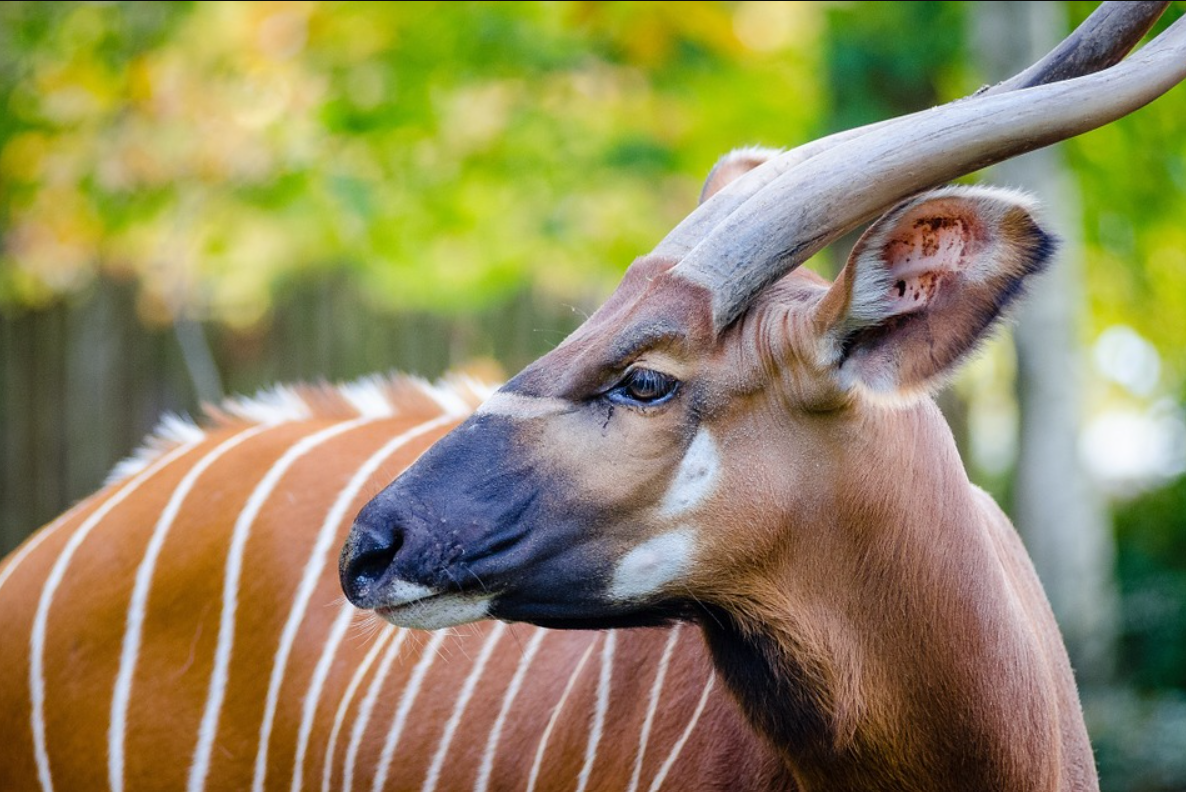
The bongo is a huge, sturdy antelope that has a hump on its back and a reddish-brown coat with white stripes. Long, spiral-shaped horns that grow up to 40 inches in length are a feature shared by both men and females. They have big ears and a characteristic white mark on their faces that looks like a chevron.
Information about the natural habitat of Bongo Antelope
The deep rainforests and montane forests of Central and East Africa are the main habitats for bongos. They like places with plenty of vegetation and water supplies nearby. Because of their big ears, which aid in sound detection in the thick undergrowth, bongos are ideally suited to their natural environment.
Behaviour patterns of Bongo Antelope
Since bongos are mostly nocturnal creatures, the night is when they are most active. They hide and relax in the dense forest foliage throughout the day. They are said to be timid and secretive, which makes it challenging to locate them in the wild. Male and female bongos only come together during mating, making them solitary creatures as well.
Diet and Feeding Habits of Bongo Antelope
As an herbivore, bongos consume a wide range of plants, including leaves, grasses, fruits, and bark. Their unique digestive system enables them to effectively take nutrients from their diet. It’s well known that bongos are picky eaters, only consuming the plant portions that are highest in nutrients.
Threats to the Bongo Antelope: Human activities impacting Bongo populations
The International Union for Conservation of Nature has designated the bongo as an endangered species (IUCN). Their primary risks to survival include poaching for their flesh and horns, competition from domestic cattle, and habitat degradation from deforestation. To stop future population reduction and to preserve and restore the bongo’s native habitat, conservation activities are being carried out.
Reproductive and Mating process of Bongo Antelope
Bongos give birth to a single calf following a gestation period of around nine months. To keep the calf safe from predators, the mother conceals it under thick foliage. For a few weeks, the calf stays concealed until it has the strength to follow its mother. Male bongos mature sexually at three years of age, whereas females mature sexually at two years.
Unique behaviours, adaptations, or characteristics that make them stand out
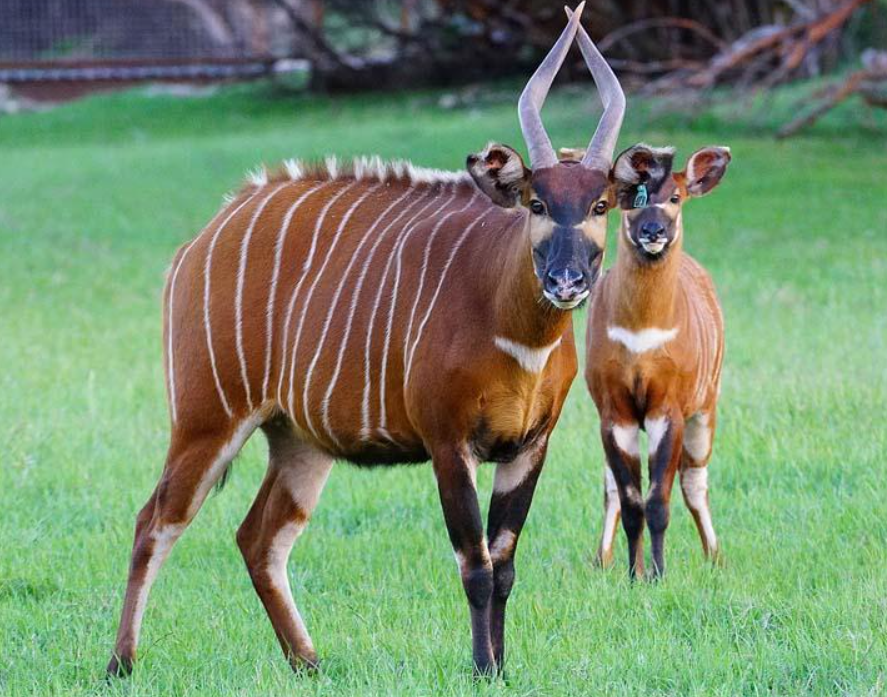
Bongos have a number of adaptations that aid in their survival in their native forests. They blend in well with the forest’s shadows and dappled sunshine thanks to their reddish-brown coat with white stripes. Their spiral-shaped horns serve as a line of defence against any dangers, and their enormous ears aid in their ability to hear noises and predators.
FAQ (Frequently Asked Questions) about Bongo Antelope
Q: What is a Bongo Antelope?
Ans: The Bongo (Tragelaphus eurycerus) is a large and strikingly beautiful species of antelope native to the rainforests of Central and West Africa. Known for their striking orange-brown coats with white vertical stripes, and large, spiraling horns, bongos are primarily nocturnal and herbivorous, feeding on leaves, fruits, and bark.
Q: Where can you find Bongo Antelopes?
Ans: Bongo antelopes are found in the dense tropical forests of Central and West Africa, primarily in countries such as Cameroon, Gabon, the Republic of Congo, and Uganda. They live in dense rainforests, where they are well camouflaged against the trees and foliage due to their reddish-brown coats and white stripes.
Q: What do Bongo Antelopes eat?
Ans: Bongo antelopes are herbivores and primarily feed on leaves, grasses, fruits, and bark. They are especially known for feeding on the leaves of forest plants that are often too tough or too high for other herbivores to reach. Bongos are also known to browse on shrubs and young trees.
Q: How big do Bongo Antelopes get?
Ans: Bongo antelopes are large, with males typically standing around 40-47 inches (100-120 cm) tall at the shoulder and weighing between 500-900 pounds (225-410 kg). Females are slightly smaller, weighing around 350-650 pounds (160-295 kg) and standing about 39-45 inches (100-115 cm) tall. Their large size and striking appearance make them easily recognizable in their natural habitat.
Q: Are Bongo Antelopes endangered?
Ans: Yes, Bongo antelopes are listed as vulnerable by the International Union for Conservation of Nature (IUCN). Their populations are declining due to habitat loss, poaching, and hunting. Deforestation, as well as the encroachment of human settlements into their rainforest habitats, has significantly impacted their numbers. Conservation efforts are underway to protect their habitats and reduce hunting pressures.
Q: How do Bongo Antelopes protect themselves?
Ans: Bongo antelopes rely on their excellent camouflage to protect themselves from predators. Their reddish-brown coats with white stripes help them blend in with the forest environment. When threatened, bongos are known to retreat into dense undergrowth, where their coloration helps them hide. Despite their large size, they are elusive and difficult to spot in their dense habitats.
Q: Are Bongo Antelopes solitary or social animals?
Ans: Bongo antelopes are generally solitary or live in small groups. Males are usually solitary, especially outside of the mating season, while females and young may form small groups. These groups are typically made up of related individuals, such as a mother with her offspring. They are not as social as some other antelope species, and much of their activity occurs at night or in the early morning hours.
Q: How long do Bongo Antelopes live?
Ans: Bongo antelopes can live up to 20 years in the wild, although their lifespan in captivity can be longer due to the absence of predators and human-induced threats. In the wild, their main threats come from predators like lions and leopards, as well as poaching and habitat destruction.
Q: Can Bongo Antelopes be kept in zoos?
Ans: Yes, Bongo antelopes are often kept in zoos and wildlife reserves, where they are provided with large enclosures that mimic their natural rainforest environment. Captive breeding programs have helped maintain their population in human care, and these programs aim to ensure the survival of the species. However, efforts are also needed to protect their natural habitats and reduce poaching in the wild.
#BongoAntelope, #AntelopeSpecies, #WildlifeConservation, #RainforestAnimals, #EndangeredSpecies, #AfricanWildlife, #AfricanAntelopes, #RainforestConservation, #WildlifeProtection, #Zoology, #AfricaWildlife, #NatureLovers
Our sources and references about Bongo Antelope
1: Wikipedia – Bongo Antelope
2: World Wildlife Fund – Bongo Antelope
3: IUCN Red List – Bongo Antelope
4: ARKive – Bongo Antelope