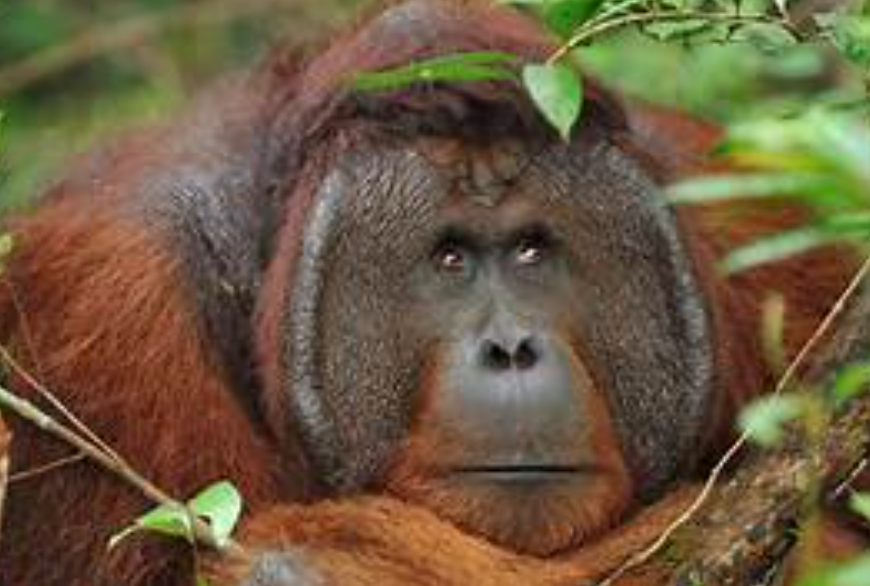
A species of orangutan found in Borneo. Known for their reddish-brown hair and intelligent behavior, Bornean Orangutans are critically endangered due to habitat destruction and poaching. They are solitary animals that primarily live in trees.
Quick Top 10 Facts about Bornean Orangutan
| SCIENTIFIC NAME | Pongo pygmaeus |
| CLASSIFICATION | KINGDOM: Animalia PHYLUM: Chordata CLASS: Mammalia ORDER: Primates FAMILY: Hominidae GENUS: Pongo SPECIES: P. pygmaeus |
| SIZE | Males: 4.3–5.2 feet (1.3–1.6 meters) in length, females: 3–4.3 feet (0.9–1.3 meters) |
| HABITAT | Tropical rainforests on the island of Borneo in Southeast Asia |
| DIET | Primarily frugivorous; also eats leaves, bark, and insects |
| SPECIES | The Bornean Orangutan is one of the two species of orangutans, the other being the Sumatran Orangutan |
| COUNTRY | Native to the island of Borneo, which is part of Malaysia and Indonesia |
| REPRODUCTION | Gestation period of about 8.5 months; typically gives birth to one offspring every 6–8 years |
| LIFE SPAN | Up to 30–40 years in the wild, possibly longer in captivity |
| CONSERVATION STATUS | Critically Endangered; habitat loss, poaching, and the illegal pet trade threaten their survival |
Amazing Facts About Bornean Orangutans
1. They are highly intelligent
Bornean Orangutans are known for their advanced tool-making abilities, using leaves and sticks to solve problems.
2. Solitary creatures
Unlike many primates, orangutans are solitary, with males and females coming together only for mating.
3. Powerful swimmers
Despite their arboreal nature, orangutans are strong swimmers and can cross rivers.
4. Tree-dwelling lifestyle
Orangutans spend most of their time in trees, building nests to sleep in every night.
5. Slow reproductive rate
They have one of the slowest reproduction rates of any mammal, giving birth only once every 6–8 years.
6. Endangered due to habitat loss
Their primary threat is deforestation, as their rainforest home is cleared for palm oil plantations.
7. Long childhood
Bornean Orangutans have a long childhood, staying with their mothers for 6–8 years, learning survival skills.
8. Large home range
They have extensive home ranges that can span several square kilometers, which they travel across for food.
9. Complex communication
Orangutans use a variety of vocalizations, facial expressions, and body language to communicate with each other.
10. Conservation efforts are crucial
Conservationists are working to protect Bornean Orangutans by preserving their habitat and combating poaching and illegal pet trade.
Origin and introduction of Borneo Orangutan
The Bornean Orangutan, or Pongo pygmaeus, is a large ape species that is native to the Southeast Asian island of Borneo. It is one of three species of orangutans; the other two are the Sumatran and the recently discovered Tapanuli.
Physical characteristics and features of male Borneo Orangutans
Male Bornean orangutans are the largest arboreal animals in the world, with a maximum weight of 200 pounds and a maximum height of about 5 feet. When fully extended, their powerful, long arms may reach over seven feet. Their bodies are covered in reddish-brown hair that helps them blend in with the forest canopy.
Intriguing facts about Borneo Orangutans
These extremely intelligent orangutans have been observed using tools in the wild. Their primary dietary sources are fruits, leaves, bark, and occasionally insects. Bornean orangutans are well known for their extraordinary climbing abilities because they spend the majority of their lives in trees. Every day they build new nests, spending the night in these branches and leaf abodes.
Threats and conservation efforts for Borneo Orangutans
Unfortunately, the Bornean orangutan is listed as critically endangered by the International Union for Conservation of Nature (IUCN). Its population has sharply declined due to habitat degradation brought on by illegal logging, deforestation, and the expansion of palm oil plantations. In addition, they are hunted for their flesh and captured for the illegal pet trade.
Conservation initiatives of Borneo Orangutans
Conservation efforts are preserving the Bornean orangutan and its natural habitat. National parks and reserves have been established to provide these primates with protected areas, and organizations are working to raise public awareness of the importance of their protection. In addition, initiatives are being made to discourage illegal logging and promote sustainable palm oil production in an effort to minimize environmental harm.
Raising awareness about endangered species: Borneo Orangutans
It is impossible to overestimate the importance of protecting the Bornean orangutan’s unique and endangered status, as well as its role in maintaining the Borneo rainforest’s ecosystem. These orangutans are vital to forest regrowth because they act as seed dispersers, spreading seeds through their excrement. By preserving their habitat, we can ensure the survival of the Bornean orangutan and a number of other species that rely on the forest.
Fascinating facts about Borneo Orangutan
Interesting information about Bornean Orangutans One of the most well-known and fascinating primate species in the world are Bornean orangutans. These sentient beings, who originated on the island of Borneo, are recognizable by their lengthy arms and red hair. Reading this article will help you gain a better understanding of Bornean orangutans, which will cover some fascinating facts about these amazing animals.
The natural habitat of Borneo Orangutans, including the rainforests of Borneo
Borneo is an island shared by three nations: Malaysia, Indonesia, and Brunei. It’s the only place in the world where you can find Bornean orangutans. They live in mountainous areas, swamp forests, and lowland rainforests. Because of their remarkable adaptability, these primates can live in a wide range of environments, such as secondary forests and peat swamps.
Physical features of Borneo Orangutans, such as their size, weight, and distinctive reddish-brown fur
The largest mammal on Earth that lives in trees is the Bornean orangutan. While females are slightly smaller, adult males can grow to a height of up to 5 feet and weigh approximately 200 pounds. Their powerful, long arms, which reach over seven feet, swing through the trees. Their reddish-brown hair covers their bodies, giving them excellent forest camouflage.
Characteristic traits of Bornean orangutans
The big, sly faces of Bornean orangutans are among their most characteristic traits. In adult males, they develop prominent cheek pads called flanges. These flanges are a sign of strength and have an effect on luring women. Bornean orangutans primarily eat fruits because they are frugivores. Although they prefer ripe fruits, they also eat flowers, insects, leaves, and bark. They spend the majority of their time sleeping and searching for food because they have a slow metabolic rate. Due to their consumption of fruits and subsequent feces, these primates are essential to the dispersal of seeds.
The semi-solitary nature of Bornean orangutans
Male adult Bornean orangutans live alone or in pairs with their young, making them semi-solitary creatures. Male adults may have sizable territories that overlap with multiple female territories. They use a range of vocalizations, such as prolonged calls audible over great distances, to communicate. These calls are used to establish dominance and draw in females.
The reproductive behavior of Borneo Orangutans
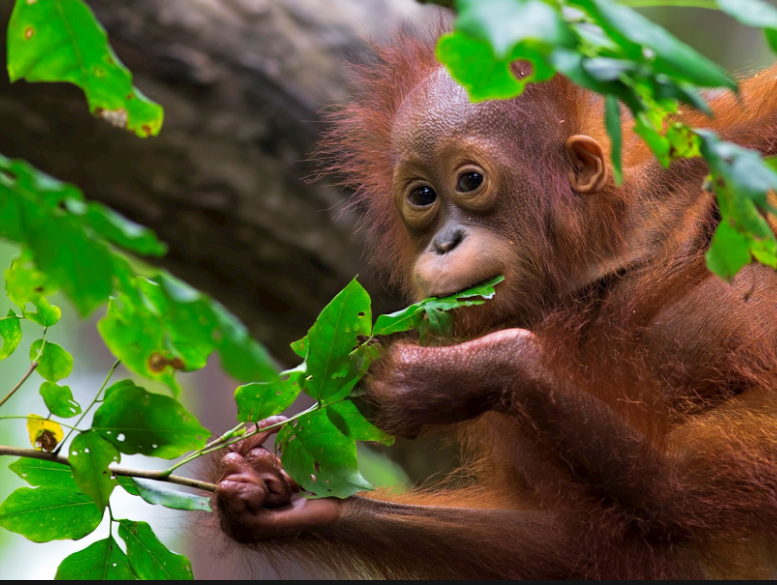
Orangutan females give birth to a single offspring after a gestation period of roughly nine months. The mother gives her young a great deal of attention; she carries them for the first few years and teaches them vital survival skills.
The main threats and challenges faced by Borneo Orangutans
The International Union for Conservation of Nature has classified Bornean orangutans as critically endangered (IUCN). The main threats to their survival are the pet trade, illegal hunting, and habitat loss from deforestation. Large swathes of orangutan habitat have been destroyed as a result of the quick growth of palm oil plantations. There are initiatives in place to preserve and safeguard these amazing animals. The goals of conservation organizations are to create protected areas, advance sustainable lifestyles, and increase public understanding of the significance of orangutan conservation.

Urgency to ensure the survival of this remarkable species
People from all over the world are fascinated by the amazing creatures known as Bornean orangutans. Their distinct physical attributes, social organization, and ecological function render them an indispensable constituent of the Borneo rainforest ecosystem. We must never give up on their conservation in order to give future generations the chance to marvel at these amazing animals in their native environments.
FAQ (Frequently Asked Questions) about Bornean Orangutan
Q: What is a Bornean Orangutan?
Ans: The Bornean Orangutan (Pongo pygmaeus) is a species of orangutan found only on the island of Borneo in Southeast Asia. They are known for their distinctive orange-brown fur, long arms, and highly intelligent behavior. Bornean orangutans are critically endangered due to habitat loss and poaching.
Q: Where does the Bornean Orangutan live?
Ans: The Bornean Orangutan is native to the island of Borneo, which is shared by Malaysia and Indonesia. They primarily inhabit tropical rainforests, especially in lowland and montane forests, and are arboreal, spending most of their time in trees.
Q: What does the Bornean Orangutan eat?
Ans: Bornean orangutans are primarily frugivores, meaning they mainly eat fruit. They also consume leaves, seeds, bark, and occasionally insects or small animals. They play a vital role in their ecosystem by dispersing seeds and helping maintain forest diversity.
Q: How big does the Bornean Orangutan get?
Ans: Adult male Bornean orangutans can weigh up to 220 pounds (100 kg), while females are smaller, typically weighing around 90 pounds (40 kg). They are known for their long arms, which help them swing between trees, and their large, round faces with prominent cheek pads, especially in mature males.
Q: Are Bornean Orangutans endangered?
Ans: Yes, the Bornean orangutan is critically endangered, with populations rapidly declining due to deforestation, habitat destruction, and illegal hunting. Habitat loss, primarily due to palm oil plantations and logging, is the main threat to their survival.
Q: How does the Bornean Orangutan live in the wild?
Ans: Bornean orangutans are solitary creatures, typically living alone, except for mothers with their young. They are arboreal and build nests in trees to sleep in at night. They are excellent climbers and use tools such as sticks to help them obtain food or extract insects from tree bark.
Q: What sounds does the Bornean Orangutan make?
Ans: Bornean orangutans communicate using a variety of vocalizations, including grunts, screams, and hoots. They also make vocalizations to establish territory or to communicate with other orangutans in the area, and mothers often use specific calls to attract their infants.
Q: How long do Bornean Orangutans live?
Ans: In the wild, Bornean orangutans can live up to 30 to 40 years, and in captivity, they can live even longer. Their slow rate of reproduction, with females giving birth to one baby every 6 to 8 years, makes their populations vulnerable.
Q: Can Bornean Orangutans be kept in captivity?
Ans: While some Bornean orangutans are kept in accredited zoos and wildlife sanctuaries for conservation purposes, they are not suitable as pets due to their complex needs. They require vast spaces, social interaction, and a varied diet. Efforts are focused on ensuring their well-being and educating the public about conservation.
Q: What are the conservation efforts for Bornean Orangutans?
Ans: Conservation efforts include habitat protection, anti-poaching initiatives, and reforestation projects. Organizations are working to reduce palm oil plantations’ impact on orangutan habitats, and wildlife sanctuaries are rescuing and rehabilitating orphaned or injured orangutans. Public awareness campaigns also aim to protect these critically endangered animals.
#BorneanOrangutan, #OrangutanConservation, #EndangeredSpecies, #RainforestWildlife, #Primates, #SaveOrangutans, #WildlifeConservation, #TropicalRainforest, #NatureLovers, #SustainablePalmOil
Our sources and references about Bornean Orangutan
1: Wikipedia – Bornean Orangutan
2: World Wildlife Fund – Bornean Orangutan
3: Save The Orangutan – Bornean Orangutan
4: National Geographic – Bornean Orangutan