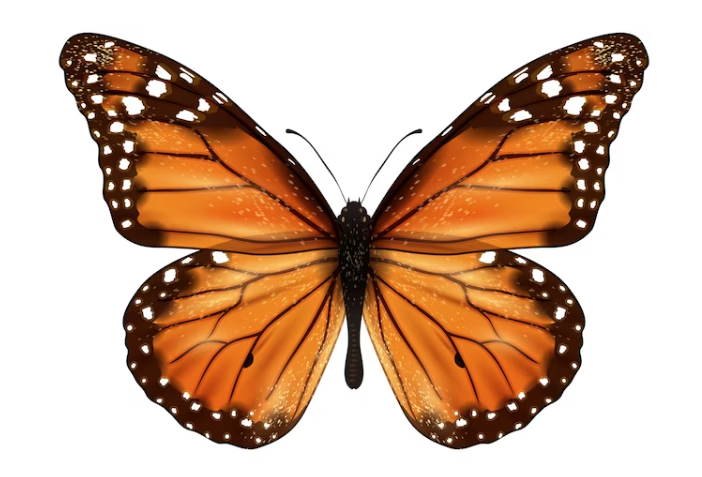
A beautiful insect known for its colorful wings and graceful flight. Butterflies undergo a complete metamorphosis, transitioning from a caterpillar to a pupa, and then emerging as an adult. They play a crucial role in pollination.
Quick Top 10 Facts about Butterfly
| SCIENTIFIC NAME | Rhopalocera (Butterfly) |
| CLASSIFICATION | KINGDOM: Animalia CLASS: Insecta ORDER: Lepidoptera FAMILY: Various families (e.g., Nymphalidae, Pieridae, Papilionidae) PHYLUM: Arthropoda GENUS: Various genera |
| SIZE | Wingspan varies greatly depending on species, ranging from 1.5 cm (0.6 in) to 30 cm (12 in) |
| HABITAT | Woodlands, meadows, gardens, and tropical forests; found worldwide, except Antarctica |
| DIET | Adults feed primarily on nectar from flowers, while larvae (caterpillars) eat leaves of specific plants |
| SPECIES | There are over 17,000 species of butterflies, including species like the Monarch (*Danaus plexippus*) |
| COUNTRY | Found all over the world except Antarctica; species distribution varies by region |
| GESTATION PERIOD | Butterflies go through a metamorphosis with four stages: egg, larva (caterpillar), pupa (chrysalis), and adult; the complete cycle lasts between 2 weeks and several months depending on species |
| LIFE SPAN | Varies by species, typically from a few weeks to several months for adults |
| CONSERVATION STATUS | Some species are endangered or threatened due to habitat loss, climate change, and pesticide use (e.g., the Swallowtail butterfly) |
Facts about butterflies as a species in the animal kingdom
The amazing metamorphosis that butterflies go through makes them interesting animals. They begin as tiny eggs, hatch into caterpillars, and then travel through many development phases to become stunning butterflies. This procedure is quite amazing and highlights the marvels of nature. Among the most exquisite and elegant animals in the natural world are butterflies. We are drawn to them by their delicate wings, vibrant patterns, and complex designs, and we are always in awe of their remarkable transformation.
You should be aware of a few interesting facts about butterflies. First of all, butterflies belong to the order Lepidoptera, which is named for its “scaly wings.” Around 17,500 different species of butterflies may be found worldwide, with the majority of them being found in tropical regions.
Thousands of tiny scales, which are intricate adaptive structures that reflect light, cover their wings. Every butterfly species has distinct colours and patterns that help it stand out from the others. These patterns often serve as a defence against predators. Amazingly, butterflies can taste with their feet. Over the ages, they have developed several adaptations to survive in their surroundings; this is just one of them.
Stages of a butterfly’s life cycle
The process by which a caterpillar transforms into an adult butterfly is known as metamorphosis. This process involves a four-stage cycle of total transformation, with different phases for each adult butterfly with wings. Another fascinating fact about butterflies is that they can communicate with one another by flapping their wings in a manner similar to Morse code. In addition to having keen vision, butterflies can travel up to 30 kilometres each day in search of nectar. Some butterflies may live up to two months, which is an astonishingly long lifespan! Despite enduring various natural calamities and mutations, butterflies have adapted uniquely to their individual environments. They are fascinating to observe and captivate us.
Geographic distribution of butterfly species and the importance of colour patterns
The vivid and striking colours of butterflies, which differ significantly across species, are well-known. These colours serve multiple functions, including attracting potential mates, alerting predators to their toxicity, and aiding camouflage. The beautiful patterns on their wings contribute to their overall attractiveness.
For many plant species to survive, butterflies are necessary for pollination.
As they flutter from flower to flower in search of nectar, they unintentionally transfer pollen, which aids fertilisation.
Plants and butterflies share a symbiotic relationship that helps sustain ecosystems and increases biodiversity.
Additionally, butterflies’ presence indicates the existence of appropriate habitats and food supplies, which are markers of a healthy ecosystem.
Important facts about butterflies in the animal kingdom
Beautiful butterflies enthral us with their vivid colours and graceful flight. They are important to our environment in addition to being visually stunning. We’ll uncover the wonders of butterflies with our collection of interesting facts and insights.
1. Circular Life Cycle
Butterflies undergo four unique stages in their metamorphosis: the egg, larva (caterpillar), pupa (chrysalis), and adult stages. The adult butterfly emerges from the chrysalis with fully developed wings and the ability to fly.
2. Multiculturalism
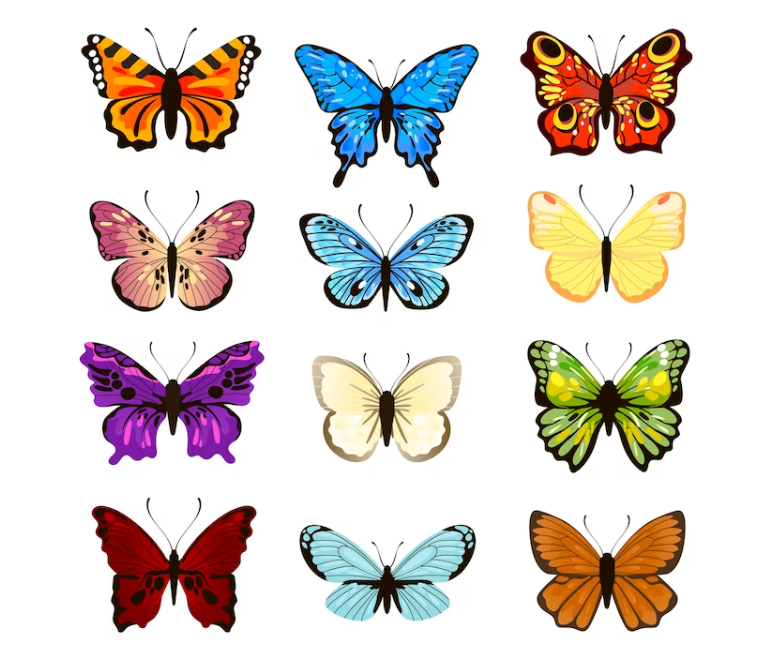
Around 20,000 species of butterflies exist worldwide, and each has unique qualities. They are one of the most varied insect groups, exhibiting a wide range of sizes, colours, and patterns.
3. A pair of wings
Butterflies’ vivid colours come from tiny scales covering their wings. These scales are made of a protein called chitin. Their wings display intricate patterns that serve as warnings to predators, mates, and for concealment.
4. Movement
Certain butterfly species are renowned for their long-distance migrations. The monarch butterfly, for example, travels hundreds of miles annually from North America to Mexico. These migrations are considered one of the most extraordinary events in nature.
5. Butterfly Estates
One way to attract butterflies to your home is by creating a butterfly garden. Plant nectar-rich flowers like milkweed, lavender, and coneflower to provide nourishment for adult butterflies. Additionally, adding host plants like dill and parsley can draw in caterpillars, which are their main food source.
6. Duration of Life
A butterfly’s lifespan varies by species. On average, butterflies live for two to four weeks. Some species, like the Mourning Cloak butterfly, may live up to eleven months.
7. Insect pollinators
Butterflies are essential pollinators. They unintentionally spread pollen as they move from one flower to another in search of nectar. This promotes plant reproduction. Plants and butterflies have a mutually beneficial relationship that supports environmental balance and biodiversity. 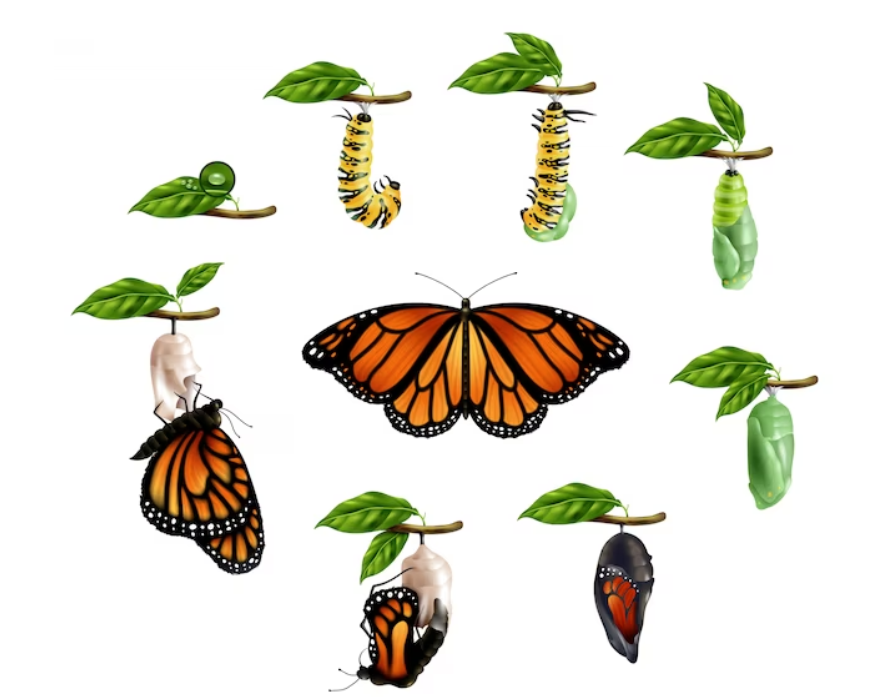
8. Perception via the senses
Butterflies have excellent eyesight and can perceive a broad spectrum of colours. They can also see ultraviolet light, which is invisible to humans. This ability helps them find nectar-rich flowers and identify potential mates.
9: Modifications
To live in various environments, butterflies have developed numerous adaptations. Some species have evolved eye-like patterns on their wings to ward off predators. Others contain poisonous substances that make them indigestible to predators.
10. Dangers
Many threats, such as habitat loss, pesticide use, and climate change, endanger butterflies. It is crucial to protect their habitats and create butterfly-friendly environments to ensure their survival.
Importance of conservation efforts for butterfly populations
There are several reasons why conserving butterfly populations is vital. By protecting their habitats and natural resources, we can ensure the survival and diversity of these vulnerable species. As both pollinators and indicators of environmental health, butterflies are crucial to maintaining a balanced ecosystem. Conserving butterfly populations helps preserve the overall richness and beauty of our natural environment, highlighting the interconnectedness of all living things.
FAQ (Frequently Asked Questions) about Butterflies
Q: What is a butterfly?
Ans: A butterfly is an insect known for its vibrant colours, delicate wings, and graceful flight. Butterflies belong to the order Lepidoptera and are closely related to moths.
Q: Where do butterflies live?
Ans: Butterflies can be found all over the world, in diverse habitats such as gardens, meadows, forests, and tropical rainforests. They are most commonly found in warm climates.
Q: What do butterflies eat?
Ans: Butterflies primarily feed on nectar from flowers using their long proboscis. Some species also feed on tree sap, rotting fruit, or animal droppings for additional nutrients.
Q: How do butterflies defend themselves?
Ans: Butterflies use camouflage, flight, and mimicry to evade predators. Some species have eye patterns on their wings to scare off potential threats. Others may play dead to avoid being eaten.
Q: How do butterflies reproduce?
Ans: Butterflies reproduce sexually. After mating, the female lays eggs on specific plants. These eggs hatch into larvae (caterpillars), which later metamorphose into pupae (chrysalises) before becoming adult butterflies.
Q: Are butterflies important to the environment?
Ans: Yes, butterflies play an essential role in pollination. They help fertilise flowers by transferring pollen as they feed on nectar. This supports the growth of plants and crops.
Q: How long do butterflies live?
Ans: The lifespan of a butterfly varies by species. On average, butterflies live from a few weeks to a couple of months. Some species only live for a few days as adults.
Q: What are the characteristics of butterflies?
Ans: Butterflies are characterised by their colourful, patterned wings, which are covered in tiny scales. They have a slender body, six legs, and two pairs of wings that they hold vertically when resting.
Q: Are butterflies endangered?
Ans: Some species of butterflies are endangered due to habitat loss, climate change, and the use of pesticides. Conservation efforts are being made to protect butterfly populations and their habitats.
Q: Can butterflies migrate?
Ans: Yes, some butterfly species, such as the Monarch butterfly, are known for their long migratory journeys. They travel thousands of miles to find suitable breeding grounds.
#Butterfly, #ButterfliesOfInstagram, #ButterflyLovers, #InsectLovers, #NaturePhotography, #WingedBeauty, #ButterflyGarden, #Pollinators, #InsectPhotography, #WildlifeConservation, #ColorfulWings, #NatureLovers, #ButterflyLife, #Entomology, #InsectWorld
Our sources and references about Butterfly
1: Wikipedia
2: National Geographic
3: Encyclopaedia Britannica
4: Butterfly Conservation