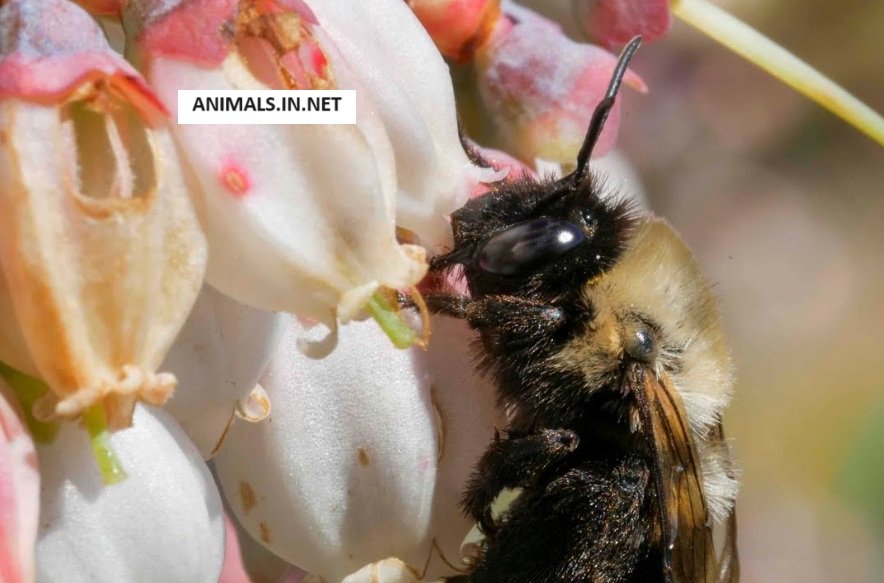
Quick Top 10 Facts about Southeastern Blueberry Bee
| SCIENTIFIC NAME | Habropoda laboriosa |
| CLASSIFICATION | KINGDOM: Animalia PHYLUM: Arthropoda CLASS: Insecta ORDER: Hymenoptera FAMILY: Apidae GENUS: Habropoda SPECIES: H. laboriosa |
| SIZE | Length: Around 0.5–0.75 inches (12–19 mm) |
| HABITAT | Woodlands, gardens, and blueberry farms in the southeastern United States |
| DIET | Nectar and pollen, primarily from blueberry flowers and other spring-blooming plants |
| SPECIES | Southeastern Blueberry Bee, a solitary bee species known for its vital role in blueberry pollination |
| COUNTRY | United States, particularly in the southeastern states like Georgia, Florida, and Alabama |
| GESTATION PERIOD | Solitary bees; females build nests and lay eggs individually in early spring |
| LIFE SPAN | Adults live only a few weeks; the full life cycle from egg to adult spans about one year |
| CONSERVATION STATUS | Not currently endangered, but sensitive to habitat loss and pesticide use |
Amazing Facts About Southeastern Blueberry Bees
1. They are blueberry specialists
Southeastern Blueberry Bees are particularly adapted to pollinate blueberry plants, making them essential to crop success in the southeastern U.S.
2. They are solitary, not social
Unlike honeybees, these bees do not form colonies. Each female builds and provisions her own nest.
3. They use buzz pollination
This bee species vibrates its flight muscles to dislodge pollen from the flower’s anthers—a technique especially effective for blueberry plants.
4. Their activity is perfectly timed
The Southeastern Blueberry Bee emerges in early spring, perfectly synchronized with blueberry bloom season.
5. They are fast and agile
These bees are quick fliers and agile foragers, often visiting hundreds of flowers in a short time.
6. They dig underground nests
Females dig small burrows in well-drained sandy soils where they lay eggs and store pollen and nectar for their larvae.
7. They are important for agriculture
As one of the most efficient native pollinators of blueberries, they play a key role in commercial fruit production.
8. They’re sensitive to habitat changes
Because they nest in specific soil conditions and rely on native plants, changes to the landscape can impact their survival.
9. They resemble bumblebees
They are often mistaken for small bumblebees due to their size and fuzzy appearance, but are a distinct species.
10. They contribute to biodiversity
By pollinating native and cultivated plants, Southeastern Blueberry Bees help maintain ecological balance and biodiversity in their habitats.
Exploring the Southeast Blueberry Bees
The extraordinary Southeastern blueberry bee has unique characteristics that make it an outstanding pollinator of blueberry bushes. Their specific pollination methods, like buzz pollination, are essential to achieving a good fruit set and production. We can promote sustainable agricultural methods and preserve the health of blueberry ecosystems.
Introduction to Southeast Blueberry Bees
The southeastern part of the United States is home to a remarkable variety of bees. These bees are an important part of the ecology in this area because they have evolved, particularly to pollinate blueberry bushes. They are distinguished from other bee species by a unique set of characteristics.
Characteristics of Southeast Blueberry Bees
The size of southeastern blueberry bees is an intriguing aspect of them. When compared to other bee species, they are rather small; females typically measure 8 to 10 mm in length. Because of their size, they can easily navigate blueberry bushes’ intricate blossoms, resulting in efficient pollination. Because they are smaller in size and less prone to stinging, they are less frightening to people.
Behaviour and Nesting Habits
The behaviour of southeastern blueberry bees is another intriguing feature. These bees are solitary in nature, unlike honeybees, which reside in vast colonies. Every female bee constructs its own underground nest, usually next to blueberry bushes. They use a mixture of plant matter and dirt to build their nests, which are little tunnels where they deposit their eggs. Unlike other species, Southeastern Blueberry Bees have a solitary existence and do not make honey or have a queen bee. Rather, it is the duty of each female to gather nectar and pollen to nourish her young.
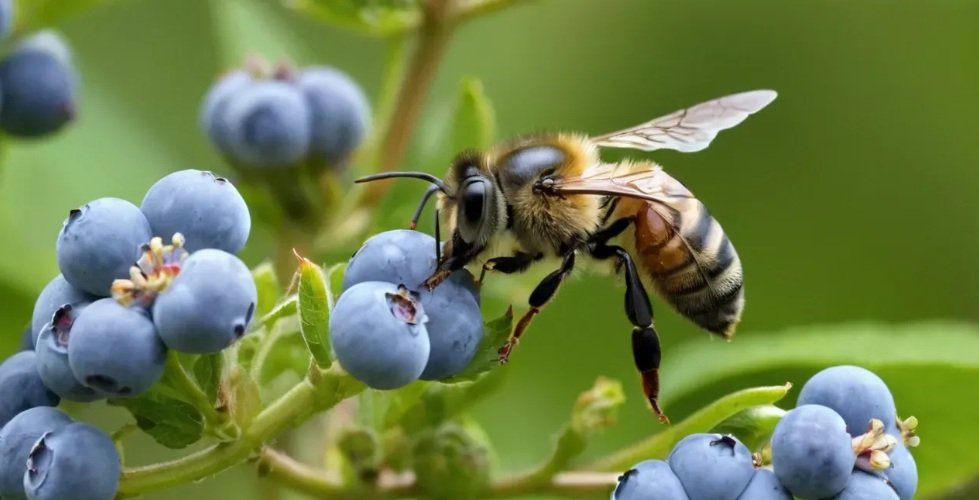
Discovering the Southeast Blueberry Bees
Distribution and Habitat
The southeastern blueberry bees are native to the Southeast United States, especially in areas where blueberry bushes are abundant. They live in states like Florida, Georgia, and the Carolinas. These bees like open spaces with sandy soils, such as blueberry fields, meadows, and pine woods.
Anatomy and Appearance
Unlike honey bees, which live in colonies, southeastern blueberry bees are solitary insects. The females of these bees are medium-sized, growing to a length of 10–12 mm, while the males are somewhat smaller. These bees get their name from their metallic blue-black colouring, which is shown on their sturdy and hairy bodies.
Pollination Techniques
The fact that southeastern blueberry bees are experts at pollinating blueberry bushes is one of their most intriguing characteristics. Blueberry bees transport pollen on the underside of their abdomen, in contrast to honey bees, which gather pollen in specialised structures on their hind legs. This adaptation is a result of their ability to carry pollen from one bloom to another effectively, which increases the likelihood of successful pollination.
Buzz Pollination
Southeastern blueberry bees employ an unusual pollination method known as buzz pollination, sometimes called sonication. They vibrate their flying muscles at a certain frequency and latch onto the blueberry flower stamens. This vibration aids pollination, which releases pollen from the flower’s anthers. This method greatly benefits blueberry bushes because their pollen is densely packed and requires intense vibrations to be released.
Importance in Blueberry Production
It is impossible to exaggerate the importance of southeast blueberry bees to the blueberry industry. These bees are thought to be the best pollinators for blueberry bushes, outperforming even honey bees in this regard. According to studies, southeastern blueberry bee populations are positively correlated with increased fruit set and productivity on blueberry fields. Their sophisticated pollination processes ensure that a larger proportion of flowers are effectively fertilised, resulting in better fruit output and quality.
Nesting Behaviour and Conservation
The female blueberry bees in the Southeast build their own individual nests, acting as solitary nesters. Usually, they make their nests underground by tunnelling through sandy soil to deposit their eggs. These nests are made up of many separate cells, each holding an egg and a pollen ball that has been provided. Before starting the new cell, the female bee closes the previous one. The eggs develop into larvae, which eat the pollen ball until they pupate and become adult bees.
 Preserving Southeast Blueberry Bees
 Preserving Southeast Blueberry Bees
The preservation of southeastern blueberry bee populations is essential because of their role as pollinators for blueberry bushes. A few of the things endangering their numbers include pesticide usage, habitat loss, and climate change. It is crucial to maintain these bees’ natural habitats, refrain from using dangerous pesticides, and encourage sustainable agricultural methods that meet their requirements for foraging and nesting.
FAQ (Frequently Asked Questions) about Southeastern Blueberry Bee
Q: What is the Southeastern Blueberry Bee?
Ans: The Southeastern Blueberry Bee (Habropoda laboriosa) is a native solitary bee found in the southeastern United States. As its name suggests, it plays a vital role in pollinating blueberry plants. Unlike honeybees, it is a solitary pollinator and does not live in hives. It is known for its efficient pollination of blueberry crops through a unique behavior called buzz pollination.
Q: Where does the Southeastern Blueberry Bee live?
Ans: This bee species is primarily found in the southeastern U.S., especially in states like Georgia, Florida, Alabama, and the Carolinas. It inhabits areas near blueberry fields and woodlands where it can nest in sandy or loose soil. These bees create underground burrows to lay their eggs and raise their young.
Q: What does the Southeastern Blueberry Bee eat?
Ans: Adult Southeastern Blueberry Bees feed on nectar from flowers, especially those of blueberry plants. They also collect pollen to feed their larvae. Blueberry flowers are their preferred source, making them extremely valuable to blueberry farmers due to their specialized pollination techniques.
Q: How big is the Southeastern Blueberry Bee?
Ans: Southeastern Blueberry Bees are relatively small, typically measuring about 10 to 15 millimeters in length. They resemble bumblebees in appearance, with fuzzy black and grayish or yellowish markings, and are often mistaken for smaller bumblebees due to their similar shape and coloring.
Q: How does the Southeastern Blueberry Bee defend itself?
Ans: As solitary bees, Southeastern Blueberry Bees are generally non-aggressive and avoid confrontation. Females are capable of stinging, but they rarely do unless handled or threatened. Their solitary nature and nesting in the ground also help minimize human contact and reduce the risk of stings.
Q: What is unique about the Southeastern Blueberry Bee?
Ans: What makes this bee special is its ability to perform buzz pollination, or sonication. By vibrating its flight muscles while clinging to blueberry flowers, it effectively releases pollen that other pollinators can’t access. This makes them far more effective at pollinating blueberries than honeybees.
Q: Are Southeastern Blueberry Bees endangered?
Ans: Southeastern Blueberry Bees are not currently listed as endangered, but like many native pollinators, they are vulnerable to habitat loss, pesticide use, and changes in agricultural practices. Conservation of their habitat and reducing pesticide exposure can help support their populations.
Q: How long do Southeastern Blueberry Bees live?
Ans: These bees have a short active life cycle. Adults typically live for only a few weeks during early spring, coinciding with the bloom of blueberry plants. The rest of their life cycle is spent in the larval stage within their underground nests.
Q: Can you keep Southeastern Blueberry Bees as pets?
Ans: No, Southeastern Blueberry Bees are wild, solitary pollinators and are not suited for domestication or being kept as pets. However, gardeners and farmers can attract and support them by planting native flowers, especially blueberries, and maintaining natural, undisturbed areas for nesting.
#SoutheasternBlueberryBee, #NativeBees, #Pollinators, #BlueberryPollination, #BuzzPollination, #SolitaryBees, #WildBees, #HabropodaLaboriosa, #PollinatorConservation, #GardenEcology
Our sources and references about Southeastern Blueberry Bee
1: Wikipedia – Habropoda laboriosa
2: University of Florida – Southeastern Blueberry Bee
3: Xerces Society – Native Bees
4: Pollinator Partnership