The Spongy Moth, formerly known as the Lymantria dispar, is an invasive species originally from Europe. It is infamous for the damage its larvae cause to trees, particularly oaks. These moths are easily recognizable by their large, fuzzy bodies and distinctive markings. They are a threat to forest ecosystems in many parts of North America.
Quick Top 10 Facts about Spongy Moth
| SCIENTIFIC NAME | Lymantria dispar |
| CLASSIFICATION | KINGDOM: Animalia PHYLUM: Arthropoda CLASS: Insecta ORDER: Lepidoptera FAMILY: Erebidae GENUS: Lymantria SPECIES: L. dispar |
| SIZE | Wingspan: 1.5–2 inches (4–5 cm) |
| HABITAT | Forests, woodlands, and urban areas in temperate regions of Europe, Asia, and North America |
| DIET | Larvae feed on the leaves of various hardwood trees, especially oaks, birches, and poplars |
| SPECIES | Spongy Moth, known for the distinctive “spongy” texture of its larvae, which causes defoliation of trees |
| COUNTRY | Originally native to Europe and Asia; now found in parts of North America, particularly in the northeastern United States and Canada |
| LIFE CYCLE | Egg → Larva (caterpillar) → Pupa → Adult Moth |
| LIFE SPAN | 2–3 months (varies by climate and location) |
| CONSERVATION STATUS | Not threatened, but considered an invasive pest in some regions due to its impact on forestry |
Amazing Facts About Spongy Moths
1. They are invasive pests
Spongy Moths, especially in North America, are considered invasive pests due to their destructive larvae, which can cause significant defoliation of trees, particularly oaks and birches.
2. The larvae look like “sponges”
The caterpillars (larvae) are covered in tufts of hair that give them a spongy appearance, which is where they get their name.
3. They cause damage to forests
Spongy Moth larvae can strip entire trees of their leaves, leading to reduced growth and, in extreme cases, the death of the trees.
4. Their populations can explode
Under favorable conditions, Spongy Moths can have rapid population growth, leading to large-scale infestations in affected areas.
5. Their eggs survive cold winters
The Spongy Moth’s eggs are laid in large masses on tree trunks, where they overwinter and survive the cold winter months, hatching in spring when temperatures warm.
6. Moths have a short adult lifespan
As adults, Spongy Moths live for only about 1-2 weeks, during which time they mate and lay eggs to begin the next generation.
7. They have a strong flight ability
Adult Spongy Moths are strong fliers, often traveling large distances to locate suitable breeding areas.
8. Males and females look different
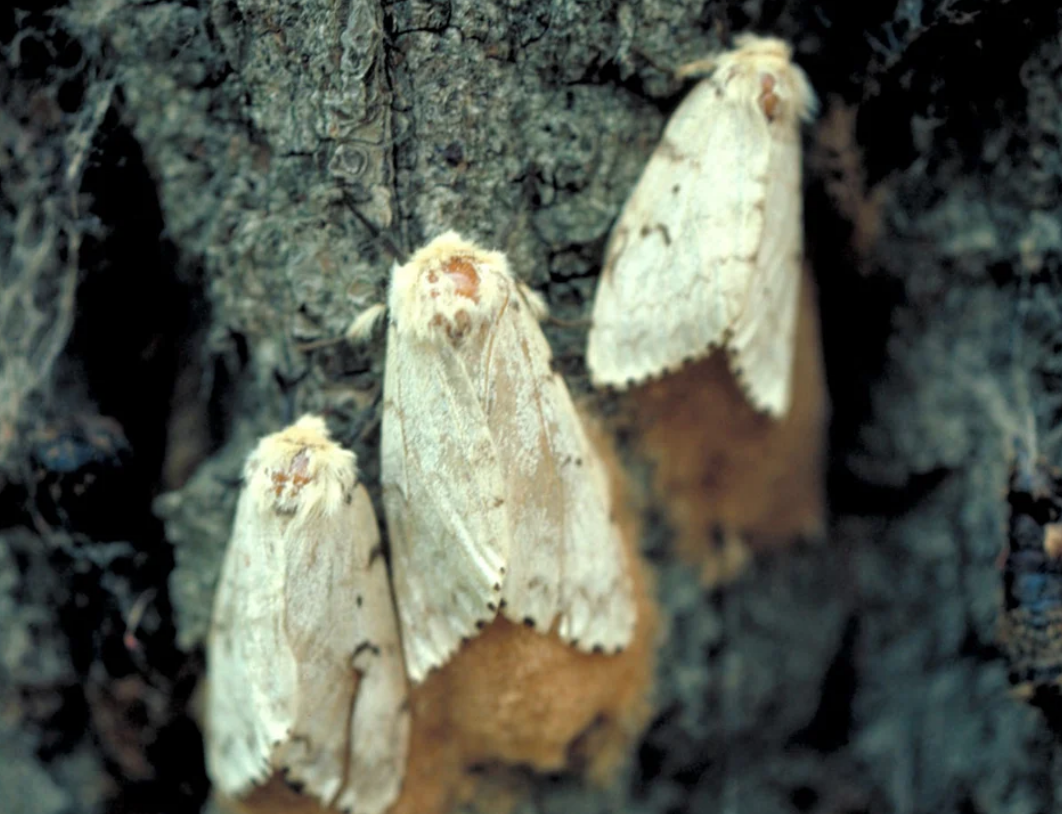
Male Spongy Moths are brown with distinctive black markings, while females are larger, white, and wingless, and they emit pheromones to attract males.
9. Their larvae have numerous predators
Despite being a pest species, Spongy Moth larvae are preyed upon by birds, mammals, and beneficial insects like parasitoid wasps, which help control their populations.
10. Their management is challenging
Control measures for Spongy Moths include the use of biological agents, insecticides, and manual removal of egg masses, but their ability to spread quickly makes them difficult to manage.
Interesting Information Regarding the Spongy Moth
The spongy moth, scientifically known as Lymantria dispar, is an intriguing insect that attracts attention due to its unique life cycle and noteworthy ecological impact. This species belongs to the Erebidae family, a well-known family of moths. Native to Europe and Asia, the spongy moth first arrived in North America in the late 1800s, notably in the 1860s. These moths were unintentionally introduced, primarily for silk production.
Growth and Spread of Spongy Moth Populations in North America
Spongy moth populations have expanded significantly throughout North America since their arrival, especially in the northeastern United States and parts of Canada. Their rapid reproduction and ability to adapt to various environments are responsible for this proliferation. Male and female moths vary in size and colour, with adult moths having a hairy, attractive appearance. Females are often larger and less colourful than males, which helps them blend in and hide from predators.
Ecological Impact of Spongy Moths on Forests
Spongy moths significantly influence local ecosystems because of their feeding habits. The larvae consume a wide range of trees, particularly oaks, which may lead to defoliation and threaten the biodiversity and health of forests. Ecologists and forest managers are concerned about the long-term consequences of spongy moth outbreaks. Understanding the spongy moth’s biology and ecology is crucial to developing effective management strategies and minimising its negative impacts on its habitats.
Behaviour and Life Cycle of the Spongy Moth
The life cycle of the spongy moth (Lymantria dispar) consists of four stages: the egg, larva (caterpillar), pupa, and adult moth. The transformation begins when the female moth lays her eggs, usually in late summer or early autumn. Egg masses can contain up to 1000 eggs, which are covered with a soft, spongy material that provides protection and concealment. The larval stage starts when the eggs hatch in the spring as temperatures rise, after being dormant during the winter.
The Larval Stage: A Feeding Frenzy
Known for their voracious appetites, the larvae (caterpillars) hatch from the eggs between late April and early June. They begin feeding intensely on a range of deciduous trees, including oaks, maples, and birches. In their early instar, the larvae are small and mostly hidden. As they mature, they display distinctive behaviours, such as gathering in groups to feed and spreading out as they grow. The defoliation caused by this feeding frenzy impacts the trees and surrounding ecosystems.
Ecological Effects and Difficulties Caused by Spongy Moths
The Invasive Nature of the Spongy Moth
The spongy moth (Lymantria dispar) is an invasive species that significantly affects forest ecosystems. Native to Europe and Asia, these moths have established colonies in North America, causing widespread damage. Their larvae, which are voracious leaf-eaters, can defoliate entire trees, particularly hardwoods like oaks, maples, and aspens. This intense feeding reduces the trees’ ability to photosynthesise and may eventually lead to their death. The loss of these trees disrupts local ecosystems, affecting not only the trees but also the many creatures that rely on them for food and shelter.
Impact on Plant and Animal Species
The growing number of spongy moths threatens the richness of their habitats. Invasive plants often thrive in disturbed environments, meaning that native plant species suffer due to deforestation caused by spongy moth infestations. Wildlife populations that depend on native plants for food and shelter may also be adversely affected by changes in the plant community mix. Birds, animals, and insects are particularly at risk, as they rely on a diverse range of plant life for survival.
Challenges in Managing Spongy Moth Populations
Controlling spongy moth populations poses several challenges for ecosystems and conservation efforts. Traditional management methods, such as pesticide use, can harm non-target species and disrupt ecological balances. Furthermore, spongy moths reproduce at such high rates that constant monitoring and control measures are necessary to prevent outbreaks. Biological control agents, such as natural predators and parasitoids, along with integrated pest management strategies, are often used to restore ecological balance. These approaches aim to preserve biodiversity and forest health while reducing the ecological damage caused by spongy moths.
Strategies for Prevention and Control of Spongy Moths
Biological Control Methods
Introducing natural predators or infections is a common biological control method for managing spongy moth populations. For example, certain predatory insects and parasitic wasps have shown potential in reducing spongy moth numbers. By feeding on caterpillars, these predators help control the population naturally, without relying on chemicals. Additionally, specific fungi can target and infect the larvae, further supporting biological control efforts.
Chemical Control Solutions for Spongy Moths
Insecticides designed to target spongy moth larvae at critical life stages are commonly used as chemical control methods. To maximise efficacy, these chemicals must be applied when the larvae are young and most vulnerable. Care must be taken to minimise the impact on non-target species and the environment. Consulting pest control experts can help identify the safest and most effective chemical treatments.
Cultural Approaches to Preventing Infestations
Cultural approaches also play a vital role in prevention. By using appropriate landscaping and forest management practices, the likelihood of infestations can be greatly reduced. Preventative steps include maintaining a clean understory, removing diseased or dead trees, and ensuring proper tree fertilisation. Public awareness campaigns are crucial in educating landowners and homeowners on how to recognise early signs of infestation and implement preventative measures.
Effective Management of Spongy Moth Populations
By combining biological, chemical, and cultural approaches, and raising public awareness, we can effectively manage spongy moth populations. This will help protect agricultural resources and promote healthier ecosystems.
FAQ (Frequently Asked Questions) about Spongy Moth
Q: What is a Spongy Moth?
Ans: The Spongy Moth (Lymantria dispar) is a species of moth native to Europe and Asia, but it is now an invasive pest in North America. The moth’s larvae (caterpillars) are known for their “spongy” appearance and their destructive feeding habits, which can severely damage trees by defoliating them.
Q: Where does the Spongy Moth live?
Ans: The Spongy Moth is found in temperate regions, including Europe, Asia, and North America. In North America, they are especially prevalent in the northeastern United States and Canada.
Q: What do Spongy Moths eat?
Ans: The larvae feed on the leaves of a wide variety of hardwood trees, particularly oaks, birches, and poplars. The feeding habits of the larvae can cause significant damage to forests and urban greenery.
Q: How do Spongy Moths reproduce?
Ans: Adult Spongy Moths mate after emerging from their pupal stage. Females lay their eggs in masses on tree trunks, where the eggs overwinter and hatch in the spring. The larvae then feed on tree leaves and grow through several stages before pupating and becoming adults.
Q: Are Spongy Moths harmful to humans?
Ans: Spongy Moths do not pose a direct threat to human health, but their larvae can cause environmental damage by defoliating trees. Additionally, some people may experience allergic reactions to the hairs of the larvae.
Q: How do Spongy Moths affect forests?
Ans: Spongy Moths can cause significant damage to forests by defoliating trees, which weakens the trees and reduces their ability to grow. In extreme cases, repeated defoliation can lead to tree death, which affects biodiversity and ecosystem health.
Q: How long do Spongy Moths live?
Ans: The Spongy Moth has a short adult lifespan, typically living for only 1-2 weeks, during which time it mates and lays eggs. The larvae, however, can last through the summer and cause lasting damage to vegetation.
Q: How can Spongy Moths be controlled?
Ans: Control measures for Spongy Moths include biological agents, such as the use of parasitoid wasps, insecticides, and manual removal of egg masses. However, due to their rapid reproduction and widespread distribution, they remain challenging to manage.
Q: Can Spongy Moths be eradicated?
Ans: Eradicating Spongy Moths is difficult due to their adaptability and rapid spread. While control methods can reduce populations, complete eradication is unlikely. Ongoing monitoring and management are necessary to prevent further spread.
Q: Are Spongy Moths dangerous to crops?
Ans: Spongy Moths primarily affect trees, particularly hardwoods, and are not known to significantly harm agricultural crops. However, they can cause damage to ornamental trees and gardens.
#SpongyMoth, #LymantriaDispar, #InvasiveSpecies, #ForestPests, #MothSpecies, #TreeDamage, #Ecology, #PestControl, #UrbanForests, #InsectLife
Our sources and references about Spongy Moth
1: Wikipedia – Spongy Moth
2: US Forest Service – Spongy Moth
3: Michigan State University – Spongy Moth
4: The Nature Conservancy – Spongy Moth