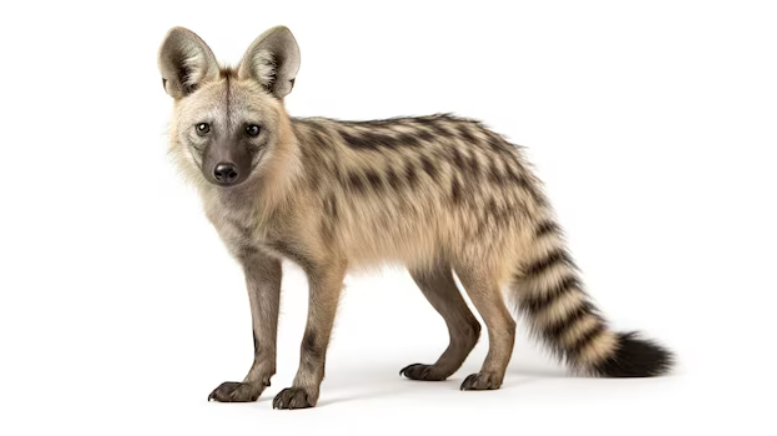
Introducing the aardwolf as a unique and fascinating animal
Originally from eastern and southern Africa, the aardwolf, also called Proteles cristata, is a tiny animal. With its distinct habits and adaptations, the aardwolf is an intriguing species. It is an exceptional member of the hyena family due to its unique diet, nocturnal habits, and defensive systems. By being aware of and respecting these aardwolf facts, we can do more to preserve and protect this amazing species.
Quick Top 10 Facts about Aardwolf
| SCIENTIFIC NAME | Proteles cristata (Aardwolf) |
| CLASSIFICATION | KINGDOM: Animalia CLASS: Mammalia ORDER: Carnivora FAMILY: Hyaenidae PHYLUM: Chordata GENUS: Proteles |
| SIZE | Up to 85 cm (33 inches) in length, with a tail length of up to 30 cm (12 inches), weighing between 8-14 kg (18-31 lbs) |
| HABITAT | Open savannas and grasslands in Southern and Eastern Africa |
| DIET | Insectivorous – Primarily feeds on termites, ants, and other insects |
| SPECIES | Aardwolf (*Proteles cristata*) |
| COUNTRY | Found in Southern and Eastern Africa, including countries like South Africa, Namibia, and Zimbabwe |
| GESTATION PERIOD | Approximately 90-95 days |
| LIFE SPAN | Up to 12 years in the wild |
| CONSERVATION STATUS | Listed as “Least Concern” (LC) by the IUCN due to its wide distribution, though it faces threats from habitat loss and hunting |
Aardwolf natural habitat, which includes grasslands and savannas in eastern and southern Africa
One of the most interesting members of the hyena family is the aardwolf. It is indigenous to the savannas and grasslands of southern and eastern Africa. In spite of its name, the aardwolf is a tiny, peculiar, insectivorous animal rather than a wolf at all.
Aardwolf feeding habits, such as using its long tongue to lap up termites from their mounds
The aardwolf is a lone, nocturnal species, unlike its bigger cousins. It emerges at night to forage for food, spending the majority of the daytime hours in its burrows. Its primary food source is termites, which it captures with its long, sticky tongue. An essential predator in its environment, the aardwolf may really eat millions of termites in a single night.
Aardwolf’s appearance, including its unique dentition
The aardwolf’s unique teeth are among its most defining characteristics. The aardwolf’s jaw structure is smaller, and it has fewer teeth than other hyenas. Its ability to adapt lets it consume termites without causing damage to its teeth. The aardwolf also has a special kind of defence. Its anal glands have the ability to release an offensive stench when threatened, which may put off would-be predators.
Unique habits and fascinating facts about aardwolf
Ultimately, the aardwolf is an amazing animal with unique habits and adaptations. It’s an interesting animal to study and admire in the African grasslands because of its distinct defensive systems, nocturnal habits, and specialised food.
It belongs to the hyena family but differs in several aspects.
As a member of the hyena family, the aardwolf is distinguished from its bigger and more well-known cousins by a few special traits. We will investigate a few amazing aardwolf facts.
The Aardwolf’s appearance, including its size, weight, and distinctive features
The aardwolf is a medium-sized carnivore with a striking look. It has a bushy tail, long legs, and a slim body. The aardwolf has short, coarse fur that leans largely towards grey or yellow. The long, upright hairs of the aardwolf’s mane, which extend down its spine and down the back of its neck, are among its most remarkable characteristics.
Aardwolf’s diet, which primarily consists of termites
The aardwolf’s primary food consists of insects, since it is an insectivorous species. It eats mostly termites, which it collects and eats with its long, sticky tongue. Since the aardwolf may eat millions of termites in a single night, it plays a significant role as a predator in managing termite populations. Beyond termites, the aardwolf also consumes beetles and ants, among other insects.
Nocturnal Behaviour of Aardwolf
Because it is largely nocturnal, the aardwolf is most active at night. It rests throughout the day in tunnels or dens that it constructs for itself or snatches from other animals. The aardwolf emerges around nightfall to start its nocturnal food-gathering expedition. It may escape competition from other carnivores that are active during the day, such as lions and hyenas, because of its nocturnal lifestyle.
Aardwolf’s reproductive habits, mating rituals and parental care
Aardwolves are mainly solitary creatures, although they do establish monogamous partnerships during the mating season. Aardwolves are monogamous animals, and they will remain so until the female gives birth to a litter of one to four pups. The two parents work together to raise the cubs, and they alternate between finding food and tending to the young. The cubs will spend around a year with their parents before going off on their own.
Adaptations for protection against predators
The aardwolf has evolved a number of protection strategies to shield itself from predators, despite its tiny stature. It will hiss and growl low to ward off would-be assailants when it feels threatened. Should this be ineffective, the aardwolf may potentially release an offensive-smelling substance from its anal glands, which serves as a warning. Aardwolves can also defend themselves if needed with their long, keen claws.
Conservation status and any specific challenges it faces
On the IUCN Red List of Threatened Species, the aardwolf is now classified as a species of least concern. This indicates that there are now no significant dangers to its existence. But aardwolf populations may suffer from habitat loss and fragmentation, pesticide usage in agriculture, and other factors. Their long-term existence is being worked for by keeping an eye on and safeguarding their habitats.
FAQ (frequently asked questions) about Aardwolf
Q: What is an Aardwolf?
Ans: The Aardwolf (Proteles cristata) is a small, nocturnal mammal native to southern and eastern Africa, known for its insectivorous diet and hyena-like appearance.
Q: Where do Aardwolves live?
Ans: Aardwolves are found in open savannas, grasslands, and dry regions of southern and eastern Africa, including countries like South Africa, Zimbabwe, and Namibia.
Q: What do Aardwolves eat?
Ans: Aardwolves are insectivores, primarily feeding on termites, ants, and other small insects. They have specialized teeth and jaws to break open insect mounds.
Q: How do Aardwolves defend themselves?
Ans: Aardwolves defend themselves by using their strong scent glands to mark territory and deter predators. They are also capable of running quickly to escape threats.
Q: How do Aardwolves reproduce?
Ans: Aardwolves reproduce sexually, with the female giving birth to a small litter of 2 to 4 cubs after a gestation period of around 90 days.
Q: Are Aardwolves nocturnal?
Ans: Yes, Aardwolves are primarily nocturnal, foraging for food and being most active during the night to avoid the heat of the day.
Q: How long do Aardwolves live?
Ans: In the wild, Aardwolves can live up to 10 years, though their lifespan may be shorter due to predation and environmental factors.
Q: What are the characteristics of Aardwolves?
Ans: Aardwolves have a slender body, long legs, and a yellowish-brown coat with darker stripes. They resemble hyenas but are much smaller and have a unique diet.
Q: Are Aardwolves endangered?
Ans: Aardwolves are not currently endangered but face threats from habitat loss, hunting, and competition with other predators. Their populations are considered stable in most areas.
Q: Do Aardwolves live in groups?
Ans: Aardwolves are generally solitary animals, though they may share territories with others. They typically live alone or in small family groups.
#Aardwolf, #HyenaFamily, #AfricanWildlife, #WildlifePhotography, #AardwolfLife, #SavannaAnimals, #WildlifeConservation, #NocturnalAnimals, #AfricaWildlife, #AnimalLovers, #NatureLovers, #WildAnimals, #AardwolfOfAfrica, #WildlifeProtection, #EndangeredSpecies
Our sources and references about Aardwolf
1: Wikipedia
2: Encyclopaedia Britannica
3: Smithsonian Magazine
4: World Wildlife Fund (WWF)