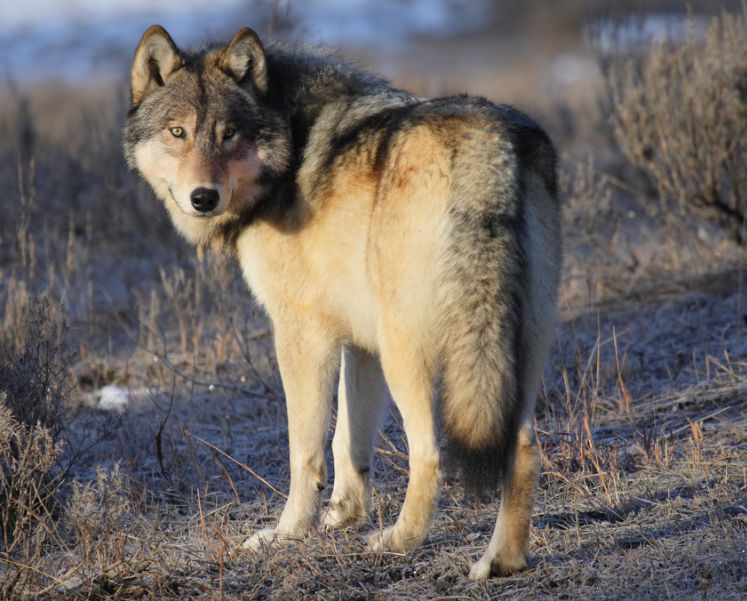
The Wolf is a carnivorous mammal known for its social structure, often living in packs. Wolves are highly intelligent and skilled hunters, capable of taking down large prey like deer, moose, and bison. They have a complex communication system, including howls, body language, and scent marking. Wolves are found in various habitats, from forests to tundra.
Quick Top 10 Facts about Wolf
| SCIENTIFIC NAME | Canis lupus |
| CLASSIFICATION | KINGDOM: Animalia CLASS: Mammalia ORDER: Carnivora FAMILY: Canidae PHYLUM: Chordata GENUS: Canis |
| SIZE | Height: 26-32 inches (66–81 cm), Length: 3.5–5.5 feet (1.1–1.7 m), Weight: 40–175 lbs (18–79 kg) |
| HABITAT | Wolves are found in forests, tundra, grasslands, and mountains, mainly in North America, Europe, and Asia. |
| DIET | Carnivorous – primarily hunt large prey like deer, moose, and elk, but will also eat smaller animals and scavengers. |
| SPECIES | Gray Wolf (Canis lupus) is the most common species, with several subspecies like the Arctic Wolf, Timber Wolf, and Mexican Wolf. |
| COUNTRY | Found in North America, Europe, Asia, and parts of the Middle East. |
| GESTATION PERIOD | 63 days |
| LIFE SPAN | In the wild: 6–8 years, In captivity: Up to 16 years |
| CONSERVATION STATUS | Least Concern – However, some subspecies are considered endangered or vulnerable due to habitat loss and human-wildlife conflict. |
Amazing Facts About Wolves
1. Wolves live in packs
Wolves are social animals that live in structured family groups known as packs, with a clear hierarchy.
2. Excellent communicators
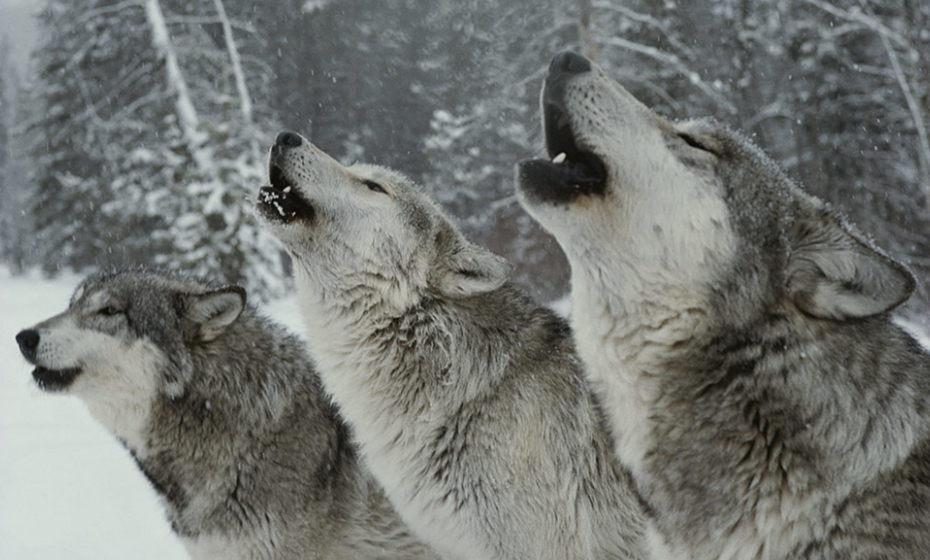
Wolves communicate with each other using vocalizations (howling), body language, and scent marking.
3. Their howl can be heard up to 10 miles away
Wolves use their howls to communicate with pack members over long distances, especially in dense forests.
4. They are skilled hunters
Wolves hunt in packs and are skilled at bringing down large prey like elk and deer, relying on teamwork.
5. Wolves are territorial
Each wolf pack has a defined territory that they defend from rival packs.
6. Wolves are primarily nocturnal
While wolves can hunt during the day, they are often more active during dawn and dusk, preferring the cover of night.
7. Wolves have large territories
A wolf pack’s territory can span over 1,000 square miles, depending on the availability of food and other factors.
8. They have a high metabolism
Wolves need to eat large amounts of food to sustain their energy, and can consume up to 20 pounds (9 kg) of meat in one meal.
9. They have keen senses
Wolves have incredible hearing and a strong sense of smell, which helps them locate prey and communicate with pack members.
10. Wolves play a vital role in the ecosystem
By controlling the populations of herbivores, wolves help maintain the balance of ecosystems, preventing overgrazing and supporting biodiversity.
History and Facts About Wolves and Their Classification Within the Animal Kingdom
Humans have been fascinated by wolves for generations due to their intriguing nature. These magnificent creatures, members of the Canidae family, are well-known for their social interactions and impressive hunting skills. Thanks to their remarkable adaptability, wolves inhabit a wide variety of environments, including grasslands, tundra, and woodlands. Here are more facts about wolves:
Classification Within the Canidae Family
As members of the Canidae family, wolves share a close relationship with coyotes and domestic dogs. Wolves are the largest canids and live in packs led by an alpha couple. The most well-known wolf species is the grey wolf, which predominantly resides in the Northern Hemisphere.
Fascinating Facts About Wolves and Their Remarkable Behaviour
Wolves usually restrict themselves to areas between 250 and 500 square miles. However, they may expand their territory when food becomes scarce.
1: Wolves, as apex predators, control the population of prey species.
2: Wolves form lifelong partnerships and are monogamous.
3: Wolves are highly intelligent, with a very complex social structure.
4: Wolves communicate using a wide range of vocalisations, including their distinctive howls.
5: Wolves give birth to litters of three to six puppies during a 45-day gestation period.
6: As ambush predators, wolves typically target weak, sickly, or injured prey.
7: Wolves have a single-chamber stomach, making them monogastric animals.
8: Wolves’ keen senses of hearing, smell, and sight make them effective hunters.
9: Wolves socialise well with coyotes and even domestic dogs due to their high level of social interaction.
10: Wolves travel in groups, enabling them to catch and consume larger prey.

Physical Appearance of Wolves, Including Their Size, Weight, and Colour Variations
The intricate social structure of wolves is one of their most fascinating characteristics. Wolves live in packs led by an alpha male and female. Every member of the pack has a distinct role and duty, and the hierarchy is maintained through a system of dominance and submission. Wolves communicate using vocalisations, body language, and scent-marking, which helps them coordinate hunts and protect their territory.
Hunting Facts About Wolves, Such as Cooperative Hunting and Strategic Tactics
Wolves are skilled hunters and primarily prey on large ungulates like moose, elk, and deer. They are renowned for their extraordinary cooperation during hunts, using strategies to bring down their prey. Wolves, though ruthless predators, play a crucial role in maintaining the delicate balance of the ecosystem. They help preserve plant ecosystems by preventing overgrazing and controlling herbivore populations.
Breeding Behaviour of Wolves, Including the Alpha Pair’s Role in Reproduction
Wolves exhibit a high level of loyalty and cooperation within their packs, and they possess a strong sense of family. They form close bonds with both their partners and offspring, with both parents actively participating in rearing the young. Wolves are highly intelligent and can solve problems, adapting to their changing surroundings. Their excellent senses of smell and hearing help them find food and communicate with pack members.
The Importance of Understanding and Conserving Wolves in the Animal Kingdom
Sadly, wolves have faced numerous challenges throughout history, including habitat loss, persecution, and hunting. However, conservation efforts have helped protect and restore wolf populations in many areas. Today, wolves are recognised as important keystone species vital to maintaining ecosystem health. To ensure biodiversity and their continued survival, it is essential to understand and appreciate these remarkable creatures. Wolves are famous for their social structure, intelligence, and hunting abilities.
Social Structure and Behaviour, Including the Vocalisations and Body Language of Wolves
1. A Mentality of Packing
Wolves live in packs and are highly social animals. The dominant individuals in the group, an alpha male and female, lead the pack. The pack functions as a unit to hunt, care for their young, and protect their territory.
2. Superb Hunters
Wolves are skilled hunters with a 30% success rate. Their main prey includes large ungulates like elk and deer. They employ strategic planning, communication, and cooperation in their hunting tactics.
3. Cryptic Interaction
Wolves’ howls are infamous for their eerie sound. These vocalisations serve as a form of communication within the pack, helping them to mark territory, coordinate hunts, and signal their location to one another.
4. Flexibility
Due to their remarkable adaptability, wolves can live in a wide range of environments, such as grasslands, tundra, and woodlands. They can thrive on various prey species, depending on their location, and have access to a diverse array of food options.
5. Endangered Species
Despite their adaptability and resilience, wolves are classified as endangered in many parts of the world. Hunting, habitat destruction, and conflicts between humans and wolves have contributed to their decline.

FAQ (frequently asked questions) about Wolf
Q: What is a Wolf?
Ans: A wolf is a carnivorous mammal belonging to the Canidae family. Wolves are known for their intelligence, strong social structure, and adaptability. They are the ancestors of domestic dogs and are found in various habitats around the world.
Q: Where do Wolves live?
Ans: Wolves are found in a variety of habitats, including forests, tundra, grasslands, and deserts. They are native to North America, Europe, and Asia, with some populations also present in parts of the Middle East.
Q: What do Wolves eat?
Ans: Wolves are carnivores and typically hunt in packs to take down large prey such as deer, moose, and elk. They may also scavenge on smaller animals or eat smaller mammals, birds, and even fish when larger prey is scarce.
Q: Are Wolves dangerous to humans?
Ans: Wolves generally avoid human contact and are not typically dangerous to people. They pose little threat to humans, as they are more likely to flee from humans. However, they can become aggressive if threatened, especially when protecting their pack or young.
Q: How do Wolves reproduce?
Ans: Wolves reproduce sexually. The female wolf (called a bitch) comes into estrus once a year, and after mating, she gives birth to a litter of 4 to 7 pups. Pups are cared for by both parents and other pack members.
Q: How do Wolves defend themselves?
Ans: Wolves rely on their pack structure for protection. They defend themselves using their teeth, speed, and strong social bonds. When threatened, they may use their powerful jaws or work together as a pack to intimidate predators or threats.
Q: How long do Wolves live?
Ans: Wolves typically live for about 6 to 8 years in the wild, although they can live longer in captivity. Many wolves die young due to disease, accidents, or conflict with humans or other animals.
Q: What are the physical characteristics of Wolves?
Ans: Wolves have a strong, muscular body with a thick fur coat that varies in color, ranging from gray to white, black, or even reddish hues. They have long legs, large paws, and a bushy tail, all of which help them survive in the wild.
Q: Are Wolves social animals?
Ans: Yes, wolves are highly social animals that live in packs. These packs are typically family groups, with a hierarchical structure. The pack works together to hunt, protect territory, and care for pups.
Q: Are Wolves endangered?
Ans: While wolves were once endangered in many areas due to hunting and habitat loss, some species have rebounded thanks to conservation efforts. However, certain species of wolves, such as the Mexican gray wolf, remain endangered and are still under protection efforts.
#Wolf, #WolvesOfInstagram, #WolfLovers, #WildlifePhotography, #AnimalConservation, #NatureLovers, #WildlifeProtection, #CanineLovers, #WolfPack, #EndangeredSpecies, #WolfWildlife, #WolvesInTheWild, #Predators, #WildlifeConservation, #AnimalKingdom
Our sources and references about Wolf
1: Wikipedia – Wolf
2: National Geographic – Wolf Facts
3: Encyclopaedia Britannica – Wolf
4: World Wildlife Fund – Wolf