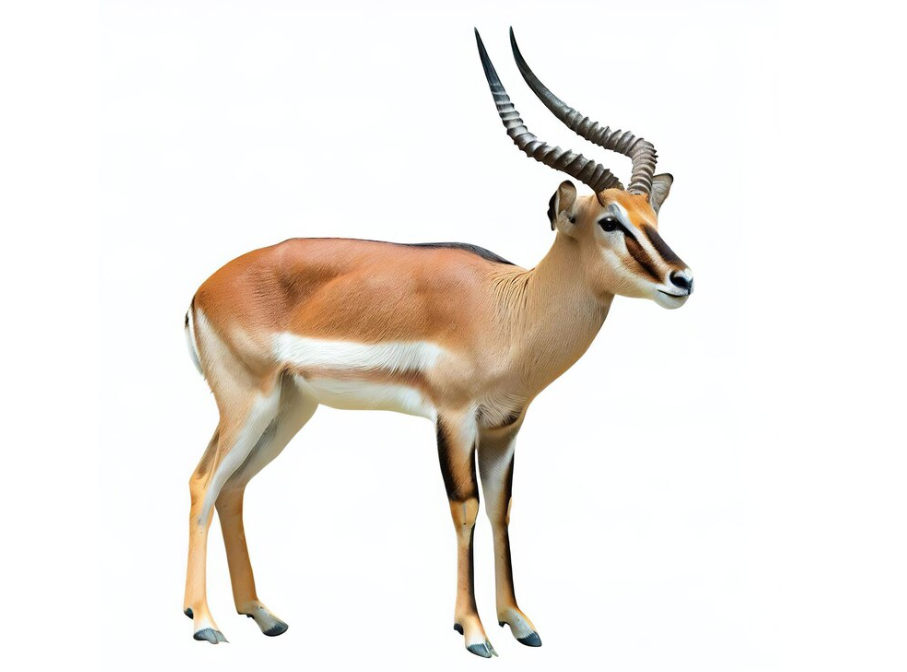
The Addax is a critically endangered species of antelope found in the Sahara Desert. It is well-adapted to harsh desert conditions, with a light-colored coat that reflects the sun and broad hooves for walking on sand. Addaxes are herbivores, grazing on grasses and shrubs in the desert.
Quick Top 10 Facts about Addax Antelope
| SCIENTIFIC NAME | Addax antelope |
| CLASSIFICATION | KINGDOM: Animalia PHYLUM: Chordata CLASS: Mammalia ORDER: Artiodactyla FAMILY: Bovidae GENUS: Addax SPECIES: A. nasomaculatus |
| SIZE | Height: 3.5–4.5 feet (1–1.3 meters) at the shoulder, Weight: 100–120 kg (220–265 lbs) |
| HABITAT | Arid and semi-arid regions, including the Sahara Desert in northern Africa |
| DIET | Herbivorous, grazing on grasses, shrubs, and desert plants |
| SPECIES | Also known as the screwhorn antelope, known for its spiral horns and ability to adapt to harsh desert environments |
| COUNTRY | Native to the Sahara Desert region, found in parts of Algeria, Chad, Egypt, Mali, Mauritania, and Niger |
| GESTATION PERIOD | Approximately 250–270 days, with a single calf born at a time |
| LIFE SPAN | 10–20 years in the wild, although the species is endangered |
| CONSERVATION STATUS | Critically Endangered, primarily due to habitat loss, poaching, and competition with livestock |
Amazing Facts About Addax Antelope
1. Addax antelope are desert specialists
The Addax antelope is highly adapted to living in the harsh desert environment, capable of surviving with minimal water by obtaining moisture from their food.
2. They have uniquely twisted horns
The males possess long, spiral-shaped horns that can be up to 1 meter (3.3 feet) long, which they use in defense during territorial fights.
3. They are very elusive and difficult to spot
Addax antelope are highly secretive and well-camouflaged, making them difficult to spot in their desert habitat.
4. They are primarily nocturnal
To avoid the extreme heat of the desert day, Addax antelope are most active at night and during the cooler hours of dawn and dusk.
5. They are capable of surviving without drinking water for long periods
The Addax antelope has adapted to the desert by conserving water and obtaining moisture from their food, allowing them to survive in arid conditions.
6. Their diet mainly consists of desert vegetation
Their herbivorous diet includes grasses, shrubs, and desert plants, which they can graze on even in the driest parts of their environment.
7. They have strong legs built for desert terrain
Addax antelope are well-built for moving through the tough, sandy terrain of the desert, with strong, long legs that allow them to travel long distances in search of food and water.
8. They are critically endangered
The Addax antelope has been listed as critically endangered due to habitat loss from human activities, poaching, and competition with domesticated livestock for resources.
9. Addax antelope are social animals
Although they tend to live in small herds of up to 20 individuals, they are not particularly territorial and often roam in search of food.
10. They have excellent heat tolerance
Addax antelope can withstand extreme heat, withstanding temperatures over 40°C (104°F) by resting during the hottest parts of the day and being active at cooler times.
Addax, a species of antelope native to the Sahara Desert
The white antelope, or addax, is an interesting animal found in North Africa’s Sahara Desert. These magnificent animals have evolved to withstand some of the most extreme conditions on the planet. Addax creatures are very outstanding due to their unique qualities and striking looks.
Physical appearance of addax, large size, distinctive horns, and pale coat colour
The medium-sized Addax antelope has long, twisted horns and a stocky body. To protect them from the harsh desert conditions, their bodies grow shaggy and dense with fur. Their light sandy-white fur hue offers superb concealment in the parched surroundings. Because of this adaptation, they may blend in perfectly with their environment, making it harder for predators to identify them.
How addax have adapted to survive in extreme desert conditions
The capacity for water conservation shown by Addax is among their most intriguing features. These antelopes have evolved physiological adaptations that enable them to go for extended periods of time without drinking water in order to thrive in the desert. Their kidneys are quite good at storing water, and they may get moisture from the plants they eat. Furthermore, Addax may decrease their body temperature in the warmest times of the day to minimise water loss via perspiration. They can survive in the harsh desert climate because of their amazing adaptations.
Interesting facts about addax
The addax is a fascinating and unusual creature that lives in the Sahara Desert and other dry parts of Africa. It is sometimes referred to as the white antelope or screwhorn antelope. Here are a few fascinating details on the addax:
1. Physical attributes
The medium-sized addax antelope has a unique look. Its legs are lengthy, its neck is thick, and its frame is stocky. The addax is primarily known for its long, twisted horns, which may reach a maximum length of three feet. Both sexes have horns; however, the males often have bigger ones.
2. Adjustments to Life in the Desert
The arid habitat has well-suited the addax. Its light sandy coat gives it concealment from predators and helps it blend in with the desert dunes. The addax gets its hydration from the plants it consumes, which allows it to withstand extreme heat and continue for extended periods of time without water.
3. Conservation Status and Efforts
Unfortunately, the International Union for Conservation of Nature (IUCN) presently lists the addax as severely endangered. The primary danger facing the addax is habitat loss brought on by human activities like oil prospecting and overgrazing. Its decrease has also been attributed to poaching for its horns and flesh.

4. Social Conduct
Addax are gregarious creatures that inhabit herds comprising no more than 20 members. They relax in the shade during the warmest portion of the day and are most active in the early and late hours of the day. Addax use a variety of vocalisations and scent markings to interact with one another.
5. Nutrition
Being an herbivore, the addax mostly eats the grasses, leaves, and other plants that grow in its dry environment. It can absorb nutrients from hardy desert plants because of its digestive system and unique teeth. The addax is well adapted to its surroundings since it can live on very little in the way of food and water.
6. Reproduction
roughly two years of age is when female addax achieve sexual maturity, and roughly three years is when male addax reach sexual maturity. Although breeding may take place all year, it normally peaks during the rainy season when food is more plentiful. One calf is born after a gestation period of around eight months. For the first several weeks, the mother conceals the calf in foliage to keep it safe from predators.
7. Environmental Initiatives
The addax and its habitat are under threat, and many conservation groups are fighting to save them. These initiatives include creating protected areas, putting anti-poaching measures in place, and spreading awareness of how crucial it is to preserve this rare species. Programs for captive breeding have also been devised to aid in the population growth of addax.
8. Cultural Importance
Certain African groups attach cultural value to the addax. It is often portrayed in artistic works and is involved in customary rites and festivities. The horns of the addax serve as both a symbol of strength and power as an implement in ancient crafts.
Addax is an amazing creature that has evolved to withstand the severe climate of the Sahara Desert. But it is in danger of becoming extinct right now due to a number of difficulties. The addax is a rare and significant species, and its existence depends on conservation and protection efforts.
FAQ (Frequently Asked Questions) about Addax Antelope
Q: What is an Addax Antelope?
Ans: The Addax Antelope (Addax antelope) is a critically endangered species of antelope native to the Sahara Desert. Known for its remarkable ability to survive in extreme desert conditions, the Addax is a medium-sized antelope with long, twisted horns and a coat that helps it blend into its environment. Its distinct features and adaptations make it an incredible survivor in one of the harshest environments on Earth.
Q: Where do Addax Antelopes live?
Ans: Historically, Addax Antelopes were found across much of the Sahara Desert in North Africa. However, due to habitat loss, overhunting, and other factors, their population has drastically declined, and they are now primarily found in protected reserves in North Africa. Some small populations are found in the wild, but their numbers are few. The Addax has adapted to the desert environment, thriving in arid regions with little water.
Q: What do Addax Antelopes eat?
Ans: Addax Antelopes are herbivores, primarily feeding on a variety of grasses, shrubs, and other desert vegetation. They are well-adapted to desert life and can go for long periods without water, getting the moisture they need from the plants they consume. During the dry season, Addax are capable of surviving on minimal food sources by adapting to their environment’s fluctuating availability of resources.
Q: Are Addax Antelopes endangered?
Ans: Yes, the Addax Antelope is classified as critically endangered by the International Union for Conservation of Nature (IUCN). Overhunting, habitat loss, and climate change have contributed to a severe decline in their population. Conservation efforts, including the establishment of protected areas and breeding programs, are underway to try to preserve this iconic species.
Q: How do Addax Antelopes survive in the desert?
Ans: Addax Antelopes are incredibly well-adapted to desert life. Their light-colored coats reflect the sun’s rays, helping them stay cool in the extreme heat. They can tolerate extreme temperatures and are capable of surviving for long periods without water by relying on the moisture found in the vegetation they eat. Additionally, Addax Antelopes have large, splayed hooves that help them move easily across the sandy terrain.
Q: How big do Addax Antelopes get?
Ans: Addax Antelopes are medium-sized animals. They typically stand around 90–100 cm (35–39 inches) at the shoulder and weigh between 40 to 75 kg (88 to 165 lbs). Their long, twisted horns are one of their most distinctive features, with males typically having larger and more spiraled horns compared to females.
Q: How do Addax Antelopes behave?
Ans: Addax Antelopes are generally solitary or found in small groups, especially during the dry season when food and water are scarce. They are primarily active during the cooler parts of the day, such as early morning and late afternoon. Their behavior is well-adapted to the harsh desert conditions, and they are known for being elusive and able to survive in the toughest desert environments.
Q: How do Addax Antelopes reproduce?
Ans: Addax Antelopes have a seasonal breeding cycle, with mating typically occurring during the rainy season. After a gestation period of about 240 days, the female gives birth to a single calf. Calves are born with spots on their coats, which fade as they grow older. The calf stays close to its mother for protection until it becomes more independent, usually after a few months.
Q: Can Addax Antelopes be kept in captivity?
Ans: Yes, Addax Antelopes are kept in some zoos and wildlife reserves around the world, particularly as part of breeding and conservation programs. While they can be found in captivity, efforts are primarily focused on preserving their natural habitat and supporting breeding efforts to reintroduce them into the wild. Maintaining genetic diversity is crucial for the survival of the species.
Q: How can we help protect the Addax Antelope?
Ans: Supporting conservation organizations that focus on protecting desert habitats and endangered species like the Addax Antelope is essential. Efforts to preserve their natural environment, reduce poaching, and establish sustainable management plans in protected areas are critical. Additionally, raising awareness about the plight of the Addax Antelope can help generate support for conservation initiatives.
#AddaxAntelope, #DesertWildlife, #EndangeredSpecies, #Conservation, #WildlifeProtection, #SaharaDesert, #Antelope, #SaveTheAddax, #WildlifeConservation, #DesertSurvival
Our sources and references about Addax Antelope
1: Wikipedia – Addax
2: IUCN Red List – Addax
3: World Wildlife Fund – Addax
4: Wildlife Protection – Addax Antelope