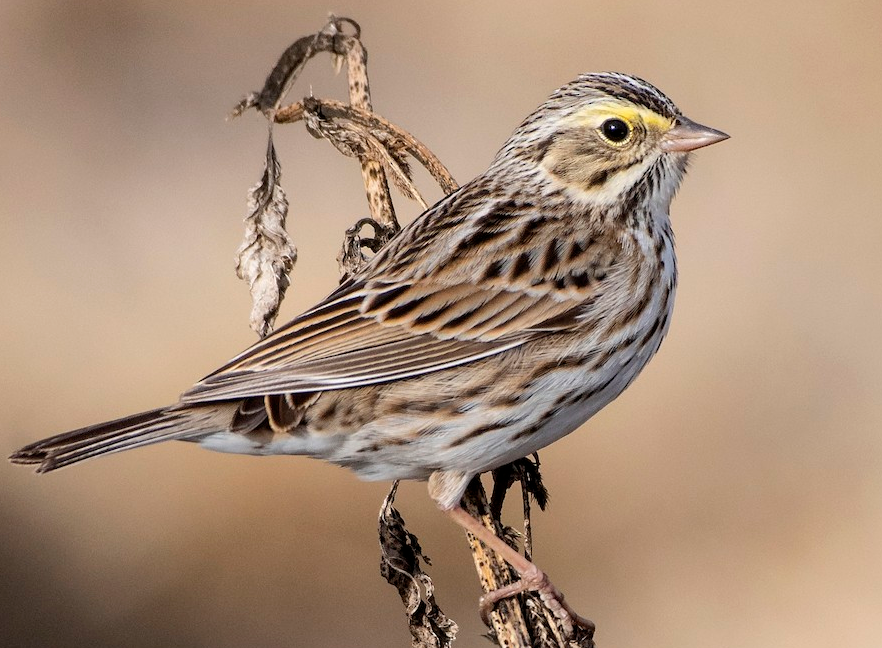
The Savannah Sparrow is a small songbird native to North America. You typically find it in grasslands, meadows, and open fields. With its distinctive markings, including a streaked brown body and yellowish eyebrows, the Savannah Sparrow is easily recognisable. This species migrates across the continent, appearing in northern and southern regions. Known for its beautiful songs, it helps to control insect populations. It also serves as prey for larger predators, contributing to ecosystem balance.
Quick Top 10 Facts about Savannah Sparrow
| SCIENTIFIC NAME | Passerculus sandwichensis |
| CLASSIFICATION | KINGDOM: Animalia PHYLUM: Chordata CLASS: Aves ORDER: Passeriformes FAMILY: Passerellidae |
| SIZE | Length: 12–16 cm (4.7–6.3 inches) with a wingspan of 20–23 cm (7.9–9.1 inches) |
| SPECIES | There are several subspecies, including Western and Eastern Savannah Sparrows, among others. |
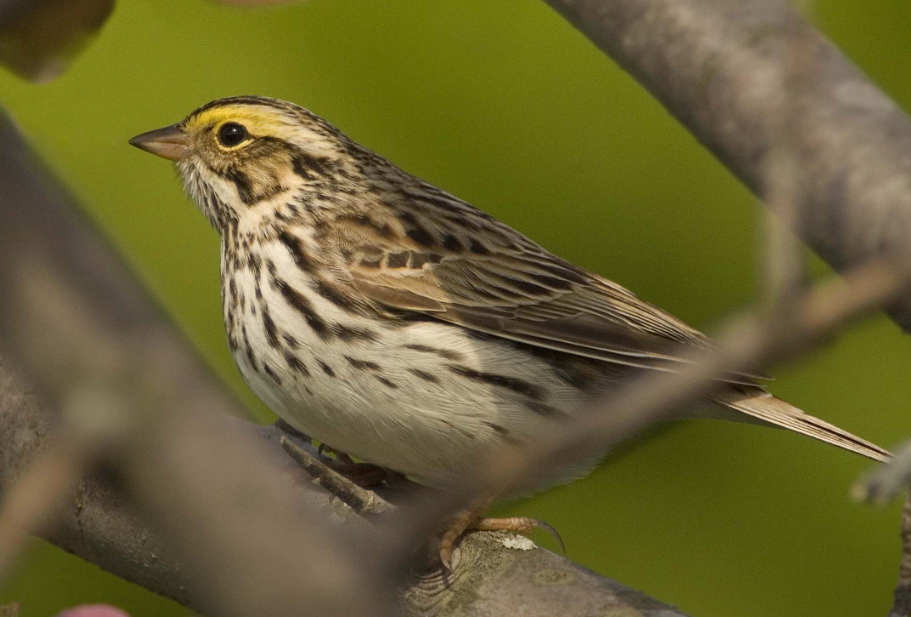
| APPEARANCE | They are brown and streaked with a yellowish eyebrow, white belly, and rounded tail. |
| LIFE SPAN | They typically live three to five years in the wild. Many do not survive beyond their first year. |
| HABITAT | They inhabit grasslands, meadows, pastures, and agricultural fields across North America. Their range stretches from Canada to Mexico. |
| DIET | They feed on insects, seeds, and small invertebrates. Their diet varies with the seasons. |
| NATURAL PREDATORS | Raptors, snakes, and domestic cats prey upon Savannah Sparrows in many areas. |
| COUNTRY | They are native to North America, occurring from Canada down to southern Mexico. |
| GESTATION PERIOD | As a bird, the Savannah Sparrow lays eggs. Incubation typically lasts 12–14 days with both parents sharing incubation duties. |
| CONSERVATION STATUS | The species is listed as Least Concern, although some populations are declining. Habitat loss and land-use change threaten certain groups. |
Amazing Facts About Savannah Sparrow
1. A Beautiful Songbird
The Savannah Sparrow is renowned for its sweet, varied songs. Males often sing to attract mates and to defend territories during breeding season.
2. Migratory Behavior
The Savannah Sparrow migrates seasonally between breeding and wintering grounds. Many birds travel from northern breeding areas to the southern United States and Mexico.
3. Insectivore Diet
In summer, Savannah Sparrows feed mainly on insects and small invertebrates. This diet helps to reduce local insect populations and pest outbreaks.
4. Vital Role in Agriculture
These sparrows help farmers by eating insects that harm crops. Consequently, they act as a useful part of agricultural ecosystems.
5. Adaptable Habitat
Savannah Sparrows adapt well to diverse habitats, including natural grasslands and farmland. They also inhabit some urban fringes where suitable cover exists.
6. Social Birds
Outside breeding season, Savannah Sparrows often gather in flocks. They feed together and sometimes migrate as a group.
7. Quick Nest Builders
These sparrows build nests on the ground, usually hidden in tall grass or shrubs. Their nests are quick to construct and are well camouflaged.
8. Monogamous Breeding
Savannah Sparrows typically form monogamous pairs for breeding. Both parents cooperate to care for the young.
9. Strong Fliers
Although primarily ground dwellers, these sparrows fly strongly when needed. They make direct flights during migration or to escape predators.
10. Declining Numbers in Some Areas
The species remains widespread, but some populations have declined locally. Habitat loss and agricultural practices contribute to those declines.
The Savannah Sparrow is a Delicate Grassland Songbird
Small and adaptable, the Savannah Sparrow (Passerculus sandwichensis) thrives in open grasslands. You also find it in meadows and marshes across North America. It ranks among the most common sparrow species on the continent. You can identify it by its unique plumage, melodious song, and territorial behaviour. Contrary to its name, it does not inhabit African savannas. Instead, it favours environments that resemble savannas, such as grasslands and coastal regions.
1. The Savannah Sparrow’s Physical Attributes
Its size, colouration, and patterns make the Savannah Sparrow small but notable. These birds are light and nimble, measuring 12 to 14 cm in length. They weigh between 12 and 24 grammes. Their appearance distinguishes them from other sparrow species.
Colouration and Plumage
- Upperparts: The back, wings, and tail show brownish-grey streaking. These streaks help to camouflage the bird among grasses and foliage.
- Underparts: The underparts tend to be paler, with white or pale yellowish bellies. Darker streaks appear along the flanks toward the belly.
- Head and Face: The face displays a distinct eyeline, often called an ‘eyeline’. Cheeks may be paler and faintly streaked, while the crown shows brown streaks.
- Bill: The small, conical bill suits a seed-based diet. At the base, it often appears grey or pink.
Their colour patterns allow Savannah Sparrows to blend into their surroundings. This camouflage increases survival by helping them evade predators.
2. Range and Habitat
Their geographic range spans from Alaska and Canada down to parts of Mexico. Savannah Sparrows occupy a wide variety of habitats across North America. They thrive where suitable foraging and nesting conditions exist.
Favourite Environments
Savannah Sparrows prefer agricultural land, open grasslands, and moist meadows. They also frequent coastal salt marshes and low-vegetation areas for nesting cover. Although common in grasslands, they use pastures and prairies during migration.
These sparrows migrate seasonally.
Some populations winter in the southern United States or Mexico.
Other populations remain in temperate regions all year.
They may occur at elevations up to 2,500 metres, though they prefer lower altitudes.
3. Social Structure and Behaviour
The Savannah Sparrow acts territorially at times and lives alone or in pairs. During breeding, individuals defend nesting territories from rivals. However, the birds become social and form small groups during migration.
The Concept of Territoriality
Male Savannah Sparrows display strong territorial behaviour during mating season. They use vocalisations and displays to defend areas from rival males. Their territorial calls often sound as high-pitched chirps or trills. These calls warn other males to keep away.
Movement and Flight
Savannah Sparrows move swiftly and perform short-distance flights. If frightened, they fly a short distance then return to cover. During migration, they fly longer distances, sometimes hundreds of miles. They are not known for exceptionally long-distance flights compared with some species.
4. Nutrition and Feeding Practices
Savannah Sparrows eat mainly seeds and so are largely granivorous. They take seeds from grasses, grains, and weeds. During the breeding season, they add insects and arthropods to feed their young.
Behaviour of Foraging
As ground feeders, these sparrows search for seeds and tiny insects on the ground. They often use a hop-and-scratch technique to uncover food while foraging. This strategy suits grassy fields and meadows where seeds hide in vegetation.
Although opportunistic, Savannah Sparrows rely primarily on seeds for sustenance.
They take advantage of insect outbreaks and other available food in warm months.
5. Song and Vocalisations
The Savannah Sparrow’s song remains one of its most captivating traits. During breeding season, males sing frequently to attract mates and claim territories.
Features of the Song
The song typically includes high-pitched, melodic notes and whistled trills. Observers sometimes describe it as a buzzing or rapid trill. Song variation occurs across regions and between individual birds. Males often sing from elevated perches such as fences and tall grasses to be noticed.
When alarmed, Savannah Sparrows emit short, piercing cries as warnings.
These alarm calls alert nearby birds to potential danger.
6. Nesting and Reproduction
Savannah Sparrows usually breed in spring and summer when conditions suit young. Males establish territories and sing to attract females during this time. Females assess males by song quality and the territory that males control.
Places to Nest
Females build shallow cup nests on the ground in thick vegetation. They use grasses, sedges, and other plant material to construct nests. The nest lining may include down or feathers to keep eggs warm.
Incubation and Eggs
Females lay three to five eggs, often white or light brown with speckles. Incubation lasts about ten to twelve days and involves both parents. After hatching, both parents feed the chicks with seeds and insects. The chicks fledge approximately nine to eleven days after hatching.
7. Status of Conservation
The IUCN lists the Savannah Sparrow as Least Concern due to its wide range. Nevertheless, habitat alteration puts pressure on some populations. Urbanisation, intensive agriculture, and land-use change threaten grassland habitats.
Trends in Population
Local declines occur where grasslands face conversion to other uses. Despite those declines, the species remains robust across much of its range. Conservation projects in some areas aim to restore and protect grassland habitats.
Preservation of Habitat
Conservationists promote sustainable farming that preserves natural grasslands and wetlands. Protected areas and wildlife refuges also provide safe habitats for these birds. Such measures help Savannah Sparrows survive and maintain healthy populations.
FAQ (Frequently Asked Questions) about Savannah Sparrow
Q: What is a Savannah Sparrow?
Ans: The Savannah Sparrow is a small, migratory songbird native to North America. It is known for its musical song and streaked brown plumage.
Q: Where do Savannah Sparrows live?
Ans: You find them in grasslands, meadows, pastures, and agricultural fields. Their range extends from Canada to Mexico.
Q: What do Savannah Sparrows eat?
Ans: They primarily eat insects, seeds, and small invertebrates. They adjust their diet according to seasonal availability.
Q: How long do Savannah Sparrows live?
Ans: In the wild, they typically live three to five years. Predation and environmental pressures reduce many birds’ first-year survival.
Q: Are Savannah Sparrows endangered?
Ans: No, they are not endangered, though some populations face declines. Habitat loss and agricultural change pose ongoing challenges.
Q: How do Savannah Sparrows communicate?
Ans: They communicate largely through song, especially during breeding season. Males sing to attract mates and to defend territories.
Q: Do Savannah Sparrows migrate?
Ans: Yes, they migrate from northern breeding grounds to southern wintering areas. Some populations remain in temperate zones year-round.
Q: How do Savannah Sparrows build their nests?
Ans: They build nests on the ground in tall grass or shrubbery. They use grasses and other plant material to camouflage the nest.
Q: How can I attract Savannah Sparrows to my yard?
Ans: Provide open fields with tall grasses and seed sources. Reducing pesticide use will also help by increasing insect prey.
Q: What is the conservation status of Savannah Sparrows?
Ans: They are classified as “Least Concern.” Some populations face pressures from habitat loss and farming practices.
#SavannahSparrow #Songbirds #NorthAmericanBirds #MigratoryBirds #BirdWatching #BirdConservation #Wildlife #BirdFacts
Our sources and references about Savannah Sparrow
1: Wikipedia – Savannah Sparrow