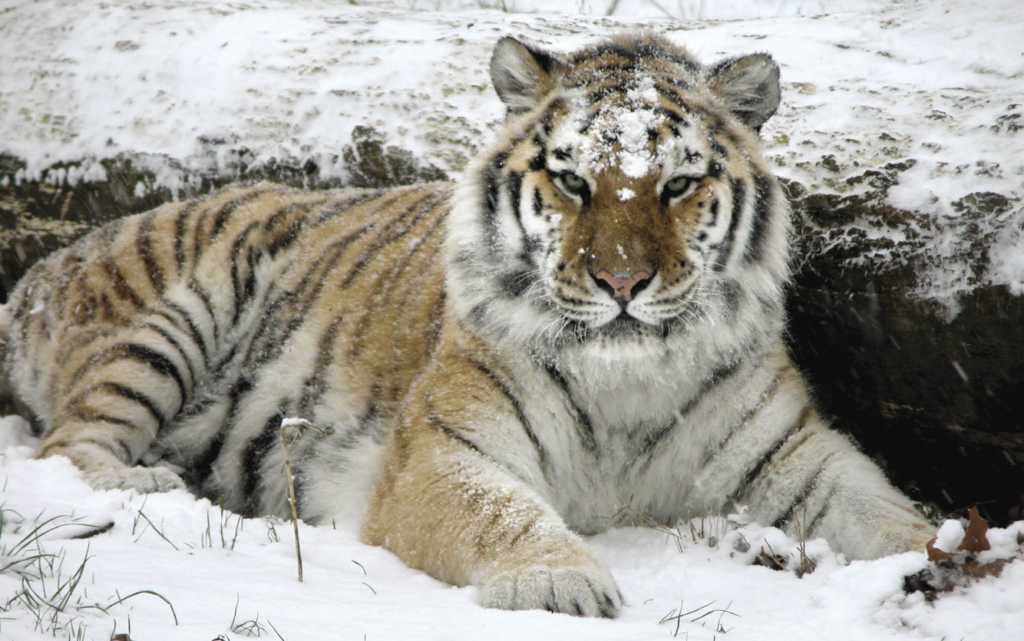
The Siberian Tiger, also known as the Amur Tiger, is the largest tiger subspecies and one of the most powerful land carnivores in the world. Native to the Russian Far East and parts of northeastern China and North Korea, this majestic big cat is known for its thick fur, pale orange coat with dark stripes, and robust build. Siberian Tigers are solitary, elusive predators that require large territories and are adapted to cold, forested environments. Though once critically endangered, conservation efforts have helped stabilize some populations, though threats from poaching and habitat loss persist.
Quick Top 10 Facts about Siberian Tiger
| SCIENTIFIC NAME | Panthera tigris altaica |
| CLASSIFICATION | KINGDOM: Animalia PHYLUM: Chordata CLASS: Mammalia ORDER: Carnivora FAMILY: Felidae |
| SIZE | Length: 2.7–3.3 m (9–11 ft) including tail; Weight: 180–320 kg (400–700 lbs) |
| SPECIES | Subspecies of the tiger (Panthera tigris) |
| APPEARANCE | Thick pale orange fur with fewer and paler stripes than other tigers; large head, muscular build, white belly and chest |
| LIFE SPAN | 10–15 years in the wild; up to 20–25 years in captivity |
| HABITAT | Temperate forests, boreal forests, and mountainous regions of Russia, China, and North Korea |
| DIET | Cervids (deer), wild boar, elk, and sometimes smaller prey like hares and birds |
| NATURAL PREDATORS | None as adults; cubs may be vulnerable to bears, leopards, and other large predators |
| COUNTRY | Russia (Siberia), China, North Korea |
| GESTATION PERIOD | Approximately 3.5 months; typically gives birth to 2–4 cubs |
| CONSERVATION STATUS | Endangered (IUCN Red List) |
Amazing Facts About Siberian Tiger
1. Largest Tiger Subspecies
Siberian Tigers are the biggest of all tiger subspecies, with some males weighing over 700 lbs.
2. Cold Climate Adaptation
Their thick fur and large size help them survive harsh, snowy winters in their native range.
3. Solitary Hunters
They are solitary animals, patrolling large territories and marking their range with scent and scratches.
4. Apex Predators
With no natural predators as adults, Siberian Tigers sit at the top of their food chain.
5. Long Distance Travelers
They can travel up to 20 miles a night in search of prey or mates.
6. Rare and Elusive
Fewer than 600 Siberian Tigers remain in the wild, mostly in the Russian Far East.
7. Protected by Law
They are strictly protected by conservation laws and reserves in Russia and China.
8. Maternal Care
Mother tigers raise their cubs alone for up to 2 years, teaching them to hunt and survive.
9. Important Cultural Symbol
They are revered in Russian and East Asian cultures as symbols of strength and bravery.
10. Conservation Success Story
Thanks to international efforts, the population of Siberian Tigers has rebounded from a low of under 100 in the 1940s.
The Majestic and Endangered Siberian Tiger
One of the world’s most gorgeous and elusive big cats is the Siberian Tiger, also called the Amur Tiger (Panthera tigris altaica). This famous predator, which is native to areas of China and the Russian Far East, is well-known for its strength, beauty, and scarcity. The biggest tiger subspecies, the Siberian tiger, is listed as endangered, and conservation measures are being taken to preserve its declining numbers. This article will examine the Siberian Tiger’s physical traits, behaviour, habitat, nutrition, and conservation status in order to highlight the animal’s vital significance in the ecosystems it lives in and the continuous attempts to preserve it.
Physical Attributes of the Siberian Tiger
Size and Body Structure
- Male Siberian tigers typically weigh between 400 and 675 pounds (180–306 kg), with some rare individuals exceeding 700 pounds.
- Females are smaller, weighing between 200 and 370 pounds (90–168 kg).
- Including their 3-foot (1 m) tail, males can grow up to 12 feet (3.7 m) long.
Coat and Coloration Adaptations
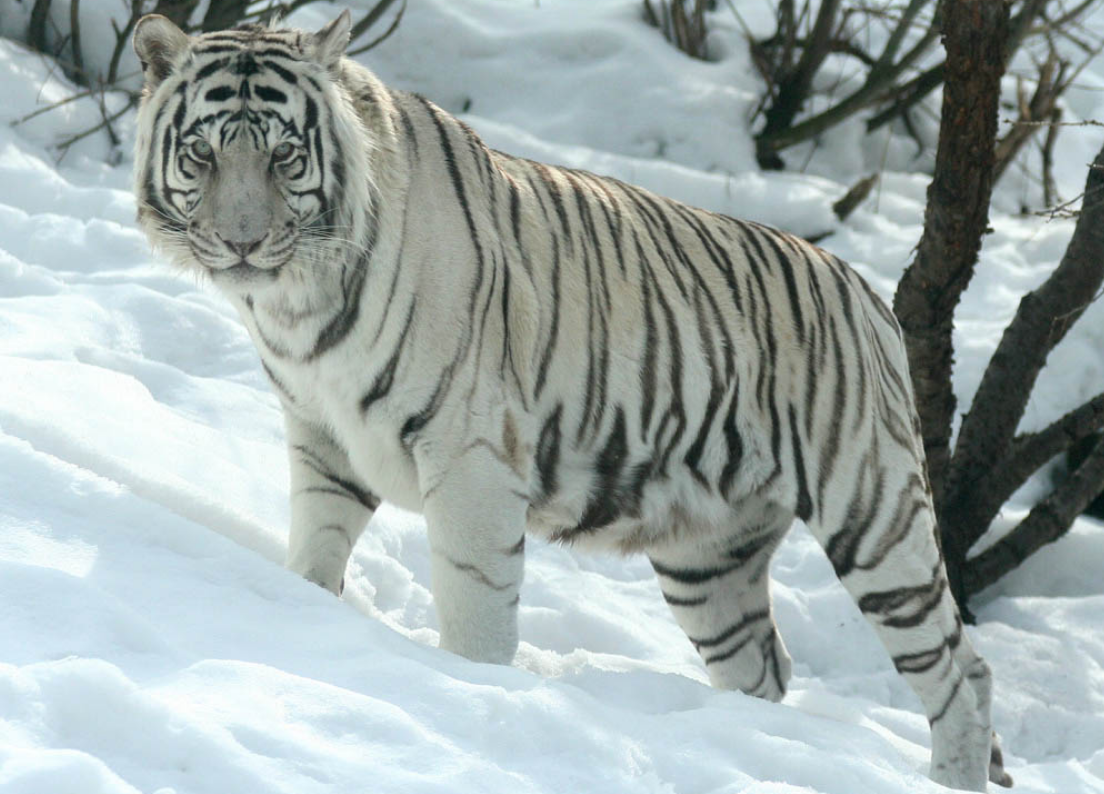
One of the Siberian Tiger’s most striking characteristics is its coat. It is protected from the extreme cold of its natural habitat by its thick and dense fur coat. The tiger’s remarkable look is instantly recognisable due to its light, reddish-orange coat and vertical black stripes running over its body. Because its fur is thicker than that of other tiger subspecies, the Siberian Tiger can withstand the harsh winters in its natural environment. Its fur may be lighter or almost white in the winter, which helps it blend in with the snowy surroundings.
Facial Features and Sensory Capabilities
The Siberian Tiger has a ferocious and powerful look due to its eyes, which are usually golden or amber in colour. Long, thick whiskers frame its large face and aid in its ability to move through the deep trees that make up its environment. The white patches on the back of its ears, commonly called “eyespots,” are believed to aid in communication amongst tigers and to protect the delicate part of its head from assaults.
Range and Habitat of the Siberian Tiger
Geographical Range
The Russian Far East’s temperate forests, especially those in the Amur River basin and the Sikhote-Alin mountain range, are home to the Siberian tiger. It may also be found in the provinces of Jilin and Heilongjiang in northeastern China. These regions are known for having severe, frigid winters with frequent snowfall and below-freezing temperatures. Over the course of thousands of years, the Siberian Tiger has evolved to flourish in this harsh habitat.
Climate Conditions and Seasonal Adaptability
One of the coldest places in the world for tigers is the home of the Siberian Tiger. Because of their thick fur coat and sturdy physique, tigers are well-suited to withstand winter temperatures that may dip as low as -40°F (-40°C). The tiger must be able to withstand seasonal changes in the habitat, even if the summers are brief and chilly.
Preferred Forest Terrain and Water Sources
Mixed woodlands, temperate hardwoods, and boreal forests comprise the thick forests that Siberian tigers like. In addition to providing protection during inclement weather, these woodlands allow tigers to pursue their prey. Because there is a lot of prey and water around, tigers often dwell close to river systems.
Hunting Behaviour and Diet
Primary Prey Species
The tiger may sometimes prey on domesticated animals, particularly in regions close to populated areas.
Hunting Techniques and Stealth
Siberian tigers hunt alone. They ambush their target by using their extraordinary power, speed, and stealth. Since their prey is most active at dawn or dusk, tigers usually hunt at these times. They seek prey from a distance by using their acute senses of hearing and sight. After locating a victim, they stealthily approach, hiding among the thick undergrowth. In order to bring down the animal, the tiger would often strike at close range with great force and accuracy, utilising its razor-sharp claws and fangs. Although Siberian tigers usually hunt alone, they could share a kill if needed.
Feeding Patterns
Siberian Tigers typically devour up to 40–50 pounds (18–23 kg) of prey in a single meal after successfully bringing it down. They have a tendency to eat rapidly and may conceal leftovers for later use, which prolongs the shelf life of food.
Social Structure and Behavioural Patterns
Solitary Nature and Home Ranges
Unlike lions, who live in prides, Siberian tigers are solitary animals. Each tiger normally maintains a large home range and lives a solitary life. Depending on the availability of food, water, and other resources, their area may vary in size.
Territorial Marking and Communication
- Male tigers mark territory by scent-marking, clawing trees, and urinating.
- They often maintain larger territories than females.
- Territorial disputes can arise, especially between males.
Reproduction and Cub Development
Siberian tigers are monogamous at certain seasons. After around 93–112 days of gestation, females typically give birth to a litter of 2–4 cubs. Blind and defenceless after birth, cubs depend on their mother for warmth and sustenance. The cubs learn how to hunt and live in the wild from their mother, who raises them by herself. Before becoming independent, cubs usually live with their mother for one and a half to two years.
Conservation Status of the Siberian Tiger
IUCN Endangered Classification
The International Union for Conservation of Nature (IUCN) has designated the Siberian Tiger as endangered. Only over 500 individuals remain in the wild, according to latest estimates, with the majority residing in the Russian Far East and a tiny population in northeastern China. Poaching, habitat degradation, and conflict between humans and animals are the main risks to the survival of the Siberian tiger.
Major Threats to Survival
Loss of Habitat
Illegal logging and deforestation have drastically diminished the Siberian Tiger’s natural habitat. Tigers lose their habitats when forests are cut down for logging, urbanisation, and agriculture, which also affects the numbers of their prey.
Poaching and Illegal Trade
Because of the illicit wildlife trade, Siberian tigers are being hunted down for their fur, bones, and other body parts, which are used as luxury goods and in traditional medicine. Illegal hunting is still a major problem in spite of tremendous anti-poaching efforts.
Conservation Initiatives and Protection Efforts
To save the Siberian Tiger and its environment, many conservation initiatives are underway. Protected places like the Sikhote-Alin Biosphere Reserve and the Land of the Leopard National Park were created by the Russian government in partnership with environmental groups. These initiatives seek to monitor the tiger population, protect habitat, and lessen poaching. Furthermore, groups like the WWF and the Wildlife Conservation Society (WCS) are still working on international projects to support tiger conservation and lessen conflict between people and animals.
FAQ (Frequently Asked Questions) about Siberian Tiger
Q: What is a Siberian Tiger?
Ans: A Siberian Tiger is the largest tiger subspecies, adapted to cold climates and found mainly in eastern Russia.
Q: How many Siberian Tigers are left in the wild?
Ans: There are estimated to be around 500–600 Siberian Tigers in the wild today.
Q: Where do Siberian Tigers live?
Ans: They inhabit forests and mountains in the Russian Far East, and parts of northeastern China and North Korea.
Q: Are Siberian Tigers endangered?
Ans: Yes, they are classified as Endangered due to habitat loss, poaching, and low population numbers.
Q: What do Siberian Tigers eat?
Ans: Their diet includes large prey like deer, elk, and wild boar.
Q: How long do Siberian Tigers live?
Ans: In the wild, they live around 10–15 years; in captivity, up to 25 years.
Q: Are Siberian Tigers dangerous to humans?
Ans: Like all wild predators, they can be dangerous, but they typically avoid human contact.
Q: How big is a Siberian Tiger?
Ans: Males can reach over 3 meters (10 feet) in length and weigh up to 320 kg (700 lbs).
Q: How are Siberian Tigers protected?
Ans: Through anti-poaching efforts, wildlife reserves, and breeding programs.
#SiberianTiger #AmurTiger #BigCats #WildlifeConservation #EndangeredSpecies #RussiaWildlife #TigerFacts #PantheraTigris
Our sources and references about Siberian Tiger
1: Wikipedia – Siberian Tiger
2: WWF – Tiger Conservation
3: National Geographic – Siberian Tiger
4: IUCN Red List – Panthera tigris