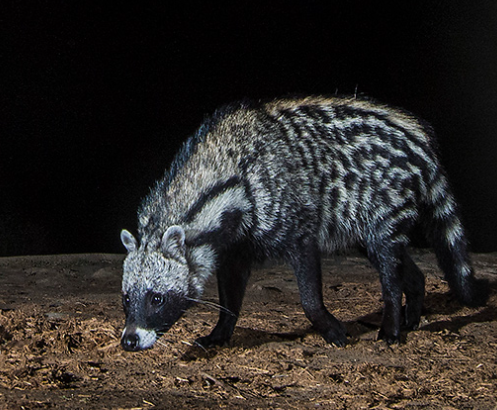
Quick Top 10 Facts about African Civet
| SCIENTIFIC NAME | Civettictis civetta (African Civet) |
| CLASSIFICATION | KINGDOM: Animalia CLASS: Mammalia ORDER: Carnivora FAMILY: Viverridae PHYLUM: Chordata GENUS: Civettictis |
| SIZE | Length: 60–80 cm (24–31 inches) Tail: 40–55 cm (16–22 inches) Weight: 9–20 kg (20–44 lbs) |
| HABITAT | Forests, woodlands, and savannas in sub-Saharan Africa |
| DIET | Carnivorous – Feeds on small mammals, birds, insects, and fruits |
| SPECIES | African Civet (*Civettictis civetta*) – A nocturnal mammal known for its distinctive black-and-white markings |
| COUNTRY | Found across sub-Saharan Africa, from West to East Africa |
| GESTATION PERIOD | 60–70 days |
| LIFE SPAN | Up to 20 years in captivity; 10–15 years in the wild |
| CONSERVATION STATUS | Least Concern – Populations are stable, but affected by habitat loss and hunting |
Natural habitat of the African civet, including forests, grasslands, and savannas
Found across sub-Saharan Africa, the African Civet, or Civettictis civetta, as it is formally named, is an intriguing creature. This nocturnal animal is distinguished by its unusual features, which include a pointed face, short legs, and a long, thin body. Its body is covered with black dots and stripes, and its coarse fur ranges in hue from grayish-brown to black. Being a lone animal, the African civet prefers to forage and hunt by itself in its native environment.
Unique characteristics and appearance of the African civet
The smell glands of the African civet, which are situated close to the base of the tail, are one of its most distinguishing characteristics. The civet uses the musky substance these glands make to identify its territory and communicate with other people. It’s interesting to note that the perfume business has long placed a high value on this secretion. A variety of foods, such as fruits, insects, small animals, and even carrion, are included in the civet’s diet. Its powerful jaws and pointed teeth let it easily capture and devour its food.
Civet’s hunting techniques and feeding habits
The African Civet is a versatile animal that can live well in a variety of settings, including grasslands, woods, and even cities. It is a skilled climber and is often seen hunting or resting in trees. The civet is not totally antisocial, despite its tendency for isolation. Growls, hisses, and purrs are some of the vocalisations it uses to communicate with other animals. It can also hear and see quite well, which helps it to traverse its environment and identify any dangers or prey. One amazing animal that is crucial to preserving the ecological balance of Africa is the African civet.
Interesting Facts about the African Civet
Native to the African continent, the African civet is a distinctive and fascinating animal. Numerous wildlife enthusiasts have developed an interest in this nocturnal critter because of its unique look and habits. We shall look at some amazing facts about the African civet.
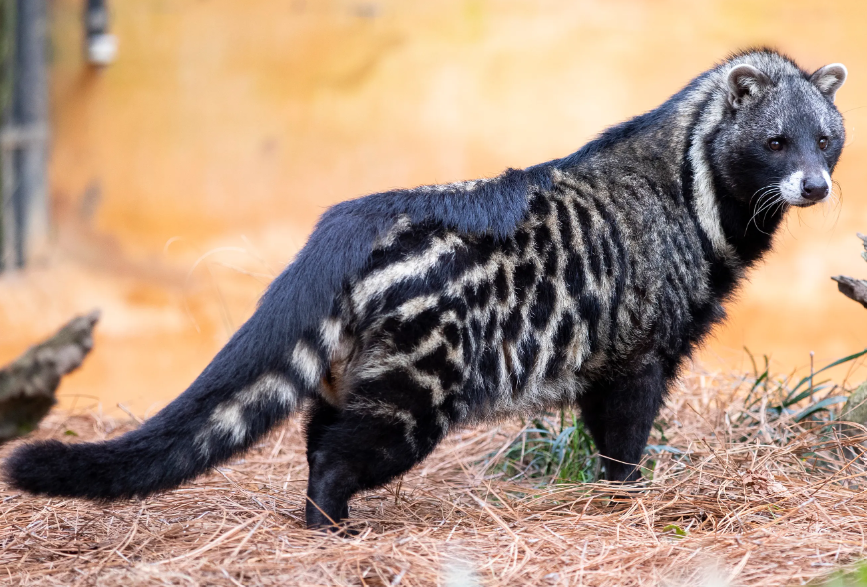
1. Size and Appearance
A medium-sized animal with short legs and a slim body is the African civet. Up to half the length of its body, its tail is long and slender. The civet’s coarse fur has black markings and stripes and ranges in hue from grayish-white to yellowish-brown. The civet is protected and able to fit in with its environment because of its distinctive pattern.
2. Natural Environment
Throughout sub-Saharan Africa, African civets may be found in a variety of environments, such as grasslands, savannas, and woods. Due to their adaptability, they can live well in both urban and rural settings. They do, however, like locations with plenty of vegetation and water supplies.
3. Behaviour at Night
Because it is primarily nocturnal, the African civet is most active at night. It can hunt and travel in the dark because of its exceptional night vision. The civet spends the day sleeping in hollow trees or dens where it feels secure and safe.
4. Nutrition
Due to their omnivorous nature, African civets consume both small prey and plant matter. Fruits, berries, insects, small mammals, birds, reptiles, and eggs make up their diet. Their excellent sense of smell aids them in finding food sources, particularly fruits and insects.
5. Communication and Scent-Marking
Scent-marking is one of the most interesting behavioural traits of the African civet. Scent glands close to the anus of civets are used by them to mark their territory. Each one of them secretes a distinct musky smell that helps them communicate with other civets and establish dominance.
6. Alone Monsters
Due to their solitary nature, African civets prefer to live and hunt by themselves. They are solitary and use their scent to mark their territory. However, if there is enough food and other resources available, they might put up with other civets living in their territory.
7. Reproductive behaviour of the African civet
African civets have different breeding seasons based on where they live. After a gestation period of approximately two months, females give birth to litters of one to four young. The baby civets have closed eyes at birth, but they grow fast and become self-sufficient in a matter of months.
8. Conservation status of the African civet
The IUCN Red List currently lists the African civet as a species of least concern. Threats to its population, however, include hunting for its fur and musk glands, habitat loss, and fragmentation. To guarantee the long-term survival of this unusual and fascinating animal, conservation efforts are essential.
African civet and its significance in African wildlife
With its unusual look, nocturnal habits, and capacity for scent marking, the African civet is an enthralling animal. It is an apt survivor in the African bush due to its adaptability and solitary disposition. We can help conserve and preserve the African civet for the enjoyment of future generations by being aware of and appreciating these fascinating facts about the species.
FAQ (frequently asked questions) about African Civet
Q: What is an African Civet?
Ans: The African Civet (Civettictis civetta) is a nocturnal mammal native to sub-Saharan Africa. It is known for its distinctive black-and-white markings, cat-like body, and its role in producing a musky scent used in perfumes.
Q: Where do African Civets live?
Ans: African Civets are found throughout sub-Saharan Africa, particularly in wooded, forested, and savanna areas. They are typically solitary animals and prefer habitats near water sources like rivers and marshes.
Q: What do African Civets eat?
Ans: African Civets are omnivorous and have a diverse diet. They feed on a mix of fruits, small mammals, birds, insects, and occasionally eggs. They also scavenge on carrion when available.
Q: How do African Civets defend themselves?
Ans: African Civets have strong claws and sharp teeth that they use to defend themselves. They are also capable of spraying a foul-smelling musk to deter predators or threats.
Q: How do African Civets reproduce?
Ans: African Civets give birth to live young. After a gestation period of around 60–70 days, females give birth to a small number of offspring, typically 1-3. The young are cared for in dens or sheltered areas until they are old enough to venture out.
Q: Are African Civets endangered?
Ans: African Civets are not currently listed as endangered. However, they face threats from habitat destruction, poaching for their scent glands, and the illegal pet trade, which can impact their population in some regions.
Q: How long do African Civets live?
Ans: In the wild, African Civets can live up to 12 years, although their lifespan may be shorter in captivity due to various factors like diet, stress, and health issues.
Q: What are the physical characteristics of African Civets?
Ans: African Civets are medium-sized mammals with a cat-like body, a long bushy tail, and striking black-and-white markings. They have a distinctively pointed snout and large ears, and their fur is often coarse.
Q: Do African Civets make good pets?
Ans: While they may appear charming, African Civets are wild animals and not ideal pets. They are nocturnal, require large territories, and have specific dietary needs. Their musky scent also makes them difficult to keep as household pets.
Q: How do African Civets communicate?
Ans: African Civets use a variety of vocalizations, including growls, hisses, and purrs. They also communicate through scent-marking, using their musk glands to mark their territory and signal to other civets.
#AfricanCivet, #Civet, #WildlifePhotography, #WildlifeConservation, #AfricanWildlife, #NocturnalAnimals, #CivetLovers, #SavannaAnimals, #RareAnimals, #NatureLovers, #AnimalLovers, #ForestCreatures, #EndangeredSpecies, #WildAnimals, #MammalsOfAfrica
Our sources and references about African Civet
1: Wikipedia – African Civet
2: IUCN Red List – African Civet
3: ARKive – African Civet
4: Encyclopaedia Britannica – African Civet