Quick Top 10 Facts about Beewolf Wasp
| SCIENTIFIC NAME | Philanthus triangulum |
| CLASSIFICATION |
KINGDOM: Animalia PHYLUM: Arthropoda CLASS: Insecta ORDER: Hymenoptera FAMILY: Crabronidae GENUS: Philanthus |
| SIZE | About 10–18 mm (0.4–0.7 inches) |
| HABITAT | Sandy soils, gardens, meadows, and open landscapes with sparse vegetation |
| DIET | Adults feed on nectar; larvae are fed paralyzed honeybees by the female wasp |
| SPECIES | One of over 130 species in the genus Philanthus |
| COUNTRY | Widespread in Europe, North Africa, and parts of Asia |
| GESTATION PERIOD | Eggs hatch within a few days; larval development takes about 2–3 weeks |
| LIFE SPAN | Adult lifespan is typically a few weeks; life cycle is annual |
| CONSERVATION STATUS | Not currently endangered, but local populations may be threatened by habitat loss |
Amazing Facts About Beewolf Wasp
1. They are solitary wasps
Beewolves do not form colonies like social wasps; each female builds and maintains her own nest.
2. Known as “bee hunters”
They are called Beewolves because females hunt and paralyze honeybees to feed their larvae.
3. Expert diggers
Females use their legs and mandibles to excavate deep burrows in sandy soil for nesting.
4. They preserve their prey
Beewolf females use antimicrobial secretions to keep paralyzed bees fresh for their young.
5. Incredible sense of smell
They use scent to locate and return precisely to their underground nest entrances.
6. Play a role in pollination
While adults feed on nectar, they inadvertently help pollinate flowers.
7. Not aggressive to humans
Beewolves rarely sting humans and are not considered dangerous unless provoked.
8. Use chemical warfare
They produce nitric oxide to sterilize their nests and prevent mold from growing on their food supply.
9. Females do all the work
Only females dig nests, hunt bees, and care for the larvae — males live brief lives and do not contribute.
10. Named by ancient Greeks
The name “Philanthus” comes from Greek roots meaning “lover of flowers,” despite their bee-hunting habits.
What is a beewolf wasp bug and what is its significance in the insect world?
The beewolf wasp is an interesting member of the Crabronidae family of insects. These wasps are renowned for their peculiar methods of hunting and intriguing nest-building customs. They are found all across the world, but especially in Europe, Asia, and North America.
The hunting techniques employed by the beewolf wasp bug
One interesting aspect of beewolf wasps is their hunting technique. In order to provide food for their offspring, beewolves in their female form hunt and immobilise bees. They can locate and capture bees in flight with great skill. The beewolf wasp hits the imprisoned bee with poison that paralyses it but does not kill it. This ensures that the prey will remain fresh for the developing larvae.
Reproductive behaviour of beewolf wasps
Another intriguing aspect of beewolf wasps is their breeding technique. Female beewolves excavate tunnels to lay their eggs. Because the protective characteristics of the soil are essential to the larvae’s growth, they carefully choose certain types of soil from which to build their nests. The female beewolf captures and paralyses the bees, then takes them to the nest, where she gives each bee an egg. The paralysed bee serves as nourishment for the growing larva, ensuring its survival until it pupates and matures into an adult wasp.
Distinct markings or adaptations that help it survive in its environment
Taken into account, the beewolf wasp is a remarkable insect with peculiar mating and hunting habits. It locates and captures bees in flight and picks the ideal soil to construct its nests, showcasing its incredible adaptability. Studying the beewolf wasp allows us to comprehend the intricate relationships that occur naturally between predators and their prey.
Fascinating facts about Beewolf Wasp Bugs
An intriguing insect of the Crabronidae family, Philanthus triangulum is sometimes known as the beewolf wasp bug. The distinct habits and adaptations of these lone wasps are well known. We’ll look at some fascinating information on the beewolf wasp insect below:
Praying and Hunting: Preferred prey, such as bees or other insects
Skilled hunters and beewolf wasps mostly feed on bees. Finding a bee, usually a honeybee, the female wasp strikes it to render it paralysed. The bee is subsequently carried back to its subterranean nest by the wasp, immobilised. The young of the wasp consume the paralysed bee as nourishment.
It’s interesting to note that beewolf wasps show a predilection for certain bee species. They seem to be selective in their hunting behaviours, as shown by their apparent preference for certain bee colours and sizes.
Nest construction: Stages of nest development in beewolf wasp bugs
Beewolf wasps are solitary insects that burrow into the earth to build their nests. The female wasp burrows in the ground, usually in places that are sandy or loamy. The burrow has many chambers and may reach a depth of up to 30 centimetres.
Mating rituals and nest construction: Role of the female beewolf wasp bug
The female beewolf wasp searches for a bee to provide her nest once her burrow is finished. After paralysing it, she brings the bee back to the nest and places a single egg on its body. In order to keep the bee fresh for the growing larvae to eat, the mother shuts the chamber.
Mutually Beneficial Alliance: Contribution to biodiversity
A peculiar symbiotic interaction exists between beewolf wasps and the bacteria they grow in antennal glands, which are specialised organs. The antibacterial substances produced by these bacteria, called Streptomyces, shield the beewolf’s progeny from dangerous infections.The female wasp covers a bee with germs from her antennal glands as she traps it. The bacterial coating serves as a barrier, stopping the development of germs and fungi that may contaminate the bee and make it unfit for the wasp’s larvae to eat.
Reproduction and Mating: Reproductive behaviour includes mating and egg-laying habits
For the purpose of mating, male beewolf wasps employ a mix of chemical and visual signals to find females. A male engages in a courting display when he locates a female who is receptive. This entails stroking the female’s wings and antennae with his own. Mating takes place if the female is receptive. The female beewolf wasp starts constructing her nest by herself after mating. She places a paralysed bee in each compartment, along with a single egg. Up until it reaches adulthood, the growing larva feeds on the paralysed bee.
Dispersion and Environment: Regions or countries where it is commonly found
Beewolf wasps may be found throughout Europe, Asia, and North Africa, among other regions of the planet. The most typical places to find them are open environments like grasslands, meadows, and sandy places.
Interesting facts about its feeding habits or interactions with other organisms
During the summer, when bees, their favourite food, are plentiful, these wasps are busy. They are crucial to ecology because they regulate bee numbers and preserve the harmony of insect groups.
The beewolf wasp bug is an amazing insect with unusual adaptations and hunting habits. These wasps have developed amazing ways for surviving and procreating, from their symbiotic connection with bacteria to their selective prey choices. Comprehending the complicated lifestyles of insects such as the beewolf wasp bug enables us to recognise the richness and variety of the natural world.
FAQ (Frequently Asked Questions) about Beewolf Wasp
Q: What is a Beewolf Wasp?
Ans: The Beewolf Wasp, also known as the Philanthus triangulum, is a solitary wasp species known for its remarkable hunting behavior. It preys primarily on honeybees, which it paralyzes and uses to feed its larvae. These wasps are named “beewolves” due to their hunting skills and aggressive nature when protecting their nests.
Q: What do Beewolf Wasps look like?
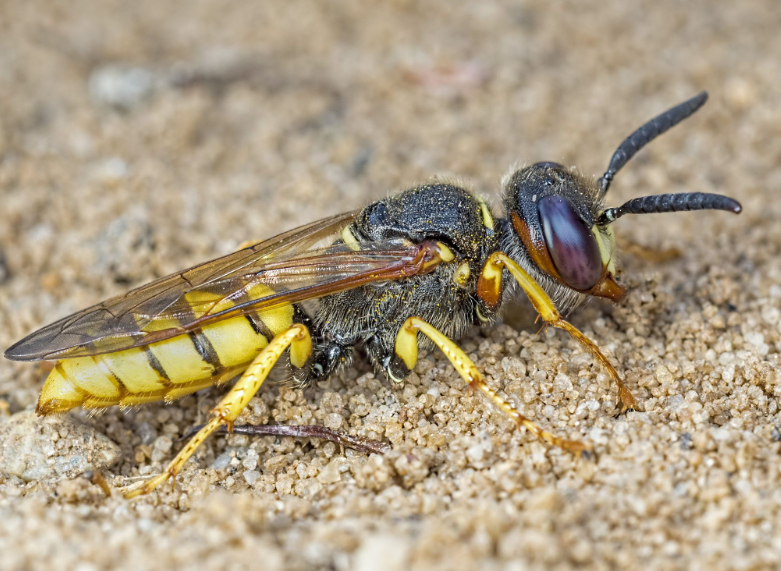
Ans: Beewolf Wasps have a distinctive appearance, with a stout body and striking yellow and black markings. Their size ranges from 10 to 15 millimeters in length, and they have large compound eyes, typical of wasps. Their wings are transparent and their antennae are long and curved.
Q: Where do Beewolf Wasps live?
Ans: Beewolf Wasps are commonly found in Europe, the Middle East, and parts of Asia. They prefer sunny, dry environments, such as open fields, meadows, and sandy soil areas, where they create their nests in the ground. They can be found near beehives, as they hunt honeybees to feed their larvae.
Q: How do Beewolf Wasps hunt honeybees?
Ans: Beewolf Wasps are skilled hunters that attack and paralyze honeybees using their venom. The wasps inject venom into the bee, rendering it immobile, and then carry it back to their nest. The paralyzed bee is stored alive in a chamber, where it serves as food for the wasp larvae when they hatch.
Q: Are Beewolf Wasps dangerous to humans?
Ans: Beewolf Wasps are not typically dangerous to humans unless provoked. While their sting can be painful, they are not aggressive towards humans and prefer to focus on hunting for their larvae. However, if disturbed, they may sting in defense of their nest.
Q: How do Beewolf Wasps reproduce?
Ans: Beewolf Wasps reproduce by laying eggs inside burrows that they create in the soil. Each female wasp paralyzes several honeybees and stores them in a nest chamber for her larvae. After the eggs hatch, the larvae feed on the bees until they mature into adult wasps.
Q: What do Beewolf Wasp larvae feed on?
Ans: Beewolf Wasp larvae feed on paralyzed honeybees that are stored alive in the nest. The larvae consume the bees, which provide them with the necessary nutrients to grow and develop into adult wasps.
Q: How long do Beewolf Wasps live?
Ans: The lifespan of an adult Beewolf Wasp is typically between 2 and 4 weeks. The life cycle from egg to adult takes about 6 weeks, with the larvae feeding on the paralyzed bees before emerging as adults.
Q: Are Beewolf Wasps beneficial or harmful to the ecosystem?
Ans: Beewolf Wasps play an important role in controlling honeybee populations, but they are not considered harmful to the overall ecosystem. They help regulate bee numbers and prevent overpopulation in areas where honeybees may thrive excessively. However, in some areas, they can impact local beekeepers, as they prey on honeybees.
Q: How do Beewolf Wasps protect their nests?
Ans: Beewolf Wasps are highly protective of their nests and will defend them aggressively if threatened. They use their sting to deter predators and intruders. When threatened, they may also engage in flight maneuvers to scare off larger animals or humans.
#BeewolfWasp, #WaspInsects, #InsectFacts, #SolitaryWasp, #BeePredator, #Pollinators, #InsectLovers, #WaspNests, #Honeybees, #WaspLife, #Nature, #InsectWorld, #PhilanthusTriangulum, #WaspBehavior
Our sources and references about Beewolf Wasp
1: Wikipedia – Beewolf (Philanthus triangulum)
2: National Geographic – Bees and Wasp Behavior
3: Britannica – Beewolf Wasp
4: British Wildlife – Beewolf Wasp