The Yellowhammer is a small bird found across Europe and Asia. It is easily identifiable by its bright yellow plumage, particularly on the head and underparts. Yellowhammers are primarily insectivorous but also feed on seeds. They are commonly found in open habitats such as farmland and grasslands.
Quick Top 10 Facts about Yellowhammer
| SCIENTIFIC NAME | Emberiza citrinella |
| CLASSIFICATION | KINGDOM: Animalia PHYLUM: Chordata CLASS: Aves ORDER: Passeriformes FAMILY: Emberizidae GENUS: Emberiza SPECIES: E. citrinella |
| SIZE | Length: 6.3–6.7 inches (16–17 cm) Wingspan: 9.8–11 inches (25–28 cm) |
| HABITAT | Open countryside, farmland, grasslands, and hedgerows across Europe and parts of western Asia |
| DIET | Mainly seeds and grains; also insects during breeding season |
| SPECIES | Yellowhammer, a bunting bird known for its bright yellow plumage and melodious song |
| COUNTRY | Native to Europe and parts of Asia; introduced populations in New Zealand |
| GESTATION PERIOD | Incubation lasts about 12–14 days; chicks fledge in around 10–13 days |
| LIFE SPAN | Typically 3–5 years in the wild |
| CONSERVATION STATUS | Least Concern; although some local populations are declining due to changes in farming practices |
Amazing Facts About Yellowhammers
1. Famous for their song
Yellowhammers have a distinctive and cheerful song, often described as “a little bit of bread and no cheese.”
2. Bright yellow plumage
The males have vibrant yellow heads and underparts, making them easy to spot during the breeding season.
3. Ground nesters
They build their nests on or near the ground, usually well hidden in vegetation.
4. Adapt well to farmlands
Yellowhammers thrive in open agricultural areas, especially where hedgerows and fallow fields are present.
5. Diet changes seasonally
In summer, they consume more insects to feed their young, while in winter they primarily eat seeds and grains.
6. Social outside breeding season
They often gather in flocks during autumn and winter, sometimes mixed with other buntings and finches.
7. Introduced to New Zealand
They were brought to New Zealand in the 19th century to control insect pests and have established stable populations there.
8. Declining in parts of Europe
Changes in agricultural practices have led to habitat loss, affecting Yellowhammer numbers in some regions.
9. Beloved in folklore
The bird features in poetry and folklore, especially in the UK, due to its distinctive call and appearance.
10. Males sing to mark territory
Their melodious song not only attracts mates but also warns rival males to stay away from their breeding grounds.
Introduction to the Gorgeous Yellowhammer Songbird
Throughout Europe and certain regions of Asia, the Yellowhammer (Emberiza citrinella) is a remarkable and immediately identifiable songbird. The yellowhammer has long enthralled birdwatchers and environment lovers with its vivid yellow plumage and catchy singing. The yellowhammer, which is well-known for its unusual look and behaviour, is an important cultural and ecological species. We will examine this lovely bird’s physical traits, behaviour, habitat, feeding, reproduction, and conservation status below.
The Yellowhammer’s Physical Attributes
Physical Appearance and Coloration
A medium-sized songbird, the yellowhammer is distinguished by its vivid plumage and distinctive markings.
Look of the Male Yellowhammer
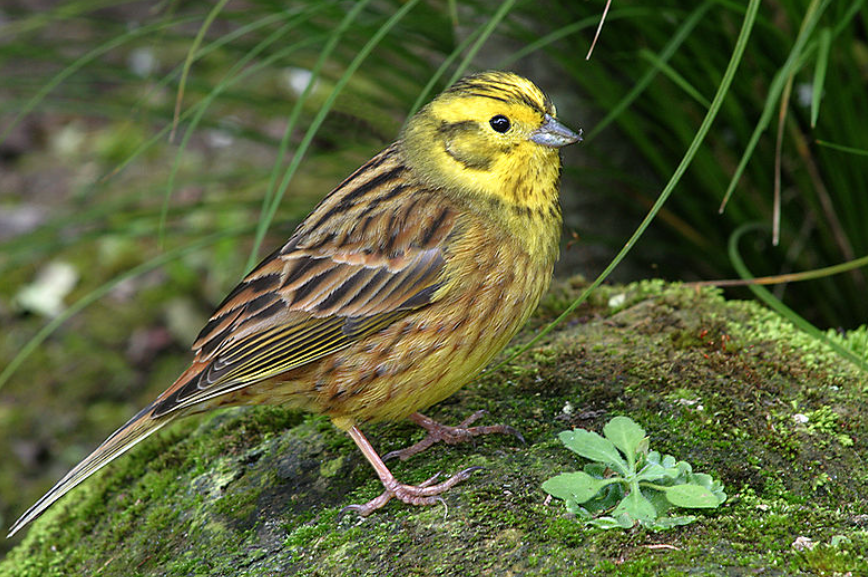
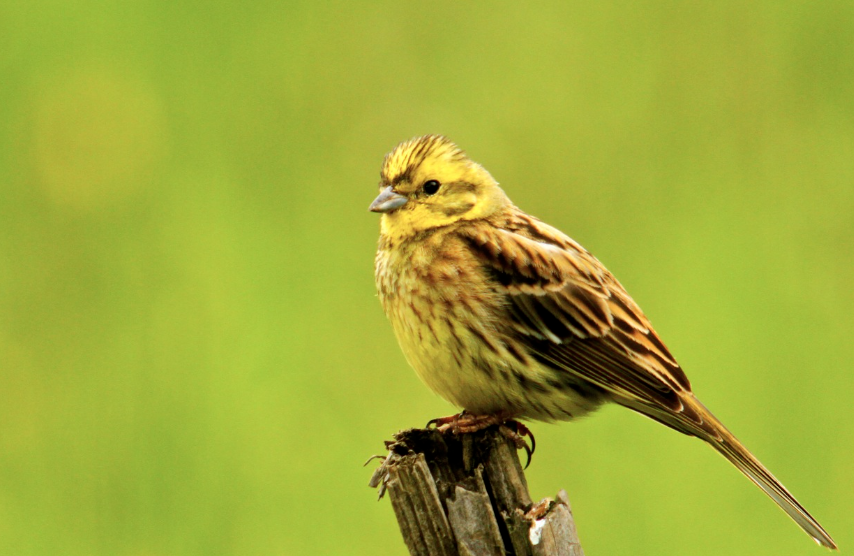
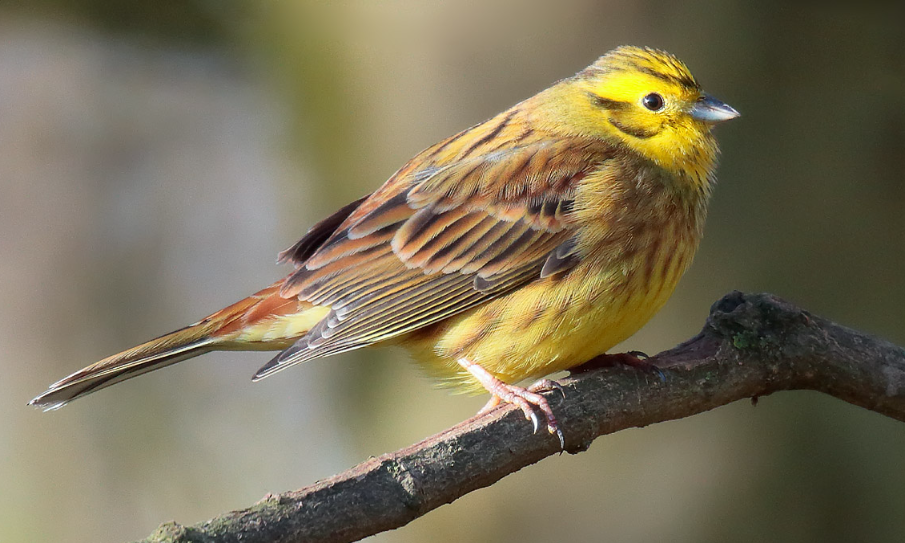
With its brilliant yellow head, breast, and underparts, the mature male Yellowhammer is very eye-catching. The body has a textured look because of the brown and olive-green streaks, especially on the wings and back. During the mating season, when the male uses his vivid colours to entice a partner, this yellow colouring is particularly noticeable.
Female Yellowhammer’s Coloration
The colouration of the female Yellowhammer is more muted, appearing streaky and brownish. Her overall colour fits in better with her surroundings, giving her concealment while caring for the young or incubating eggs. Her belly is a duller yellow.
Key Characteristics
The yellowhammer’s most distinctive characteristic is its yellow markings, which make it quite simple to recognise in the field.
Dimensions
Yellowhammers are medium-sized birds that weigh between 25 and 30 grams (0.88 and 1.05 ounces) and measure between 16 and 18 cm (6.3 and 7 inches) in length. They can fly over broad spaces with ease because of their wingspan, which is between 25 and 30 cm (9.8 and 11.8 inches).
Eyes and Beak
Like other seed-eating birds, the yellowhammer possesses a conical beak that aids in cracking open grains and seeds. The bird’s yellow plumage contrasts well with the beak, which is usually horn-coloured or pinkish-brown in colour.
In contrast to the brilliance of their feathers, their eyes are expressive and black. Their unusual look is further enhanced by their characteristic face pattern, which includes black streaks around the eyes.
Distribution and Habitat
Habitat Overview
Farmlands, hedgerows, the borders of woodlands, and scrub areas are among the open environments where the Yellowhammer is most often seen. This bird does well in environments with plenty of food sources, such as seeds and insects, as well as shelter for breeding.
Range of Geography
The Yellowhammer is widely distributed across Europe and certain regions of Asia. Its range stretches from Russia and western Siberia in the east to Iceland and Ireland in the west. It may also be found in Turkey and Scandinavia. In certain places, especially in the north, the bird migrates, and throughout the winter it may be seen making its way to southern Europe or portions of North Africa.
Favourite Environment
Open agricultural areas, such as hedgerows, grasslands, and farmlands, are preferred by the yellowhammer. It is often linked to agricultural regions, as well as fields with a profusion of food-producing weeds and grasses.
Additionally, they may be found in scrublands, the fringes of woodlands, and even urban parks if they are near locations with good foraging opportunities. Since they need long grass or thick bushes to conceal their young from predators and construct their nests, lush vegetation is necessary for nesting.
Migration and Elevation
Although it may sometimes be seen at higher elevations during migration, the Yellowhammer typically prefers to remain at lower elevations. It moves to warmer places in the winter to escape the bitter cold in colder climates.
While certain populations, especially in northern regions, may migrate to southern Europe or North Africa for the winter, other populations are permanent, remaining in their breeding grounds throughout the year.
Nutrition and Feeding Practices
Primary Diet
Although it mostly eats seeds, the omnivorous yellowhammer will also eat tiny insects and invertebrates, particularly during the mating season when the chicks require higher protein sources to thrive.
Nutrition
As granivores, or seed eaters, yellowhammers consume a wide range of seeds, including those from crops, weeds, and grasses. They are often seen in weedy and agricultural fields, where they gather seeds from plants such as maize, clover, and dandelions.
In addition to seeds, the Yellowhammer will eat tiny fruits and berries, especially during the late summer and early fall when these foods are plentiful.
Eating Insects
Yellowhammers often use insects like grasshoppers, beetles, and caterpillars to provide their chicks with the extra nutrition they need during the mating season. Because they are so prevalent, they are usually foraged from the ground or low bushes.
Feeding Practices
Usually ground feeders, yellowhammers hop or stroll on the ground in pursuit of seeds and insects. Additionally, they may use their conical beaks to pry open seeds in bushes or trees to scavenge for fruit or insects.
Social Structure and Behaviour
Seasonal Behavior and Grouping
When food is more plentiful in the winter, yellowhammers may form small groups, but outside of the mating season, they are solitary or pair birds. The requirement for food and appropriate nesting locations is closely linked to their behaviour.
The Concept of Territory
In order to protect his area and entice a partner, the territorial male Yellowhammer often sings from a high perch throughout the mating season. To draw attention to himself and promote his domain, he may sing from fence posts, hedgerows, or even trees.
The characteristic song of male Yellowhammers is a string of melodic notes that are often compared to a “little bit of bread and no cheese” because of how repetitive and captivating it is.
Nesting
Using natural flora to provide a hidden nesting place, yellowhammers construct their nests in tall grass, hedgerows, or thick bushes. Usually made of grass, twigs, and dirt, the nest itself is lined with softer materials like down and feathers.
Although the male may assist by protecting the location from competitors and predators, the female bears the majority of the burden for nest construction.
Formation of Flocks
Yellowhammers and other seed-eating birds may form small mixed-species groups outside of the mating season. Usually, these groups are made up of females, young birds, and sometimes single males. Until the following mating season, when they will set up territories, the birds stay in these groups.
Lifespan and Reproduction
Breeding Season and Nesting
Depending on the region, the Yellowhammer breeding season starts in late spring or early summer. When a female selects a male, the two mate and start building a nest. Males use their singing performances to entice partners.
Usually brown-speckled, the female lays three to five eggs, which she then incubates for 12 to 14 days. The chicks are fed by both parents, with the female staying to protect and warm the eggs while the male periodically brings food to the nest.
Raising a Chick
The chicks are altricial after hatching, which means they are blind, naked, and reliant on their parents for warmth and sustenance. The chicks fledge (leave the nest) at 12 to 15 days due to their rapid growth.
The young birds ultimately become independent, but for a little time after they fledge, both parents continue to feed the chicks.
Duration of Life
Yellowhammers typically live two to three years; however, many may not make it through their first year because of predators or unfavourable weather. They may survive longer under the right circumstances; some people can live up to five years.
Status of Conservation
Population Reduction
Due to habitat degradation brought on by changes in agricultural methods, yellowhammer numbers have been declining in various regions of Europe, especially the UK. There are fewer nesting places and food supplies available as a result of the destruction of hedgerows and grasslands for farming and urbanisation.
Because fewer wild seeds and insects are available, intensive agriculture—especially the use of pesticides and herbicides—has also had a detrimental effect on their food source.
Conservation Initiatives
The preservation of hedgerows and wildflower meadows is crucial to the survival of the yellowhammer, which is protected under many conservation initiatives throughout Europe. The Yellowhammer’s future may be secured with the support of agricultural changes that emphasise more environmentally friendly methods, including organic farming.
In several nations, conservation and birdwatching organisations are attempting to keep an eye on Yellowhammer numbers and put plans into action to enhance the species’ habitat.
FAQ (Frequently Asked Questions) about Yellowhammer
Q: What is a Yellowhammer?
Ans: The Yellowhammer (Emberiza citrinella) is a brightly colored bird native to Europe and parts of Asia. Known for its vivid yellow plumage and distinct song, it is often found in open countryside, farmland, and hedgerows.
Q: Where does the Yellowhammer live?
Ans: Yellowhammers are primarily found across Europe, from the British Isles to central Asia. They are typically seen in farmland, hedgerows, and open woodlands, often in rural areas where there is plenty of low vegetation and seed-producing plants.
Q: What does the Yellowhammer eat?
Ans: Yellowhammers are granivores, which means their diet consists mainly of seeds. They primarily feed on seeds from grasses, weeds, and other plants. During the breeding season, they may also eat insects and other small invertebrates to provide protein for their chicks.
Q: How big is a Yellowhammer?
Ans: Yellowhammers are medium-sized songbirds, measuring about 6.5 to 7.5 inches (17 to 19 cm) in length with a wingspan of around 12 to 14 inches (31 to 36 cm). They typically weigh between 25 and 35 grams.
Q: What does a Yellowhammer look like?
Ans: The Yellowhammer has a striking appearance, with bright yellow plumage on its head, chest, and underparts. Its back is streaked brown, and it has a distinctive, slightly rounded tail. Males are more vibrant in color than females, which tend to be slightly duller in appearance.
Q: What is the Yellowhammer’s song like?
Ans: The Yellowhammer’s song is a cheerful and melodious trill, often described as a repetitive “a little bit of bread and no cheese.” The song is sung by males during the breeding season to attract mates and establish territory.
Q: How long do Yellowhammers live?
Ans: Yellowhammers have an average lifespan of around 2 years, although some individuals can live longer, up to 6 years, under ideal conditions. Their lifespan can be shorter due to predation, harsh weather, and habitat loss.
Q: Are Yellowhammers endangered?
Ans: While the Yellowhammer is not currently considered endangered, its population has declined in certain regions, particularly in the UK, due to habitat loss, changes in farming practices, and pesticide use. Conservation efforts are in place to protect their habitats and support breeding populations.
Q: How do Yellowhammers breed?
Ans: Yellowhammers typically breed in late spring to early summer. The female builds a nest in dense vegetation, often on the ground or low in shrubs. She lays a clutch of 3 to 5 eggs, which both parents help incubate. After hatching, the chicks are fed by both parents until they fledge, usually about two weeks later.
Q: Can Yellowhammers be kept as pets?
Ans: Yellowhammers are wild birds and should not be kept as pets. They are best appreciated in their natural environment. In many places, it is illegal to capture or keep wild birds as pets without appropriate permits, as it can be harmful to the bird population and ecosystems.
#Yellowhammer, #Songbird, #Birdwatching, #WildlifeConservation, #BritishBirds, #EuropeanBirds, #NatureLovers, #Birdsong, #EndangeredSpecies, #BirdLovers
Our sources and references about Yellowhammer
1: Wikipedia – Yellowhammer
2: RSPB – Yellowhammer
3: Encyclopedia Britannica – Yellowhammer
4: Birdwatching HQ – Yellowhammer