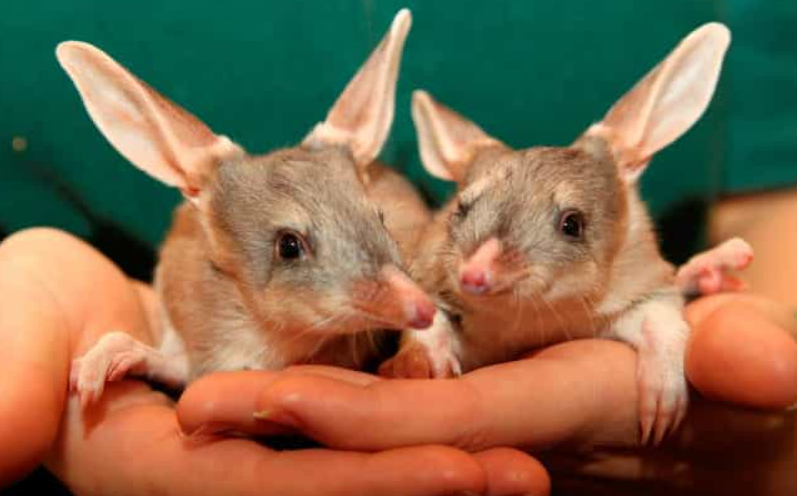
A nocturnal marsupial native to Australia, known for its long ears and burrowing habits. Bilbies are omnivores, feeding on a variety of plants and insects, and are an endangered species due to habitat loss and predation.
Quick Top 10 Facts about Bilby
| SCIENTIFIC NAME | Macrotis lagotis |
| CLASSIFICATION | KINGDOM: Animalia PHYLUM: Chordata CLASS: Mammalia ORDER: Peramelemorphia FAMILY: Thylacomyidae GENUS: Macrotis SPECIES: M. lagotis |
| SIZE | Length: 11–22 inches (29–55 cm), Tail: 8–12 inches (20–30 cm), Weight: 2–5.5 pounds (1–2.5 kg) |
| HABITAT | Arid and semi-arid regions of central and western Australia |
| DIET | Omnivorous; eats insects, seeds, bulbs, fruit, fungi, and small animals |
| SPECIES | Bilby, also known as the Greater Bilby, a nocturnal marsupial known for its long ears and burrowing behavior |
| COUNTRY | Australia |
| GESTATION PERIOD | About 12–14 days (extremely short); young continue development in the pouch |
| LIFE SPAN | 6–7 years in the wild; up to 10 years in captivity |
| CONSERVATION STATUS | Vulnerable; populations declining due to habitat loss and introduced predators |
Amazing Facts About Bilbies
1. Bilbies are expert diggers
Bilbies create complex burrow systems up to 10 feet long to escape predators and extreme heat.
2. They have incredible hearing
Their large ears not only give them excellent hearing but also help regulate body temperature in the hot Australian climate.
3. Bilbies are nocturnal
They are active at night, using their keen sense of smell and hearing to locate food in the dark.
4. They play a role in ecosystem health
By digging for food, bilbies aerate the soil, promoting seed dispersal and water absorption.
5. Bilbies don’t need to drink water
They get most of their moisture from their food, making them well-adapted to arid environments.
6. They are marsupials
Females have a backward-facing pouch to protect their young from dirt as they dig.
7. The Easter Bilby is a conservation symbol
In Australia, the bilby is celebrated as an alternative to the Easter Bunny to raise awareness of native wildlife.
8. They have long, narrow snouts
Bilbies use their snouts to root through soil for insects, fungi, and bulbs.
9. Predators threaten their survival
Introduced species like cats and foxes are major threats to wild bilby populations.
10. Conservation efforts are underway
Breeding programs, predator-proof sanctuaries, and public education campaigns are helping to protect the bilby from extinction.
Intriguing facts about bilbies
Small marsupials native to Australia, bilbies are also known as rabbit-bandicoots. They belong to the family Thylacomyidae and are closely related to koalas and kangaroos. These creatures are nocturnal and may be identified by their large ears, sharp noses, and slender bodies with soft hair covering them.
Origin and habitat range of bilbies
Bilbies live in Australia’s dry and semi-arid environments, particularly the deserts and grasslands. To thrive in these harsh settings, they have acquired specialised traits. For instance, their large ears help them detect possible predators and food sources, and their strong forelimbs enable them to dig tunnels for safety and refuge.
Bilbies burrows provide shelter and protection for various animals
In ecosystem engineering, bilbies have an intriguing function. Their burrowing actions are vital to maintaining the health of the environment. By digging extensive burrow networks, they aerate the soil, enhancing nutrient cycling and promoting the development of flora. Insects and other creatures, such as reptiles, find refuge in their burrows, creating a diverse ecology among the arid surroundings.
Threats and conservation efforts for bilbies
Bilbies face many threats, including competition for resources, habitat degradation, and predation by invasive species. Conservation efforts are now underway to protect these endangered marsupials and ensure their survival for future generations.

Fascinating facts about bilbies
Small marsupials indigenous to Australia are called bilbies. They are renowned for having an unusual look and intriguing behaviour. We shall look at some amazing Bilby facts below.
Adaptations that help bilbies survive in their specific environments
In Australia, bilbies are mostly found in semi-arid and desert areas. They like environments like grasslands, shrublands, and deserts. They used to be found over much of the continent, but their range has drastically shrunk as a result of habitat loss and invasive species predation. These days, conservation reserves and protected regions are home to the majority of bilbies.
Unique features such as long ears, pointy snout, and large hind legs
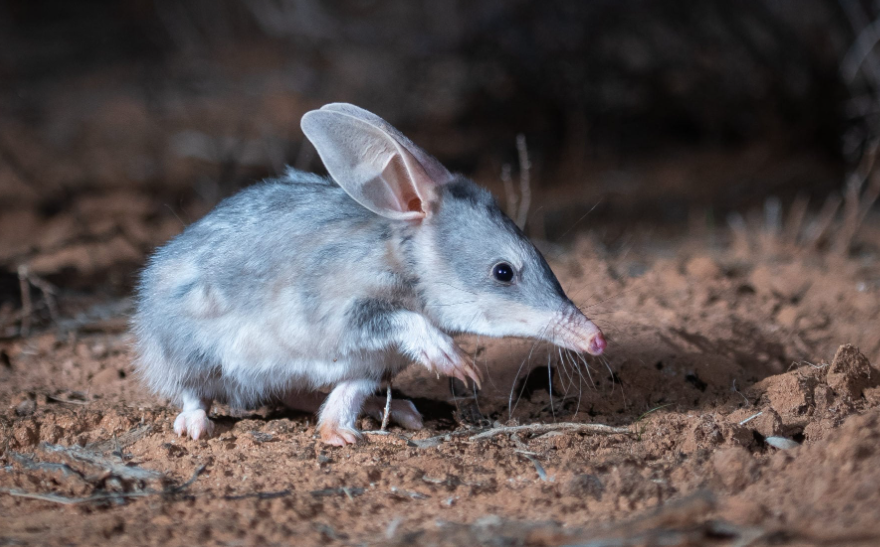
Bilbies may be distinguished from other marsupials by their unique look. Their physique is slim, with a pointed nose and long ears. They have silky, smooth fur that is often light brown to grey in colour. The long, rabbit-like tail of bilbies, which has a white tuft at the end and is hairless at the base, is one of their most distinctive characteristics.
Successful conservation programmes or initiatives for bibliographies
The strength of bilbies’ forelimbs is another intriguing physical trait. They have developed tunnels for protection and refuge, and their limbs are ideally suited for this task. Excellent diggers and bilbies may construct intricate tunnel systems with many chambers and exits.
Nocturnal nature of bilbies and how they are most active during the night
Since bilbies are mostly nocturnal creatures, the night is when they are most active. In their dry environments, this behaviour helps them escape the heat of the day. Bilbies withdraw to their burrows throughout the day in order to relax and save energy. When night falls, they come out to search for food. They use their keen sense of smell to find mushrooms, seeds, insects, and bulbs.
importance of protecting bilbies for future
Bilbies are typically nocturnal creatures, although they may be active during the day as well, particularly in milder climates or when they feel comfortable in their surroundings. But during the day, they tend to be more circumspect and want to remain concealed.
Reproductive and mating habits of bilbies
When it comes to reproduction, bilbies are different from other marsupials. During the dig, the females’ pouch, which faces backward, helps keep dirt out. Bilbies have a very brief gestation period, roughly 12 to 14 days. The little, immature joeys burrow into their mother’s pouch after birth, where they continue to grow and develop.
Challenges faced by bilbies in terms of reproduction
Depending on the resources available, female bilbies may give birth to many litters in a year. After spending around 70 to 80 days in the pouch, the joeys begin to go outside. They reach complete independence between the ages of 8 and 9 months.
Actions taken by the government to protect and conserve bilbies
Currently, the International Union for Conservation of Nature (IUCN) has designated bilbies as vulnerable. Numerous risks exist for them, including competition from introduced species, habitat degradation, and predation by foxes and feral cats. To preserve and replenish bilby populations, several conservation initiatives are being carried out.
Government funding and support for research and monitoring of bilby populations
Government organisations and conservation groups are collaborating to develop bilby populations in protected regions and build cages free of predators. The goal of these initiatives is to improve the bilbies’ chances of surviving and advance their return to the wild.
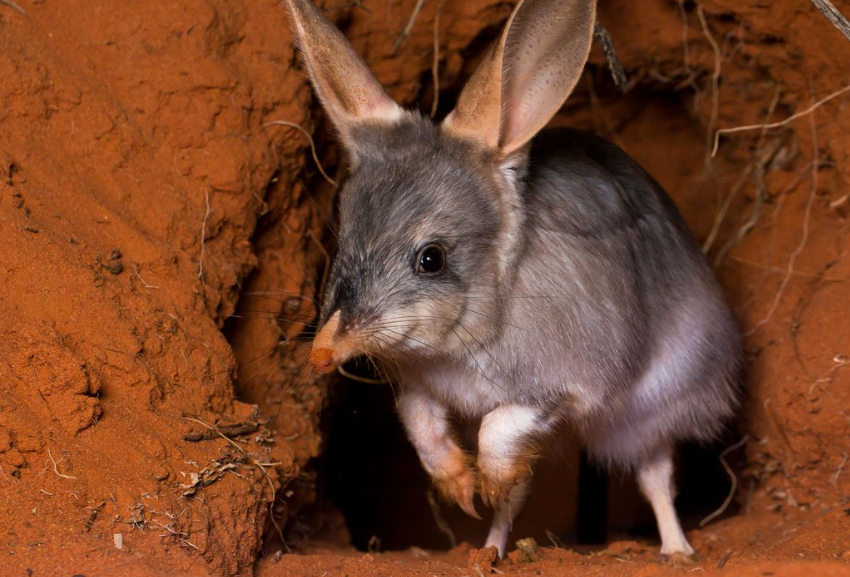
Initiatives aimed at protecting these unique Australian animals
Bilbies are amazing animals with unusual traits and ways of behaving. They are an essential component of Australia’s biodiversity because of their capacity to flourish in dry conditions and their function in ecosystem dynamics. We can help protect bilbies and guarantee their existence for future generations.
FAQ (Frequently Asked Questions) about Bilby
Q: What is a Bilby?
Ans: The Bilby is a small, nocturnal marsupial native to Australia, known for its long ears, soft grey-blue fur, and pointed snout. Scientifically called Macrotis lagotis, it’s sometimes referred to as the “rabbit-eared bandicoot.”
Q: Where do Bilbies live?
Ans: Bilbies are found in arid and semi-arid regions of central and western Australia. They inhabit deserts, grasslands, and shrublands, digging extensive burrow systems to escape the heat and predators.
Q: What do Bilbies eat?
Ans: Bilbies are omnivores and mainly eat insects, seeds, bulbs, fungi, fruit, and small animals. They use their excellent sense of smell and long tongues to locate and dig up food underground.
Q: Are Bilbies endangered?
Ans: Yes, the Greater Bilby is listed as *Vulnerable* due to habitat loss, predation by invasive species (like foxes and cats), and competition with rabbits. Conservation efforts, including breeding programs and predator control, are in place to help protect them.
Q: How big is a Bilby?
Ans: An adult Bilby typically weighs between 1 to 2.5 kg (2.2 to 5.5 lbs) and can grow up to 55 cm (about 22 inches) long, not including their long, bushy tails which can add an extra 20–30 cm.
Q: Are Bilbies nocturnal?
Ans: Yes, Bilbies are nocturnal. They come out at night to forage and remain underground in their burrows during the hot daylight hours to stay cool and safe.
Q: What’s special about a Bilby’s burrow?
Ans: Bilbies dig spiral-shaped burrows that can be up to 3 meters long. These burrows help regulate temperature and provide protection from predators and the harsh Australian sun.
Q: Do Bilbies carry their young in a pouch?
Ans: Yes! As marsupials, female Bilbies have a pouch where they carry and nurse their underdeveloped young. Interestingly, their pouches face backward, which prevents dirt from entering while they dig.
Q: Are Bilbies related to rabbits?
Ans: No, despite their rabbit-like appearance, Bilbies are not related to rabbits. They are marsupials, while rabbits are placental mammals. However, they do share some similar features due to convergent evolution.
Q: What is the Easter Bilby?
Ans: The Easter Bilby is an Australian alternative to the Easter Bunny, created to raise awareness about endangered native species. Chocolate bilbies are sold instead of chocolate bunnies to support conservation efforts.
#Bilby, #EasterBilby, #AustralianWildlife, #Marsupials, #Conservation, #EndangeredSpecies, #NocturnalAnimals, #OutbackAnimals, #WildlifeAustralia, #SaveTheBilby
Our sources and references about Bilby
1: Wikipedia – Bilby
2: Australian Museum – Greater Bilby
3: National Geographic – Greater Bilby
4: Save the Bilby Fund