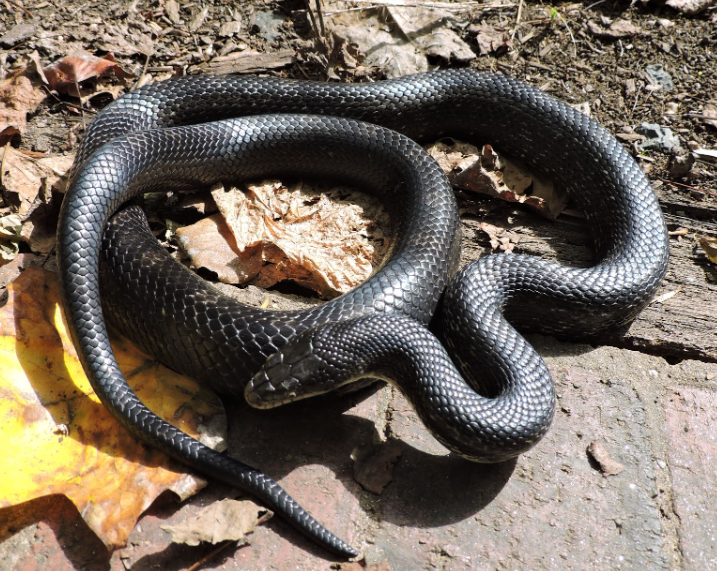
Quick Top 10 Facts about Black Rat Snake
| SCIENTIFIC NAME | Pantherophis obsoletus |
| CLASSIFICATION |
KINGDOM: Animalia PHYLUM: Chordata CLASS: Reptilia ORDER: Squamata FAMILY: Colubridae GENUS: Pantherophis SPECIES: Pantherophis obsoletus |
| SIZE | Up to 8 feet (2.4 meters) in length |
| HABITAT | Woodlands, grasslands, and farmlands, often near water sources |
| DIET | Carnivorous; primarily feeds on rodents, birds, and eggs |
| SPECIES | There are several subspecies of the Black Rat Snake, including the Eastern and Western varieties |
| COUNTRY | Found across the eastern United States |
| GESTATION PERIOD | Eggs incubate for 60-70 days before hatching |
| LIFE SPAN | Average 10-15 years in the wild |
| CONSERVATION STATUS | Not endangered; considered to be a species of least concern |
Amazing Facts About Black Rat Snake
1. Excellent climbers
Black Rat Snakes are skilled climbers and can often be found in trees or on fences as they search for food or shelter.
2. Non-venomous
Despite their intimidating size, Black Rat Snakes are non-venomous and rely on constriction to subdue their prey.
3. They can mimic other species
When threatened, they can flatten their heads to mimic venomous species like the Eastern Diamondback Rattlesnake, scaring off potential predators.
4. Great hunters of rodents
Black Rat Snakes are excellent at controlling rodent populations, which helps to reduce crop damage and limit disease transmission.
5. They shed their skin regularly
Like other snakes, Black Rat Snakes shed their skin several times a year to accommodate their growing bodies.
6. Their color changes with age
Juveniles are typically light gray with darker patterns, while adults are mostly solid black.
7. Masters of camouflage
Their black coloration helps them blend into their surroundings, especially when they are in tree trunks or underbrush.
8. They are solitary creatures
Black Rat Snakes are generally solitary and prefer to live alone, except during the breeding season.
9. Powerful constrictors
Although non-venomous, these snakes use their muscular bodies to constrict and kill their prey before swallowing it whole.
10. Known for their docile nature
Black Rat Snakes are usually not aggressive and will often try to escape rather than confront a threat, making them popular among reptile enthusiasts.
Introducing the black rat snake as a species
North America is home to the black rat snake, commonly referred to as the eastern rat snake, a non-venomous snake species. The Black Rat Snake, scientifically known as Elaphe obsoleta obsoleta, is a non-venomous snake that lives in North America. This snake species, which belongs to the Colubridae family, is one of the largest in the region. The name “Black Rat Snake” alludes to these features as well as its black colouring, since it tends to eat rats and other small animals.
Characteristics and size of the black rat snake
These snakes are readily identified by their creamy or white undersides and shiny black scales. They may grow up to be 6–8 feet long, and some have been known to grow up to be 9–10 feet long. Because of their small build and silky scales, they have the ability to move rapidly and climb trees with ease.
Specific regions or primary habitats where black rat snakes are commonly found
Meadows, forests, and wooded areas are the primary habitats of black rat snakes, where they may search for their preferred food. They often mount trees in search of tiny animals or bird nests since they are adept climbers. Despite their name, they are not limited to eating rats; they can consume other rodents, birds, amphibians, and even snakes.
Fascinating facts about the black rat Snake
Because of their reputation for gentleness, these snakes are not believed to be aggressive towards humans. They never bite until provoked; however, sometimes they may vibrate their tails, give off a pungent odour, or launch a defensive assault when challenged. Because they help control rodent populations, which is beneficial to ecosystems, they are helpful in agricultural areas. We’ll look at some fascinating information on black rat snakes below:
Process of egg-laying and incubation of the Black Rat Snake
Black rat snakes are oviparous, meaning that they deposit eggs instead of producing live young. Usually, females lay a clutch of 10–30 eggs in rotting logs or other suitable locations. The eggs hatch after around 60 days. The hatchlings are between 10 and 15 inches long and are self-sufficient from birth.
Threats faced by Black Rat Snake, such as habitat loss or persecution
The Black Rat Snake species is threatened by habitat deterioration and human activities; hence, conservation efforts are in place to protect it. We must cherish and acknowledge these snakes as vital parts of the ecosystem if we are to encourage their conservation and peaceful coexistence with humans.
Average size and length of the Black Rat Snake
Size and Look The sleek, glossy black scales that define black rat snakes are what give them their name. On the other hand, people’s skin tones might differ, and some can have blotches or other patterns. They may reach astonishing lengths of up to six feet or more, and they have a slim body.
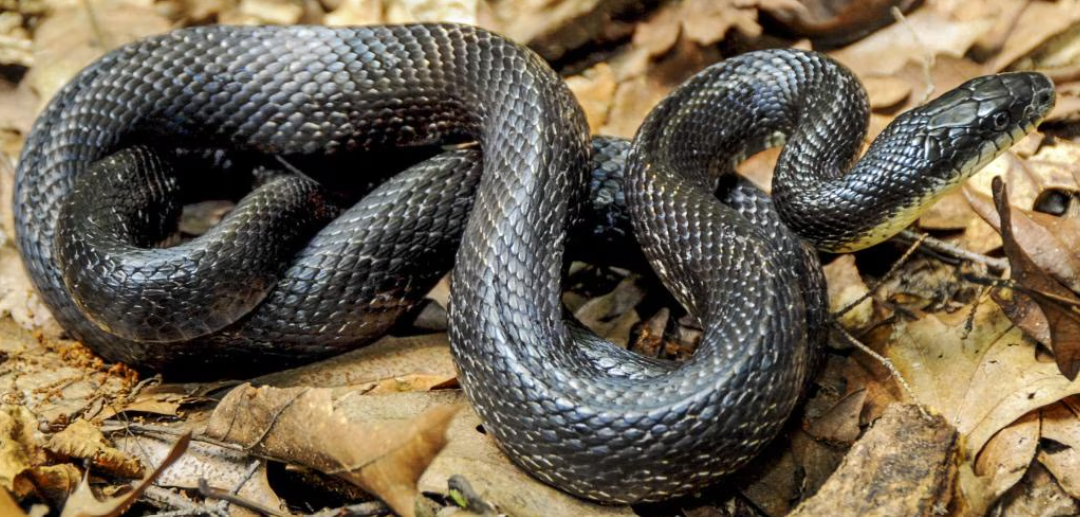
Physical Appearance of the Black Rat Snake
With their big eyes and somewhat pointed snouts, these snakes have a recognisable head form. They can move quickly across their surroundings because of their shiny, smooth scales.
Range and Dispersion of the Black Rat Snake
The eastern United States, from Florida to New England, is home to the majority of black rat snake populations. They are very versatile animals that can live happily in a wide range of environments, such as suburban areas, grasslands, marshes, and woods.
Ability of the snake to climb trees and its adaptability to various environments
These snakes are great climbers and are often seen in trees or on rocky patches. They live close to water sources, including lakes, ponds, and rivers, and they are skilled swimmers.
Nutrition and Meal Patterns of the Black Rat Snake
Black rat snakes ensnare their victims by coiling their bodies around them and applying pressure until they suffocate, making them constrictors. They do not just eat rats, despite their name. They eat many different kinds of tiny animals, including birds, eggs, and even snakes.
Defence and hunting techniques of the Black Rat Snake
Being expert hunters, these snakes find their prey by using their excellent sense of smell. They are very helpful to humans in agricultural regions since they are good at managing rodent infestations.
Conduct and protective mechanisms of the Black Rat Snake
In general, black rat snakes are calm and do not bite people. They may hiss, vibrate their tails, or strike in response to anything that threatens them. They don’t really threaten people, however, since they are not poisonous.
Conservation efforts of the Black Rat Snake
The capacity of black rat snakes to imitate rattlesnakes is an intriguing defensive strategy. They can coil their bodies, shake their tails, and vibrate their tails against grass or dry leaves to make a rattling sound when they feel threatened. Potential predators may be dissuaded from attacking by this behaviour and may reconsider.
Reproduction and life cycle of the black Snake
Procreation and Duration of Life Because they lay eggs, black rat snakes are oviparous. An appropriate spot to lay eggs, such as rotting wood or a hole in the ground, will be found by the female snake. The eggs will subsequently be left to continue their own incubation by her. The hatchlings will emerge from the eggs in a few weeks.
Information on the average lifespan of black rat snakes
With some lasting up to 20 years or more in the wild, these snakes have a comparatively lengthy lifetime. But in places where there is a lot of human involvement or predation, their longevity may be greatly reduced.
We need to protect Black Rat Snakes to maintain ecological balance
The advantages of black rat snakes and their part in preserving a healthy ecology must be made known to the public. We can contribute to the protection and peaceful cohabitation of these amazing animals if we have better knowledge of them. As of right now, there is no list of vulnerable or endangered species for black rat snakes. They do, however, suffer a number of dangers, including habitat degradation, road mortality, and persecution due to human misidentification as dangerous snakes.
Behaviour of black rat snakes and the ecological role of black rat snakes in their ecosystem
Amazing animals with distinctive traits and habits are black rat snakes. Because of their abilities to adapt, hunt, and have defence systems, they play a significant role in the environment. We may promote a deeper understanding of these snakes’ significance in the natural world by educating ourselves about them.
FAQ (Frequently Asked Questions) about Black Rat Snake
Q: What is a Black Rat Snake?
Ans: The Black Rat Snake (Pantherophis obsoletus) is a non-venomous snake native to North America. Known for its glossy black coloration and impressive size, it is often found in forests, fields, and suburban areas. It is an excellent climber and can often be seen in trees or high vegetation, where it hunts for small mammals, birds, and eggs.
Q: How big does a Black Rat Snake get?
Ans: Black Rat Snakes can grow to impressive lengths, with adults typically measuring between 4 to 6 feet (1.2 to 1.8 meters) long. However, some individuals can reach up to 8 feet (2.4 meters), making them one of the largest snakes in their range. Their long, slender bodies are adapted for climbing and constricting prey.
Q: Where are Black Rat Snakes found?
Ans: Black Rat Snakes are native to the eastern United States and are commonly found in woodlands, grasslands, and agricultural areas. They are also commonly found in suburban and rural areas where they seek shelter in barns, sheds, or even attics. They are adaptable and can thrive in a variety of habitats as long as they have access to suitable prey and shelter.
Q: What do Black Rat Snakes eat?
Ans: Black Rat Snakes are constrictors and primarily feed on small mammals, such as rats, mice, and squirrels. They also prey on birds, bird eggs, and occasionally amphibians. Their excellent climbing ability allows them to hunt birds in trees, and they are known for their ability to control rodent populations in agricultural settings.
Q: Are Black Rat Snakes dangerous?
Ans: No, Black Rat Snakes are non-venomous and pose no direct threat to humans. They are generally calm and will avoid confrontation if given the opportunity. If threatened, they may attempt to flee or, in rare cases, may flatten their bodies and hiss loudly to deter predators. They are beneficial in controlling rodent populations.
Q: How do Black Rat Snakes reproduce?
Ans: Black Rat Snakes reproduce by laying eggs. The female lays between 10 to 30 eggs in a warm, humid location, such as rotting logs, mulch piles, or under rocks. The eggs hatch after about two months, and the baby snakes are fully independent from birth. Juvenile Black Rat Snakes resemble adults, but with a pattern of light and dark markings that fade as they mature.
Q: How long do Black Rat Snakes live?
Ans: Black Rat Snakes can live up to 20 years in captivity, although their lifespan in the wild is typically shorter, around 10 to 15 years, due to predation and environmental factors. Their lifespan can be influenced by factors such as habitat quality, food availability, and human activity.
Q: What is the habitat of a Black Rat Snake?
Ans: Black Rat Snakes are highly adaptable and can be found in a variety of habitats, including forests, grasslands, agricultural fields, and suburban areas. They are excellent climbers and often seek shelter in trees, barns, sheds, or under rocks. They thrive in areas with abundant cover and access to prey like rodents and birds.
Q: How do Black Rat Snakes behave?
Ans: Black Rat Snakes are primarily nocturnal, hunting at night and resting during the day. They are solitary animals, only coming together for mating. They are excellent climbers and swimmers, often seen navigating trees or water. When threatened, they may hiss, vibrate their tails, or even strike, but they typically try to avoid confrontation.
Q: Are Black Rat Snakes good pets?
Ans: Black Rat Snakes can make good pets for experienced snake owners, as they are relatively docile and easy to care for. They are also known for their long lifespan and can adapt well to captivity if provided with proper care, including a suitable enclosure, temperature, humidity, and a proper diet of rodents. However, they require a large space to move and climb, making them better suited for more experienced reptile keepers.
#BlackRatSnake, #Snake, #Constrictor, #NonVenomousSnake, #Wildlife, #SnakeLovers, #ReptileCare, #WildlifeConservation, #RodentControl, #SnakeSpecies, #NorthAmericanSnakes
Our sources and references about Black Rat Snake
1: Wikipedia – Black Rat Snake
2: Virginia Wildlife – Black Rat Snake
3: Reptiles Magazine – Black Rat Snake
4: Snakes for Pets – Black Rat Snake