Quick Top 10 Facts about Black Widow Spider
| SCIENTIFIC NAME | Latrodectus mactans |
| CLASSIFICATION | KINGDOM: Animalia PHYLUM: Arthropoda CLASS: Arachnida ORDER: Araneae FAMILY: Theridiidae GENUS: Latrodectus SPECIES: L. mactans |
| SIZE | Females: up to 1.5 inches (including leg span); Males: significantly smaller |
| HABITAT | Dark, dry, sheltered places such as garages, sheds, woodpiles, and under rocks |
| DIET | Insects such as flies, mosquitoes, grasshoppers, and beetles |
| SPECIES | Part of the widow spider group; includes multiple species globally |
| COUNTRY | Native to North and South America, but found worldwide in warmer climates |
| GESTATION PERIOD | Egg sacs hatch in about 20 days; females may produce several sacs during summer |
| LIFE SPAN | Females live 1–3 years; Males live only a few months |
| CONSERVATION STATUS | Not endangered; widespread and common in appropriate habitats |
Amazing Facts About Black Widow Spider
1. Famous for the red hourglass mark
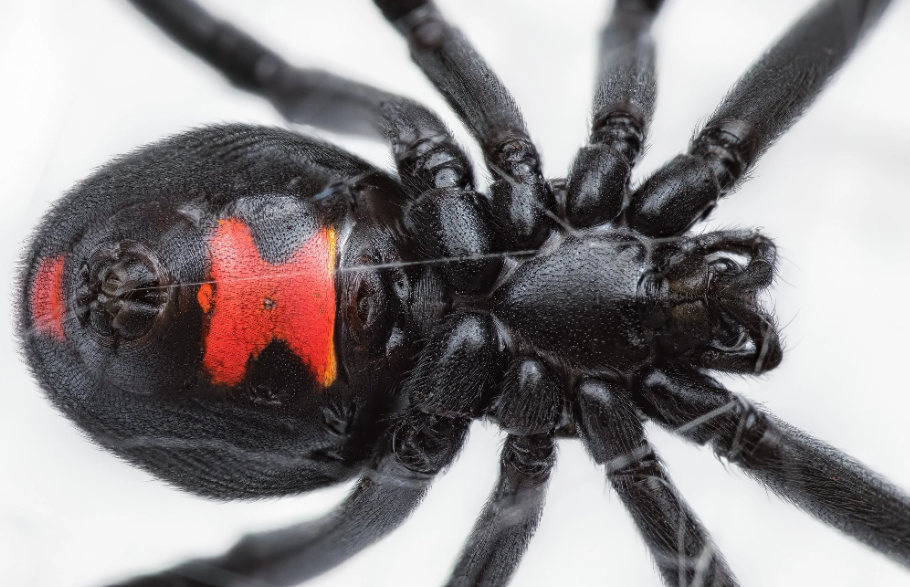
Female Black Widows are recognized by the shiny black body and red hourglass on the underside of the abdomen.
2. Only females are dangerous to humans
Female bites can inject neurotoxic venom, while males are harmless.
3. Bites are rarely fatal
Though painful, modern medical care makes serious complications from bites extremely rare.
4. Males are much smaller
Male Black Widows are tiny and often overlooked. They do not bite or pose any threat.
5. Not aggressive unless disturbed
They bite only in self-defense, typically when their webs or egg sacs are threatened.
6. Their venom is 15x stronger than a rattlesnake’s
Though rarely deadly, the venom is potent and used to paralyze small insect prey.
7. Webs are irregular and sticky
Black Widow webs are messy and strong, often built close to the ground.
8. Cannibalistic mating behavior
Females sometimes consume males after mating, giving the species its “widow” name.
9. Effective pest control
By feeding on a variety of insects, they play a role in natural pest management.
10. Symbol of fear and fascination
Due to their appearance and venom, Black Widows are often featured in myths, media, and pop culture.
Scientific classification of the Black Widow Spider
The Black Widow Latrodectus mactans, the scientific name for spiders, is a family of poisonous arachnids that is part of the Theridiidae. Its unique look, which consists of a glossy black body with a red hourglass-shaped pattern on its belly, is well known. This marking helps to alert prospective predators to the poisonous nature of the spider.
Distribution of this species and their geographical distribution
The Black Widow The world’s temperate zones, which include North America, Europe, and Asia, are home to the majority of spider species. They like isolated, gloomy environments like crowded spaces, woodpiles, and cracks in rocks. These spiders are renowned for their extraordinary web-building abilities. They create erratic, tangled webs that catch their victims.
Information about the venomous bite of the Black Widow Spider
The Black Widow Spider’s venom is neurotoxic, which means that it damages the targets’ neurological systems. Although a Black Widow Spider bite seldom results in death for humans, it may induce excruciating agony, cramping in the muscles, nausea, and perspiration. If you believe you have been bitten by a Black Widow Spider, it is imperative that you get medical aid right away. Treatment may help reduce symptoms and avoid consequences. Notwithstanding the possibility of injury from their bite, Black Widow Spiders are essential to maintaining the equilibrium of the environments they live in by managing bug and other arthropod populations.
An Intriguing Arachnid:
The Black Widow Spider Many people have been drawn to and intrigued by the poisonous black widow spider, technically known as Latrodectus mactans. Fear and intrigue are associated with the black widow spider due to its unique appearance and strong venom.
Look and Recognition:
The jet-black hue and the red marking in the form of an hourglass on the abdomen of the black widow spider make it easy to identify. With a body length of around 1.5 inches (3.8 cm), the female black widow is bigger than the male, who is just about half an inch (1.3 cm) longer. The male black widow has no red hourglass pattern and is less poisonous.
Distribution and Habitat:
There are black widow spiders in many parts of the globe, including Australia, Asia, Europe, and North America. They are often found in dark, isolated places like woodpiles, sheds, and garages, and they enjoy warm weather. Due in part to their well-known capacity for environmental adaptation, black widows are widely distributed.
Actions and Nutrition:
It is well known that black widow spiders have unusual mating habits. The term “black widow” comes from the fact that the female black widow often kills and eats the male after mating. Because the female obtains vital nutrients from the male’s body to support the development of her eggs, this behaviour is thought to be a survival tactic.
Black widow spiders mostly eat insects, including beetles, flies, and mosquitoes. They are expert predators, immobilising their victims with their venom. The neurological system of those who are bitten by a black widow spider is impacted by its neurotoxic venom. After the victim becomes immobile, the black widow envelops it in silk and administers digestive enzymes to soften its internal organs, facilitating easy ingestion.
Poisoning and Hazards to Humans:
Although the venom of the black widow spider is very strong, most of the time it is not thought to be fatal to humans. Nonetheless, a black widow’s bite may result in excruciating pain, cramping in the muscles, and other symptoms. If you have been bitten by a black widow, you should definitely get medical help, particularly if your symptoms are severe.
In general, black widow spiders are not aggressive; they will only attack if they feel threatened or provoked. They do not aggressively seek out people as prey; instead, they prefer to conceal themselves in their webs. However, in locations that are dark and uninhabited, where black widows could be found, care should be used when touching items.
Avoidance and Management:
It is crucial to maintain clean, clutter-free indoor and outdoor spaces to avoid black widow spider interactions. Check for possible hiding places on a regular basis, such as woodpiles, rubbish, and unwanted things, and remove them. Wear gloves and protective clothes while working in locations where black widows may be present to reduce the chance of being bitten.
Areas where black widows are likely to live may also be inspected and treated by professional pest control services. These professionals may provide practical ways to get rid of and manage black widow populations, protecting your house and the area around it.

With its unusual look, peculiar behaviour, and strong venom, the black widow spider is unquestionably an intriguing species. Because they manage insect populations, black widow spiders are vital to the ecology, but it’s still crucial to be cautious and respectful of them. We can minimise any possible threats and cohabit with these fascinating arachnids by learning about them and putting preventative measures in place.
FAQ (Frequently Asked Questions) about Black Widow Spider
Q: What is a Black Widow Spider?
Ans: The Black Widow Spider is a highly recognizable and venomous spider species known for the female’s shiny black body and red hourglass marking on the underside of her abdomen. Scientifically referred to as *Latrodectus*, Black Widows are found in many parts of the world, including North America, and are part of the cobweb or tangle-web spider family.
Q: Why is it called the Black Widow?
Ans: The name “Black Widow” comes from the myth that the female spider eats the male after mating, which has been observed in some cases but is not the norm. The striking black color and widow association add to its reputation as a deadly and mysterious creature.
Q: Where do Black Widow Spiders live?
Ans: Black Widow Spiders prefer dark, sheltered areas such as woodpiles, sheds, garages, basements, and under rocks or furniture. They build irregular, sticky webs in undisturbed areas and are mostly active at night. They are commonly found in warmer regions.
Q: Are Black Widow Spiders dangerous?
Ans: Yes, the bite of a female Black Widow Spider is venomous and can be dangerous to humans, especially children, the older people, or those with weakened immune systems. However, bites are rarely fatal and can be treated with medical attention. Males and juveniles are much less harmful.
Q: What happens if you get bitten by a Black Widow?
Ans: A bite from a Black Widow may cause intense pain, muscle cramps, nausea, and sweating. The bite itself may look like a small red bump or puncture mark. Medical attention is recommended to manage symptoms and prevent complications. Antivenom is available in serious cases.
Q: What do Black Widow Spiders eat?
Ans: Black Widows feed on insects such as flies, mosquitoes, grasshoppers, beetles, and caterpillars. They trap prey in their webs and use venom to immobilize them before digesting the prey externally and consuming the liquefied remains.
Q: How can I identify a Black Widow Spider?
Ans: Female Black Widow Spiders are shiny black with a distinct red or orange hourglass marking on the underside of their abdomen. Males are smaller, lighter in color, and often have red or white spots or streaks. Juveniles may have similar markings but are more mottled in color.
Q: Are all Black Widow Spiders black?
Ans: Not all species of Black Widows are jet black. Some species may appear brownish or have different markings depending on age, sex, and species. The iconic red hourglass shape on the female’s abdomen is the most consistent identifier.
Q: How can I avoid Black Widow Spider bites?
Ans: Avoid sticking your hands into dark, undisturbed areas like woodpiles, under rocks, or in storage bins. Wear gloves when gardening or cleaning outdoor structures. Keep garages, sheds, and basements tidy to discourage nesting. If you see a web with a spider that has the hourglass marking, do not disturb it and consider removal by a pest control professional.
Q: Do Black Widow Spiders have predators?
Ans: Yes, despite their venomous bite, Black Widows have natural predators including birds, wasps (especially the Mud Dauber), mantises, and other spiders. Their secretive lifestyle helps them avoid being eaten.
#BlackWidowSpider, #Latrodectus, #VenomousSpiders, #SpiderFacts, #InsectAwareness, #Arachnids, #SpiderSafety, #WidowSpider, #NatureEducation, #CreepyCrawlies
Our sources and references about Black Widow Spider
1: Wikipedia – Latrodectus (Black Widow)
2: CDC – Black Widow Spider
3: National Geographic – Black Widow Spider Facts
4: PestWorld – Black Widow Spiders