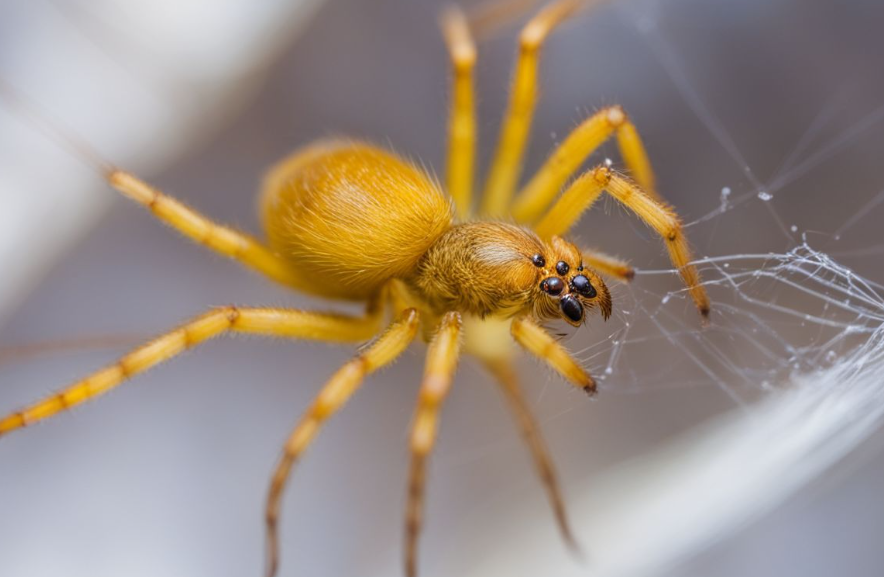
The Yellow Sac Spider is a venomous species of spider found in North America. It is named for the sac-like web it constructs, which it uses to hide during the day. While not aggressive, it will bite in self-defense, and its venom can cause mild irritation or swelling in humans.
Quick Top 10 Facts about Yellow Sac Spider
| SCIENTIFIC NAME | Cheiracanthium spp. |
| CLASSIFICATION | KINGDOM: Animalia PHYLUM: Arthropoda CLASS: Arachnida ORDER: Araneae FAMILY: Miturgidae GENUS: Cheiracanthium |
| SIZE | Body length: 8–15 mm (0.3–0.6 inches) Leg span: 20–30 mm (0.8–1.2 inches) |
| HABITAT | Commonly found in gardens, homes, and woodlands across North America, Europe, and parts of Asia |
| DIET | Carnivorous; feeds primarily on insects, such as flies, mosquitoes, and other small arthropods |
| SPECIES | Yellow Sac Spider, known for its distinctive yellowish appearance and nocturnal hunting behavior |
| COUNTRY | Native to North America, Europe, and parts of Asia |
| GESTATION PERIOD | Females lay eggs in sacs, which hatch into spiderlings after 2–3 weeks |
| LIFE SPAN | 1–2 years in the wild |
| CONSERVATION STATUS | Least Concern; not currently threatened, but populations can be affected by habitat loss and pesticide use |
Amazing Facts About Yellow Sac Spiders
1. Venomous bite
The Yellow Sac Spider is venomous and can cause a painful bite, although it is not typically life-threatening to humans.
2. Active at night
These spiders are nocturnal hunters, emerging at night to prey on insects and other small arthropods.
3. Named for its silk sacs
The Yellow Sac Spider creates a characteristic sac-like web where it hides during the day, which is often found in corners or under leaves.
4. Aggressive defense behavior
When threatened, Yellow Sac Spiders may bite in self-defense, although they typically prefer to avoid conflict if possible.
5. Long leg span
While their bodies are small, Yellow Sac Spiders have relatively long legs, making them quite agile and fast.
6. Common household pest
Yellow Sac Spiders are often found in homes, where they help control insect populations by feeding on mosquitoes, flies, and other pests.
7. Reproduce by egg sacs
Females lay eggs in sac-like structures, which hatch into spiderlings after a few weeks. These egg sacs can be found in secluded areas.
8. Help control insect populations
As predators of smaller insects, Yellow Sac Spiders play a beneficial role in controlling populations of pests, especially in gardens.
9. Not social spiders
Yellow Sac Spiders are solitary creatures and do not form colonies or webs with other spiders.
10. Potential allergic reaction to bites
Though generally harmless, the bite of a Yellow Sac Spider can cause a local reaction in some people, with swelling, redness, and pain. In rare cases, it can lead to more serious reactions.
The Yellow Sac Spider: A Complete Guide to the Entertaining Arachnid
Introduction to the Yellow Sac Spider
Especially in the United States, the Yellow Sac Spider (Cheiracanthium inclusum) is a kind of spider that is often seen in gardens, houses, and other human settings. The Yellow Sac Spider has drawn the attention of arachnologists and the general public because of its unique traits, venomous bite, and capacity to live close to human habitation, even though its small size and generally non-aggressive nature may not make it as well-known as some other spider species. To provide a comprehensive overview of this sometimes misunderstood arachnid, we will examine the Yellow Sac Spider’s physical characteristics, habitat, nutrition, behaviour, venomous bites, life cycle, and conservation status below:
Physical Features of the Yellow Sac Spider
Colouration and Size
The Yellow Sac Spider is a tiny, nimble arachnid that is readily recognised in its surroundings because of a few distinguishing characteristics.
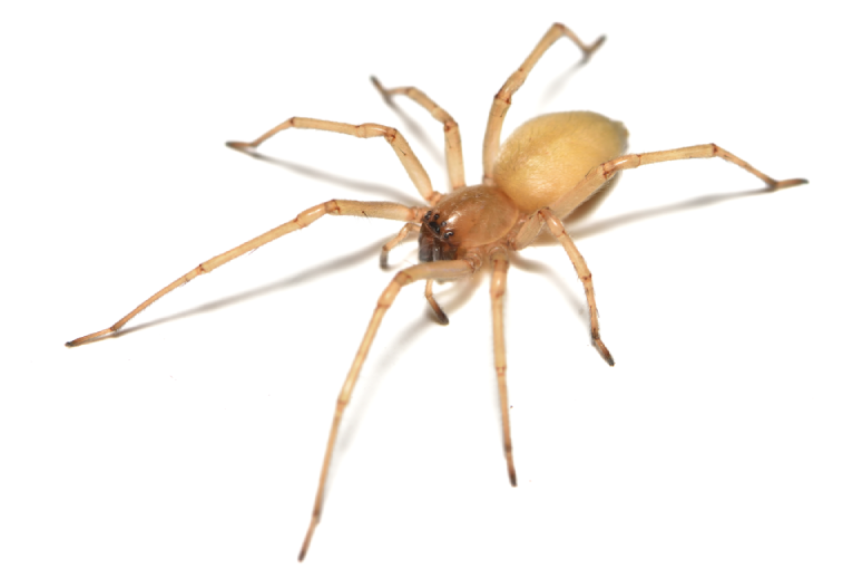
- Colouration: The Yellow Sac Spider’s body is usually pale yellow or yellowish-green, as the name implies, but it may also be light tan or have a deeper yellowish tint. Given that it is often found amid plants, grass, and other flora, the spider’s colour helps it blend in with its environment. Its colouration is a crucial distinguishing characteristic, even if its body may have a subtle or hazy pattern.
- Size: Yellow Sac Spiders range in size from 8 to 12 millimetres, making them small to medium-sized spiders. Compared to females, who may grow bigger and are more robust, men are typically significantly smaller.
- Body and Legs: The spider has an oval-shaped, long body and comparatively lengthy legs that are often only a little bit longer than the body. Usually pale brown or yellow in colour, the legs have a little hairy aspect.
- Eyes: The Yellow Sac Spider has eight eyes in two rows, much like a lot of other spiders. It has a quite modest look since its eyes are smaller and less noticeable than those of other spiders.
- Abdomen and Cephalothorax: The spider has a separate abdomen and a distinct cephalothorax, which is the combined head and thorax. The abdomen lacks the distinct patterns or markings seen in other species and may look somewhat transparent, particularly in young spiders.
Distribution and Habitat of the Yellow Sac Spider
Geographic Range
Because of their remarkable adaptability, yellow sac spiders may be found in a variety of settings. One of the reasons they are so common is because they are not choosy about their surroundings.
- Geographic Range: From the southern regions of Canada to Mexico, the Yellow Sac Spider may be found all throughout North America, but particularly in the United States. In the United States, it is most prevalent in the Midwest, Southeast, and Northeast.
- Habitat Preferences: Low vegetation, gardens, forests, and grasslands are the usual habitats of this species. Although Yellow Sac Spiders are more often seen outside, they may also infiltrate homes. To construct their characteristic sacs, they look for dark, untouched places like closets, attics, basements, and storage facilities. The spiders spend the day or the winter months resting in these silk cages called sacs.
Web Building
The Yellow Sac Spider is renowned for its very simple web, in contrast to many other spiders that weave elaborate, enormous webs. Usually, it makes little silk homes or sacs where it may rest and await prey. These sacs might be discovered in cracks and crevices, under leaves, or in corners. The spider mostly employs its webs for refuge and egg-laying, rather than using them to catch animals during hunting.
Yellow Sac Spider Behaviour and Diet
Hunting Methods and Feeding
As active hunters, yellow sac spiders do not use webs to catch their prey; instead, they use their speed and agility to grab it.
- Hunting Methods: Yellow Sac Spiders are aggressive hunters who actively investigate their surroundings for food, in contrast to web-building spiders. They are most active at night; therefore, that’s when they often hunt. Usually, they wait close to their silk sacs before swiftly pursuing and capturing any smaller insects that approach too near.
- Diet: As carnivores, yellow sac spiders consume a broad range of tiny insects, such as flies, mosquitoes, ants, and other arthropods. They are helpful predators that aid in reducing the numbers of minor pests in and around houses and gardens since they are also known to consume other spiders.
- Feeding Behaviour: The spider usually waits for its victim to get close to its sac before leaping forward and biting to render the prey immobile. Digestive enzymes are injected by yellow sac spiders to liquefy their prey’s tissues, which they then eat. Yellow sac spiders only employ their agility and poisonous bite, in contrast to web-building spiders that often use their webs to immobilise victims.
Venomous Bites and Human Interaction
Venomous Bite
The Yellow Sac Spider is well-known for its deadly bite, which is one of its most distinctive features. The venom of this spider may nevertheless induce localised symptoms in humans, even if it is not as strong as those of more harmful species like the brown recluse or black widow.
- Venomous Bite: The Yellow Sac Spider immobilises its victim by injecting harmful proteins into it. Its venom may produce localised discomfort, redness, and swelling, although it is often not fatal to people. In some instances, people could have more serious side effects, such as burning at the bite site, nausea, or itching.
- Human Interaction: Although Yellow Sac Spiders are generally not hostile towards people; they may bite if they feel trapped or threatened. Typically, bites happen when a spider is unintentionally disturbed, such as when someone reaches into a concealed, dark space where the spider is sleeping. Cleaning the area, administering ice to minimise swelling, and, if required, using over-the-counter pain medicines are the usual treatments for bites. In the event of a severe allergic response, prompt medical assistance is necessary.
- Avoiding Bites: Exercise caution while handling things in locations where Yellow Sac Spiders may be present to avoid being bitten. The chance of being bitten may be decreased by wearing gloves and being aware of spider habitats.
Life Cycle and Reproduction of the Yellow Sac Spider
Mating and Egg Laying
Males and females of yellow sac spiders mate throughout the mating season, according to a rather simple system of reproduction.
- Mating: Male Yellow Sac Spiders will aggressively seek out females during the breeding season, which is usually in the spring or summer. The male will use his legs to make a succession of vibratory signals in an attempt to court the female. Mating takes place if the female is receptive. Many spider species exhibit the behaviour of the male leaving the area after mating in order to avoid being devoured by the female.
- Egg Sac and Egg Laying: The female will produce a silk sac, usually in a protected area, in which she will deposit her eggs after mating. Several hundred eggs may be found in each sac, depending on the female’s size and condition. After hatching, the eggs become larvae, which develop into nymphs and then adults.
- Lifespan: The lifespan of the yellow sac spider is quite brief, usually lasting one to two years. The younger stages appear in early spring or late autumn, whereas the adults are often seen during the warmer months.
Yellow Sac Spider’s Role in Human-Ecosystem Interaction
Beneficial Role in the Ecosystem
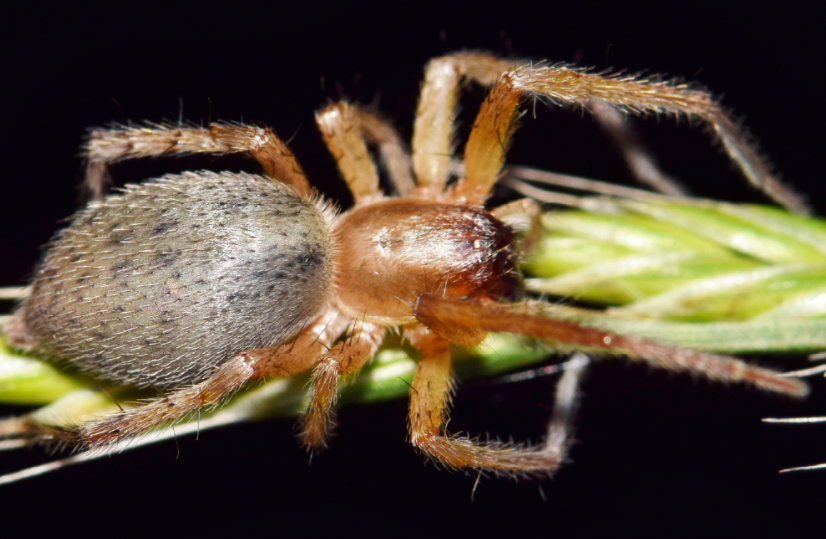
The yellow sac spider contributes to the ecology while being poisonous. It contributes to insect population management by consuming pests and smaller insects, which lessens the prevalence of other potentially dangerous species. Because of this, it is a natural pesticide, especially for homes and gardens.
- Beneficial Role: The Yellow Sac Spider contributes to the preservation of environmental equilibrium by preying on lesser insects. It adds to the richness of its ecosystem by acting as both a predator and a prey species. Insects that may otherwise harm crops or plants are less common thanks to its diet of pests.
- Human Interaction: Yellow sac spiders often assist in keeping flies, mosquitoes, and other bothersome insects under control in houses. Although they might be painful to bite, these spiders usually don’t attack people and would rather stay concealed. Public awareness of yellow sac spiders’ use in pest management may help allay unwarranted anxiety and foster tolerance for this species.
FAQ (Frequently Asked Questions) about Yellow Sac Spider
Q: What is a Yellow Sac Spider?
Ans: The Yellow Sac Spider (Cheiracanthium inclusum) is a species of spider commonly found in North America. It is recognized for its yellow or pale coloration and is known for its aggressive behavior when disturbed. These spiders are often seen in gardens, homes, and outdoor areas, and are nocturnal hunters.
Q: Where does the Yellow Sac Spider live?
Ans: Yellow Sac Spiders are commonly found in a variety of environments, including gardens, houses, and outdoor spaces. They often create silk sacs, which they use as shelters during the day. They are often found in the corners of walls, under furniture, and in dark, undisturbed places.
Q: What does the Yellow Sac Spider eat?
Ans: The Yellow Sac Spider is a carnivorous species and feeds on a variety of insects, including flies, ants, and other small arthropods. It is an active hunter that ambushes its prey using its agility and venom to immobilize it before consuming it.
Q: How big is the Yellow Sac Spider?
Ans: The Yellow Sac Spider is relatively small, with a body length of about 1.5 to 2.5 cm (0.6 to 1 inch), not including its leg span. Despite its small size, its bite can cause discomfort and irritation in humans.
Q: What does the Yellow Sac Spider look like?
Ans: The Yellow Sac Spider has a pale yellowish or light brown body with darker markings on its legs and abdomen. It has long, slender legs and a slightly elongated body. Its distinctive color helps it blend into its surroundings, such as walls and foliage, where it hunts for prey.
Q: Are Yellow Sac Spiders dangerous?
Ans: Yellow Sac Spiders are venomous, and their bites can cause mild to moderate pain and irritation in humans. The bite may result in redness, swelling, and a small wound. While they are not aggressive towards humans, they will bite in self-defense if provoked. Their venom contains cytotoxic components, which can lead to skin reactions in some cases.
Q: How does the Yellow Sac Spider defend itself?
Ans: The Yellow Sac Spider defends itself by biting if it feels threatened. Its venom helps to immobilize and subdue its prey. When cornered, it may also try to flee to safety, as it prefers to avoid confrontation. It is a nocturnal hunter and often hides in its silk sac during the day.
Q: How long do Yellow Sac Spiders live?
Ans: The lifespan of a Yellow Sac Spider is typically 1 to 2 years, although this can vary depending on environmental conditions such as food availability and temperature. They have a relatively short life cycle, with females living longer than males.
Q: Are Yellow Sac Spiders common?
Ans: Yes, Yellow Sac Spiders are common in many areas, especially in North America. They are found in a variety of habitats, including gardens, homes, and forests. They are nocturnal and active in the warmer months, making them more visible during the spring and summer.
Q: Can Yellow Sac Spiders be kept as pets?
Ans: While it is technically possible to keep Yellow Sac Spiders as pets, it is not recommended due to their venomous nature and their relatively aggressive tendencies. They are more suited to life in the wild where they can fulfill their role in controlling insect populations.
#YellowSacSpider, #VenomousSpiders, #SpiderBites, #InsectHunter, #Arthropods, #SpiderFacts, #GardenSpiders, #Wildlife, #SpiderConservation, #ArachnidLovers
Our sources and references about Yellow Sac Spider
1: Wikipedia – Yellow Sac Spider
2: National Institutes of Health – Yellow Sac Spider Bite
3: Australian Museum – Yellow Sac Spider
4: Britannica – Yellow Sac Spider