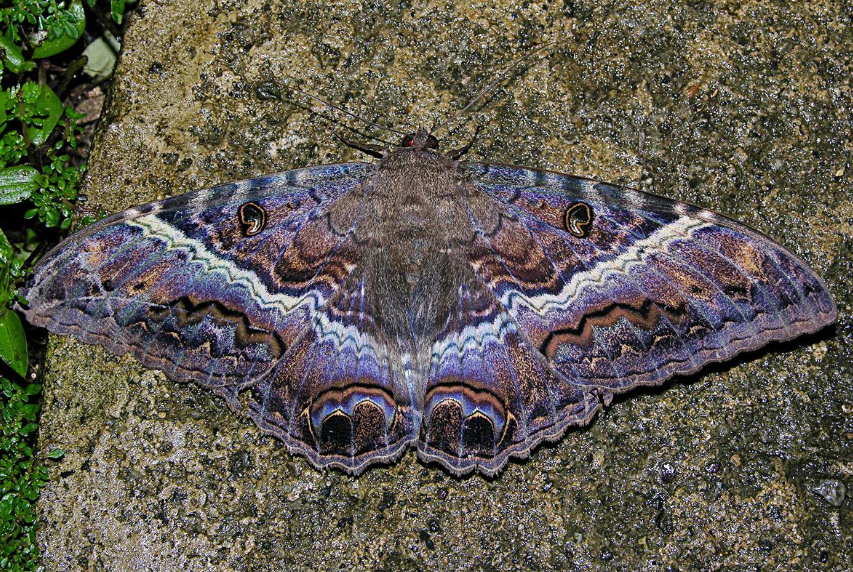
Quick Top 10 Facts about Black Witch Moth
| SCIENTIFIC NAME | Ascalapha odorata |
| CLASSIFICATION | KINGDOM: Animalia CLASS: Insecta ORDER: Lepidoptera FAMILY: Erebidae PHYLUM: Arthropoda GENUS: Ascalapha |
| SIZE | Wingspan up to 17 cm (6.7 inches) |
| HABITAT | Tropical and subtropical forests, gardens, and near homes across the Americas |
| DIET | Larvae feed on leguminous plants (especially acacia and mesquite); adults may feed on fruit juices or nectar |
| SPECIES | Only one primary species – Ascalapha odorata |
| COUNTRY | Native to Central and South America; migrates into the southern U.S. |
| GESTATION PERIOD | Eggs hatch in a few days; complete metamorphosis from larva to adult takes several weeks |
| LIFE SPAN | Adults live a few weeks; full life cycle can be a couple of months |
| CONSERVATION STATUS | Not Evaluated – Populations are stable in native range |
Amazing Facts About Black Witch Moth
1. It’s the largest moth in the continental U.S.
The Black Witch Moth has an impressive wingspan, often mistaken for a bat when flying.
2. Known as the “Death Moth” in folklore
In some cultures, its appearance is considered an omen or symbol of death or misfortune.
3. Despite myths, it’s harmless
The Black Witch Moth does not bite, sting, or cause any harm to humans.
4. It’s a strong migrator
They can travel thousands of miles from Central America all the way to the U.S. and even into Canada.
5. Males and females differ in color
Females usually have light bands across their wings, while males tend to be darker overall.
6. They are nocturnal
They are most active at night and are often attracted to lights.
7. Their camouflage is excellent
Their wing patterns help them blend into tree bark and dark corners.
8. Larvae feed on legumes
Caterpillars prefer plants like acacia, mesquite, and other legumes.
9. Adults may feed on fermenting fruit
They are sometimes found near overripe fruit, where they absorb juices.
10. They’re symbolic in many cultures
While feared in some regions, others see them as symbols of transformation or spiritual messages.
Geographical Distribution of the Black Witch Moth
Ascalapha odorata, the formal name for the Black Witch Moth, is an interesting insect of the Erebidae family. With a wingspan of up to 7 inches (18 cm), it ranks among the largest moth species in the Americas. Its size and black colouring make it an aesthetically remarkable species.
Found in Various Regions, Including North and South America, Africa, and Parts of Europe
Tropical and subtropical regions, such as areas of North and South America, the Caribbean, and some Pacific islands, serve as the Black Witch Moth’s habitat. This moth is well known for its migratory nature; individuals often travel great distances in search of suitable habitats and food sources.
Learn More About the Fascinating Features of the Black Witch Moth
The Black Witch Moth’s link to mythology and superstition is one of its most captivating features. In many cultures, people believe that this moth signifies impending death or misfortune. It is often seen as an omen when it appears at night or near a home. It’s important to remember that these beliefs lack scientific evidence and are purely based on superstition.
Misconceptions or Fears About the Black Witch Moth
Despite its sinister reputation, the Black Witch Moth poses little threat to humans. It doesn’t harm gardens or crops, nor does it have stingers or poison. In fact, as it feeds on nectar from a variety of flowers, it plays an important role in pollination.
Life Cycle of the Black Witch Moth and Stages: Egg, Larva, Pupa, and Adult
The Black Witch Moth’s life cycle is equally fascinating. It begins as an egg, which the female lays on the host plant’s leaves. After hatching, the caterpillar, or larva, progresses through several developmental stages before pupating. Afterward, the adult moth emerges from the pupa, ready to continue the cycle.
Fascinating Facts About the Black Witch Moth
The Black Witch Moth is a remarkable insect due to its size, dark colouring, and migration patterns. Even though it is often linked to superstitions and folklore, it is important to note that these associations are not supported by scientific evidence. Harmless to humans, the Black Witch Moth plays an essential role as a pollinator. Its life cycle, which starts as an egg and progresses through various stages before maturing into an adult moth, is equally fascinating.
Scientifically known as Ascalapha odorata, the Black Witch Moth has intrigued entomologists and nature enthusiasts for years. This large moth, with its dark colouring and mysterious behaviour, is one of the most intriguing creatures of the night.
Physical Appearance of the Black Witch Moth
The size of the Black Witch Moth is one of its most striking characteristics. It is one of the largest moth species in the Americas, with a wingspan that can reach up to 7 inches. The moth’s dark colouration, ranging from dark brown to black, gives rise to its name. It’s essential to note that individual colouration can vary.
Large Size, with a Wingspan of Up to 7 Inches, of the Black Witch Moth
Another notable feature of the Black Witch Moth is the unique pattern of white markings on its wings. These patterns, which resemble a crescent moon or a bat, enhance the moth’s appearance and make it easier to identify.
Interactions Between the Black Witch Moth and Humans
Unlike many other moth species, the Black Witch Moth is mostly nocturnal. It is commonly seen flying around artificial lights, drawn to their glow. This behaviour has earned it the nickname “the bat moth.”
Range and Habitat of the Black Witch Moth
The Black Witch Moth thrives in the tropical and subtropical climates of the Americas. Its range stretches from the southern United States, including Florida and Texas, all the way to Argentina. The moth’s ability to migrate long distances accounts for its widespread distribution.
The Black Witch Moth prefers wooded areas, especially those near water sources. Additionally, it is often found in gardens, parks, and other areas with plenty of greenery.
Life Cycle and Behaviour of the Black Witch Moth
The Black Witch Moth undergoes four stages in its life cycle: egg, larva, pupa, and adult. The female moth lays eggs on the leaves of various host plants, including guavas, citrus trees, and figs. Once the eggs hatch, the caterpillars feed on the leaves of their host plant.
Behaviour and Adaptations of the Black Witch Moth
When the caterpillar matures, it builds a cocoon and transforms into a pupa. This stage marks the transition from caterpillar to adult moth. The pupa, typically brown or dark in colour, camouflages well with its surroundings. Once the metamorphosis is complete, the adult moth emerges from the cocoon. The newly emerged moth has folded wings that it must extend and dry before it can take its first flight. The adult moth’s lifespan is relatively short, typically lasting only a few weeks.
Symbols and Customs of the Black Witch Moth
The Black Witch Moth holds a special place in the mythology and customs of many cultures. In Mexican and Caribbean folklore, the moth is considered a bad omen or a sign of misfortune. Its appearance is thought to signal impending disaster and is often linked to the spirits of deceased loved ones.
Ecological Importance of the Black Witch Moth
However, not all cultures view the Black Witch Moth negatively. In some Native American cultures, the moth symbolises metamorphosis and rebirth. It is seen as a guide for individuals going through a period of transition and is believed to convey messages from the afterlife.
Uniqueness and Importance of the Black Witch Moth
Those who encounter the Black Witch Moth are often fascinated and intrigued by this unique species. Given its remarkable size, dark colouring, and distinctive behaviour, it is easy to see why this moth has inspired curiosity and legend. Whether seen as a symbol of transformation or death, the Black Witch Moth remains an enigmatic and captivating nocturnal creature.
FAQ (frequently asked questions) about Black Witch Moth
Q: What is a Black Witch Moth?
Ans: The Black Witch Moth (Ascalapha odorata) is a large nocturnal moth known for its dark, bat-like wings and mysterious folklore associations. It is one of the largest moths in North America.
Q: Where do Black Witch Moths live?
Ans: Black Witch Moths are found throughout Central and South America, the southern United States, and the Caribbean. They migrate north as far as Canada, especially during warm seasons.
Q: What do Black Witch Moths eat?
Ans: Adult Black Witch Moths primarily feed on nectar, sap, or fermenting fruit. Their larvae feed on the leaves of leguminous plants, particularly acacia and mesquite.
Q: Are Black Witch Moths dangerous to humans?
Ans: No, Black Witch Moths are completely harmless to humans. Despite their large size and dark appearance, they do not bite, sting, or pose any threat.
Q: How do Black Witch Moths reproduce?
Ans: Female Black Witch Moths lay eggs on the leaves of host plants. The larvae (caterpillars) feed on the plant until they pupate and eventually emerge as adult moths.
Q: How do Black Witch Moths defend themselves?
Ans: Their dark, patterned wings help them blend into tree bark or other surfaces, providing camouflage. When disturbed, they may fly quickly away to avoid predators.
Q: How long do Black Witch Moths live?
Ans: Adult Black Witch Moths typically live for a few weeks. The entire lifecycle—from egg to adult—takes about a month, depending on environmental conditions.
Q: What are the physical characteristics of Black Witch Moths?
Ans: Black Witch Moths have a wingspan of up to 6–7 inches. Their wings are dark brown to black with lighter bands and often feature a small, pale marking that resembles an eye.
Q: Why are Black Witch Moths associated with myths?
Ans: In many cultures, the Black Witch Moth is linked to superstitions. In parts of Mexico and the Caribbean, it’s sometimes considered an omen of death or misfortune—though this is purely folklore.
Q: Are Black Witch Moths active during the day?
Ans: No, they are nocturnal and are mostly active at night. During the day, they rest in dark, quiet places such as under eaves, inside garages, or on tree trunks.
#BlackWitchMoth, #MothLovers, #InsectPhotography, #MothsOfInstagram, #Lepidoptera, #NightFlyingInsects, #MothWatch, #BugLovers, #NatureLovers, #WildlifePhotography, #InsectWorld, #SpookyMoths, #BlackMoth, #NocturnalInsects, #MacroPhotography
Our sources and references about Black Witch Moth
1: Wikipedia – Black Witch Moth (Ascalapha odorata)
2: University of Florida Entomology – Black Witch Moth
3: Texas Butterfly Ranch – Black Witch Moth Myths & Facts
4: iNaturalist – Black Witch Moth Observations


