Quick Top 10 Facts about Blackfin Tuna Fish
| SCIENTIFIC NAME | Thunnus atlanticus |
| CLASSIFICATION |
KINGDOM: Animalia PHYLUM: Chordata CLASS: Actinopterygii ORDER: Scombriformes FAMILY: Scombridae GENUS: Thunnus |
| SIZE | Up to 39 inches (100 cm) in length and up to 45 pounds (20 kg) |
| HABITAT | Warm waters of the western Atlantic Ocean, including the Gulf of Mexico and the Caribbean Sea |
| DIET | Small fish, squid, and crustaceans |
| SPECIES | Only one: Thunnus atlanticus |
| COUNTRY | Found near coastal waters of the U.S., Mexico, Cuba, and other Caribbean nations |
| GESTATION PERIOD | Spawning occurs seasonally, females release millions of eggs which hatch in about 24–48 hours |
| LIFE SPAN | Up to 5 years |
| CONSERVATION STATUS | Least Concern – Stable population but susceptible to overfishing in some regions |
Amazing Facts About Blackfin Tuna
1. Smallest of the tuna species
Blackfin Tuna is the smallest species in the genus Thunnus, making it more accessible to sport fishers.
2. Known for speed and strength
They are fast swimmers and put up a great fight, making them popular targets in recreational fishing.
3. Delicious and nutritious
Blackfin Tuna is prized for its flavor and is commonly used in sushi, grilling, or searing.
4. Schooling behavior
These fish often swim in large schools, which sometimes include other species like skipjack tuna and bonito.
5. Seasonal migration
They migrate seasonally, following warm ocean currents and food sources like baitfish.
6. Spawning in open waters
Females can release up to several million eggs during a single spawning event, which helps maintain population stability.
7. Sharp eyesight
Their keen vision allows them to hunt effectively in open waters.
8. Important to the food chain
Blackfin Tuna are both predators and prey—feeding on smaller fish and being eaten by larger predators like sharks.
9. Often found near floating debris
They are commonly seen near sargassum and other floating objects, which attract smaller fish.
10. Vital to coastal economies
They support both commercial and recreational fisheries, especially in the Gulf of Mexico and Caribbean regions.
Brief description of blackfin tuna fish
Thunnus atlanticus is the scientific name for the blackfin tuna, which belongs to the Scombridae family of fish. Most of these species are found in the western Atlantic Ocean, which runs from the Gulf of Mexico to the Caribbean Sea. Their bodies are known for being smooth and streamlined, which allows them to travel swiftly through the water.
physical appearance of blackfin tuna fish
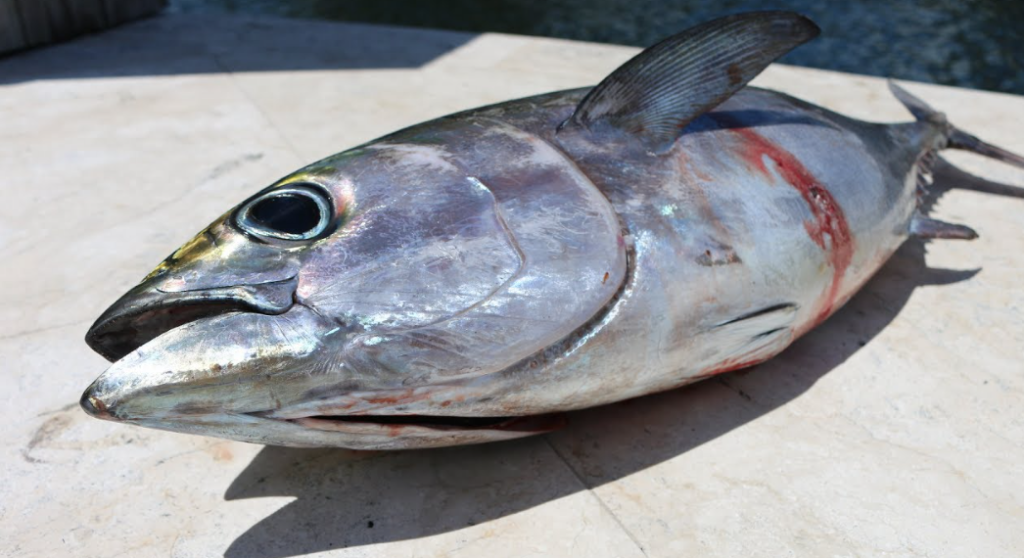
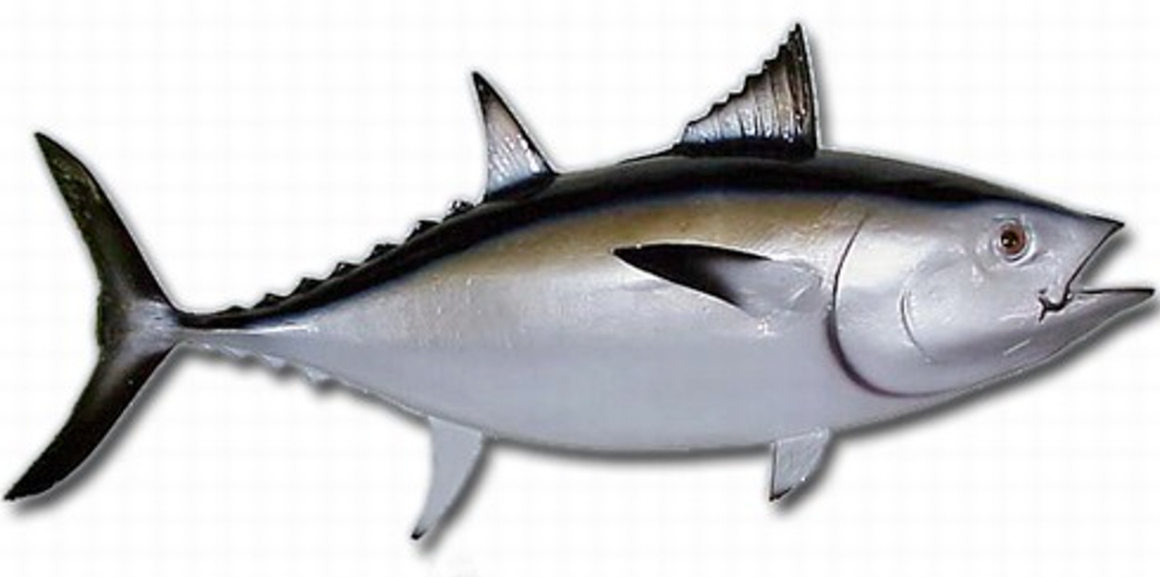
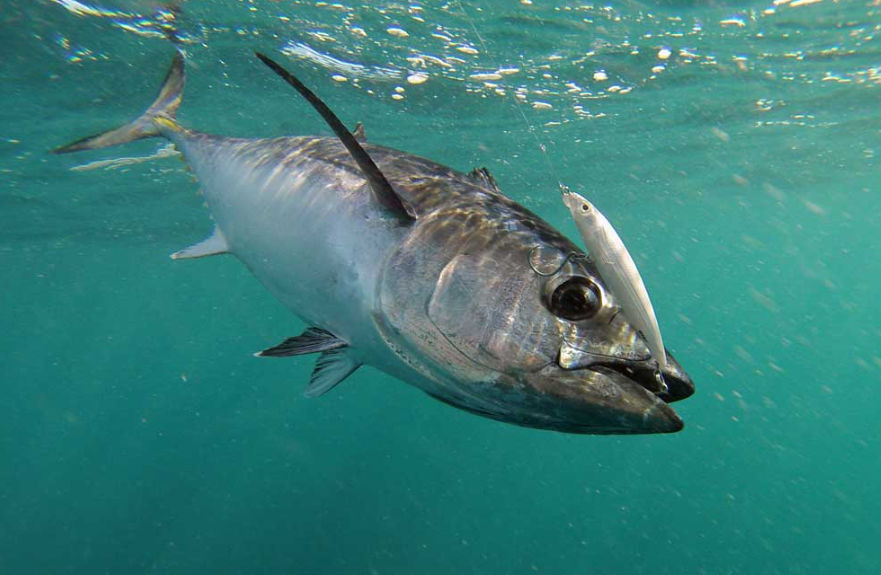
Blackfin tuna have two distinct features: dark dorsal fins and yellow finlets. That’s where the name “blackfin” originated. These fish often have a metallic blue-black colour that fades to silver on the belly and sides. Furthermore, the intensity of the horizontal stripes that run down each of them varies.
Migration patterns of Blackfin tuna fish
Blackfin tuna are very migratory, inhabiting both nearshore and offshore locations. They often swim alongside other species of tuna, such as skipjacks and yellowfin, and have been seen to form schools. These fish are opportunistic hunters who eat a variety of foods, including tiny fish, squid, and crabs. They are known to be nimble and fast, which makes them formidable submerged hunters.
Importance of blackfin tuna in the fishing industry
All things considered, Atlantic Ocean blackfin tuna are incredible creatures. Their migratory habits, slender build, and unique colours make them a separate species within the tuna family. Understanding these blackfin tuna facts might help explain the species’ biological importance and role in maritime environments.
Fascinating facts about blackfin tuna fish
Thunnus atlanticus is the scientific name for the blackfin tuna fish, which lives in the western Atlantic Ocean. Their amazing fighting prowess and delectable flavour make them much sought after by commercial and recreational anglers alike. We’ll look at some fascinating information about blackfin tuna fish below:
Coloration and distinguishing features of blackfin tuna fish
The top body of blackfin tuna fish is dark blue to black, while the bottom body is silver-white in colour. The fish has a streamlined body structure. They have a highly forked tail and recognisable yellow finlets. On average, they can reach a maximum length of three feet and weigh twenty to thirty pounds.
Distribution and Habitat of blackfin tuna fish
The western Atlantic Ocean, which stretches from the Gulf of Mexico to North Carolina, is home to blackfin tuna species. With a preference for temperatures between 68 and 86 degrees Fahrenheit, they are usually found in warm waters. Reefs, wrecks, and oil platforms are among the nearshore and offshore locations where they are known to reside.
Feeding Patterns of blackfin tuna fish
Blackfin tuna fish have a varied diet and are opportunistic eaters. Their main food source is tiny fish, including mackerel, sardines, and anchovies. They have also been reported to eat prawns, squid, and other crustaceans. Because they are apex predators, they hunt their prey using their quickness and dexterity.
Lifespan and Course of Blackfin tuna fish
Blackfin tuna often live about five to seven years, which is a very short life span. They are sexually mature, between the ages of two and three. Female blackfin tuna discharge their eggs into the open ocean from April to September, when they spawn. Within a few days, the eggs hatch into larvae that develop quickly by eating plankton until they reach a greater size.
Techniques for fishing blackfin tuna fish
Anglers greatly value blackfin tuna fish for its flavour and formidable fighting prowess. Trolling tactics, in which bait or lures are hauled behind a moving boat, are often used to target them. Blackfin tuna are often drawn to artificial lures like skirted trolling lures or feathered jigs. You may also get these fish to bite by using live bait, such as squid or little fish.
Sustainability and Conservation of Blackfin tuna fish
At this point, the population of blackfin tuna fish is thought to be steady and not in danger of becoming extinct. To preserve the sustainability of this species, fishermen must nonetheless engage in ethical fishing methods. This entails utilising non-destructive fishing gear, releasing fish that are undersized, and abiding by size and bag regulations.
popularity and versatility of blackfin tuna fish in the culinary world
The fish known as blackfin tuna is highly valued for its culinary properties. Their solid, delicious flesh is sometimes likened to that of yellowfin tuna. The flesh may be cooked in a variety of ways, including searing, grilling, or even being eaten raw as sashimi. It is often used in foods like ceviche, sushi, and tuna steaks.
Exploration and appreciation of fascinating Blackfin tuna fish
Blackfin tuna fish are interesting animals with both culinary and recreational appeal. Their eye-catching looks, formidable fighting prowess, and mouthwatering flavour keep them appealing to both fishermen and seafood aficionados. By understanding their habitat, dietary preferences, and life cycle, we can value and preserve these amazing fish for future generations to enjoy.
FAQ (Frequently Asked Questions) about Blackfin Tuna Fish
Q: What is a Blackfin Tuna?
Ans: The Blackfin Tuna (Thunnus atlanticus) is the smallest species of tuna in the Thunnus genus. It is a fast-swimming, warm-water fish known for its sleek body, dark back, and characteristic black fins. Popular among sport fishers and commercial seafood markets, the Blackfin Tuna is found primarily in the western Atlantic Ocean.
Q: Where does the Blackfin Tuna live?
Ans: Blackfin Tuna are found in the western Atlantic Ocean, from Massachusetts down to Brazil, including the Gulf of Mexico and the Caribbean Sea. They prefer warm, tropical, and subtropical waters and are often seen near the surface or in offshore schools.
Q: What does the Blackfin Tuna eat?
Ans: Blackfin Tuna are carnivorous predators that feed on smaller fish, squid, and crustaceans. Their diet includes anchovies, sardines, and shrimp. They are fast and agile hunters, often feeding near the surface in schools and using their speed to catch prey.
Q: Is the Blackfin Tuna edible?
Ans: Yes, the Blackfin Tuna is considered excellent for eating. Its meat is dark and flavorful, often used in sushi, sashimi, and grilled or seared dishes. It is a favorite among sport and commercial fishers for its taste and texture.
Q: How big does the Blackfin Tuna get?
Ans: Blackfin Tuna are the smallest of the tuna species in their genus. They typically grow up to 39 inches (100 cm) in length and weigh between 20 to 45 pounds (9 to 20 kg). However, most caught specimens are usually under 30 pounds.
Q: How fast can a Blackfin Tuna swim?
Ans: Like other tuna species, Blackfin Tuna are powerful swimmers. While specific speeds vary, they can swim at bursts of high speed, allowing them to evade predators and catch prey efficiently. Their streamlined body is designed for swift movement through open waters.
Q: Are Blackfin Tuna endangered?
Ans: Currently, Blackfin Tuna are not considered endangered. However, they are subject to regional fishing regulations to prevent overfishing. Sustainable fishing practices are encouraged to preserve their populations and marine ecosystems.
Q: How are Blackfin Tuna caught?
Ans: Blackfin Tuna are caught using a variety of fishing techniques, including trolling, casting, and using live bait. They are a popular target for recreational anglers due to their strength and the challenge they present when hooked. Commercial fisheries may use longlines and purse seines in offshore waters.
Q: What are the distinguishing features of Blackfin Tuna?
Ans: Blackfin Tuna are easily recognized by their dark metallic blue-black back, silvery sides, and a distinctive black finlets and tail. They also have a relatively small size compared to other tuna species and a torpedo-shaped body ideal for fast swimming.
#BlackfinTuna #TunaFishing #SaltwaterFish #MarineLife #SportFishing #SeafoodLovers #TunaFacts #OceanWildlife #ThunnusAtlanticus #SustainableFishing #FishSpecies
Our sources and references about Blackfin Tuna Fish
1: Wikipedia – Blackfin Tuna
2: Florida Museum – Thunnus atlanticus
3: NOAA Fisheries – Blackfin Tuna
4: Sport Fishing Magazine – Blackfin Tuna Facts