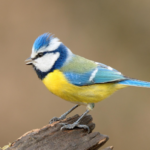
Quick Top 10 Facts about Blue Tanager Bird
| SCIENTIFIC NAME | Thraupis episcopus |
| CLASSIFICATION | KINGDOM: Animalia PHYLUM: Chordata CLASS: Aves ORDER: Passeriformes FAMILY: Thraupidae GENUS: Thraupis |
| SIZE | About 8-9 inches (20-23 cm) in length |
| HABITAT | Tropical and subtropical forests, especially in Central and South America |
| DIET | Omnivorous, feeding on fruits, seeds, insects, and small arthropods |
| SPECIES | One species: the Blue Tanager (Thraupis episcopus) |
| COUNTRY | Found throughout Central America, and in parts of South America, particularly in countries like Honduras, Costa Rica, Panama, Colombia, and Venezuela |
| GESTATION PERIOD | Eggs are incubated for 12-14 days before hatching, with a typical clutch size of 2-4 eggs |
| LIFE SPAN | About 10-15 years in the wild |
| CONSERVATION STATUS | Least Concern according to the IUCN, as the species is widespread and not currently facing significant threats |
Amazing Facts About Blue Tanager Bird
1. Known for their vibrant blue color
The Blue Tanager is easily recognized by its striking blue plumage, with some individuals displaying a slightly greenish hue on their wings and tail.
2. Excellent fruit eaters
They are particularly fond of fruit, but also supplement their diet with insects and small arthropods.
3. They thrive in tropical forests
Blue Tanagers prefer the humid and dense environment of tropical forests, where they can easily find food and shelter.
4. They are often seen in pairs
Blue Tanagers are social birds and often travel and forage in pairs or small groups.
5. They build nests in trees
Blue Tanagers construct their nests in tree branches, where they lay their eggs and protect them from predators.
6. They are relatively quiet birds
Unlike some other colorful birds, Blue Tanagers are not known for being particularly vocal, although they do communicate with soft calls.
7. Their blue feathers come from pigments and structural coloration
The vibrant blue coloration of the Blue Tanager is a result of structural coloration, in which light is reflected by microscopic structures on the feathers.
8. They have a wide range
Blue Tanagers are found across a variety of countries in Central and South America, adapting well to different types of tropical environments.
9. Their diet varies with the season
While they mostly eat fruits, Blue Tanagers are opportunistic and may shift their diet based on seasonal food availability, including insects during certain times of the year.
10. They contribute to seed dispersal
By feeding on fruits, Blue Tanagers help with seed dispersal, which is essential for maintaining healthy forest ecosystems.
Habitat and distribution of Blue Tanager Bird
The magnificent Blue Tanager is a bird species that is well recognised for its breathtaking blue feathers. Native to tropical parts of Central and South America, this little passerine bird may be found in a variety of forest settings, such as cloud forests and rainforests. Because of its remarkable blue feathers that make it stand out from its surroundings, the Blue Tanager is a beloved birdwatcher and environmentalist.
Diet and Nutrition of Blue Tanager Bird
For the bulk of the year, blue tangerines are found in the forest canopy, where they interact with other members of their species and search for food. Their varied diet consists of fruits, insects, and nectar, which they collect by leaping from branch to branch or lingering over flowers. The stunning acrobatic flying patterns of these birds are widely recognised since they allow them to negotiate over the thick vegetation of the jungle.
Reproduction and Nesting of Blue Tanager Bird
Male blue tangerines show off their vivid blue plumage to entice ladies during the mating season. They perform beautiful songs and elaborate aerial displays as part of their courting rituals. The female deposits her eggs in a cup-shaped nest she builds in the trees after their mating flight. Incubating the eggs and tending to the hatchlings until they fledge are shared by both parents in shifts.
Sweet vocalisation and songs of Blue Tanager Bird
The Blue Tanager is a striking bird with stunning blue plumage and a beautiful song. It makes these ecosystems in the tropical rainforests of the Americas more wealthy. By being knowledgeable about and respecting the facts about this species, we can assist conservation efforts to conserve the Blue Tanager and its habitat.
The state of preservation and its significance
The existence of the blue tanager is essential to the biological equilibrium of its environment. Being frugivores, they aid in the spread of seeds from a wide variety of plant species, promoting the regeneration of forests. The blue tanager, like many other bird species, is endangered due to habitat loss brought on by deforestation and the illicit pet trade. For them to survive and sustain a population, conservation initiatives are essential.
Ecological benefits of Blue Tanager Bird
Scientists and researchers are still working to understand the blue tanger’s ecology, way of life, and conservation requirements. We can protect the world’s biodiversity and gain a deeper understanding of the complex interactions that birds have with their surroundings by researching these species. The Blue Tanager serves as a symbol for the value and splendour of our natural surroundings, as well as the need to preserve them for future generations.
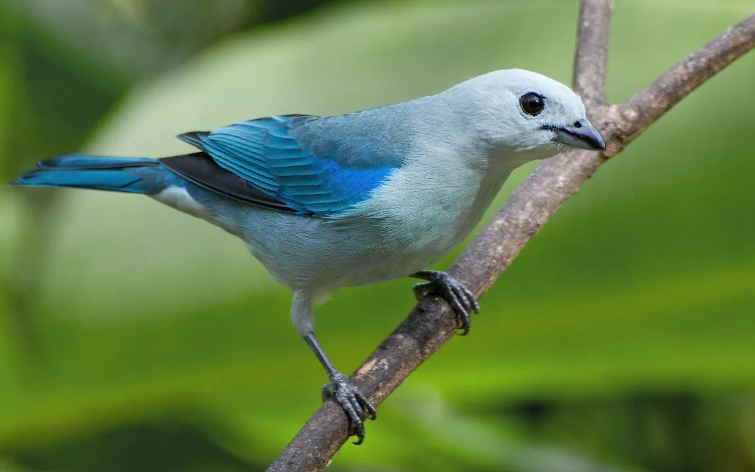
Interesting Facts about Blue Tanager Bird
The blue tanager is a little, stunning bird native to the tropical regions of the Americas. Its brilliant blue plumage and lovely voice make it a popular birdwatcher and wildlife enthusiast.
Physical Appearance of the Blue Tanager Bird
Measuring between 6 and 7 inches in length, the Blue Tanager is a medium-sized bird. The magnificent blue plumage covering the whole body, including the head, back, and wings, makes the male Blue Tanager easy to identify. The female, on the other hand, has more subdued colours and a green-blue hybrid of feathers. Both sexes have a black beak, and the legs are dark grey.
Distribution and Habitat of the Blue Tanager Bird
The blue tanager is found in the tropical forests of Central and South America. It enjoys living in the canopy of the forest, where it can easily gather nectar, fruits, and insects. This bird may be seen in countries such as Ecuador, Peru, Brazil, and Colombia.
Food and feeding habits of the Blue Tanager Bird
The Blue Tanager is mostly a frugivorous bird, meaning it eats fruit. With the use of a beak that was made just for it, it can select and eat a wide range of fruits, such as figs, palm fruits, and berries. In addition to eating fruits, it also sometimes eats spiders, insects, and flower nectar.
Behaviour and reproduction Blue Tanager Bird
Blue tanagers are sociable birds that are often seen in small groups. They communicate with one another via soft cries and chirps. During the breeding season, a male Blue Tanager will put on a sophisticated courtship show in an effort to win over a spouse. As part of its act, it opens its wings, fluffs up its feathers, and sings a lovely tune.
Conservation Status: Blue Tanager Bird
The blue tanager is classified as a species of least concern by the International Union for Conservation of Nature (IUCN). As with many other bird species, threats to the species include habitat degradation due to deforestation and illegal bird shooting for the pet trade. Its natural habitat is being preserved, and initiatives are underway to raise public understanding of the significance of conservation.
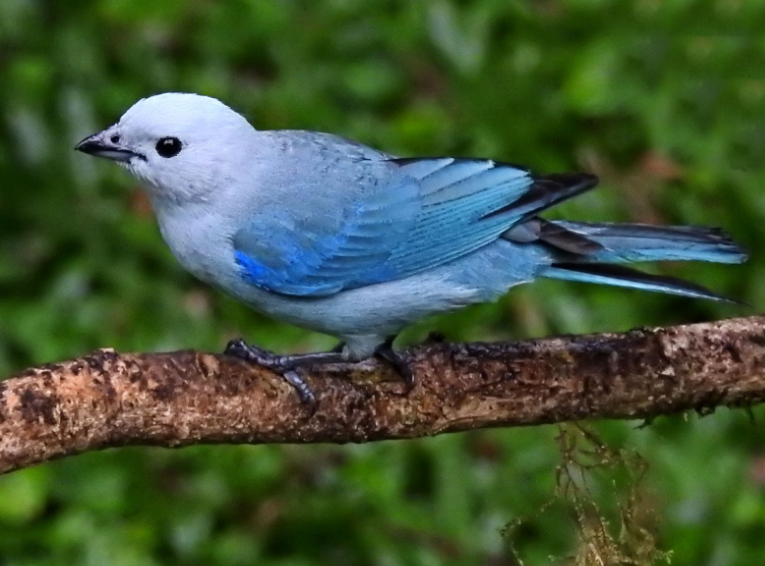
Interesting facts about the Blue Tanager Bird
The blue tanager is well known for being able to mimic the songs of other birds. Blue tangerines play an important role in the dispersal of seeds because they consume fruits and then excrete the seeds in other locations. They fiercely defend their food and breeding areas from other birds. The male blue tanager’s bright blue hue is attributed to the structure of its feathers, which both scatter and reflect light. Blue tangerines form lasting pair bonds with their spouses because they are monogamous.
FAQ (Frequently Asked Questions) about Blue Tanager Bird
Q: What is a Blue Tanager?
Ans: The Blue Tanager, also known as the Blue-and-yellow Tanager (Chlorothraupis carmioli), is a brightly colored bird found in the tropical forests of Central and South America. It is known for its striking blue and yellow plumage, which makes it a standout species among tanagers.
Q: Where does the Blue Tanager live?
Ans: The Blue Tanager inhabits the forests of Central America, particularly in regions like Costa Rica and Panama. It prefers to live in tropical and subtropical forests, where it can forage for food in the canopy or lower tree branches.
Q: What does the Blue Tanager eat?
Ans: The Blue Tanager primarily feeds on a diet of fruits, berries, and insects. It is particularly attracted to the fruiting trees in its forest habitat, where it can find a variety of berries, as well as nectar and other small invertebrates. Its diet plays an important role in seed dispersal for several plant species.
Q: How big is the Blue Tanager?
Ans: The Blue Tanager is a medium-sized bird, measuring approximately 7 to 8 inches (18 to 20 cm) in length. It has a compact body, short tail, and a striking coloration of blue and yellow feathers, which are especially vibrant during the breeding season.
Q: How do Blue Tanagers communicate?
Ans: Blue Tanagers communicate with various calls and songs, often heard as high-pitched whistles and chattering. They use vocalizations to signal their presence, attract mates, or warn of potential threats. Males, in particular, are known to sing more during the mating season.
Q: Are Blue Tanagers endangered?
Ans: While the Blue Tanager is not currently listed as endangered, it faces threats from habitat loss due to deforestation in Central America. As forests are cleared for agriculture and urbanization, the bird’s natural habitat is becoming increasingly fragmented, which can impact its population.
Q: How do Blue Tanagers breed?
Ans: Blue Tanagers breed during the rainy season in their native habitats. The female typically builds a nest in a tree or shrub using twigs and other plant materials. Once the eggs are laid, both parents help care for the chicks. The male often feeds the female during the incubation period, and both parents are involved in feeding the young after they hatch.
Q: Are Blue Tanagers migratory?
Ans: Blue Tanagers are generally non-migratory and are year-round residents in their tropical forest habitats. However, their movement may be influenced by food availability or seasonal changes in their environment.
Q: Can you see Blue Tanagers in the wild?
Ans: Yes, Blue Tanagers can be seen in their natural habitats across Central America, especially in the tropical forests of Costa Rica and Panama. Birdwatching tours in these regions often offer the opportunity to observe these vibrant birds in the wild.
Q: How can I attract Blue Tanagers to my garden?
Ans: To attract Blue Tanagers to your garden, you can plant fruit-bearing trees and shrubs that provide food sources for them. They are particularly attracted to native plants that produce berries and nectar. Installing bird feeders with fruit or nectar can also help encourage them to visit.
#BlueTanager, #TanagerBird, #Birdwatching, #TropicalBirds, #CentralAmerica, #CostaRica, #Panama, #BirdLovers, #TropicalForests, #WildlifeConservation, #BirdsOfTheWorld, #NaturePhotography
Our sources and references about Blue Tanager Bird
1: Wikipedia – Blue-and-yellow Tanager
2: BirdLife International – Blue Tanager
3: All About Birds – Blue Tanager
4: Aves de Panama – Blue-and-yellow Tanager