Quick Top 10 Facts about Blue Racer Snake
| SCIENTIFIC NAME | Coluber constrictor foxii |
| CLASSIFICATION |
KINGDOM: Animalia CLASS: Reptilia ORDER: Squamata FAMILY: Colubridae PHYLUM: Chordata GENUS: Coluber |
| SIZE | Typically 35–75 inches (90–190 cm) in length |
| HABITAT | Open woodlands, grasslands, fields, and edges of wetlands |
| DIET | Carnivorous – feeds on insects, rodents, frogs, small birds, and other reptiles |
| SPECIES | Blue Racer – a subspecies of the Eastern Racer |
| COUNTRY | Primarily found in the United States and parts of southern Canada |
| GESTATION PERIOD | Eggs hatch in 6–9 weeks after being laid in early summer |
| LIFE SPAN | Typically 5–10 years in the wild |
| CONSERVATION STATUS | Least Concern, but populations are declining in some areas due to habitat loss |
Amazing Facts About Blue Racer Snake
1. They are incredibly fast
Blue Racers can move at speeds up to 4 miles per hour, making them one of the fastest snakes in North America.
2. Not venomous but may bite if threatened
While non-venomous, they may bite and release a foul-smelling musk when handled.
3. Known for their bluish scales
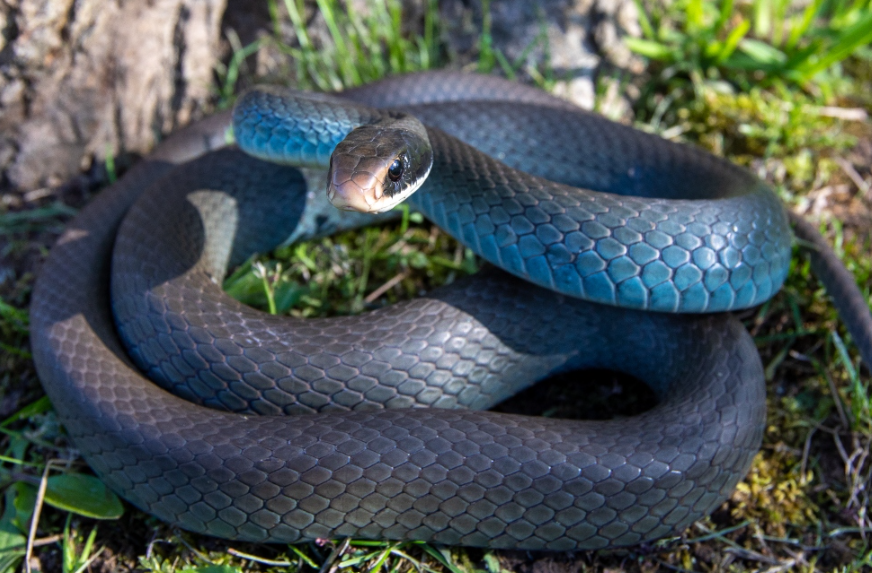
They have a beautiful blue-gray coloration with a lighter underbelly, which gives them their name.
4. Excellent eyesight
Blue Racers rely heavily on vision to locate prey, which is unusual for snakes.
5. Active during the day
They are diurnal and most active during warm daylight hours.
6. Solitary creatures
Outside of breeding season, Blue Racers are solitary and territorial.
7. Lay eggs in warm, hidden spots
Females typically lay eggs in rotting logs, under rocks, or in compost heaps.
8. Important for pest control
By feeding on rodents and insects, they help maintain ecological balance in their habitat.
9. Can climb trees
Though primarily ground-dwelling, Blue Racers are capable climbers and may escape predators by climbing low vegetation.
10. Protected in some areas
In parts of their range, especially in Ontario, Canada, they are considered a species of special concern and are protected by law.
Blue Racer’s taxonomic classification and information about subspecies and variations
Often referred to as the “Blue Racer,” Coluber constrictor foxii is a non-venomous species of snake belonging to the Colubridae family. The majority of its distribution is in eastern and central North America, which includes parts of Mexico, the US, and Canada. This snake’s remarkable blue coloration gives it its name. With its vivid blue hue, amazing speed, and significant ecological importance, the Blue Racer Snake is an intriguing animal. We can preserve and safeguard the habitats of Blue Racer snakes for future generations by being aware of and respecting these facts about the species.
Average size, coloration, patterns and unique features or adaptations
The Blue Racer is a slender snake that may grow up to 4 feet in length. Its body is long and slim with smooth scales, and its head is pointy. Its blue coloration is most prominent on its back and sides, although its belly is often a softer shade of grey or blue. Because of its unique coloration, the snake is more difficult for predators to see since it blends in with its surroundings.
Remarkable behaviours, abilities, or adaptations of blue racer snake
Blue racers are very agile, energetic snakes that are well-known for their incredible speed and agility. Being adept climbers and swimmers, they can navigate across a range of habitats, including grasslands, forests, and marshes. These snakes are diurnal; therefore, daytime hours are when they are most active. They mostly hunt small animals, birds, and other reptiles using their quick reflexes and agility. Despite their name, Blue Racers are not aggressive towards humans, and if they encountered one, they would usually try to escape. However, if they sense danger, they may hiss, vibrate their tails, or launch a self-defence strike.
Intriguing or lesser-known facts about the blue racer snake
The scientific name for the Blue Racer is Coluber constrictor foxii, and it is a species of snake that is indigenous to North America. This snake is non-venomous and a member of the Colubridae family. The Blue Racer snake is distinguished by its striking blue hue and remarkable velocity.
Physical Characteristics and appearance of the blue racer snake
The Blue Racer snake gets its name from its prevailing blue hue. Its blue colouring may, however, vary in strength, from a light blue to a deep turquoise tone. It may reach a maximum length of 4 to 6 feet and have a slim build. The Blue Racer’s sleek and silky scales add to its remarkable beauty.
Preferred habitat of the blue-racer snake
The eastern and central parts of North America are home to the Blue Racer snake. Its preferred habitats include marshes, open forests, grasslands, and prairies. Being skilled climbers, these snakes are sometimes seen sunbathing in the sun on rocks or tree branches.
Diet and activity patterns of the blue racer snake
Small animals, birds, and reptiles are the main sources of food for carnivorous snakes like blue-racers. They are renowned for their quickness and agility, which let them easily capture their prey. Constrictors, as blue racers are called, encircle their victim, suffocate it, and then devour it whole.
Speed, hunting techniques and preferred prey
One of the swiftest snakes in North America is the blue racer. With a top speed of ten miles per hour, it is a very dangerous predator. It can effectively pursue and seize its prey because of its speed and exceptional manoeuvrability.
Behaviour and activity patterns of the blue racer snake
Due to their diurnal nature, blue racers are active throughout the day. In general, they are timid and do not act aggressively towards others. They would rather run from their predators than face them when they feel threatened. The remarkable climbing and swimming abilities of Blue Racers are well known.
Reproductive behaviour of the blue racer snake
Blue-racer breeding usually takes place in the spring. Males battle it out for the attention of females during this period. Following mating, the female will deposit a clutch of eggs in a safe spot, such as a decaying log or an underground burrow. The clutch will typically include eight to thirty eggs.
Threats or challenges it faces in its environment and conservation efforts
The International Union for Conservation of Nature (IUCN) lists the blue racer snake as a species of least concern. On the other hand, their population is seriously threatened by habitat loss and fragmentation. To guarantee the continued existence of these exquisite and significant ecological snakes, it is imperative to preserve their native habitats.
Importance of understanding and conserving the blue racer snake
As both predators and prey, blue racers are essential to the environment, they maintain the equilibrium of the food chain by assisting in the management of populations of small animals and birds, and they provide bigger predators, like birds of prey and other snakes, with a food supply.
#BlueRacer, #BlueRacerSnake, #SnakeLovers, #ReptilePhotography, #WildlifePhotography, #ReptilesOfInstagram, #SnakeWatch, #NatureLovers, #NonVenomousSnake, #FastSnake, #Herping, #SnakeIdentification, #WildSnakes, #ReptileWorld, #Herpetology
FAQ (frequently asked questions) about Blue Racer Snake
Q: What is a Blue Racer Snake?
Ans: The Blue Racer is a non-venomous snake species known for its distinctive bluish-gray coloration and incredible speed. It is a subspecies of the eastern racer and is native to parts of North America.
Q: Where do Blue Racer Snakes live?
Ans: Blue Racer snakes are primarily found in the Midwestern United States, especially in open habitats like grasslands, prairies, and lightly wooded areas. They are most commonly seen in Michigan, Ohio, and nearby regions.
Q: What do Blue Racer Snakes eat?
Ans: Blue Racers are carnivorous and feed on a variety of prey, including insects, small mammals, frogs, birds, and other reptiles. They are active hunters and rely on their speed and agility to catch prey.
Q: Are Blue Racer Snakes dangerous to humans?
Ans: No, Blue Racer snakes are not dangerous to humans. They are non-venomous and generally avoid confrontation. While they may bite if cornered, their bites are not harmful beyond mild irritation.
Q: How do Blue Racer Snakes reproduce?
Ans: Blue Racers mate in the spring, and females lay eggs in the early summer. A typical clutch contains 10 to 25 eggs, which hatch after about two months. The young are independent from birth.
Q: How do Blue Racer Snakes defend themselves?
Ans: Blue Racers rely on their speed to escape danger. When threatened, they may vibrate their tails, hiss loudly, or strike defensively. They prefer to flee rather than fight when possible.
Q: How long do Blue Racer Snakes live?
Ans: In the wild, Blue Racer snakes typically live around 6 to 10 years. Their lifespan can be longer in captivity under proper care and conditions.
Q: What are the physical characteristics of Blue Racer Snakes?
Ans: Blue Racers have a slender, elongated body covered in smooth, bluish to bluish-gray scales. They often have a white or cream-colored belly and can grow up to 5 to 6 feet in length.
Q: Are Blue Racer Snakes fast?
Ans: Yes, Blue Racers are among the fastest snakes in North America. They can reach speeds of up to 4 miles per hour, making them highly efficient at escaping predators and catching prey.
Q: Are Blue Racer Snakes protected?
Ans: In some areas, Blue Racer snakes are considered a species of special concern due to habitat loss and population decline. Conservation efforts focus on preserving their natural habitats and reducing human interference.
Our sources and references about Blue Racer Snake
1: Wikipedia – Blue Racer (Coluber constrictor foxii)
2: iNaturalist – Blue Racer Snake
3: Animal Diversity Web – Eastern Racer Overview
4: Michigan DNR – Blue Racer Snake