Quick Top 10 Facts about Boa Snake
| SCIENTIFIC NAME | Boa constrictor |
| CLASSIFICATION | KINGDOM: Animalia CLASS: Reptilia ORDER: Squamata FAMILY: Boidae PHYLUM: Chordata GENUS: Boa |
| SIZE | Typically 2–4 meters (6.5–13 feet), with some individuals growing up to 5 meters (16.5 feet) |
| HABITAT | Tropical and subtropical regions, including forests, grasslands, and deserts in Central and South America |
| DIET | Carnivorous – primarily feeds on mammals, birds, and occasionally reptiles |
| SPECIES | The Boa constrictor is the most well-known species, though the genus contains several others |
| COUNTRY | Native to Central and South America, including parts of Mexico |
| GESTATION PERIOD | Females give birth to live young after 5-8 months of gestation |
| LIFE SPAN | Can live 20-30 years in captivity, and typically 15 years in the wild |
| CONSERVATION STATUS | Not endangered, but some species face threats from habitat loss and illegal trade |
Amazing Facts About Boa Snake
1. Boas are non-venomous
Boas use constriction to subdue their prey instead of venom, squeezing until the prey suffocates.
2. They are viviparous
Boa snakes give birth to live young, unlike many reptiles that lay eggs.
3. Boas are great swimmers
Boas are often found in aquatic habitats and are strong swimmers.
4. They have heat-sensitive pits
Boas have specialized pits on their faces to detect the heat of warm-blooded prey.
5. They have a powerful constriction method
When they strike, they coil around their prey and constrict, suffocating it before swallowing.
6. Boas have a slow metabolism
After a large meal, boas can go without eating for weeks due to their slow metabolic rate.
7. They can grow very large
Some boa species, like the Boa constrictor, can grow up to 5 meters (16.5 feet) in length.
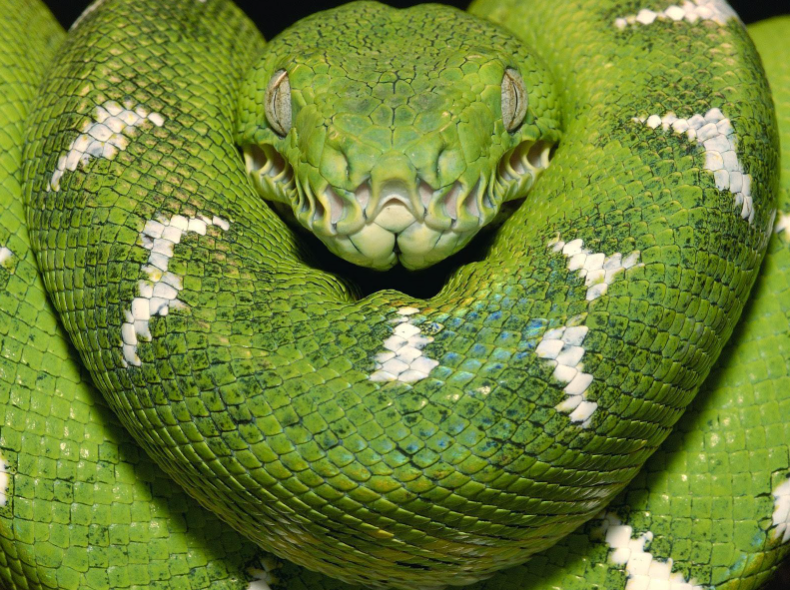
8. They have amazing camouflage
Their skin patterns help them blend into their surroundings, making them difficult to spot in the wild.
9. Boas are territorial animals
They tend to establish territories, especially when they are older and more established.
10. They are popular in the pet trade
Due to their docile nature, Boa constrictors are often kept as pets, though they require special care and a large environment.
Origin and history of the Boas Snake
Members of the Boidae family of snakes include boas. They are well known for being massive and possessing powerful, constricting abilities. Boas are found all throughout the world but are most common in North, Central, and South America, as well as on many Caribbean islands.
how Boas Snake hunt and capture their prey
One fascinating fact about boas is that they are not poisonous. Boas do not use poison to subdue their prey; instead, they rely on their massive bodies to suffocate and choke their victims. This allows them to capture and consume a wide range of prey, including mammals, birds, and other reptiles.
Reproduction and mating rituals of Boas Snake
The peculiar manner in which boas reproduce is another feature of the species. Boas, unlike other snakes, give birth to live young. This is known as viviparity. The developing embryos that female boas carry inside themselves give birth to juvenile snakes with complete wings. This adaptation allows boas to raise the chances of their progeny surviving since the young are already ready to live on their own at birth.
Fascinating facts about Boas Snake
The Boas are a vast family of non-venomous snakes in the Boidae snake family. These amazing animals may be found all over the globe and have piqued the curiosity of scientists and reptile fans alike.
Diversity and Distribution of Boas Snake
Boas are very varied animals that inhabit a variety of environments, such as deserts, grasslands, and woods. They are indigenous to many Caribbean islands as well as regions of North, Central, and South America. Boas may also be found in the Pacific Islands, Asia, and Africa.
Description of the size range of Boas Snake
Boas are renowned for their enormous stature. Certain species may grow to be rather enormous, while others can only reach lengths of around two feet, like the rubber boa. One of the biggest snakes in the world, the green anaconda, may grow to a length of more than 20 feet.
Boas have a powerful, muscular physique. They can locate prey thanks to the heat-sensing pits on their faces and their triangular heads. Boas are available in a multitude of colours and designs, from simple hues to complex patterns.
Reproductive process and gestation period
Boas are ovoviviparous, meaning they conceive live offspring. The female boa keeps the eggs within her body after mating, where they grow and hatch. The young are self-sufficient and able to survive on their own after they are born.
Hunting and Feeding Habits of Boas Snake
Carnivorous by nature, boas mostly consume small to medium-sized animals, birds, and reptiles as their food source. Being ambush predators, they stifle their victims with their muscular bodies. Boas can swallow entire prey—even bigger than their heads—thanks to a special adaptation in their jaws.
Duration of Life of Boas Snake
Boas’ lifespans vary according to the species and their surroundings. Boas may live for many decades on average. While certain species in the wild may have shorter lifespans owing to predation and other circumstances, others have been known to survive for over 30 years in captivity.
The Role of Ecosystems for Boas Snake
Boas are essential to the environments in which they live. Because they are apex predators, they aid in controlling prey species numbers, which preserves the ecosystem’s equilibrium. Boas aid in preventing disease transmission and overgrazing by managing the number of rats and other small animals.
Common myths and misconceptions about Boas Snake
Throughout history, boas have been both adored and feared in many different societies. Boas are holy and connected to fertility, healing, and protection in some indigenous societies. They have also been portrayed in folklore and ancient art, where they stand for strength and knowledge.
Status of Conservation of Boas Snake
There are currently dangers to many boa species because of habitat degradation, poaching, and the illicit pet trade. Public awareness campaigns, captive breeding initiatives, and habitat preservation are all part of the efforts being undertaken to preserve and maintain these amazing animals.
Important facts about Boas Snake
Boas are amazing snakes that have a big influence on their environments. Scientists and nature lovers alike are fascinated by them because of their variety, size, and unusual adaptations. It is crucial that we value and save these amazing animals so that future generations may enjoy them.
FAQ (frequently asked questions) about Boa Snake
Q: What is a Boa Snake?
Ans: A Boa snake is a large, non-venomous constrictor snake, primarily found in Central and South America. They are known for their powerful constriction method of killing prey.
Q: Where do Boa Snakes live?
Ans: Boa snakes are found in tropical regions of Central and South America, often inhabiting rainforests, grasslands, and sometimes semi-arid areas. Some species are also found on islands in the Caribbean.
Q: What do Boa Snakes eat?
Ans: Boa snakes are carnivorous and primarily eat small mammals, birds, and sometimes reptiles. They use constriction to subdue their prey before swallowing it whole.
Q: Are Boa Snakes dangerous to humans?
Ans: Boa snakes are not dangerous to humans. While they can bite when threatened, they are non-venomous. Their main defense mechanism is constriction, but they generally only do this when hunting prey.
Q: How do Boa Snakes reproduce?
Ans: Boa snakes reproduce by internal fertilization. Most species give birth to live young, with the mother carrying the developing young in her body until they are fully formed.
Q: How do Boa Snakes defend themselves?
Ans: Boa snakes typically rely on camouflage and stealth for protection. If threatened, they can use their strength to defend themselves by constricting or striking. Some species will also use their tail to distract or confuse predators.
Q: How long do Boa Snakes live?
Ans: Boa snakes can live for a long time, often reaching 20 to 30 years in captivity. In the wild, their lifespan is generally shorter due to predators and environmental factors.
Q: What are the physical characteristics of Boa Snakes?
Ans: Boa snakes have muscular, robust bodies, often with distinctive patterning that helps with camouflage. They can grow up to 13 feet long, with some species being smaller. They have broad heads and often a prehensile tail in some species.
Q: Are Boa Snakes good pets?
Ans: Boa snakes can make good pets for experienced reptile keepers. They require proper care, including spacious enclosures, heating, and a diet of rodents. Due to their large size, handling should be done with caution.
Q: Do Boa Snakes have any predators?
Ans: While adult boas have few natural predators, young boas are preyed upon by larger birds, mammals, and other reptiles. However, boas’ strength and ability to conceal themselves offer significant protection from most threats.
#BoasSnake, #BoaConstrictor, #SnakeLovers, #ReptilePhotography, #Boas, #SnakeLife, #ReptileLovers, #Herpetology, #WildlifePhotography, #ExoticPets, #PetSnakes, #SerpentLovers, #SnakeWatch, #ReptileWorld, #BoaLove
Our sources and references about Boas Snake
1: Wikipedia – Boa Constrictor
2: Reptiles Magazine – Boa Constrictor Care
3: Encyclopaedia Britannica – Boa
4: San Diego Zoo – Boa Constrictor