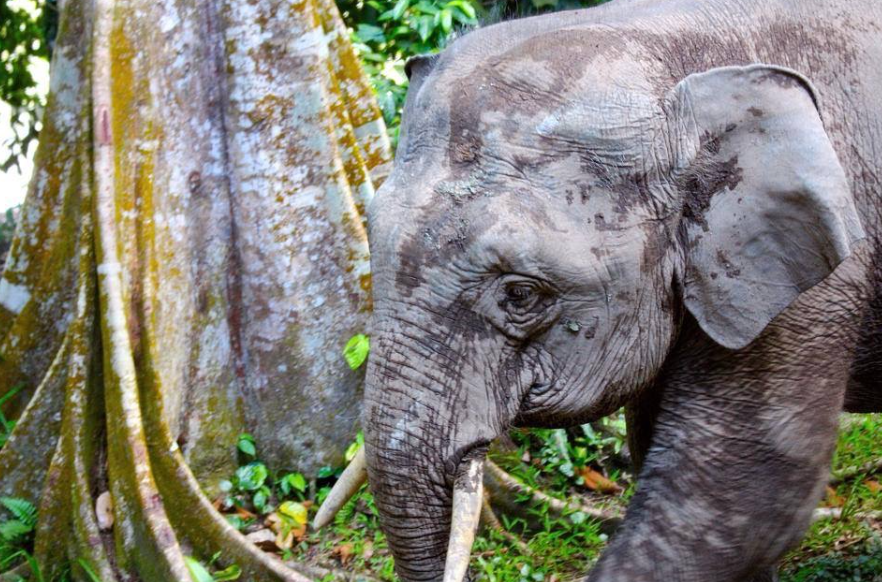
Quick Top 10 Facts about Borneo Elephant
| SCIENTIFIC NAME | Elephas maximus borneensis |
| CLASSIFICATION | KINGDOM: Animalia PHYLUM: Chordata CLASS: Mammalia ORDER: Proboscidea FAMILY: Elephantidae GENUS: Elephas SPECIES: E. maximus |
| SIZE | Height: 2.4–2.75 meters (7.8–9 feet), Weight: 500–600 kg (1,100–1,320 lbs) |
| HABITAT | Rainforests, lowland forests, and swamps of Borneo, mainly found in the Malaysian state of Sabah |
| DIET | Herbivorous, feeding on grasses, fruits, bark, and various plants found in their natural habitat |
| SPECIES | Borneo elephant is a subspecies of the Asian elephant, smaller in size than the mainland Asian elephant |
| COUNTRY | Endemic to Borneo, primarily found in the Malaysian state of Sabah |
| GESTATION PERIOD | Approximately 18–22 months (one of the longest gestation periods of any land animal) |
| LIFE SPAN | 50–70 years in the wild |
| CONSERVATION STATUS | Endangered, with a decreasing population due to habitat loss, poaching, and human-wildlife conflict |
Amazing Facts About Borneo Elephants
1. Borneo Elephants are a subspecies of the Asian elephant
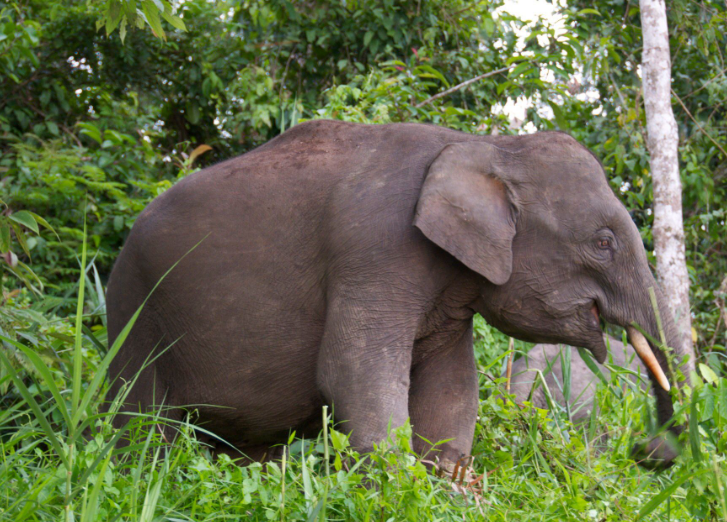
Borneo elephants are a distinct subspecies of the Asian elephant, known for their smaller size and unique physical characteristics, including larger ears and shorter, stockier builds compared to their mainland relatives.
2. They are smaller than mainland Asian elephants
Borneo elephants are generally smaller than their mainland counterparts, with adult males weighing around 500–600 kg and standing at about 2.4 to 2.75 meters tall.
3. They are herbivores
Borneo elephants feed on a variety of plant materials, including grasses, fruits, and bark, playing an essential role in maintaining the ecosystem of Borneo’s rainforests.
4. They are endangered
Borneo elephants are classified as endangered, with habitat loss and fragmentation, as well as poaching, being the primary threats to their survival.
5. Borneo Elephants have distinct features
Borneo elephants are distinguished by their smaller size, rounded ears, and a more domed forehead compared to other Asian elephants.
6. They are social animals
Like other elephants, Borneo elephants live in tight-knit family groups led by a matriarch. They are highly social animals, communicating through vocalizations and body language.
7. They play a crucial role in their ecosystem
By feeding on a wide variety of plants, Borneo elephants help shape the rainforest ecosystem, dispersing seeds and aiding in the growth of plant life.
8. They have a long gestation period
Borneo elephants have one of the longest gestation periods of any land animal, lasting between 18 and 22 months before giving birth to a calf.
9. Borneo Elephants are excellent swimmers
Despite their large size, Borneo elephants are strong swimmers and are often seen crossing rivers and streams in their natural habitat.
10. They are facing threats from human activity
The primary threats to Borneo elephants include habitat destruction due to deforestation, illegal logging, and human-elephant conflicts caused by agricultural expansion.
Introduction of the Borneo elephant and its significance in the region
The curious and unusual Borneo elephant, also known as the Bornean pygmy elephant, is found only on the island of Borneo. These elephants, the smallest subspecies of Asian elephants, are identifiable by their own traits and behavioral patterns.
Body, size and physical features of the Borneo elephant
Elephants from Borneo have a compact, stocky build, weighing between 2,000 and 5,000 kg, and their shoulder height ranges from 6 to 9 feet. Their relatively large ears help them regulate their body temperature in the hot and humid Bornean climate. Despite having smaller trunks than other elephant species, they are nonetheless highly adept at performing a wide range of tasks, including feeding, drinking, and socializing.
Adaptations they have developed to obtain food in their habitat
The lowland rainforests of Borneo are home to the majority of these elephants, who feed on a wide range of vegetation, including grasses, leaves, fruits, and bark. They are very adaptable and may even be found in plantations and agricultural areas, where they often clash with humans as a result of habitat loss and fragmentation. Elephants from Borneo are known for living sociable lives; they often live in small families led by a matriarch. To communicate, they use a range of vocalizations, tactile interactions, and body language.
Threats and conservation Status of the Borneo elephant
The survival of the Borneo elephant depends on ongoing conservation efforts. These elephants are becoming less common as a result of poaching, habitat loss, and human-elephant conflicts. Elephants’ natural habitats are being preserved, and wildlife corridors are being created in an attempt to reduce conflicts between the animals and the surrounding populations. Research and monitoring initiatives are also essential to provide data on their population size, behavior, and ecology, which may direct conservation measures.
Biodiversity and importance in ecosystem of Borneo elephant
The Borneo elephant is vital to the ecosystem’s continued health and serves as a symbol of Borneo’s rich biodiversity. They serve as seed dispersers and promote the regeneration of forests by spreading seeds via their dung. In addition to guaranteeing the survival of the Borneo elephant and its habitat, it is imperative to protect Borneo’s unique and vulnerable ecology.

Fascinating facts about Borneo Elephants
The intriguing and rare species of Borneo elephants, commonly referred to as pygmy elephants, live on the island of Borneo. Here are a few fascinating facts about these amazing animals:
Threats and risks faced by Borneo Elephants
Elephants from Borneo are considered an endangered species. Because of habitat loss and fragmentation brought on by deforestation and human activity, their number has been falling. There are only thought to be 1,500–2,000 Borneo elephants remaining in the wild.
World’s smallest animal species: Borneo Elephants
The Borneo elephant is the world’s smallest animal species. On average, they weigh between 2,000 and 5,000 kg, and their average height is 8 to 10 feet, making them around 30% smaller than their Asian and African counterparts.
Characteristics that differentiate Borneo Elephants from other elephant species
Elephants from Borneo differ from other elephant species in a number of ways. In the hot and muggy Bornean environment, their long tails and comparatively huge ears help them control body temperature. In addition, compared to other elephants, their trunks are straighter and shorter.
Dietary preferences of Borneo elephants, including their primary food
As herbivores, Borneo elephants mostly consume leaves, bark, fruits, and grasses, among other plant components. Their unique digestive mechanism enables them to get nutrients from fibrous and hardy plants.
Social behavior of Borneo elephants, including their herd structure and family dynamics
Elephants from Borneo are gregarious creatures that live in close-knit family units headed by a matriarch. These family units, referred to as herds, are made up of mature females and their young. When they achieve sexual maturity, male elephants often leave the herd and live alone or in transient bachelor groups.
How Borneo elephants aid in seed dispersal
Borneo elephants are vital to the equilibrium of the Bornean ecology. They aid in the dispersal of seeds through their excrement, promoting forest regrowth. Their eating patterns also influence plant structure and provide routes for other animals to travel.
Human-Elephant Conflict affects population of Borneo elephants
Poaching, habitat destruction, and confrontations between humans and elephants are the top challenges facing Borneo elephants. In order to preserve their habitat, create wildlife corridors, and lessen conflicts between people and elephants, conservation organizations and local government agencies are collaborating. These efforts are critical to the survival of this threatened species.
Borneo elephant contribution in ecotourism
Elephants in Borneo are becoming a well-liked ecotourism destination. Ethical ecotourism may benefit local populations financially and encourage the preservation of their natural ecosystem. In order to cause as little disruption as possible to the elephants and their natural habitat, it is crucial to make sure that these operations are conducted ethically and sustainably.
Conservation efforts for Borneo elephant to protect rare and endangered species
Borneo elephants merit our concern and conservation efforts. They are a fascinating subject of study and admiration because of their small size, unique features, and significant role in the ecosystem. We can contribute to ensuring these amazing animals survive for future generations by spreading awareness and funding conservation efforts.
FAQ (Frequently Asked Questions) about Borneo Elephant
Q: What is a Borneo Elephant?
Ans: The Borneo Elephant, also known as the Bornean pygmy elephant, is a subspecies of the Asian elephant that is native to the island of Borneo. It is smaller in size compared to other Asian elephants and is known for its distinctive features, including smaller ears, a longer tail, and a relatively gentler temperament.
Q: Where can Borneo Elephants be found?
Ans: Borneo Elephants are primarily found in the Malaysian state of Sabah, located on the island of Borneo. They inhabit the rainforests and lowland areas, particularly in the northeastern part of Borneo. Their populations are mostly confined to protected areas due to their vulnerability and habitat loss.
Q: What do Borneo Elephants eat?
Ans: Borneo Elephants are herbivores and feed on a wide variety of vegetation, including grasses, fruits, bark, and leaves. They are known to roam large distances in search of food and water, contributing to their important role in maintaining the health of their forest ecosystem by spreading seeds and helping to shape plant communities.
Q: Are Borneo Elephants endangered?
Ans: Yes, Borneo Elephants are considered endangered. Their populations have been declining due to habitat loss, fragmentation, and human-wildlife conflict, primarily caused by deforestation and agricultural expansion. Conservation efforts are being made to protect their habitat and ensure their survival, but the species remains at risk.
Q: How big do Borneo Elephants get?
Ans: Borneo Elephants are smaller compared to other Asian elephants. Adult males typically weigh between 2,000 and 3,000 kilograms (4,400 to 6,600 pounds) and can reach up to 2.5 meters (8.2 feet) in height. Females are generally smaller, with an average weight of around 1,500 kilograms (3,300 pounds).
Q: What are the physical differences of Borneo Elephants?
Ans: Borneo Elephants are smaller and have more distinct physical features compared to other Asian elephants. They have smaller ears, a shorter trunk, and a longer tail. Their tusks are also typically smaller, and their skin tends to be darker. These elephants have a more gentle nature and are less aggressive compared to other elephant populations.
Q: How do Borneo Elephants contribute to the ecosystem?
Ans: Borneo Elephants play a vital role in their ecosystem by acting as seed dispersers. As they move through the forest and feed on different types of vegetation, they help in spreading seeds and maintaining plant biodiversity. Their movement through forests also helps to open up pathways, benefiting other wildlife that depends on these habitats.
Q: Can Borneo Elephants be kept in captivity?
Ans: While it is possible to keep elephants in captivity, the Borneo Elephant’s natural habitat and behavior require large spaces to roam and social interactions with other elephants. Captivity can lead to health and behavioral issues for elephants, so it is crucial for conservation efforts to focus on protecting their wild habitats rather than promoting captivity.
Q: What are the conservation efforts to protect Borneo Elephants?
Ans: Several conservation organizations and local authorities are working to protect the Borneo Elephant population. These efforts include habitat protection, anti-poaching initiatives, and educational programs to reduce human-elephant conflicts. The establishment of wildlife corridors is also important to link fragmented habitats, allowing elephants to move freely and safely across their range.
#BorneoElephant, #BorneanPygmyElephant, #Elephants, #Conservation, #WildlifeProtection, #EndangeredSpecies, #AsianElephant, #RainforestEcosystem, #Borneo, #ElephantConservation, #Wildlife, #SaveTheElephants, #ProtectWildlife, #ForestPreservation
Our sources and references about Borneo Elephants
1: Wikipedia – Bornean Elephant
2: World Wildlife Fund – Bornean Elephant
3: IUCN Red List – Bornean Elephant
4: Sabah Wildlife Department – Borneo Elephant