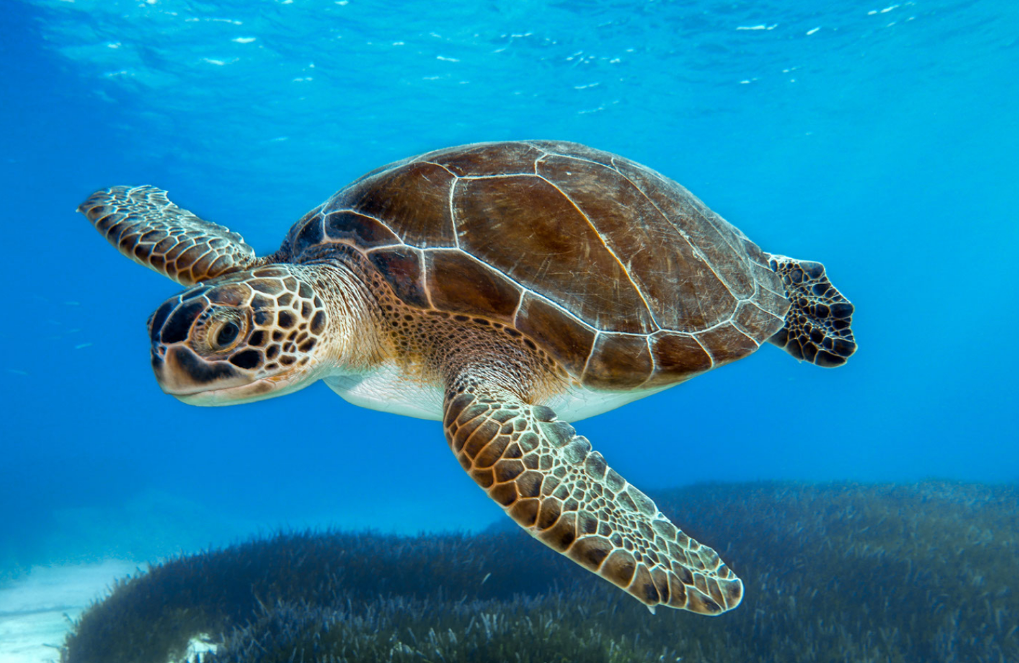
Sea turtles are ancient marine reptiles known for their remarkable long-distance migrations and ability to navigate vast oceanic expanses. There are seven species of sea turtles, each adapted to life in the sea with streamlined bodies, flipper-like limbs, and a hard shell for protection. These turtles are found in oceans around the world, with some species migrating thousands of miles between feeding and nesting grounds. Sea turtles are primarily herbivores or omnivores, feeding on seagrasses, algae, and jellyfish. They play a critical role in marine ecosystems by maintaining healthy seagrass beds and coral reefs.
Quick Top 10 Facts about Sea Turtle
| SCIENTIFIC NAME | Cheloniidae (family, for most species) |
| CLASSIFICATION | KINGDOM: Animalia PHYLUM: Chordata CLASS: Reptilia ORDER: Testudines FAMILY: Cheloniidae (for most species) |
| SIZE | Length: 60–200 cm (2–6.5 feet), depending on the species |
| SPECIES | Common species include the Green Sea Turtle (Chelonia mydas), Loggerhead Sea Turtle (Caretta caretta), and Hawksbill Sea Turtle (Eretmochelys imbricata). |
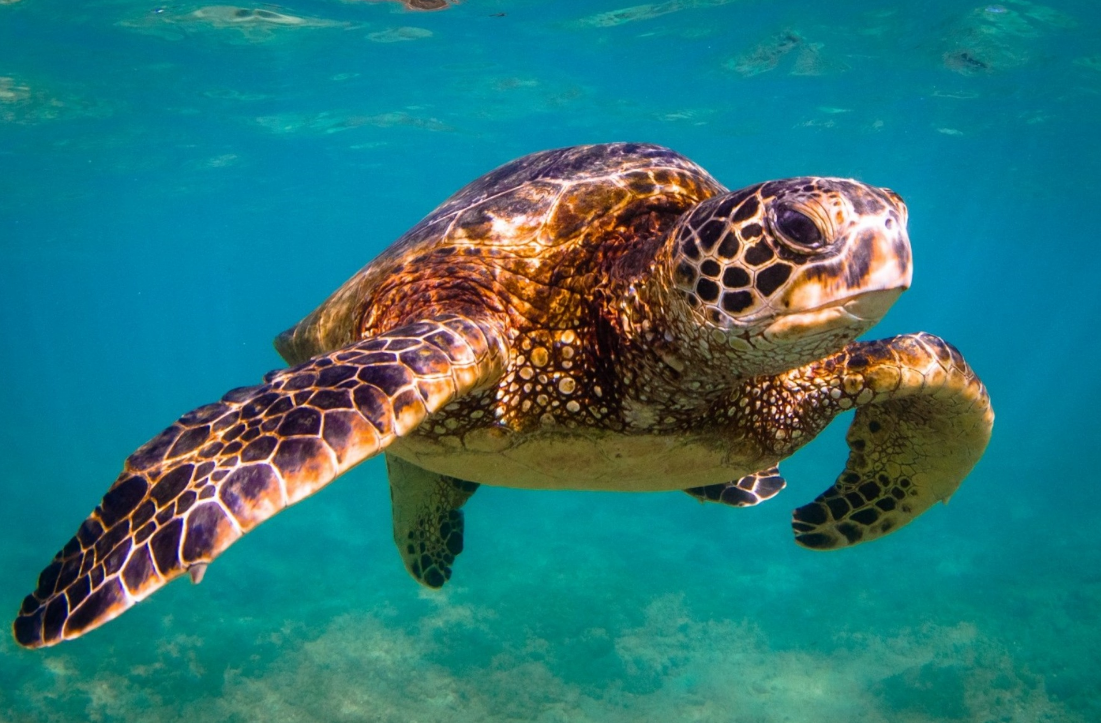
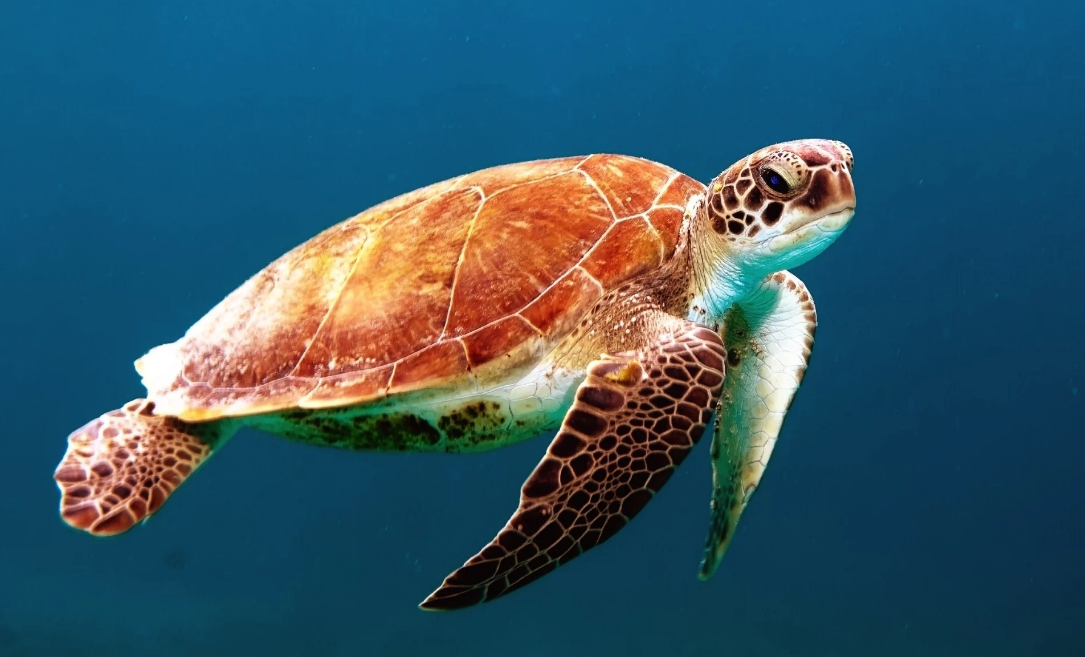
| APPEARANCE | Sea turtles have streamlined, oval-shaped bodies covered by a hard, protective shell. Their limbs are modified into flippers, making them well-adapted for swimming. |
| LIFE SPAN | Typically 50–100 years, depending on the species |
| HABITAT | Sea turtles are found in tropical and subtropical oceans worldwide. They prefer coastal areas, such as coral reefs, seagrass meadows, and sandy beaches for nesting. |
| DIET | Diet varies by species, with some turtles feeding on seagrass and algae, while others consume jellyfish, crabs, and sponges. |
| NATURAL PREDATORS | Juvenile sea turtles are preyed upon by birds, crabs, and larger fish. Adult turtles are generally free from predators, though they are sometimes hunted by humans and large sharks. |
| COUNTRY | Sea turtles are found in oceans worldwide, including the coasts of North and South America, Africa, Asia, and Australia. |
| GESTATION PERIOD | Sea turtles lay eggs, with the gestation period for eggs ranging from 50 to 70 days, depending on the species and environmental factors. |
| CONSERVATION STATUS | Many species of sea turtles are classified as endangered or critically endangered due to threats like habitat loss, illegal trade, and ocean pollution. |
Amazing Facts About Sea Turtle
1. Ancient Mariner
Sea turtles have been around for more than 100 million years, making them one of the oldest surviving reptiles. Their evolutionary adaptations have allowed them to thrive in the world’s oceans for centuries.
2. Incredible Navigators
Sea turtles are known for their incredible ability to navigate vast oceanic distances. They use the Earth’s magnetic fields, the position of the sun, and other natural cues to migrate thousands of miles between feeding and nesting areas.
3. Long-Lived Creatures
Sea turtles can live to be over 100 years old, making them some of the longest-lived marine animals. However, they take a long time to reach sexual maturity, often not reproducing until they are 20–50 years old.
4. Important for Marine Ecosystems
Sea turtles play a vital role in marine ecosystems by maintaining healthy seagrass beds and coral reefs. By feeding on seagrass, for example, they help prevent overgrowth that can smother other marine life.
5. They Return to Birthplace to Nest
Female sea turtles return to the beaches where they were born to lay their eggs. This remarkable homing instinct ensures that they reproduce on the same beaches each generation.
6. They Can Hold Their Breath for Hours
Sea turtles are capable of holding their breath for extended periods, sometimes up to 4–7 hours, depending on the species and activity.
7. They Are Vulnerable to Predators
While adult sea turtles have few predators, their eggs and hatchlings are highly vulnerable to predation by birds, crabs, and other animals, and they face many threats in the early stages of life.
8. Sea Turtles Have Specialized Feeding Habits
Different species of sea turtles have specialized diets. Some eat jellyfish, while others prefer seagrass, sponges, or crustaceans. Their feeding habits help balance marine food webs.
9. Endangered Species
Many species of sea turtles are considered endangered due to threats such as habitat destruction, pollution, and the illegal turtle trade. Conservation efforts are ongoing to protect these ancient creatures.
10. They Have Strong Homing Instincts
Once sea turtles hatch and make their way into the ocean, they imprint on the unique characteristics of their natal beach. This strong homing instinct guides them back to the same location decades later when it’s time for them to nest.
Introduction to Sea Turtles
Ancient Marine Reptiles with a Fascinating Legacy
Sea turtles are enormous marine reptiles that are members of the Dermochelyidae and Cheloniidae families. Sea turtles spend almost their whole lives in the ocean, in contrast to other turtle species that spend most of their time on land or in freshwater. They are well-known for their long-distance migrations, which include their travelling over enormous stretches of water and traversing whole ocean basins. Although certain species may be found in colder areas, sea turtles are more often found in tropical and subtropical seas.
Evolution and Adaptation to Ocean Life
A group of reptiles that have been around for more than 100 million years is represented by sea turtles. They are well-suited for life in the water because of their highly specialised physiology and hard, protective shells. Despite spending most of their time swimming, feeding, and migrating in the vast aquatic ecosystems, these cold-blooded reptiles have evolved to a life where they must surface to breathe.
Sea Turtles’ Physical Attributes
Distinctive Anatomical Features of Sea Turtles
Sea turtles are very unique creatures in both look and behaviour. Among their physical attributes are the following:
Shell: Nature’s Armor
- The strong, protective shell shields sea turtles from predators and the ocean environment.
- Shell shapes vary by species but are typically oval or heart-shaped to aid in swimming.
- The carapace (top shell) is covered in scutes—hard, keratinised scales for durability.
Flipper-Like Legs Built for Swimming
- Sea turtles have flipper-like limbs instead of ordinary legs for efficient underwater propulsion.
- Front flippers provide thrust, while rear flippers help with steering and stability.
Beak and Head Structure
- Sea turtles have relatively small heads with large, wide eyes for underwater vision.
- Species-specific beak shapes allow them to feed on a variety of prey like jellyfish and seagrass.
Size and Weight Range by Species
- The leatherback turtle is the largest, reaching up to 9 feet and 2,000 pounds.
- Other species, like the green sea turtle and loggerhead, weigh between 200 and 500 pounds.
Types of Sea Turtles
Overview of the Seven Extant Sea Turtle Species
Sea turtles come in seven different species, each with distinct traits, habitats, and ways of behaving. These seven species are:
1. Green Sea Turtle (Chelonia mydas)
- Primarily herbivorous, feeding on algae and seagrasses.
- Found in estuaries, lagoons, and coral reefs in tropical and subtropical regions.
- Known for long migrations from nesting beaches to feeding areas.
2. Loggerhead Sea Turtle (Caretta caretta)
- Distinguished by large heads and strong jaws for crushing hard-shelled prey.
- Inhabits temperate and subtropical coastal waters.
- Also performs long migratory journeys.
3. Leatherback Sea Turtle (Dermochelys coriacea)
- The largest species with a soft, leathery shell instead of a hard carapace.
- Feeds mostly on jellyfish and can dive to great depths.
- Found in tropical and temperate waters; unique ability to regulate body temperature.
4. Hawksbill Sea Turtle (Eretmochelys imbricata)
- Recognised by a narrow, hawk-like beak ideal for eating sponges from coral reefs.
- Severely endangered due to illegal poaching for its patterned shell.
5. Olive Ridley Sea Turtle (Lepidochelys olivacea)
- Smaller turtle with a heart-shaped shell.
- Exhibits mass nesting behaviour called arribada.
- Inhabits warm waters of the Atlantic, Pacific, and Indian Oceans.
6. Kemp’s Ridley Sea Turtle (Lepidochelys kempii)
- Smallest and most endangered marine turtle species.
- Mainly found in the Gulf of Mexico and eastern U.S. coasts.
- Also practices arribada nesting behaviour.
7. Flatback Sea Turtle (Natator depressus)
- Exclusive to Australia’s coastal waters.
- Features a wide, flat shell and feeds on soft corals and jellyfish.
Behaviour and Diet of Sea Turtles
Solitary Lifestyle of Sea Turtles
Except during the mating and nesting seasons, sea turtles are solitary animals who seldom contact with others. Among their actions are:
Feeding Habits Across Species
- Diet depends on species—herbivores eat algae and seagrass; omnivores eat crabs, molluscs, and invertebrates.
- Leatherbacks are jellyfish specialists, adapted to consume stinging prey.
Migratory Patterns and Navigation
- Travel vast distances between feeding and nesting sites, guided by Earth’s magnetic field and ocean currents.
- Females often return to their natal beaches for egg-laying, a ritual known as natal homing.
Nesting and Reproduction of Sea Turtles
Age of Maturity and Reproductive Behaviour
Depending on the species, sea turtles achieve sexual maturity between the ages of 20 and 50. Sea turtles go through numerous crucial phases in their reproductive process:
Mating in Coastal Waters
- Mating typically occurs offshore; females may mate with multiple males during the season.
Nesting on Sandy Beaches
- Females return to land to nest, often at beaches where they themselves hatched.
- Use flippers to dig nests, lay 50–200 eggs, cover them with sand, and return to the sea.
Incubation and Hatchling Journey
- Eggs incubate for 60–75 days depending on environmental conditions.
- Temperature influences sex—warmer nests produce more females, cooler ones more males.
- Hatchlings emerge and instinctively head for the ocean to begin their life journey.
Threats to Sea Turtles and Conservation Status
Understanding the Dangers Sea Turtles Face
Numerous species of sea turtles are presently classified as endangered or critically endangered, and they unfortunately face various dangers to their existence. Among the main threats are:
1. Habitat Destruction
- Beachfront development, resort construction, and human traffic can destroy nesting habitats.
- Artificial lighting may disorient hatchlings away from the ocean.
2. Ocean Pollution
- Plastic pollution is deadly—turtles often mistake plastic bags for jellyfish.
- Ingested plastic can cause internal blockages or death.
3. Illegal Harvesting and Trade
- Poaching for meat, eggs, and especially the decorative shells of hawksbill turtles continues illegally.
4. Climate Change Impacts
- Alters ocean temperatures and affects food sources and sex ratios of hatchlings.
- Warmer temperatures may lead to an imbalance in male-to-female hatchling ratios.
Conservation Efforts Worldwide
- Protected nesting beaches, hatchling release programs, and international treaties are in place.
- Conservation groups monitor nests and reduce illegal trade and bycatch risks in fisheries.
FAQ (Frequently Asked Questions) about Sea Turtle
Q: What is a sea turtle?
Ans: A sea turtle is a large marine reptile known for its hard shell, flipper-like limbs, and long-distance migrations across oceans.
Q: How long do sea turtles live?
Ans: Sea turtles can live between 50 and 100 years, depending on the species and environmental conditions.
Q: Where do sea turtles live?
Ans: Sea turtles inhabit tropical and subtropical oceans worldwide. They prefer coastal areas like coral reefs, sandy beaches, and seagrass meadows.
Q: What do sea turtles eat?
Ans: Sea turtles have varied diets depending on the species. They may feed on seagrass, algae, jellyfish, crabs, and sponges.
Q: Are sea turtles endangered?
Ans: Yes, many sea turtle species are endangered or critically endangered due to threats like habitat loss, pollution, and hunting.
Q: How do sea turtles navigate across the ocean?
Ans: Sea turtles use the Earth’s magnetic fields, the position of the sun, and other natural cues to navigate long distances between feeding and nesting sites.
Q: How do sea turtles reproduce?
Ans: Female sea turtles lay eggs in nests on sandy beaches, which hatch after 50–70 days. The hatchlings make their way to the ocean, where they begin their life journey.
Q: Can sea turtles breathe underwater?
Ans: Sea turtles cannot breathe underwater but can hold their breath for long periods, sometimes for several hours while resting or diving.
Q: Why are sea turtles important to marine ecosystems?
Ans: Sea turtles help maintain the health of seagrass beds, coral reefs, and other marine environments by feeding on algae and invertebrates, helping to balance the ecosystem.
Q: Can sea turtles be kept as pets?
Ans: Sea turtles are protected by law in many countries, and they are not suitable to be kept as pets. Conservation efforts focus on their protection in the wild.
#SeaTurtle #MarineReptiles #EndangeredSpecies #OceanConservation #TurtleMigration #Wildlife #MarineEcosystem #SeaTurtleFacts
Our sources and references about Sea Turtle
1: Wikipedia – Sea Turtle
2: National Geographic – Sea Turtle
3: Britannica – Sea Turtle
4: Sea Turtle Conservancy