Quick Top 10 Facts about Bush Viper Snake
| SCIENTIFIC NAME | Atheris squamigera |
| CLASSIFICATION |
KINGDOM: Animalia PHYLUM: Chordata CLASS: Reptilia ORDER: Squamata FAMILY: Viperidae GENUS: Atheris |
| SIZE | Up to 60 cm (24 inches) long |
| HABITAT | Rainforests, woodlands, and savannas in central and western Africa |
| DIET | Primarily small mammals, lizards, and birds |
| SPECIES | One species: Atheris squamigera (Bush Viper) |
| COUNTRY | Found in central and western Africa, including countries like Cameroon, Congo, and Uganda |
| GESTATION PERIOD | Viviparous, giving birth to live young, with a gestation period of about 6 months |
| LIFE SPAN | Up to 15 years in the wild, though most live shorter due to predation and environmental factors |
| CONSERVATION STATUS | Least Concern – The species is not currently at risk, but habitat destruction and poaching remain threats |
Amazing Facts About Bush Viper Snake
1. Venomous but non-aggressive
The Bush Viper has potent venom, but it is not aggressive and typically strikes only when threatened.
2. Master of camouflage
Its vibrant green or yellow body and distinctive pattern allow it to blend seamlessly into the foliage and trees of its rainforest home.
3. Nocturnal hunter
Bush Vipers are primarily nocturnal, hunting at night for small mammals, birds, and lizards.
4. Excellent climbers
They are arboreal snakes, meaning they spend most of their time in the trees, where they ambush prey.
5. Specialized heat sensors
Bush Vipers have heat-sensitive pits that allow them to detect warm-blooded prey even in low light conditions.
6. Small but deadly
Despite their relatively small size, Bush Vipers pack a powerful venom that can incapacitate their prey quickly.
7. Slow-moving predators
Unlike many other snakes, Bush Vipers are slow and methodical in their movements, relying on ambush rather than speed.
8. Live birth
Unlike many other snakes that lay eggs, Bush Vipers give birth to live young, usually after a gestation period of about 6 months.
9. Territorial creatures
They tend to defend their territories aggressively from other snakes, especially during mating season.
10. Rarely seen by humans
Due to their camouflage and nocturnal nature, Bush Vipers are difficult to spot in the wild, even though they are relatively common in their habitat.
Brief description of the Bush Viper Snake
The tropical rainforests of Central and West Africa are home to the unusual species of snake known as the bush viper. It is well known for its peculiar appearance and striking colouring, which varies depending on the area it is in. These toxic snakes may reach adulthood as small to medium-sized snakes with an average length of 60 to 80 cm.
Physical Characteristics of Bush Viper Snake
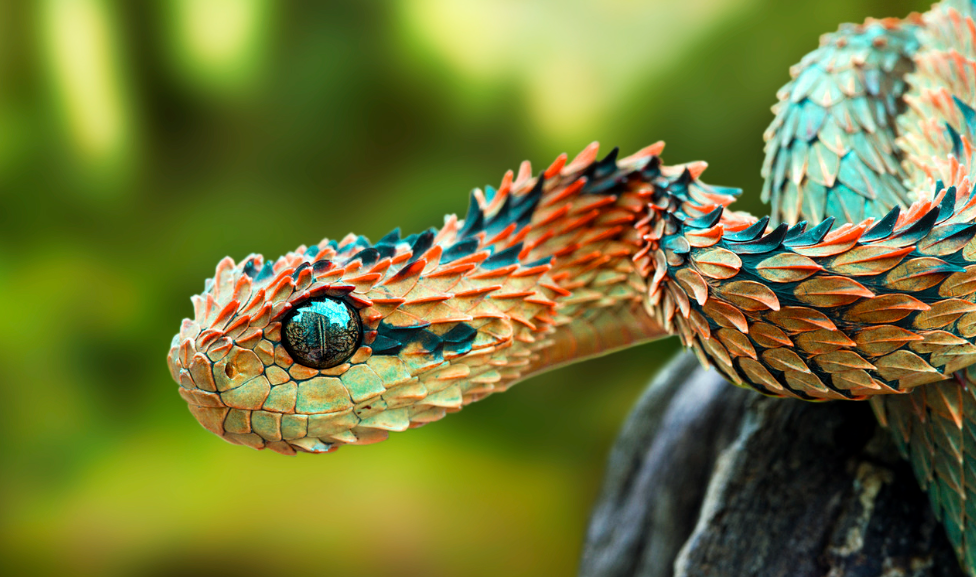
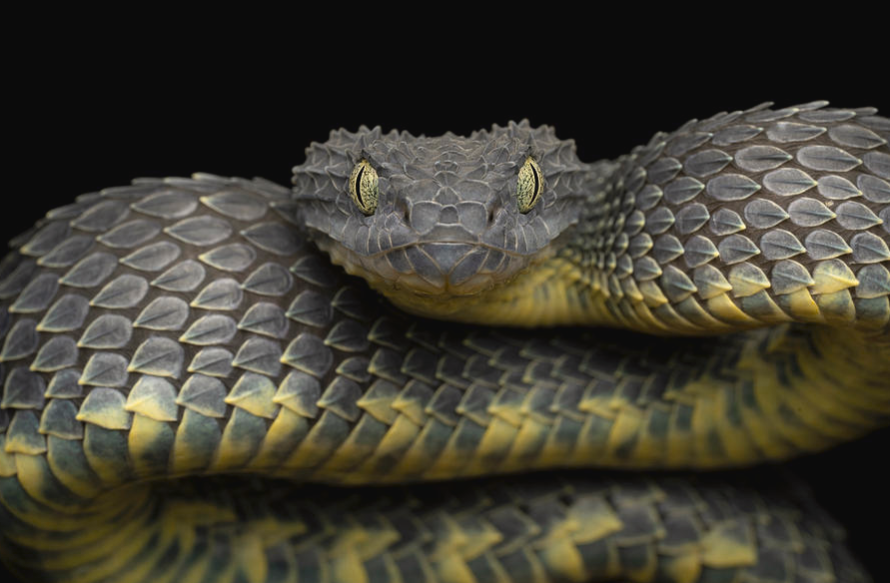
One of the most distinctive features of the Bush Viper is its triangular-shaped head, which is adorned with two horn-like scales above its eyes. These scales, called supraocular horns, give the snake its menacing aspect. Their enticing charm is further enhanced by the vertical pupils in their eyes.
Unique coloration and patterns found on Bush Viper Snake
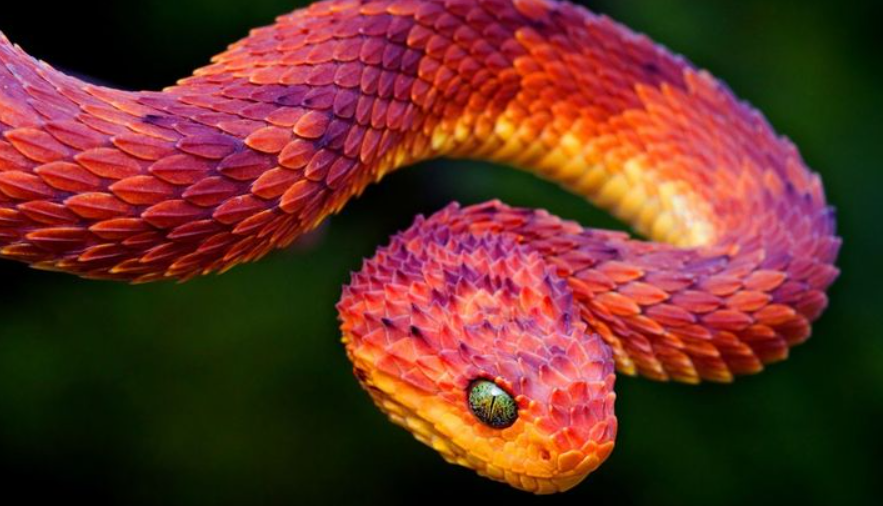
The colours of the Bush Viper range widely, from rich reds and purples to vibrant yellows and greens. Their remarkable colour variation makes them excellent ambush predators since they can easily blend into their surroundings. They also remain hidden from potential predators because of the rough texture of their scales, which helps them blend in with their environment.
Venomous capabilities of Bush Viper Snake
Bush vipers are deadly, yet they seldom attack humans; they only do so when they feel confined or in danger. Their potent venom is mostly used to immobilise their prey, which is primarily small animals, birds, and reptiles. These snakes have heat-sensitive pits on their cheeks, allowing them to identify warm-blooded prey in the dark.
Reproduction process and life cycle of Bush Viper Snake
The Bush Viper is a live-bearing species because the female gives birth to live young instead of depositing eggs. The mother will give birth to a litter of ten to twenty newborns following a gestation period of around six months. Because the young snakes are poisonous and entirely self-sufficient, they could live directly out of the womb on their own.
importance of understanding and protecting these bush viper Viper Snake
The illegal pet trade and habitat degradation pose a severe danger to the natural population of Bush Vipers. Conservation efforts are crucial to guaranteeing the survival of these uncommon and intriguing snakes for future generations to study and enjoy. It is necessary to comprehend their behaviour, environmental requirements, and reproductive cycles in order to create effective conservation programmes that will guarantee their existence.
Fascinating facts about Bush Viper Snake
The bush viper is one of the most fascinating and exquisite kinds of poisonous snakes. This little but dangerous snake, which may be found in sub-Saharan African rainforests, is distinguished by its vivid colours and distinctive features. We’ll look at some interesting bush viper facts below:
Size and shape variations among different species of Bush Viper Snake
The vivid colours of the bush viper make it easy to identify. Its body is thin and may reach a length of two feet; females are somewhat bigger than males. This snake is unique because of its amazing range of colours. The bush viper may have scales that are green, yellow, orange, red, or even purple, depending on the subspecies. Its brilliant colouring makes it a great ambush predator by blending in with the surrounding flora.
Defence mechanisms and how Bush Viper Snake hunt for prey
With its powerful hemotoxic venom, which may cause serious tissue damage or even death, the bush viper is a very dangerous snake. Its main method of immobilising its prey, which includes lizards, birds, and small mammals, is with venom. The bush viper does not depend on speed to capture its victim, in contrast to several other poisonous snakes. Rather, it waits for an unwitting prey to get close enough to strike, using its disguise and patience. The snake’s poison acts fast after it bites, enabling it to pursue and devour its victim.
Viviparity reproduction method of the Bush Viper Snake
The ways in which bush vipers reproduce are remarkable. The female bush viper gives birth to live young rather than depositing eggs, in contrast to many other snake species. This condition, known as viviviparity, is rather uncommon among snakes. A mother may give birth to a litter of four to twenty young, fully grown, and capable of fending for themselves. Because of this modification, the progeny are better able to survive in the thick jungle habitat.
Specific features of its habitat that make it suitable for Bush Viper Snake survival
Being an arboreal species, bush vipers spend the majority of their lives in trees. It can travel easily and grasp onto trees because of its prehensile tail and unique belly scales. This adaptation facilitates the snake’s ability to hunt as well as traverse its environment. It is well known that the bush viper hangs on trees, waiting for unsuspecting prey to pass under them. When the chance arises, it seizes it instantly and injects its poison into the sufferer.
Support conservation efforts to protect Bush Viper Snake habitat
The illicit pet trade and habitat destruction have made the bush viper very vulnerable in the wild. The International Union for Conservation of Nature (IUCN) has classified many bush viper subspecies as vulnerable or endangered. Educating people about the value of protecting their environment and opposing the illicit trade in these exquisite snakes is essential.

importance of understanding and protecting these unique snake species
Without a doubt, the bush viper is a lethal and fascinating snake. It is an interesting species to examine because of its vivid colours, poisonous bite, unusual mating patterns, and arboreal existence. But it’s important to keep in mind that the best way to see these snakes in their native environment is from a safe distance. By understanding and appreciating these animals, we can support their conservation efforts and guarantee their existence for future generations.
FAQ (Frequently Asked Questions) about Bush Viper Snake
Q: What is a Bush Viper Snake?
Ans: The Bush Viper (Atheris species) is a venomous snake found in sub-Saharan Africa, primarily in forests and dense vegetation. Known for its striking green or brown color, the Bush Viper is highly camouflaged in its natural environment. There are several species of Bush Vipers, including the more commonly known Atheris hispida, which has a distinctive spiny appearance.
Q: Where does the Bush Viper Snake live?
Ans: The Bush Viper is native to the rainforests and thick vegetation of sub-Saharan Africa. These snakes are arboreal and ground-dwelling, often found in trees, shrubs, and underbrush where they can easily conceal themselves. They typically inhabit countries such as Cameroon, Uganda, and the Congo Basin.
Q: What does the Bush Viper Snake eat?
Ans: Bush Vipers are carnivorous and feed on small mammals, birds, frogs, and lizards. They are ambush predators, waiting motionless for prey to come close before striking with precision. They use their venom to immobilize and digest their prey, which they swallow whole.
Q: Is the Bush Viper Snake dangerous?
Ans: Yes, the Bush Viper is venomous and can be dangerous to humans. Its venom contains potent toxins that cause tissue damage, but bites are typically not fatal if treated promptly. However, due to the snake’s elusive nature, bites are rare, and they generally prefer to avoid humans. If bitten, immediate medical attention is required to treat the effects of the venom.
Q: How big does the Bush Viper Snake get?
Ans: Bush Vipers typically range from 18 to 30 inches (45 to 75 cm) in length, with some species reaching up to 40 inches (100 cm). Despite their relatively small size, their venomous bite and camouflage make them a formidable predator in their environment.
Q: How does the Bush Viper Snake hunt?
Ans: The Bush Viper is an ambush predator, meaning it waits for prey to come within striking distance. It remains still and camouflaged, relying on its green or brown coloring to blend into its surroundings. When prey approaches, the Bush Viper strikes quickly and injects venom, which immobilizes and begins to digest the prey before it is swallowed whole.
Q: Are there different species of Bush Vipers?
Ans: Yes, there are several species of Bush Vipers, including the Green Bush Viper (Atheris squamigera) and the Hairy Bush Viper (Atheris hispida), the latter being known for its spiny, hair-like scales. Each species has unique characteristics, such as color patterns and body size, but all share the same general behavior and venomous nature.
Q: How does the Bush Viper survive in the wild?
Ans: The Bush Viper survives through its excellent camouflage, which helps it avoid predators. Its venomous bite deters potential threats, and it uses its ability to strike quickly and accurately to capture prey. Additionally, Bush Vipers have a slow metabolism and can go for long periods without food if necessary, making them well-adapted to their environment.
Q: Can the Bush Viper Snake be kept as a pet?
Ans: It is not recommended to keep a Bush Viper as a pet. They are venomous, require specific environmental conditions, and can be difficult to care for properly. Additionally, they are wild animals and should remain in their natural habitats to thrive. It’s always best to observe such animals in their native environment rather than attempt to keep them as pets.
#BushViper #Atheris #VenomousSnake #AfricanSnakes #SnakeConservation #WildlifePhotography #Reptiles #SnakeLovers #RainforestWildlife #AfricanReptiles #Amphibians #NaturePhotography #WildlifeProtection
Our sources and references about Bush Viper Snake
1: Wikipedia – Bush Viper (Atheris)
2: Reptiles Magazine – Bush Viper
3: ARKive – Bush Viper
4: Snake Museum – Bush Vipers