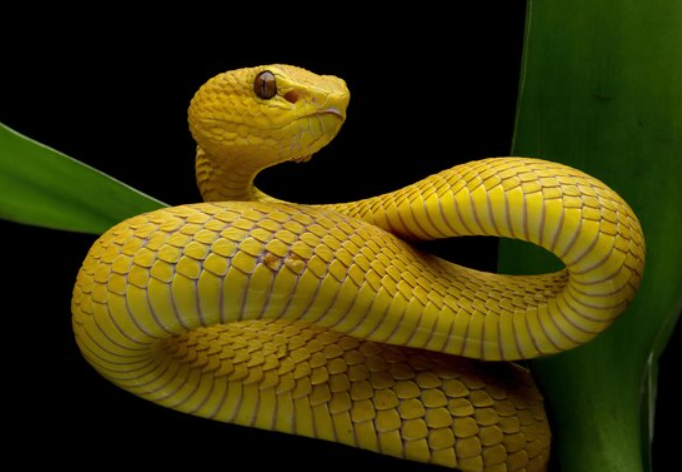
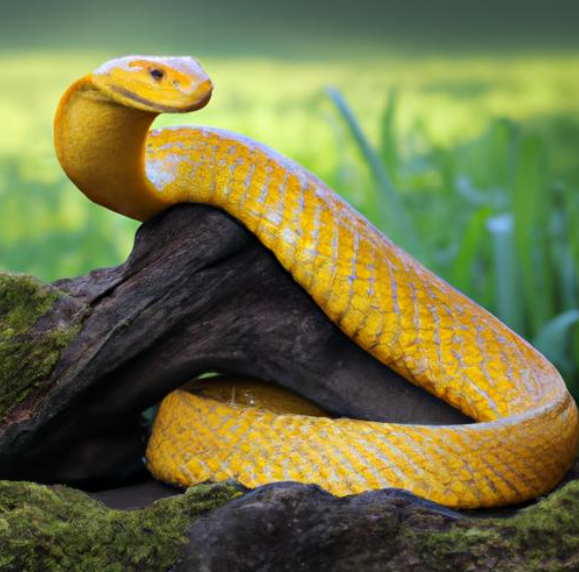
The Yellow Cobra is a color variation of the Cobra, a venomous snake found in parts of Asia and Africa. The yellow coloration is typically seen in the King Cobra species, which is the longest venomous snake in the world. Cobras are known for their iconic hood, which they expand when threatened.
Quick Top 10 Facts about Yellow Cobra
| SCIENTIFIC NAME | Naja kaouthia |
| CLASSIFICATION | KINGDOM: Animalia PHYLUM: Chordata CLASS: Reptilia ORDER: Squamata FAMILY: Elapidae GENUS: Naja SPECIES: N. kaouthia |
| SIZE | Length: 4–7 feet (1.2–2.1 meters) |
| HABITAT | Grasslands, forests, wetlands, and agricultural areas across South and Southeast Asia |
| DIET | Carnivorous; preys on small mammals, amphibians, birds, and other reptiles |
| SPECIES | The Yellow Cobra is a color morph of the Monocled Cobra, named for the circular or “monocle” pattern on the back of its hood |
| COUNTRY | Found in India, Bangladesh, Thailand, Cambodia, Laos, Vietnam, and southern China |
| GESTATION PERIOD | Oviparous; lays 16–30 eggs, which hatch after 55–70 days |
| LIFE SPAN | 20 years in captivity; generally 12–15 years in the wild |
| CONSERVATION STATUS | Least Concern; widespread but threatened by habitat destruction and human conflict in some regions |
Amazing Facts About Yellow Cobras
1. Unique monocle marking
The Monocled Cobra gets its name from the circular “monocle” pattern on the back of its hood. The yellow morph is particularly striking in color.
2. Highly venomous
Yellow Cobras have potent neurotoxic venom that affects the nervous system and can be fatal without treatment.
3. Hood display for defense
When threatened, the cobra spreads its hood to appear larger and more intimidating to potential predators or threats.
4. Native to Asia
This species is found throughout South and Southeast Asia, adapting well to both wild and urbanized environments.
5. Excellent swimmers
Yellow Cobras are semi-aquatic and capable swimmers, often found near water sources such as streams and rice fields.
6. Nocturnal hunters
They are primarily active at night, using their acute sense of smell and sight to hunt.
7. Oviparous reproduction
Females lay eggs in warm, protected places, and the young hatch fully capable of defending themselves.
8. Plays a role in pest control
By feeding on rodents and other small pests, Yellow Cobras help control agricultural pest populations.
9. Variable coloration
The Yellow Cobra is a color variation; Monocled Cobras can range from brown and black to yellowish or albino forms.
10. Feared yet misunderstood
Despite their reputation, cobras avoid human contact and only strike when provoked. They play an essential ecological role as predators.
The Yellow Cobra: An overview of the Distinct Venomous Snake Species
Known for its characteristic hood and potentially harmful bite, the Yellow Cobra is a unique colour variant of the poisonous cobra species. Cobras are members of the Elapidae family, which also contains mambas and coral snakes, two other very poisonous snakes. While most cobras are not yellow, several species and varieties do have golden tones, and because of their remarkable look, they are highly valued in the herpetological community. The physical traits, habitat, venom, behaviour, distribution, and conservation status of yellow cobras will all be covered below. This guide offers insightful information on these stunning but possibly lethal snakes.
Features of the Yellow Cobra’s Body
The most well-known feature of cobras is perhaps their hood, which is a unique extension of their skin and ribs around the neck that flares out in response to danger. In the world of snakes, this characteristic makes them instantly identifiable. Although the majority of cobras are black, brown, or grey, certain species may have yellow or golden colours, particularly at particular life stages or as a result of genetic variants.
Important Physical Characteristics of the Yellow Cobra
- Characteristics: The phrase “yellow cobra” usually describes cobras that are mostly yellow in colour. This might be a darker hue of golden or a delicate, milky yellow. But since it is often combined with other colours like brown, black, or grey, the yellow colouring creates a dramatic contrast, particularly when seen in the wild.
- Hood: When the yellow cobra senses danger, it flares out its characteristic hood, much like other cobras. Dark bands, which might differ from person to person, are often used to identify this hood. As a defensive measure, the hood makes the cobra look bigger and more menacing to any enemies or predators.
- Dimensions: The size of yellow cobras varies by species. Although certain species may grow significantly longer, most cobras often reach lengths of 6 to 10 feet (1.8 to 3 meters). In general, yellow cobras are big, strong snakes with strong bodies that can strike quickly.
- Head: In contrast to the rest of their body, cobras have a pronounced, rounded head that is somewhat wide. Large and spherical, their eyes are often black, while some have a somewhat lighter golden ring around the iris.
- Scales: Yellow cobras, like other cobras, have glossy, smooth scales that allow them to slide smoothly over the ground. Many species have keeled scales, which are ridge-like ridges on the surface that help them navigate through underbrush and grass.
The Yellow Cobra’s Venom
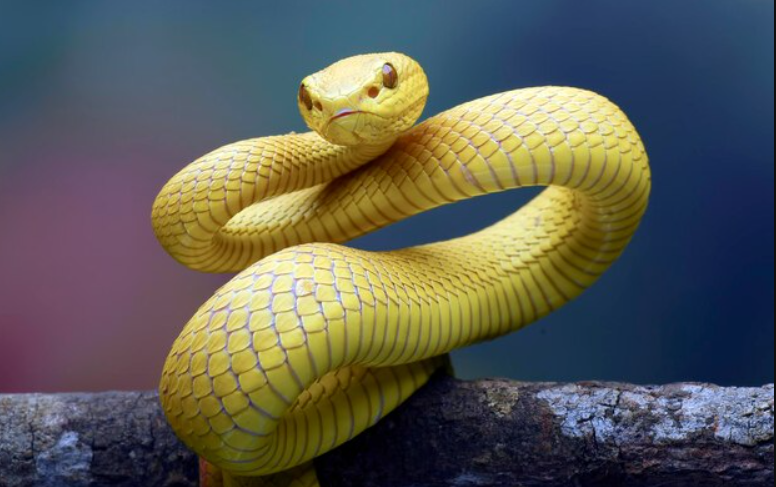
Yellow cobras have strong venom that is used to immobilise and kill victims, much like other members of the Naja genus, which comprises the majority of real cobras. Due to its neurotoxic nature, the venom rapidly impairs the victim’s capacity for movement, breathing, and other bodily functions.
Neurotoxins in the Yellow Cobra Venom
- Neurotoxins: By obstructing nerve impulses, the neurotoxins included in yellow cobra venom may paralyse victims. If not treated right away, one yellow cobra bite may be fatal. The respiratory system is affected by the venom, which paralyses the diaphragm and, if antivenom is not administered, causes asphyxiation.
- Effectiveness of the Venom: Although the cobra’s yellow colouring is a remarkable visual characteristic, it is not always a sign of how strong the venom is. But the venom is quite strong and may kill smaller animals in a few hours, much like the majority of cobras.
- Venom Yield: Depending on the cobra species and snake size, different amounts of venom may be extracted from a single bite. Up to 150 milligrams of venom may be released in a single blow by a big adult cobra. The majority of cobras, however, will just use enough venom to immobilise prey rather than injecting all of it in a defensive bite.
- Human Bites: A yellow cobra bite is still a major medical emergency, even though fatal bites are uncommon in people because of advancements in medicine and antivenoms. Given that the venom may result in swelling, discolouration, paralysis, and, in extreme situations, death, prompt medical attention is essential.
Distribution and Habitat of the Yellow Cobra
Like other cobra species, the yellow cobra is usually found in tropical and subtropical areas of Africa and Asia. Although not all cobras have yellow colouring, several species, like the Monocled Cobra (Naja kaouthia), King Cobra (Ophiophagus hannah), and Indian Cobra (Naja naja), can have skin that is yellow or golden in tone.
Geographic Range and Habitat Preferences
- Geographic Range: Grasslands, savannas, woods, and farmed regions close to populated areas are among the habitats where Yellow Cobras may be found. They are often found in places where there is an abundance of prey, including birds, reptiles, and small mammals. Because of their great adaptability, cobras may survive in urban areas and hunt in fields or woods that are close to cities.
- Habitat Preferences: To conceal themselves and ambush prey, cobras like places with plenty of cover and privacy, such as long grasses, boulders, and garbage heaps. Additionally, they often visit animal burrows, which they may use as cover in colder climates or as a place to hide from the sun.
- Altitude: Although most cobras prefer to live at lower elevations in flat, open areas, certain species, such as the King Cobra, may be found at higher elevations in the foothills of mountains.
The Yellow Cobra’s Behaviour
Yellow cobras and other cobras are solitary and territorial animals. Usually living alone, they only come together to mate. Cobras tend to shy away from conflict with people or bigger animals; however, they may be violent when provoked. Here are a few noteworthy behavioural characteristics:
Defensive and Attacking Behaviours
- Defensive Display: In an effort to look bigger and more menacing, a cobra may lift its head and flare its hood when it feels threatened. The purpose of this behaviour is to ward off possible dangers or predators. The snake may sometimes hiss loudly to emphasise its protective behaviour.
- Attack and Bite: If a danger continues, a cobra may attack with incredible speed and bite the target, injecting them with poison. Since the venom may quickly enter the circulation, cobras usually target the head or neck.
- Ambush Predator: Cobras are ambush predators while hunting. They will wait for possible prey by detecting the movement of tiny creatures with their keen eyesight and vibration sensitivity. The cobra will strike and inject venom to immobilise its victim once it is within striking range.
Reproduction of Yellow Cobras
Like other cobras, yellow cobras deposit eggs. A clutch of 10 to 30 eggs is usually laid by female cobras, who then incubate them in a warm, concealed place. Although she may remain close by to keep the eggs safe from predators, the mother often lets the eggs hatch on their own.
Conservation Status of Yellow Cobras
Depending on the species in question, yellow cobra conservation status varies. For example, despite risks from habitat degradation and poaching for the illicit pet trade, the International Union for Conservation of Nature (IUCN) has classified the Indian Cobra as a Least Concern species. The King Cobra, one of the biggest cobras and one that sometimes has yellow tones, is designated as Vulnerable, mostly because of human encroachment on its native habitat and deforestation.
Ecological Importance and Conservation Efforts
- Ecological Importance: Because they manage the numbers of birds, small animals, and other reptiles, cobras are crucial to their ecosystems.
- Conservation Efforts: Conserving these snakes’ native habitats, curbing the illicit wildlife trade, and raising awareness of the significance of these poisonous snakes in conserving ecological balance are the key goals of conservation initiatives.
FAQ (Frequently Asked Questions) about Yellow Cobra
Q: What is a Yellow Cobra?
Ans: The Yellow Cobra is not a distinct species but typically refers to a color morph or variant of known cobra species, such as the Monocled Cobra (Naja kaouthia) or Spectacled Cobra (Naja naja). These snakes are venomous and are found primarily in South and Southeast Asia. The yellow coloring can be a result of genetic variation or albinism.
Q: Where does the Yellow Cobra live?
Ans: Yellow Cobras, like other cobras, are commonly found in forests, grasslands, agricultural fields, and near human settlements. They are native to regions across South Asia (India, Sri Lanka) and Southeast Asia (Thailand, Vietnam, Cambodia). They prefer warm climates and may also inhabit termite mounds or burrows.
Q: What does the Yellow Cobra eat?
Ans: Yellow Cobras are carnivorous and feed primarily on small mammals, birds, frogs, and other reptiles. They are skilled hunters that use their venom to immobilize and kill prey before swallowing it whole. Juveniles often eat amphibians and insects, while adults prefer rodents and other vertebrates.
Q: How big does a Yellow Cobra get?
Ans: Cobras can vary in size depending on the species. Most adult Yellow Cobras grow between 4 to 6 feet (1.2 to 1.8 meters), though some individuals can reach lengths up to 7 feet (2.1 meters). Their impressive hoods and intimidating posture make them appear even larger when threatened.
Q: Are Yellow Cobras dangerous?
Ans: Yes, Yellow Cobras are highly venomous and potentially dangerous to humans. Their venom is primarily neurotoxic, affecting the nervous system and potentially leading to respiratory failure if untreated. Despite this, cobras generally avoid human contact and will only bite if provoked or threatened.
Q: How does a Yellow Cobra defend itself?
Ans: When threatened, a Yellow Cobra will raise the front part of its body, spread its iconic hood, and hiss loudly as a warning. If the threat continues, it may strike. Some cobras, like the Monocled Cobra, may also exhibit a false strike or dry bite before delivering venom. Their display is meant to intimidate rather than attack.
Q: What does the Yellow Cobra look like?
Ans: The Yellow Cobra typically has a yellow or golden-tan coloration, sometimes with darker markings on its hood or body. Like other cobras, it has a long, slender body, prominent hood, and large fangs used to inject venom. Eye coloration and patterns can vary depending on genetic factors and species type.
Q: How long do Yellow Cobras live?
Ans: In the wild, cobras generally live for 12 to 20 years, depending on environmental conditions and threats such as predators or habitat destruction. In captivity, with proper care, they can live even longer due to the absence of natural dangers and regular feeding.
Q: Can you keep a Yellow Cobra as a pet?
Ans: While it is technically possible to keep a cobra in captivity, it is not recommended for the average person. Cobras are venomous and require specialized handling, secure enclosures, and expert knowledge. In many countries, keeping venomous snakes as pets is strictly regulated or illegal due to the danger they pose.
Q: Are Yellow Cobras endangered?
Ans: Most cobra species are not currently endangered, but their populations are declining due to habitat loss, human persecution, and the fascinating pet trade. Some are listed under CITES or local wildlife protection laws. Conservation efforts are important to protect their natural habitats and prevent further decline.
#YellowCobra, #VenomousSnakes, #CobraFacts, #SnakeAwareness, #WildlifeConservation, #ReptileWorld, #SnakeSafety, #ExoticReptiles, #AsianSnakes, #ReptileEducation
Our sources and references about Yellow Cobra
1: Wikipedia – Monocled Cobra
2: Wikipedia – Indian (Spectacled) Cobra
3: Reptiles Magazine – Monocled Cobra
4: IUCN Red List – Species Status