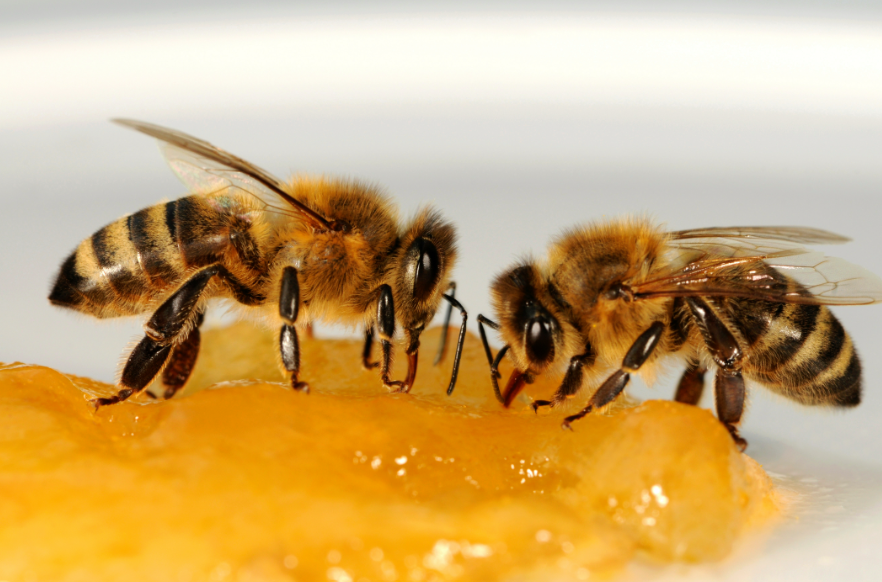
Quick Top 10 Facts about Africanized Bee
| SCIENTIFIC NAME | Apis mellifera scutellata |
| CLASSIFICATION |
KINGDOM: Animalia CLASS: Insecta ORDER: Hymenoptera FAMILY: Apidae PHYLUM: Arthropoda GENUS: Apis |
| SIZE | About 1.2 to 1.5 cm (0.5 to 0.6 inches) long |
| HABITAT | Tropical and subtropical regions; found in Africa, South and Central America, and parts of the United States |
| DIET | Herbivorous – primarily feeds on nectar and pollen from flowers |
| SPECIES | Africanized Honeybee (a hybrid of African and European honeybees) |
| COUNTRY | Native to Africa but has spread to the Americas, particularly in South and Central America, and parts of the United States |
| GESTATION PERIOD | Eggs hatch in about 3 days, and larvae mature into adult bees within 14–21 days |
| LIFE SPAN | Worker bees live about 6–8 weeks, while queen bees can live for several years |
| CONSERVATION STATUS | Not considered endangered, but can pose risks to humans due to their aggressive nature |
Amazing Facts About Africanized Bee
1. Highly aggressive behavior
Africanized bees are known for their defensive and aggressive behavior when they feel their hive is threatened.
2. Faster to react than European honeybees
They are much quicker to respond and attack when provoked, swarming in large numbers to protect the hive.
3. Hybrid of African and European bees
Africanized bees are a cross between the African honeybee and European honeybees, resulting in a much more aggressive species.
4. Spreading rapidly
Originally native to Africa, Africanized bees have spread to South and Central America and parts of the U.S. in recent decades.
5. More than just their sting
While their sting is painful, Africanized bees are dangerous mainly because they will chase intruders for long distances and attack in swarms.
6. Important pollinators
Like other bees, they are crucial for pollination of various plants and crops, contributing to biodiversity and agriculture.
7. Queen bees are vital for hive survival
The queen bee is the reproductive center of the hive, with worker bees serving the queen and protecting her from danger.
8. Swarm often to establish new colonies
When their colony grows too large, Africanized bees swarm, which can cause them to spread quickly to new areas.
9. Strong sense of community
Understanding the facts about Africanized bees
Africanized bees, also referred to as killer bees, are a hybrid species that resulted from the mating of European and African honey bees. In an effort to increase honey production, they were first brought to Brazil in the 1950s. Nevertheless, a few of these bees managed to get away and started to disperse over the Americas, earning them a bad name.
Reasons behind their aggressive nature, including genetic factors
These bees are very protective and aggressive; in reaction to perceived threats, they often launch coordinated attacks with a greater number of bees. They are known to chase their prey more extensively and in larger quantities than their European equivalents. Their genetic composition contains a greater number of African honey bee genes, which accounts for their heightened aggressiveness.
How they spread throughout the Americas, including North America
Because of their extreme adaptability, Africanized bees may survive and even flourish in dry deserts and tropical rainforests. They are skilled foragers who can cover great distances in pursuit of pollen and nectar. Because of their capacity for adaptation and survival in a variety of temperatures, they have expanded quickly across the Americas, raising serious concerns among both the general public and beekeepers. For the protection of other bee species as well as people, it is crucial to use care and expert help while working with Africanized bees.
Unique characteristics or qualities of Africanized bee honey
Africanized bees are a hybrid type of honeybee that are infamous for their aggressive nature. They are also referred to as killer bees. They are the result of a hybrid between African and European honeybees. Here are some fascinating facts about Africanized bees:
1. Migration of Africanized bees from Africa to South America
Brazil received its first shipment of Africanized bees in the 1950s in an effort to boost honey output. Nevertheless, a few of these bees managed to get away and started to travel across the Americas. Since then, they have spread across the southern states of the US, including Texas, Arizona, and California.
2. Reasons behind the aggressive nature of Africanized bees
Aggressive behavior is one of the most well-known traits of Africanized bees. Compared to their European counterparts, they are considered to launch more widespread attacks and to be more defensive. They are very sensitive to disruptions and will fiercely protect their hive, even in the case of a little danger.
3. Tendency to swarm and attack in large numbers
One characteristic of Africanized bees is their propensity to swarm. The act of a new queen bee and some worker bees leaving the old hive to start a new colony is known as swarming. These swarms may become rather large, which makes them dangerous for nearby people and animals.
4. Stinging incidents and allergic reactions
Africanized bee stings are comparable to those of European honeybees. What distinguishes them, however, is their propensity to sting in greater quantities. A scent that an Africanized bee produces while stinging alerts other bees to join the assault. For those who are allergic to bee venom, this might lead to many stings that could be fatal.
5. Nature of Defensiveness
Africanized bees are naturally inclined to protect their colony. When it comes to chasing their prey, they will go further than European honeybees. If you come into contact with a group of Africanized bees that are hostile, it is recommended that you take cover inside or cover your face and head. Avoid making abrupt movements or swatting at them, as this may agitate them even more.
6. Impact of Africanized bees on native bee populations
Africanized bees have shown an amazing capacity for environmental adaptation. They can survive in a variety of temperatures, including desert and tropical locations. Their quick dispersal over the Americas is partly due to their flexibility.
7. Honey production capabilities of Africanized bees
Bees that have been Africanized are outstanding honey producers, despite their aggressive disposition. In terms of producing honey, they are known to be more prolific than European honeybees. However, managing Africanized bees for honey production may be difficult and necessitate extra caution owing to their aggressive disposition.
8. Control and Mitigation
There are initiatives underway to lessen the effects and spread of Africanized bees. Professionals in both beekeeping and pest management use a variety of techniques to manage and regulate Africanized bee populations. This entails keeping an eye on hives, requeening with European honeybees, and putting safety precautions in place to lessen the chance of stings.
A distinct and intriguing species that has left its imprint on the Americas are Africanized bees. Even if their violent conduct might be dangerous, it’s crucial to recognize their traits and take the proper safety measures while they’re around. The effect of Africanized bees may be reduced with appropriate management and control, enabling cohabitation with these amazing insects.
FAQ (Frequently Asked Questions) about Africanized Bees
Q: What are Africanized Bees?
Ans: Africanized Bees, often referred to as “killer bees,” are a hybrid species resulting from the crossbreeding of African honeybees with European honeybees. They are known for their aggressive behavior and heightened defensive response to threats.
Q: Why are they called “killer bees”?
Ans: They are called “killer bees” due to their highly defensive nature. While they are not more venomous than other bee species, their aggressive behavior can lead to multiple stings and even fatalities in extreme cases, especially if a person is allergic to bee venom.
Q: Where do Africanized Bees live?
Ans: Africanized Bees are found primarily in the Americas, particularly in South and Central America. They began spreading northward into the southern United States after their introduction to Brazil in the 1950s.
Q: What do Africanized Bees eat?
Ans: Like other bees, Africanized Bees feed on nectar from flowers, which they use to make honey. They also collect pollen to feed their larvae. They are important pollinators in many ecosystems.
Q: Are Africanized Bees dangerous?
Ans: Yes, Africanized Bees can be dangerous if provoked. They are more likely than other bee species to sting in defense of their hive. Their aggressive nature means they can attack in large numbers, and they may pursue intruders far away from their hive.
Q: How big do Africanized Bees get?
Ans: Africanized Bees are similar in size to European honeybees, typically measuring between 0.4 to 0.6 inches (10 to 15 mm) in length. Their size does not contribute to their aggressiveness, which is mainly a result of their behavior.
Q: How do Africanized Bees behave differently from other bees?
Ans: Africanized Bees are more aggressive and territorial than European honeybees. They are quick to swarm in defense of their hive and will chase perceived threats much farther than European honeybees, often over distances of several hundred meters.
Q: Can you touch an Africanized Bee?
Ans: It is not recommended to touch an Africanized Bee or disturb their hive. They are very protective and may become agitated. Even without disturbing the hive, simply walking near it could trigger an attack.
Q: Are Africanized Bees rare?
Ans: Africanized Bees are not rare, but their distribution is limited to warmer regions. While they are widespread in parts of South America and Mexico, they are becoming increasingly common in the southern United States as they continue to spread.
Q: Do Africanized Bees have predators?
Ans: Despite their defensive nature, Africanized Bees have predators such as bears, birds, and certain mammals, which may raid their hives. However, their aggression and large defensive swarms offer strong protection against most threats.
#AfricanizedBees, #KillerBees, #Bees, #Honeybees, #Pollinators, #Insects, #Wildlife, #Nature, #Beekeeping, #DangerousBees, #Honey, #BeeSwarm, #Beekeepers, #InsectBehavior
Our sources and references about Africanized Bees
1: Wikipedia – Africanized Bee
2: CDC – Africanized Bees and Safety
3: Britannica – Africanized Bee
4: ScienceDirect – Africanized Bee Behavior